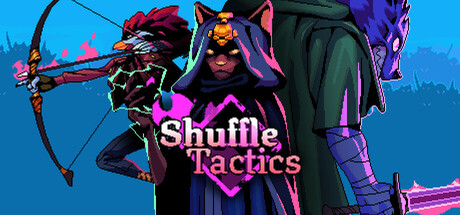
Game review
Shuffle Tactics Review: A Brilliant Idea Buried Under Bugs
5.4 / 10
- Developer
- Club Sandwich
- Publisher
- The Arcade Crew
- Released
- 24 June 2025
- Platforms
- ["PC"]
- Genre
- Tactics / Deckbuilding Roguelike
- Monetisation
- Paid
- Players
- false
The short version
Shuffle Tactics fuses grid-based tactics with deckbuilding into a combat system reviewers genuinely admire, but a consistently mixed Steam sample makes clear the game shipped with enough bugs and unclear UI feedback that even its biggest fans often can't recommend it without a long list of caveats.
Biggest strengths
- Reviewers consistently praise the core hybrid combat loop, singling out how positioning, terrain, and card-based abilities interact, with one detailed review calling successful runs 'tightly connected' between planning and execution
- Multiple reviewers highlight the sidekick system, where companion characters bring their own expandable decks and playstyles, as a standout addition that meaningfully deepens deckbuilding variety
- The pixel art, music, and overall presentation draw consistent praise across the sample, with one long review calling the art style and sound design 'outstanding' even while criticizing other aspects of the game
Biggest weaknesses
- The sample is dominated by bug reports, including game-breaking issues like actions becoming permanently unresponsive mid-fight, effects applying incorrectly, and at least one reviewer reporting reliable crashes tied to a specific card combination
- Several reviewers single out unclear combat feedback as a core design problem, including no way to see enemy attack range for certain abilities and card tooltips that don't explain what related mechanics or upgrades actually do
- Steam Deck and controller support draw specific, repeated criticism, with one reviewer stating the default Steam Deck control scheme simply doesn't work and controller support felt incomplete at launch
Who it's for: Deckbuilder and tactics fans who are comfortable with rough edges and want to catch a promising idea early, rather than players who need a polished, bug-free experience out of the box.
Our recommendation: Worth trying the free demo first; many reviewers who loved the core loop still landed on Not Recommended purely over bugs, and it's worth checking whether those specific issues have been patched before buying.
5.4 / 10
Shuffle Tactics tries to merge two demanding genres into one game: grid-based tactical combat, where positioning and terrain matter as much as your hand, and roguelike deckbuilding, where every relic and card shapes what your next run can become. Developed by Club Sandwich and published by The Arcade Crew, it landed on Steam with a genuinely mixed profile that has only slowly improved: 70% positive across 95 reviews, with a 20-review English-language sample that reads like a group of people who clearly love the idea and keep getting stopped short by how unfinished it feels.
An Ambitious Genre Mashup That Mostly Works
One especially detailed review lays out the pitch clearly: battles unfold on grid-based maps where "positioning, terrain, and movement are just as important as the cards in your hand," with action points forcing constant trade-offs between offense, defense, and mobility. When it clicks, reviewers describe real satisfaction. One recommends the game specifically for how creatively its central weapon can be used, recalling the moment they realized a thrown sword could block narrow passages or trigger collision effects when enemies were knocked into it. Another calls combat "strategic and satisfying" outright, and a third, more analytical review concludes that "when these systems work together, the result is a satisfying loop where planning and execution feel tightly connected."
Sidekicks and Deckbuilding Add Real Depth
Beyond the core combat, reviewers repeatedly call out the sidekick system as a standout feature: companion characters that bring their own separate, expandable decks and distinct playstyles into a run. One reviewer specifically credits sidekicks with feeling "impactful" and offering unique approaches rather than simply padding out a loadout. Combined with multiple playable lead characters and a wide pool of relics and upgrades, the sample generally agrees the game has strong replayability on paper, with reviewers describing meaningfully different runs depending on which pieces they find and how they build around them. One reviewer specifically contrasts the loop against genre touchstones like Slay the Spire and Wildfrost, noting that charm-style card modifiers borrowed from that space fit naturally into the tactical layer rather than feeling bolted on.
A Sample Dominated by Bug Reports
The clearest, most consistent thread running through the sample isn't a design complaint, it's stability. One reviewer, self-described as "a huge roguelike and tactical game fan," lists game-breaking bugs including a fight-ending issue where all player actions simply stop working, particularly during boss encounters. Another details seven distinct bugs in a single review, from hotkeys staying active during feedback forms to status effects applying through blocked projectiles, while still praising the underlying combat as strategic and rewarding. A third reviewer reports a specific, reliable crash tied to one character's oil-and-explosion card interactions. Several reviewers explicitly frame their Not Recommended verdict as reluctant, with one writing plainly that "this game is a lot of fun, and has interesting gameplay, but I can't recommend this game as it is right now."
Unclear Feedback Undermines the Strategy Genre's Core Promise
For a tactics game, several reviewers argue the UI actively works against the genre's central appeal: informed decision-making. One detailed critical review lists specific gaps, including no way to check certain enemies' attack ranges without clicking each one individually, card tooltips that reference other mechanics without explaining them, and upgrade choices offered with no information about what the upgrades actually do. Another reviewer makes a similar point about difficulty spikes tied to unclear boss mechanics, describing a shielded, parrying boss where it took repeated trial and error just to learn what attack types the parry actually blocked. These aren't complaints about the tactical systems being too hard, reviewers are broadly fine with challenge, they're complaints about not having enough information to engage with that challenge fairly.
Steam Deck and Controller Support Lag Behind
Hardware compatibility draws specific, repeated frustration. One reviewer states outright that "Steamdeck's default control scheme simply does not work" and that controller support "doesn't appear to be completed on launch." Not every reviewer had the same experience, one later review describes the game as "manageable on Steam Deck," if "a little slow and janky to handle over a mouse," suggesting some improvement over time, though grid navigation and multi-input interactions remain points of friction for controller players specifically.
Signs of Active, Responsive Development
To the developer's credit, the sample includes multiple reviewers who updated their verdict from negative to positive after patches, with one writing that "continued updates to this game along with addressing many of the bugs I encountered has led me to change my review to yes." Developer responses appear directly on several critical reviews in the sample, and more than one reviewer describes the creator as "very active and responsive to community feedback." A free demo is repeatedly recommended by reviewers on both sides of the recommendation split as the best way to gauge whether the core loop is worth the current rough edges for any individual player. One reviewer who refunded the full game after enjoying the demo still urged others to try it regardless, framing their bounce off the game as a matter of personal taste rather than a mark against its quality.
Final Verdict
Shuffle Tactics is a genuinely ambitious hybrid that reviewers agree gets its central idea right, tactical positioning and deckbuilding synergy that feels satisfying when the pieces line up, backed by strong art and music. What holds it back is not a design flaw so much as a polish gap: game-breaking bugs, information the interface simply doesn't surface, and Steam Deck support that several reviewers describe as unfinished. With a developer visibly patching based on feedback and a free demo available to test the water first, this is a game worth watching rather than dismissing, but going in with clear eyes about its current state.
Pros and cons
Pros
- Reviewers consistently praise the core hybrid combat loop, singling out how positioning, terrain, and card-based abilities interact, with one detailed review calling successful runs 'tightly connected' between planning and execution
- Multiple reviewers highlight the sidekick system, where companion characters bring their own expandable decks and playstyles, as a standout addition that meaningfully deepens deckbuilding variety
- The pixel art, music, and overall presentation draw consistent praise across the sample, with one long review calling the art style and sound design 'outstanding' even while criticizing other aspects of the game
Cons
- The sample is dominated by bug reports, including game-breaking issues like actions becoming permanently unresponsive mid-fight, effects applying incorrectly, and at least one reviewer reporting reliable crashes tied to a specific card combination
- Several reviewers single out unclear combat feedback as a core design problem, including no way to see enemy attack range for certain abilities and card tooltips that don't explain what related mechanics or upgrades actually do
- Steam Deck and controller support draw specific, repeated criticism, with one reviewer stating the default Steam Deck control scheme simply doesn't work and controller support felt incomplete at launch
Screenshots
-
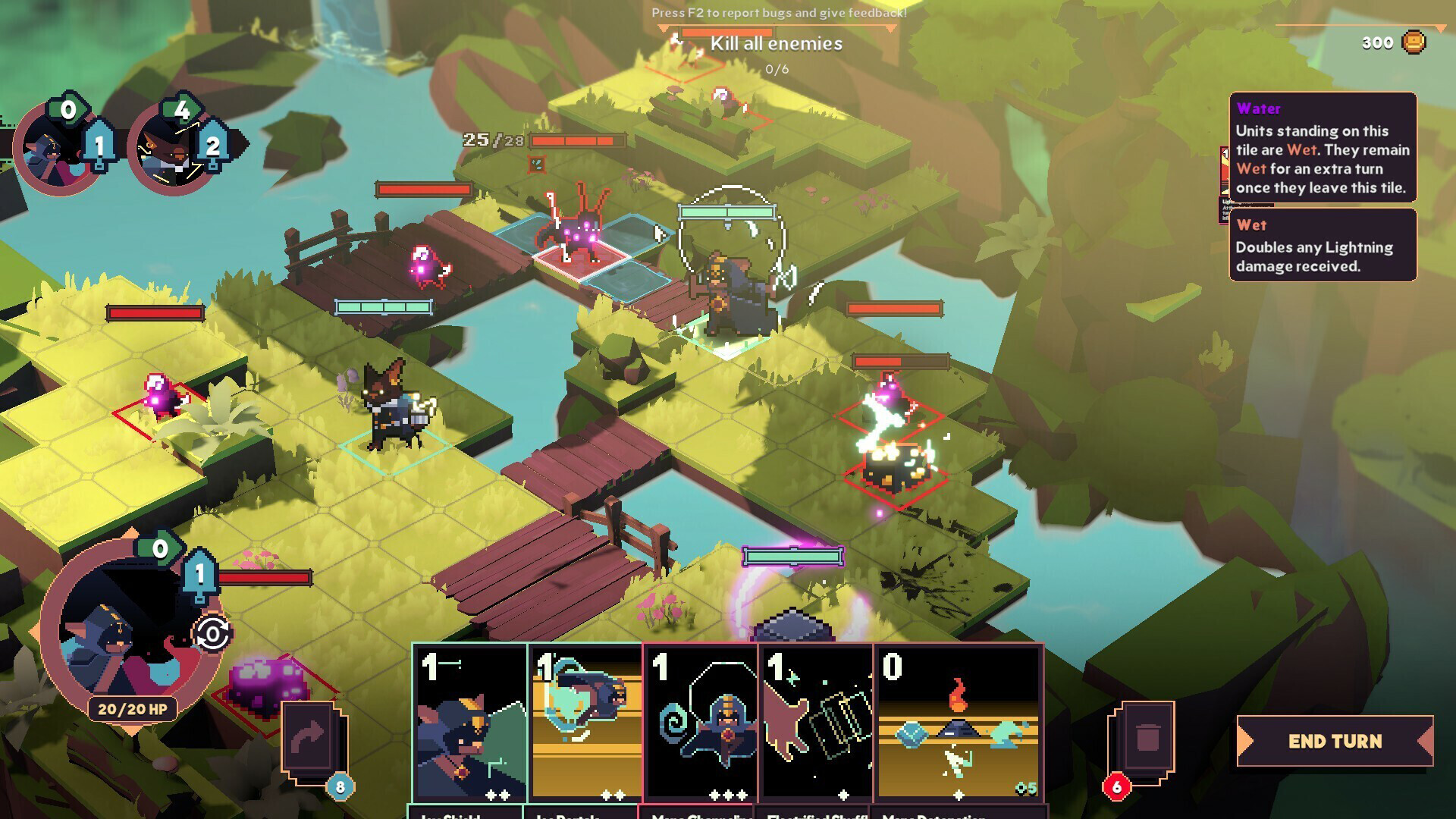
A grid-based encounter showing off the terrain-effect system, alongside the on-screen bug-reporting prompt reviewers noted the developer relies on for feedbackThe Arcade Crew -
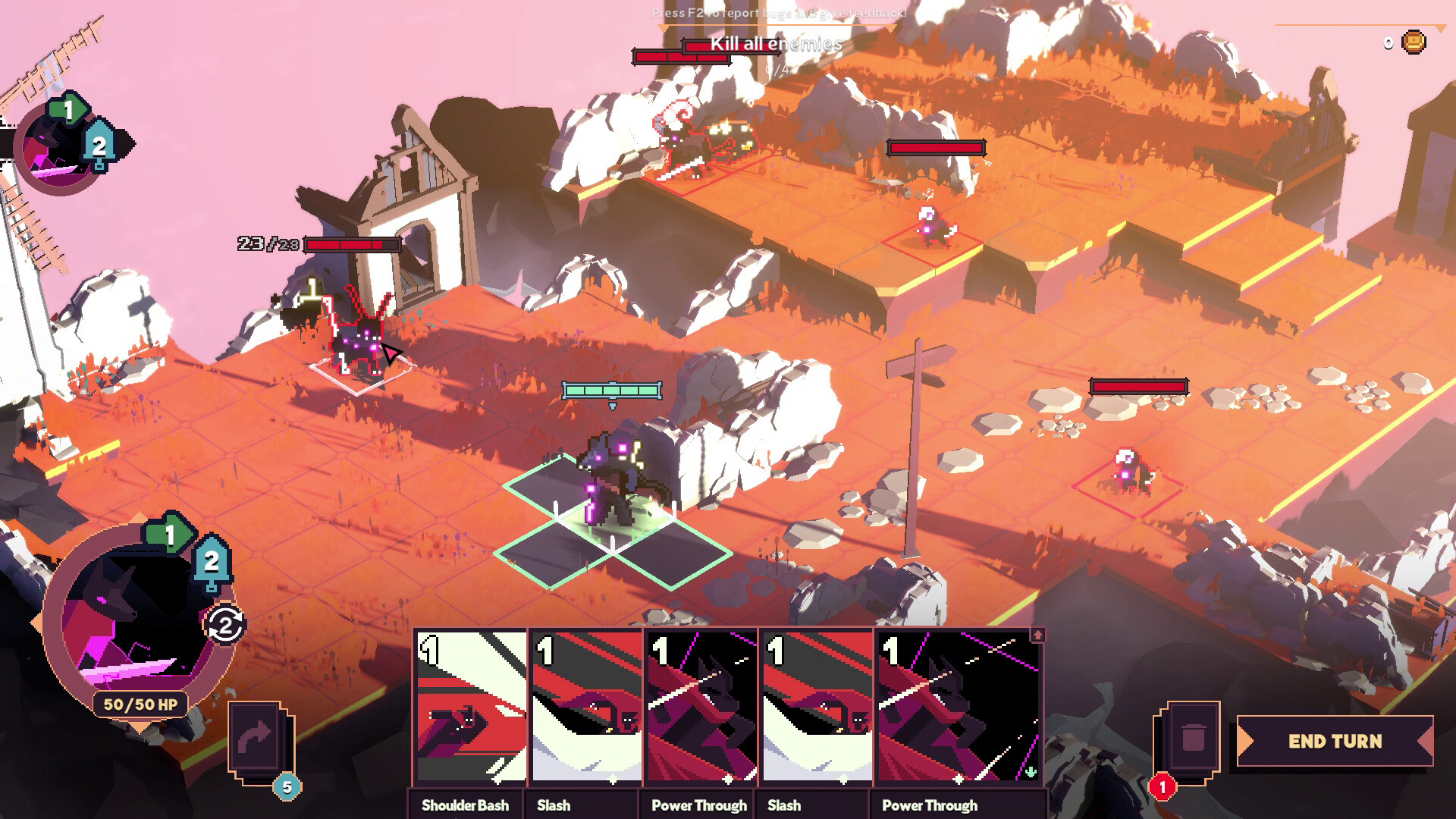
Combat on a more exposed, open battlefield, with the card-based action hand that drives each turnThe Arcade Crew -
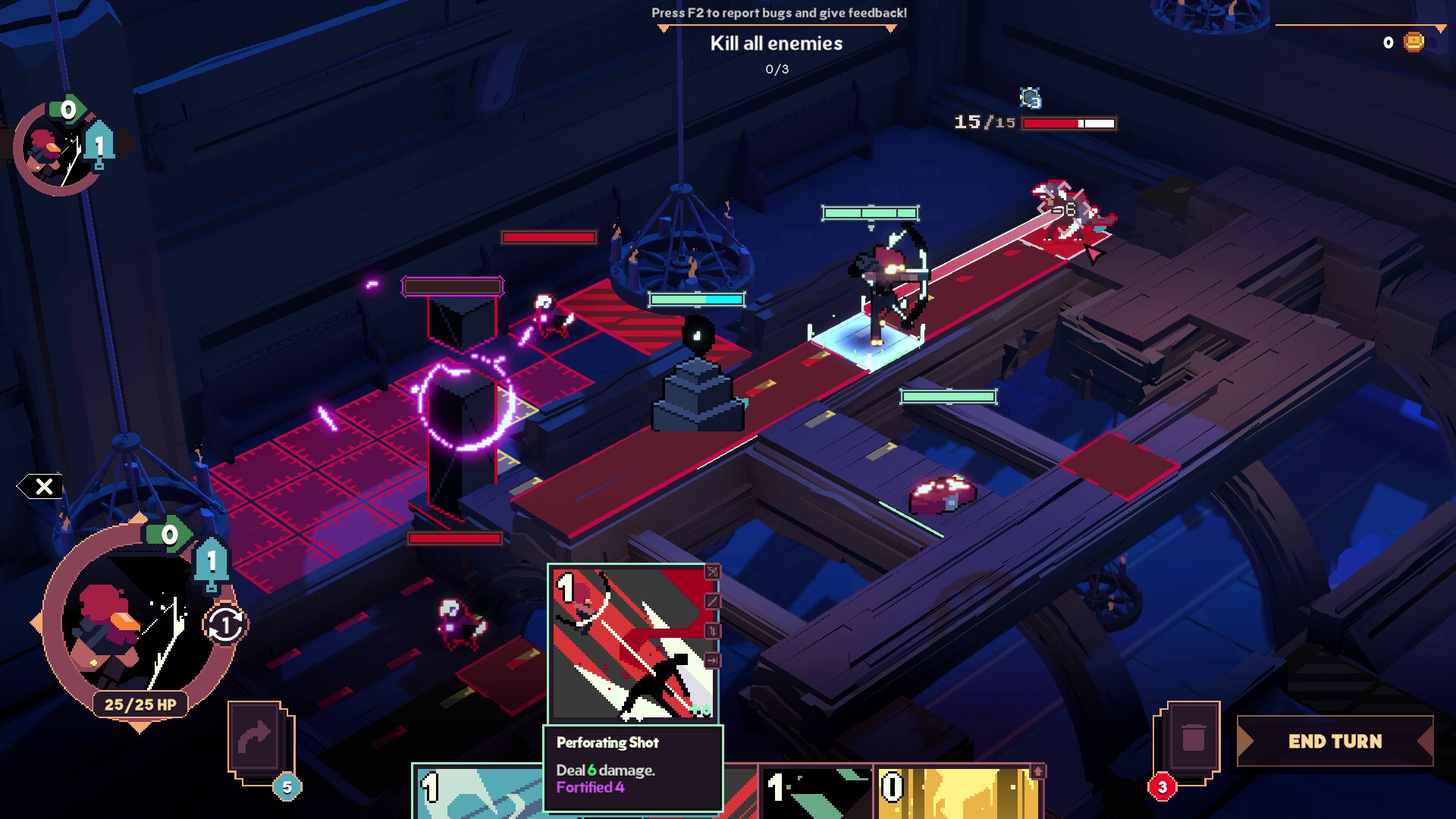
A card's damage and effects displayed mid-battle, the kind of combat feedback reviewers wanted extended further into enemy abilitiesThe Arcade Crew -
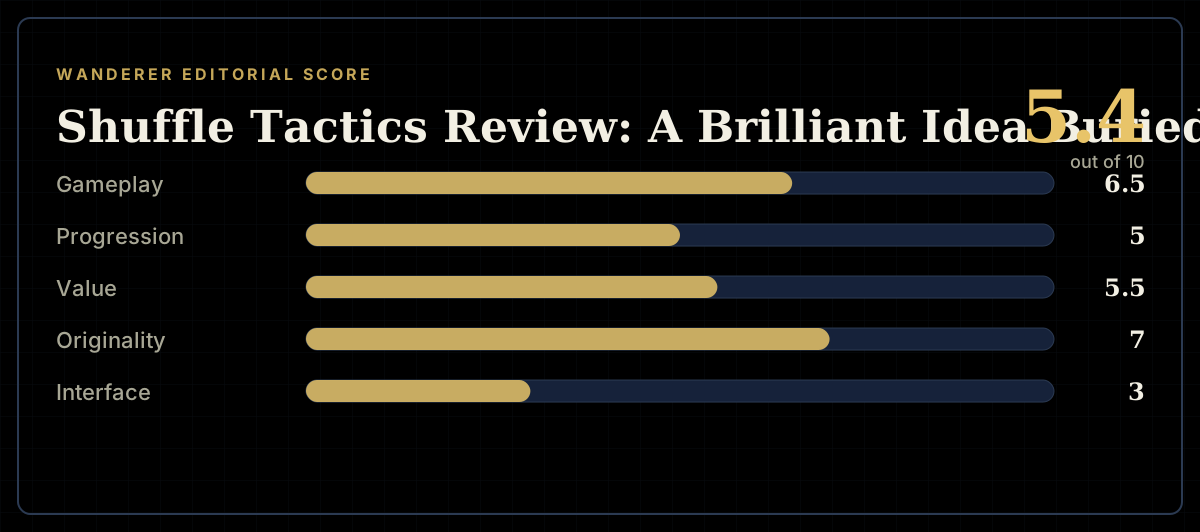
How the review scores each part of the gameWanderer Editorial -
The short versionWanderer Editorial