Game review
Lunchbreak Tactics Review: A Super Auto Pets Clone With Real Hooks and Real Frustrations
6.6 / 10
- Developer
- Borealys Games
- Publisher
- Borealys Games
- Released
- 28 April 2026
- Platforms
- ["PC"]
- Genre
- Strategy / Card Battler
- Monetisation
- Paid
- Players
- true
The short version
Lunchbreak Tactics leans openly on Super Auto Pets for its core loop of drafting units, building synergies, and battling asynchronously, and a large body of reviewers reward that familiarity with real hours logged and genuine addiction, while a smaller but consistent group flags specific frustrations with unlock gating, a demoralizing rank system, and a rocky post-launch patch.
Biggest strengths
- Multiple reviewers with over 100 hours logged describe genuine addiction, with one specifically praising the roughly 15-minute run length as ideal for short breaks
- The hero-and-clan drafting system draws detailed praise for its depth of synergy combinations, with one lengthy review calling out specific scoring mechanics that reward thoughtful team building
- Asynchronous PvP lets players jump in and out freely, a structural choice several reviewers specifically credit for fitting into busy schedules
Biggest weaknesses
- One detailed negative review describes a post-update state where full runs repeatedly error out and require reloading, calling the game 'basically broken'
- Several reviewers criticize the early-game character and clan unlock gating as punishing rather than rewarding, with one noting it can feel like losing 'because u just didnt have the same possibilitys your opponent had'
- A price reduction shortly after launch drew a specific complaint from an early buyer who called it 'a big red flag,' and multiple reviewers separately criticize the ranked system for discouraging comebacks
Who it's for: Fans of Super Auto Pets and similar autobattlers looking for quick, asynchronous runs, rather than players seeking a deeply original take on the genre.
Our recommendation: A strong pickup for autobattler fans who don't mind an unabashed Super Auto Pets influence, but worth waiting on if recent stability complaints haven't been addressed.
6.6 / 10
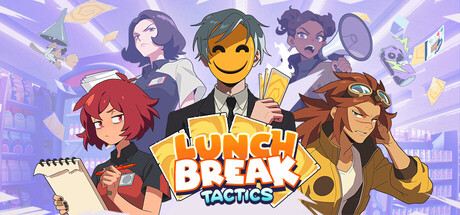
Lunchbreak Tactics sets its autobattler loop in a chaotic supermarket backstore, tasking players with drafting a squad of units, stacking synergies across heroes and card clans, and battling other players' teams asynchronously, all wrapped in a self-aware theme about killing time on a mundane retail shift. It sits at 76% positive across a substantial 124 Steam reviews, and a sample of 18 English-language reviews spanning its April 2026 launch through September shows a game that hooks a large number of players hard while drawing specific, repeated complaints from a smaller but vocal minority.
Wearing Its Influences Openly
Almost every detailed review in the sample compares the game directly to Super Auto Pets, and not subtly. One reviewer who reached the world's #1 leaderboard spot writes plainly that "if you have played Super Auto Pets, it's impossible not to draw some comparisons," pointing to shared elements like five-unit teams, frontline collision combat, and single-item equipment slots. A shorter, more skeptical review goes further, calling it "literally Super Auto Pets," while still conceding "this game is good" on its own terms. The consensus across the sample is that Lunchbreak Tactics doesn't reinvent the format so much as reskin and refine it.
Heroes, Clans, and Genuine Synergy Depth
Where reviewers say the game earns its keep is in its hero-and-clan drafting system. Each run starts with a hero passive and two card clans chosen from six, and the top-rated review in the sample details how positioning, tempo, and end-of-round reputation scoring, rather than a simple shared health pool, create decisions that diverge meaningfully from genre norms. Multiple shorter reviews back this up, praising "tons of combo possibilities" and "a lot of fun synergies to discover," suggesting the drafting layer is where the game's real identity lives, even under an openly derivative surface.
Built for Short, Asynchronous Sessions
The asynchronous structure draws consistent, specific praise. One reviewer with 85.9 hours logged calls each run "about 15 minutes, perfect for a quick break," while another with nearly 140 hours highlights how the format lets players "jump into games pretty easily and freely" without needing an opponent online at the same time. For a game explicitly themed around stealing a moment of fun during a shift, reviewers broadly agree the pacing and format deliver on that premise.
Unlock Gating That Frustrates Early Players
A specific, recurring complaint concerns how heroes and clans unlock over time rather than being available from the start. One detailed negative review argues this creates unfair matches against players who've already unlocked stronger options, writing it "almost feels like a punishment" to be matched against opponents with tools you can't yet access. Another reviewer estimates unlocking everything took roughly 12 hours, calling that pacing "mixed" rather than outright bad, but the underlying tension between early-game limitation and matchmaking fairness shows up across multiple independent reviews.
A Rank System Some Reviewers Call Punishing
Beyond unlock gating, the ranked ladder itself draws pointed criticism. One reviewer with 6.6 hours logged calls the system "awful," explaining that because every game affects rank, "the optimal way to play is to always be considering quitting the run," undermining comebacks and making losing streaks feel worse than they should. That reviewer notes the tension is especially odd given the game's "casual lunch table card game theming," yet offers no casual, rank-free mode as an alternative.
Stability and a Contentious Mid-Release Price Cut
Two separate issues show up in the sample's more critical reviews. A developer-acknowledged bug report describes a state where "the game is basically broken," with runs repeatedly erroring out after a patch, serious enough that Steam shows a developer response attached to it, which at least suggests the studio is actively monitoring and addressing reports rather than ignoring them. Separately, one early buyer criticizes a price reduction that came shortly after launch without compensation for those who paid full price, calling it "a big red flag from the company." A second, unrelated complaint from a different reviewer echoes the same frustration around losing to opponents with access to stronger, still-locked cards, reinforcing that the unlock-gating issue and the pricing issue read as separate but compounding sources of frustration for early adopters specifically. Neither complaint appears to be the majority experience, but both are specific enough to flag for anyone considering an early purchase.
Where It Sits Among Autobattler Peers
One reviewer's detailed comparison list places Lunchbreak Tactics alongside The Bazaar, Monster Train, 9 Kings, and Backpack Battles as reference points for anyone deciding whether the genre appeals to them, and that company feels accurate given how the game distributes its ambitions across drafting, positioning, and asynchronous pacing rather than leaning hard on any single mechanic. At NZ$23.49, it costs more than a typical mobile-first autobattler but less than many premium strategy releases, and reviewers who've logged well over a hundred hours suggest that price holds up reasonably well against the amount of replay value on offer, gating complaints notwithstanding.
Final Verdict
Lunchbreak Tactics doesn't pretend to be anything other than a supermarket-themed spin on Super Auto Pets, and reviewers who go in with that expectation largely come away hooked, with genuinely high hour counts backing up the addiction reviewers describe. But the complaints in the sample are specific rather than vague: gated unlocks that can feel unfair in early matches, a rank system that discourages comeback attempts, and at least one serious post-patch stability report. For autobattler fans comfortable with an openly derivative premise, it's a strong pick; for anyone hoping for a fully original take or a flawless launch, the reviews here suggest tempering expectations.
Pros and cons
Pros
- Multiple reviewers with over 100 hours logged describe genuine addiction, with one specifically praising the roughly 15-minute run length as ideal for short breaks
- The hero-and-clan drafting system draws detailed praise for its depth of synergy combinations, with one lengthy review calling out specific scoring mechanics that reward thoughtful team building
- Asynchronous PvP lets players jump in and out freely, a structural choice several reviewers specifically credit for fitting into busy schedules
Cons
- One detailed negative review describes a post-update state where full runs repeatedly error out and require reloading, calling the game 'basically broken'
- Several reviewers criticize the early-game character and clan unlock gating as punishing rather than rewarding, with one noting it can feel like losing 'because u just didnt have the same possibilitys your opponent had'
- A price reduction shortly after launch drew a specific complaint from an early buyer who called it 'a big red flag,' and multiple reviewers separately criticize the ranked system for discouraging comebacks
Screenshots
-
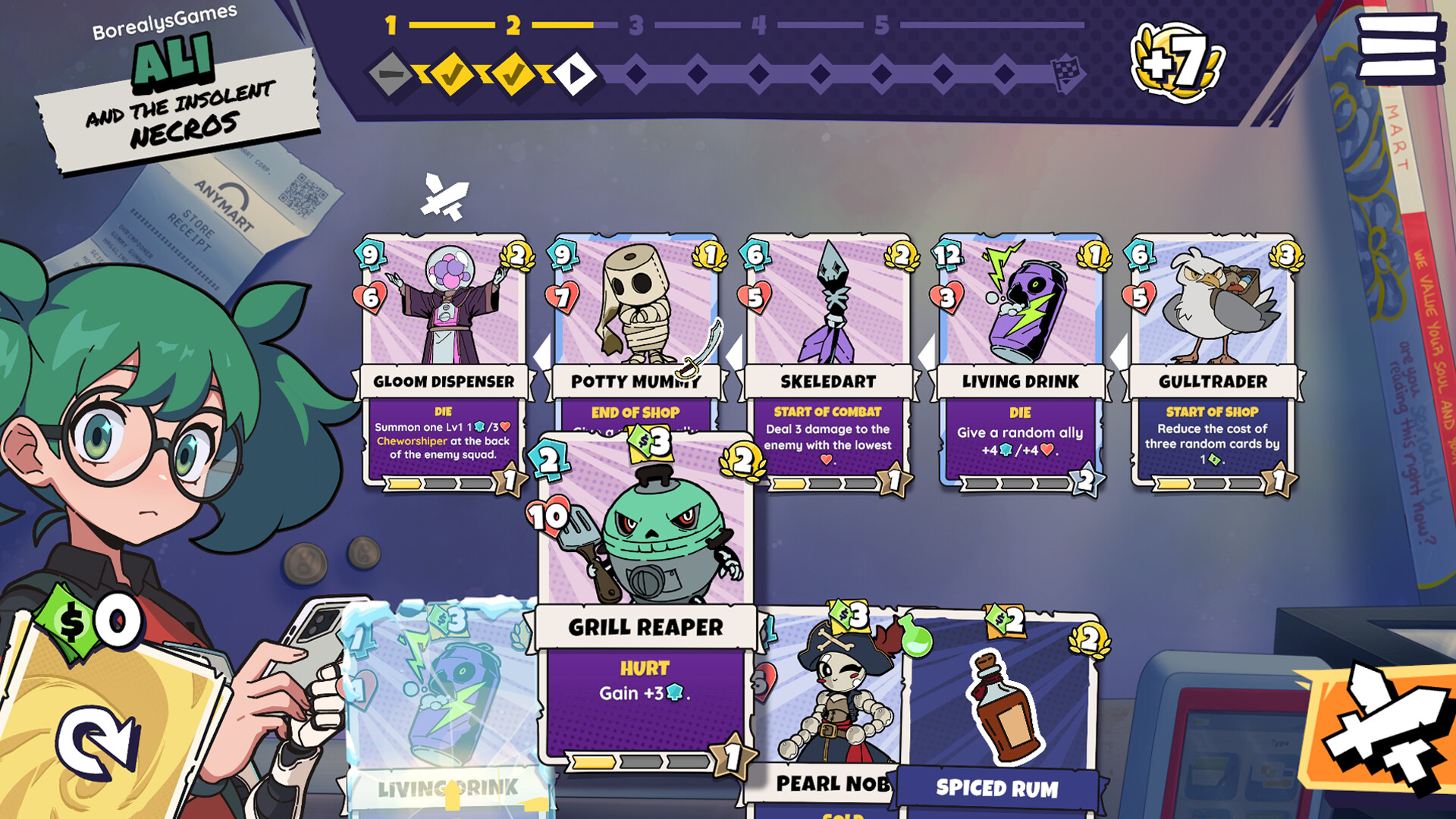
The shop phase, where players draft units and items to build synergies for their squadBorealys Games -
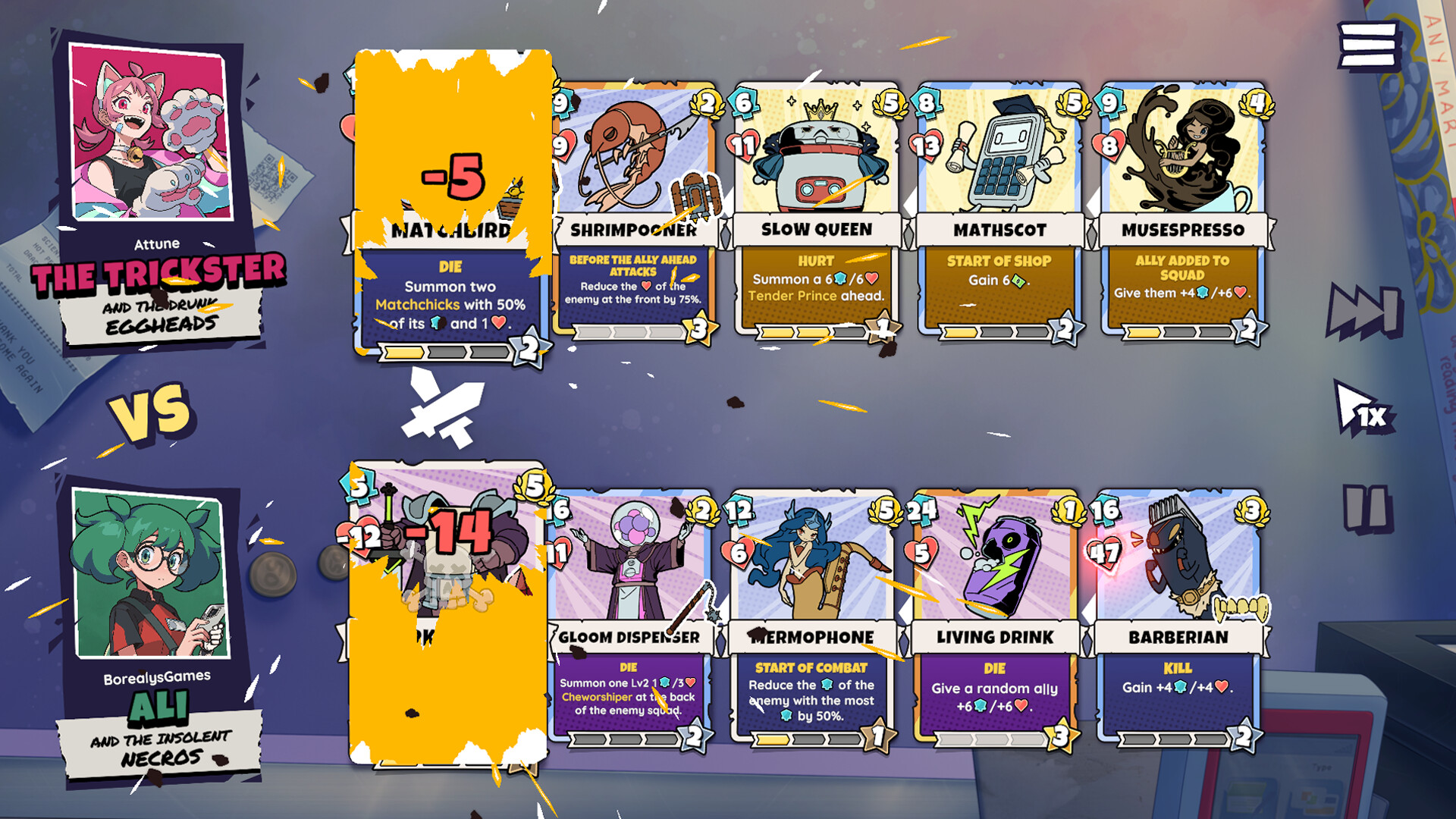
Combat plays out automatically once both squads are drafted, with card abilities triggering in sequenceBorealys Games -
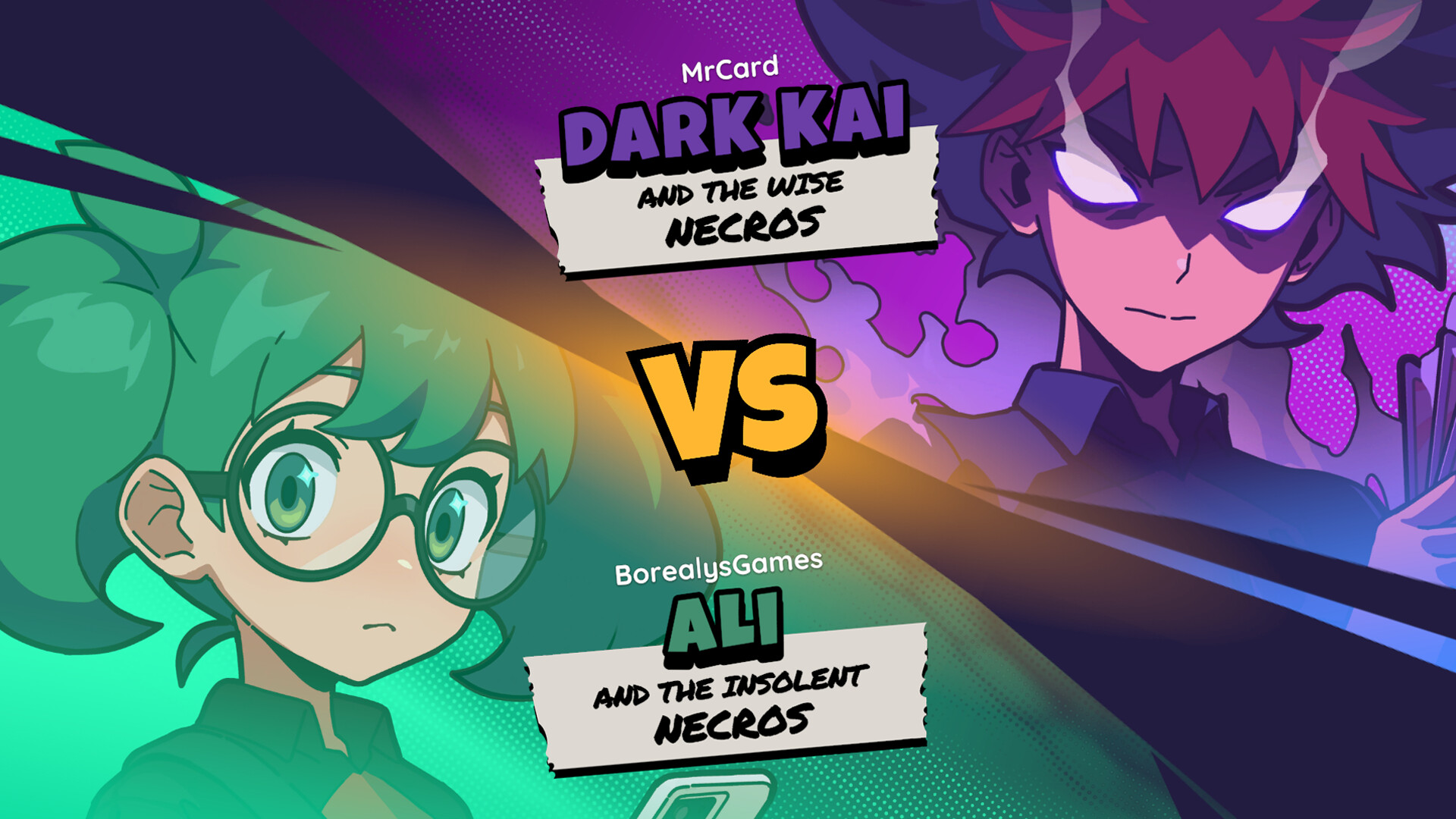
Asynchronous PvP matches players' hero and clan picks without requiring both to be online at onceBorealys Games -
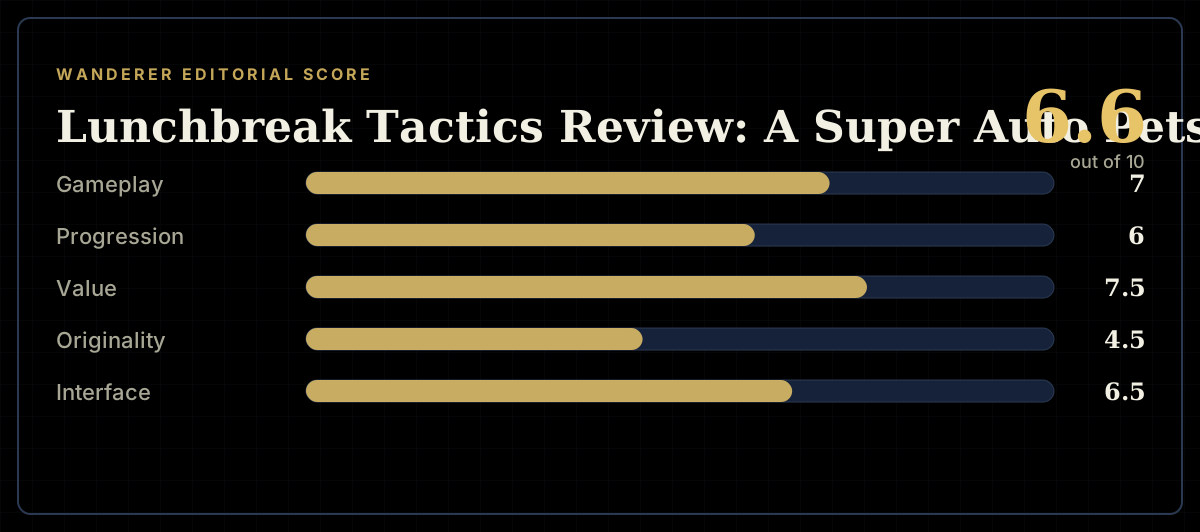
How the review scores each part of the gameWanderer Editorial -
The short versionWanderer Editorial