
Game review
CyberTD
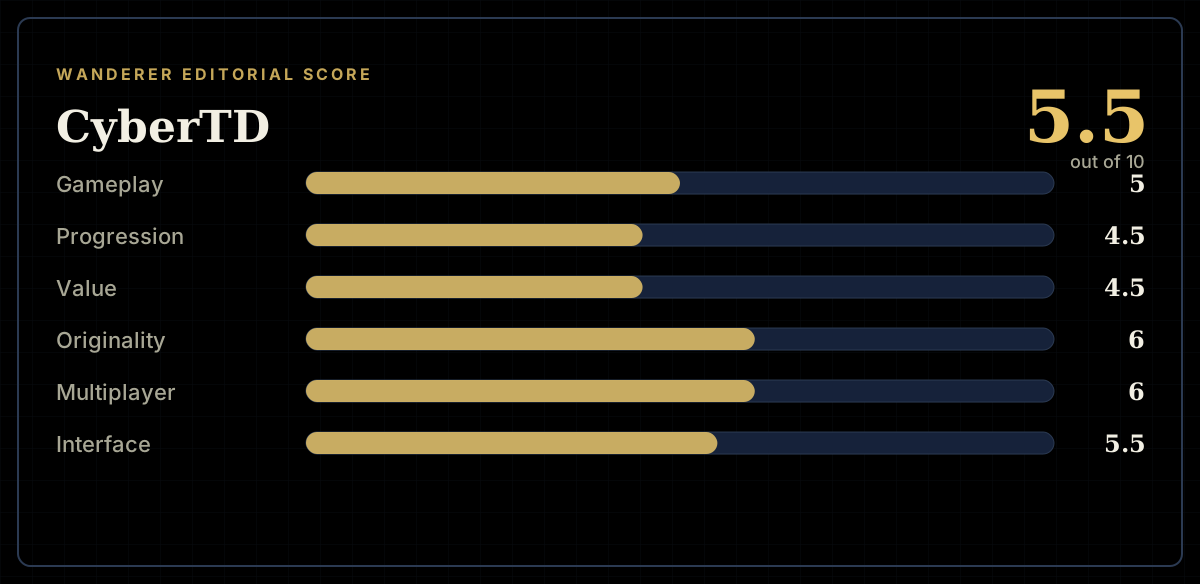
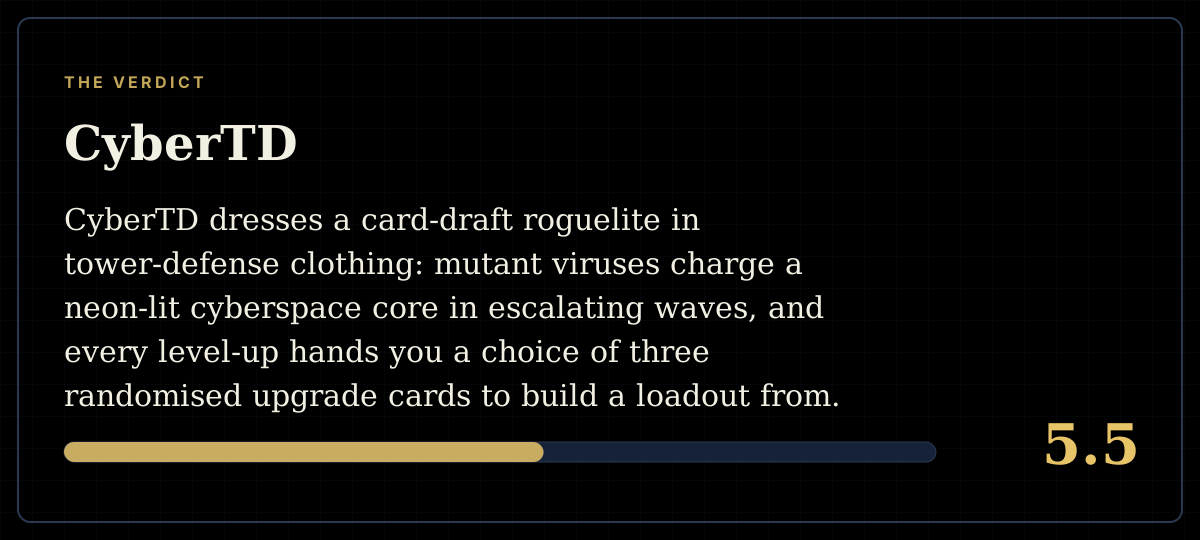
5.5 / 10
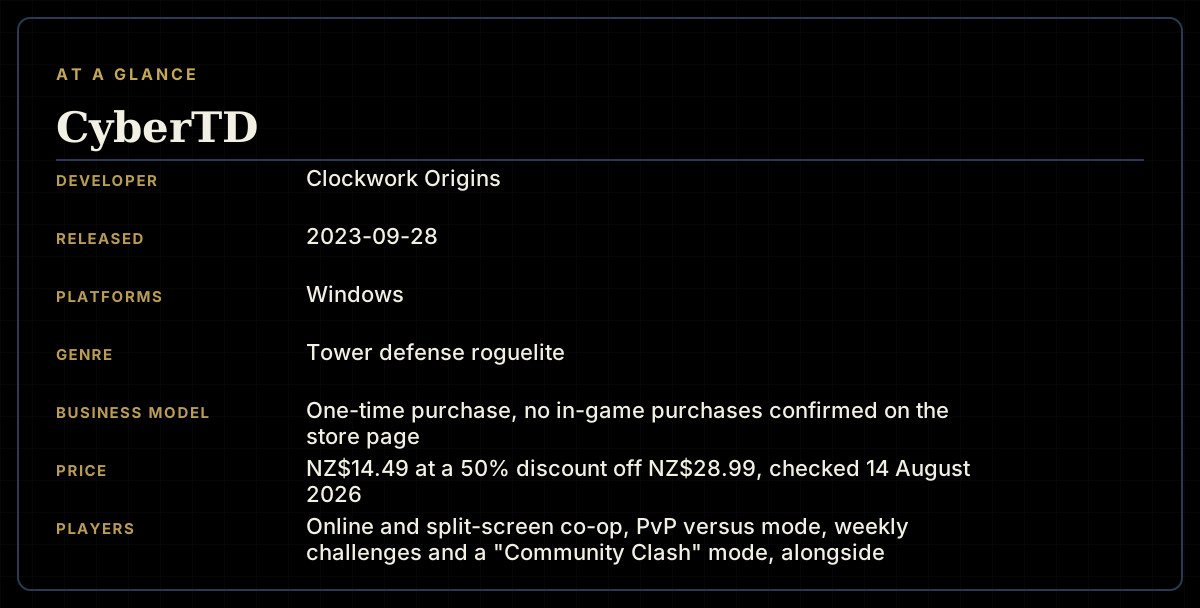
- Developer
- Clockwork Origins
- Publisher
- Clockwork Origins
- Released
- 28 September 2023
- Platforms
- Windows
- Genre
- Tower defense roguelite
- Monetisation
- One-time purchase, no in-game purchases confirmed on the store page
- Players
- Online and split-screen co-op, PvP versus mode, weekly challenges and a "Community Clash" mode, alongside single-player
The short version
CyberTD dresses a card-draft roguelite in tower-defense clothing: mutant viruses charge a neon-lit cyberspace core in escalating waves, and every level-up hands you a choice of three randomised upgrade cards to build a loadout from. It's a genuine, reasonably distinctive hybrid, with real co-op and versus multiplayer modes and forty-two achievements to chase. What sinks a lot of the goodwill is a decision at the centre of the design: there is exactly one tower, no maze to build, and nothing resembling the placement puzzle the genre is named for. Reviewers who came in expecting a tower-defense game, rather than a wave-survival deckbuilder wearing its aesthetic, are consistently the most disappointed, and several call the NZ$28.99 launch price steep for what's on offer even before that mismatch sets in.
Biggest strengths
- Genuine co-op and versus multiplayer modes alongside single-player, plus weekly challenges and a rotating "Community Clash" mode, unusually social for a small-scale tower-defense-adjacent release
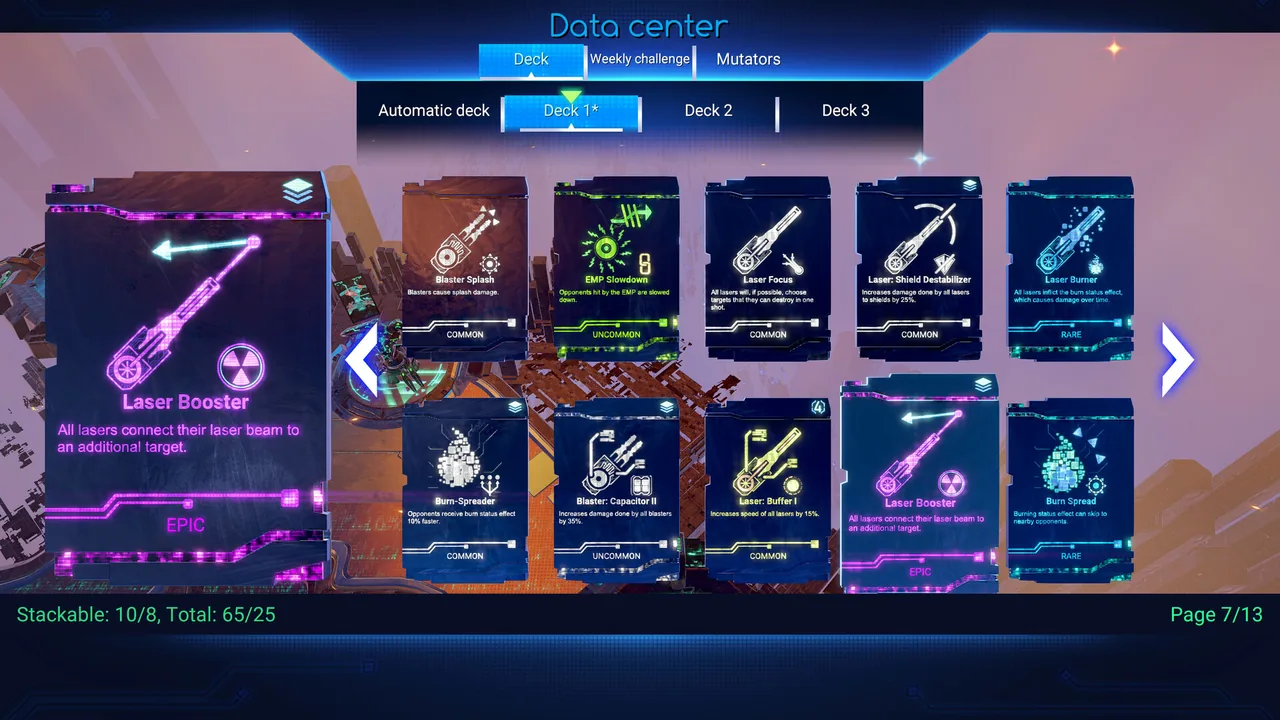
- A large, rarity-tiered card pool (Common through Epic) spread across a deep Data Center loadout screen gives real build variety between runs
- Forty-two Steam achievements and full controller support show a level of platform polish above the game's price point
Biggest weaknesses
- The game gives you exactly one tower and no ability to build a maze or influence enemy pathing, a fundamental departure from the genre it's marketed under that multiple reviewers call out as a bait-and-switch
- A recurring complaint describes upgrades as luck-and-playtime gated rather than skill-or-strategy gated — "the longer you play, the better upgrade chances you have" rather than meaningful tactical choice
- One detailed review reports damage-calculation and balance issues that flatten the difficulty curve later in the campaign, describing it as "seemingly intentional" rather than an obvious bug
Who it's for: Card-draft roguelite fans who don't mind the genre it's marketed as being a red herring, and players specifically looking for a co-op or versus wave-survival game with a cyberpunk skin. Traditional tower-defense fans expecting maze-building and tower placement should look elsewhere.
Our recommendation: Wait for a sale rather than paying full price — the 50% discount already on the store page is a reasonable entry point for what's a fairly thin single-tower, card-draft loop. Read the store description carefully before buying if the tower-defense genre tag is what's drawing you in; the actual design has more in common with a survivors-style upgrade draft than a classic TD.
5.5 / 10
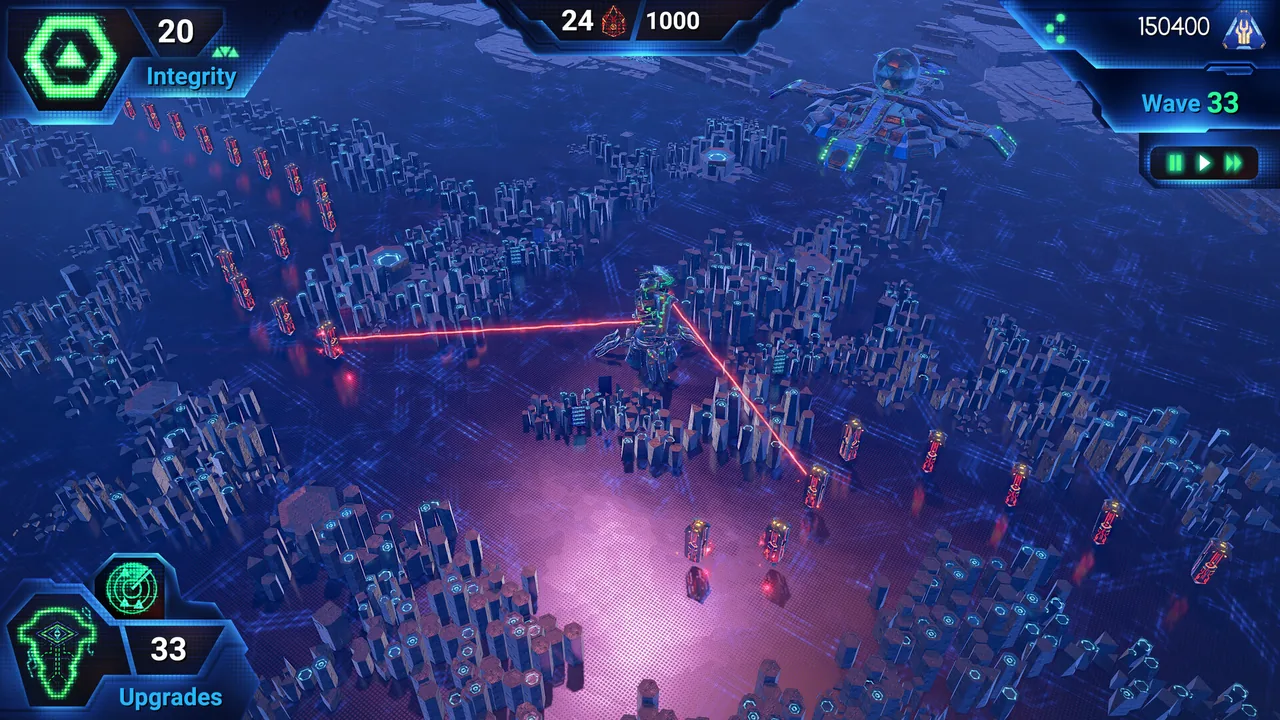
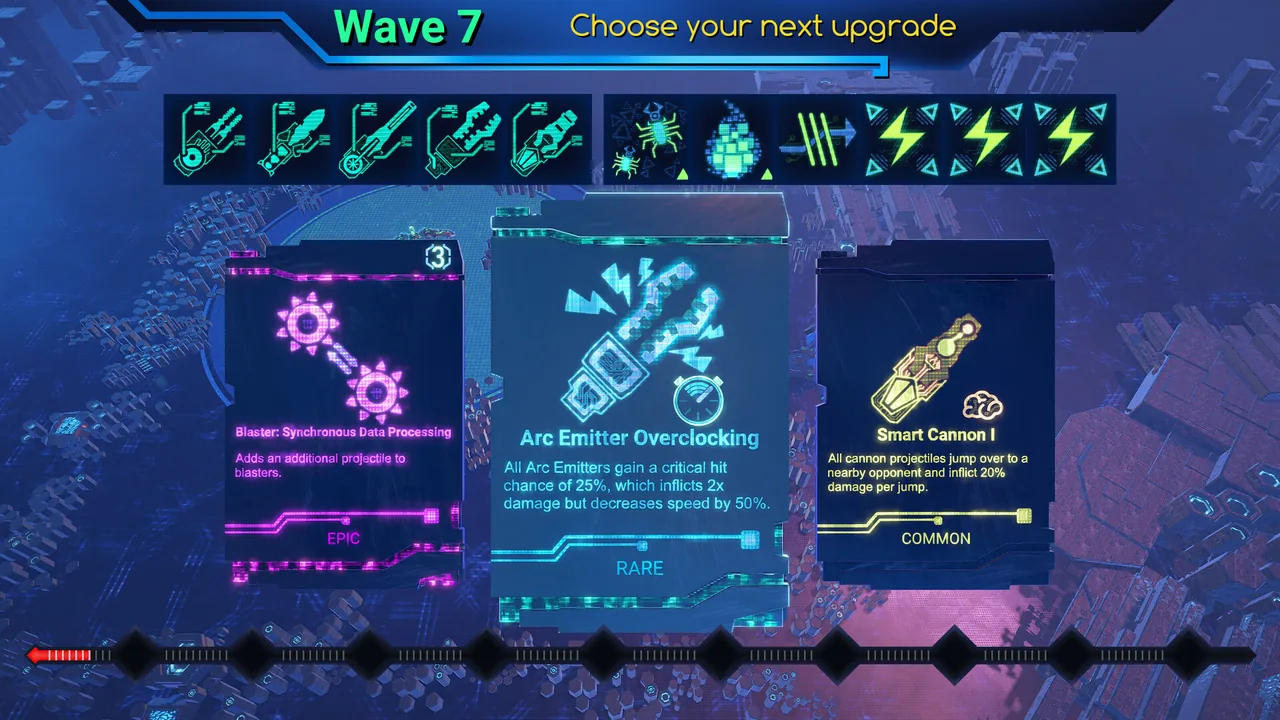
CyberTD's pitch is straightforward: mutant viruses are storming the core of cyberspace, wave after wave, and it's up to you and a "split-personality killer drone" to stop them with an escalating pile of upgrades. What that pitch doesn't make obvious — and what a consistent thread running through this game's negative reviews argues it should — is that "tower defense" is doing less work in that description than the genre name implies. There is one tower. You do not build a maze. You do not choose where enemies walk. The entire strategic layer sits in which of three randomised upgrade cards you draft at each wave, not in placement or pathing, and reviewers who arrived expecting the genre's usual spatial puzzle are consistently the ones who walk away most frustrated.
One tower, a deep card pool, and a real disagreement about what that means
To be fair to the design, CyberTD commits to its choice rather than half-heartedly bolting a card system onto a conventional TD skeleton. The Data Center screen, shown in the promotional screenshots, holds a genuinely large pool of rarity-tiered cards — Common, Uncommon, Rare, Epic — spread across thirteen pages of loadout options, organised into deck slots you can build and swap between runs. That's real structural depth for a roguelite deckbuilder, and it's the part of the game that draws the most consistent praise: reviewers who accept it on its own terms describe genuine build variety and a satisfying escalation as blasters, lasers and elemental status effects stack together.
The trouble is the disagreement about what genre that adds up to. One detailed negative review lays out the case plainly: "we learn up front that we only got 1 Tower and can't really influence the Maze... every single gun pretty much does and feels exactly the same." Another, even blunter, calls it "by far the worst tower defense" the reviewer has played specifically because of the missing placement layer, and argues the genre's core skill — reading a map and building a chokepoint — simply isn't present here. Whether that's a fair complaint depends entirely on what a buyer expected walking in, but it's not a minority position in the review corpus, and it's the single most repeated criticism across the negative reviews this review read in full.
Luck, grind, and a reported balance flatline
A second, related complaint concerns how upgrades are earned rather than what they do. Multiple reviewers describe the game as effectively a playtime-and-luck system rather than a skill-based one — "you can only do better at by playing longer... luck and playtime based, not skill or strategy based," in the words of the most-upvoted negative review. That's a real design tension for a game built around random card draws: without deliberate mitigation tools like rerolls or targeted removal, a draft-based upgrade system tends to reward time invested over decisions made, and several reviewers report exactly that pattern here.
More concerning is a detailed technical complaint from a reviewer with over 2,000 minutes logged, who reports finding "something odd" with the damage calculation specifically — describing later campaign difficulty as barely distinguishable from earlier waves despite theoretically stronger enemies, and calling the imbalance "seemingly intentional" rather than an obvious bug. That's a single detailed account rather than a broad pattern in this review's much smaller sample, but it's worth flagging precisely because it's specific and hard to dismiss as generic frustration — a flattened difficulty curve would explain why several other reviewers separately describe the mid-to-late game as repetitive rather than escalating.
Real multiplayer, real post-launch support, and a live question about the team's focus
Set against those complaints, CyberTD does deliver features that plenty of games at this price point skip entirely. Co-op and versus multiplayer are both real, functioning modes rather than marketing bullet points, weekly challenges rotate for players who've cleared the base content, and a "Community Clash" mode adds a shared social hook. Forty-two Steam achievements and full controller support round out a genuinely well-supported platform presence.
One August 2024 review claims the development team "gave up the game shortly after release" to focus on other projects, attributed to conversations on the developer's Discord. That's worth treating carefully rather than repeating as settled fact: Steam's own news feed for this app shows a content update as recently as September 2025 — CyberTD 1.4.0 — nearly two years after launch, alongside two substantial content updates in the first three months post-release. The honest read is that support slowed considerably after an active first few months, which is a normal trajectory for a small studio's release, not that the game was abandoned outright.
Final verdict
CyberTD is a competently made, visually polished card-draft roguelite that happens to be sold under a genre name it only partially earns — real tower-defense fans expecting to build a maze and place towers will find exactly one tower and no maze at all, and that mismatch is the single loudest complaint in its review history. Underneath that framing issue sits a real, if luck-leaning, upgrade system with genuine co-op and versus multiplayer, weekly challenges, and continued support well past its first year. At full price several reviewers reasonably call it feature-starved for a nearly NZ$30 ask; at the 50% discount already sitting on the store page, it's a fairer trade for players who go in understanding what kind of game they're actually buying.
Pros and cons
Pros
- Genuine co-op and versus multiplayer modes alongside single-player, plus weekly challenges and a rotating "Community Clash" mode, unusually social for a small-scale tower-defense-adjacent release
- A large, rarity-tiered card pool (Common through Epic) spread across a deep Data Center loadout screen gives real build variety between runs
- Forty-two Steam achievements and full controller support show a level of platform polish above the game's price point
- Clean, legible sci-fi presentation — the wave map, HUD and card-draft screens are visually coherent and professionally produced
- Post-launch support continued well past release, with a content update as recently as September 2025, two years after launch
Cons
- The game gives you exactly one tower and no ability to build a maze or influence enemy pathing, a fundamental departure from the genre it's marketed under that multiple reviewers call out as a bait-and-switch
- A recurring complaint describes upgrades as luck-and-playtime gated rather than skill-or-strategy gated — "the longer you play, the better upgrade chances you have" rather than meaningful tactical choice
- One detailed review reports damage-calculation and balance issues that flatten the difficulty curve later in the campaign, describing it as "seemingly intentional" rather than an obvious bug
- Versus mode is described by one reviewer as "not even a versus mode," more a race to see who survives longer than direct competition
- At the full NZ$28.99 launch price, several reviewers call the amount of content feature-starved for the asking price, comparing it unfavourably to free browser-tower-defense games
Screenshots
-
CyberTDImage: Clockwork Origins via Steam -
CyberTDImage: Clockwork Origins via Steam -
CyberTDImage: Clockwork Origins via Steam -
How the review scores each part of the gameWanderer Editorial -
The game at a glanceWanderer Editorial -
The short versionWanderer Editorial