
Game review
Depth of Mind Review
7.4 / 10
- Developer
- FunB4nan
- Publisher
- FunB4nan
- Released
- 14 September 2026
- Platforms
- ["Windows"]
- Genre
- RPG
Descending Through Someone Else's Mind
Depth of Mind opens with a warning worth taking seriously: this is a roguelite about a depressed man's inner world, and it doesn't soften the heavier themes it explores, including suicide. Rather than fighting monsters in a dungeon, you're descending through layers of consciousness, assembling a team of "mental operatives" to confront fears, distorted personality fragments, and ideas given combat stats. It's a striking premise, and what's more striking still is that it's the work of a single solo developer, FunB4nan, who's apparently been personally responding to player emails since launch — the kind of hands-on care that shows in how coherent the whole thing feels despite its small scale and $4.79 price tag.
The framing device is simple but effective: you explore a main room that visually fills in with new objects and details as you progress through runs, rendered in a striking style that several players compared to chalk drawings on a blackboard. Between runs, lore cutscenes fill in pieces of the story without ever directly interrupting the gameplay loop itself, which lets the narrative build at its own pace rather than forcing you to sit through exposition mid-run.
A JRPG-Flavored Deckbuilder With Real Depth to Its Builds
Mechanically, Depth of Mind sits closer to a turn-based JRPG party manager than a pure deckbuilder, despite the genre tags. You assign actions to individual team members rather than drawing from a shared deck, attach up to three "chips" per character for passive effects, and unlock new party members as runs progress. Turn order matters enough to reward planning — your team always acts before the enemy, and you can freely reposition characters to control which of your actions lands first, which becomes an important tool for avoiding incoming damage rather than just maximizing your own output.
Enemies are themed around specific mental disorders, which does double duty as thematic reinforcement and as a genuinely useful gameplay signal — recognizing an enemy type gives you a rough read on how it'll behave, turning encounter design into a small puzzle rather than a pure stat check. Build variety is a clear strength: players have found viable poison builds, defensive "thorn" teams built around blocking and counters, and aggressive damage-stacking strategies, all supported by synergies between actions, chips, and the relics you collect along the way. For a $4.79 solo-developer game, the sheer number of viable directions a run can take is genuinely impressive.
That said, balance is the game's clearest weak point. At least one specific chip effect was singled out by multiple players as dramatically overtuned — a permanent stat-growth effect tied to defeating smaller enemies that, once acquired early, can snowball a character into an unkillable win condition well before other builds even come online. It doesn't ruin the game, since that chip isn't guaranteed to appear in a given run, but its existence does mean some runs can devolve into hunting for one specific power spike rather than engaging with the wider systems on offer. A patch or two of numbers tuning would go a long way toward making every run feel like it's testing your build-crafting rather than your luck.
Heavy Themes, Handled With Care
What sets Depth of Mind apart from a crowded roguelite-deckbuilder market isn't its mechanics, solid as they are, but its willingness to sit with genuinely difficult material without turning it into shock value. Players consistently noted that the heavier beats land hard specifically because the game doesn't dwell on them constantly — the lore cutscenes are sparse and purposeful rather than a constant stream of misery, which makes the moments that do hit feel earned rather than exploitative. It's a tricky balance for any game to strike, let alone one built by a single person on a shoestring budget, and by most accounts it succeeds.
The game isn't without rough edges beyond its balance issues, though. A handful of players found the ending unclear, without a strong sense of finality even after apparently completing every act, and had to rely on an in-game quest tracker to confirm their progress rather than getting a clean, satisfying close. There's also a small but genuinely charming vein of hidden detail-hunting running through the game — multiple players mentioned discovering small easter eggs, like a specific photo tucked away in an in-game recycling bin, that reward the kind of curious exploration the main room encourages.
A Tiny, Thoughtful Roguelite That Deserves More Eyes on It
At under five dollars, Depth of Mind is an easy recommendation on value alone, and the fact that it launched to a relatively quiet reception despite a strong 88 percent positive rating feels more like a timing and visibility problem than a reflection of the game's quality. A daily-run leaderboard is in place for players chasing more structured competition, though with the game's small player base so far, don't expect it to be especially populated. If the heavy subject matter is something you can engage with comfortably, there's a genuinely well-crafted, mechanically dense roguelite here that punches well above its price point.
It won't be for everyone — the dark themes are a real barrier for some players by design, and the balance issues mean min-maxers chasing the "correct" build will occasionally find the path of least resistance a little too obvious. But for players looking for a roguelite with something real to say, built with evident care by one person, Depth of Mind is well worth the handful of hours it takes to see through.
Verdict
Depth of Mind pairs a JRPG-flavored deckbuilding loop with a genuinely thoughtful, carefully handled psychological framing, delivering real build variety and emotional weight for a shoestring price. A few overtuned chip synergies and an unclear sense of when a run — or the whole game — is actually finished keep it from greatness, but this is a striking, personal roguelite from a solo developer that deserves far more attention than it's gotten.
Pros:
- Genuinely striking, personal premise handled with real care around heavy subject matter
- Deep build variety across chips, actions, and relics for a $4.79 game
- Distinctive chalk-drawing-style presentation that evolves as you progress
- Enemy design themed around specific mental disorders that doubles as useful gameplay information
- Excellent value with a responsive solo developer actively supporting the game
Cons:
- At least one chip synergy is significantly overtuned relative to the rest of the build options
- No clear sense of a definitive ending, even after completing all visible acts
- Runs can become a hunt for a specific power spike rather than engaging with the wider systems
- Small early player base makes the daily leaderboard feel sparsely populated
- Dark themes around depression and suicide are a real barrier for some players by design
Screenshots
-
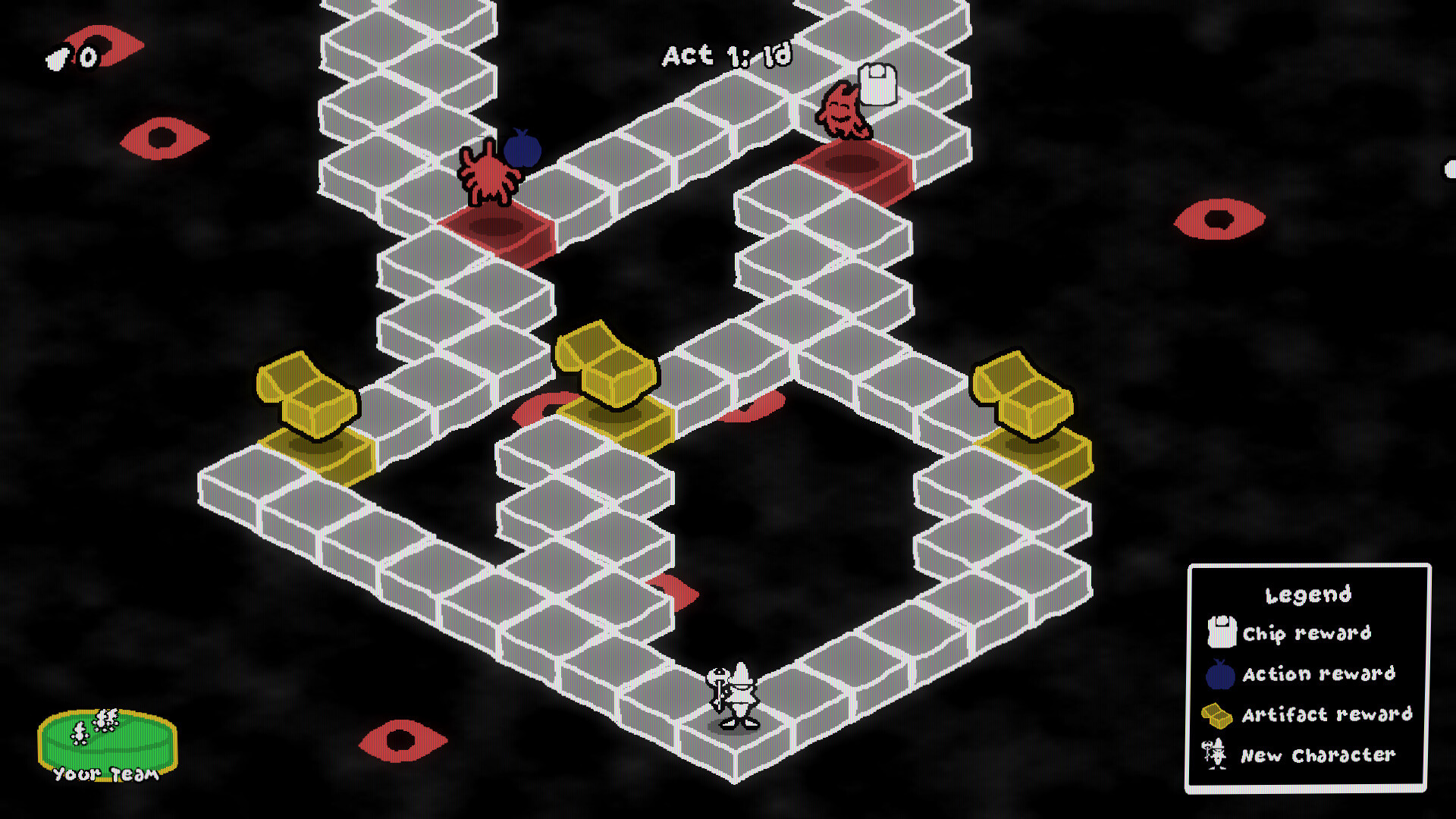
The branching layer map, with chip, action, and artifact rewards markedImage: FunB4nan -
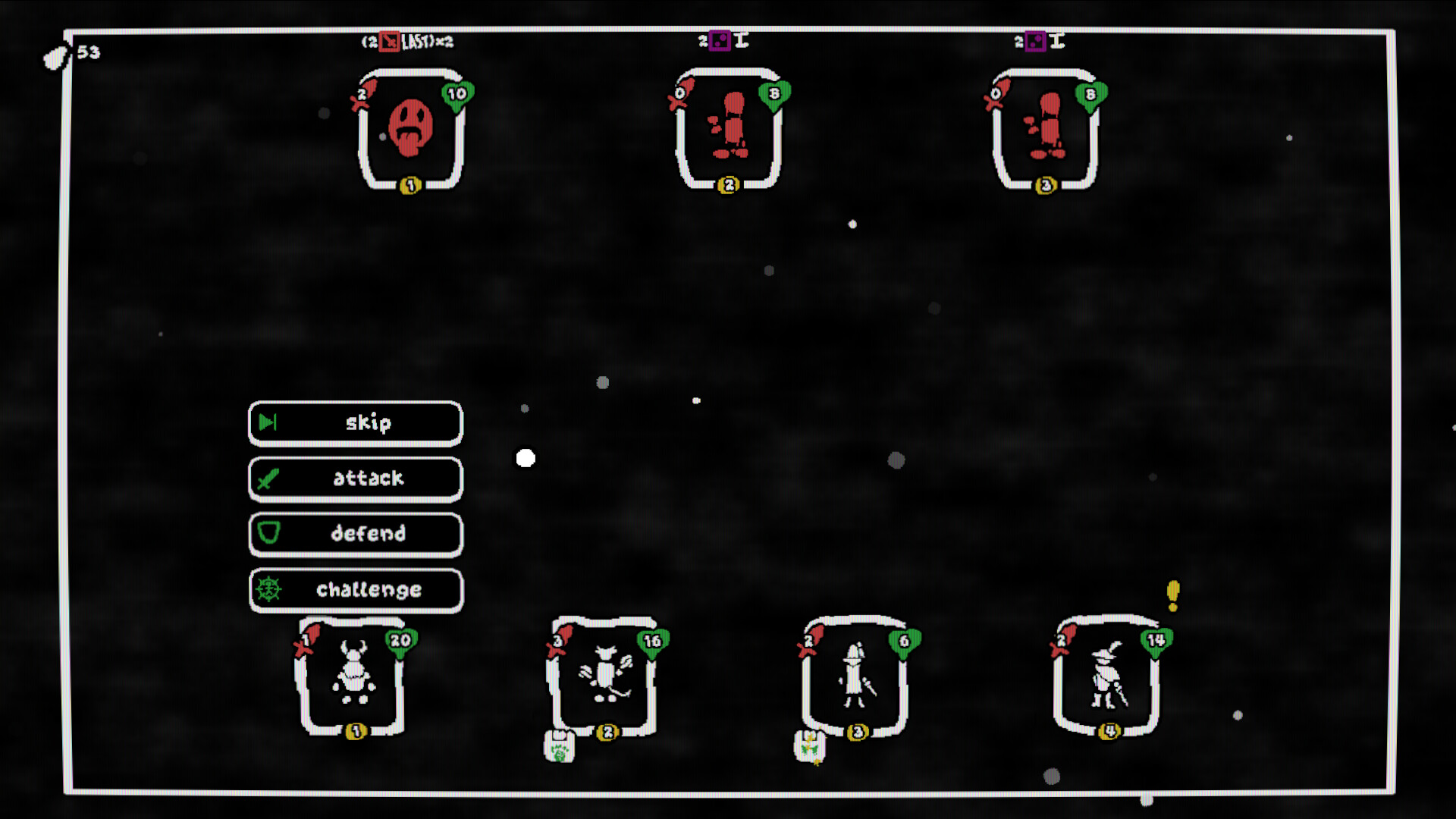
A turn-based encounter with the full four-member partyImage: FunB4nan -
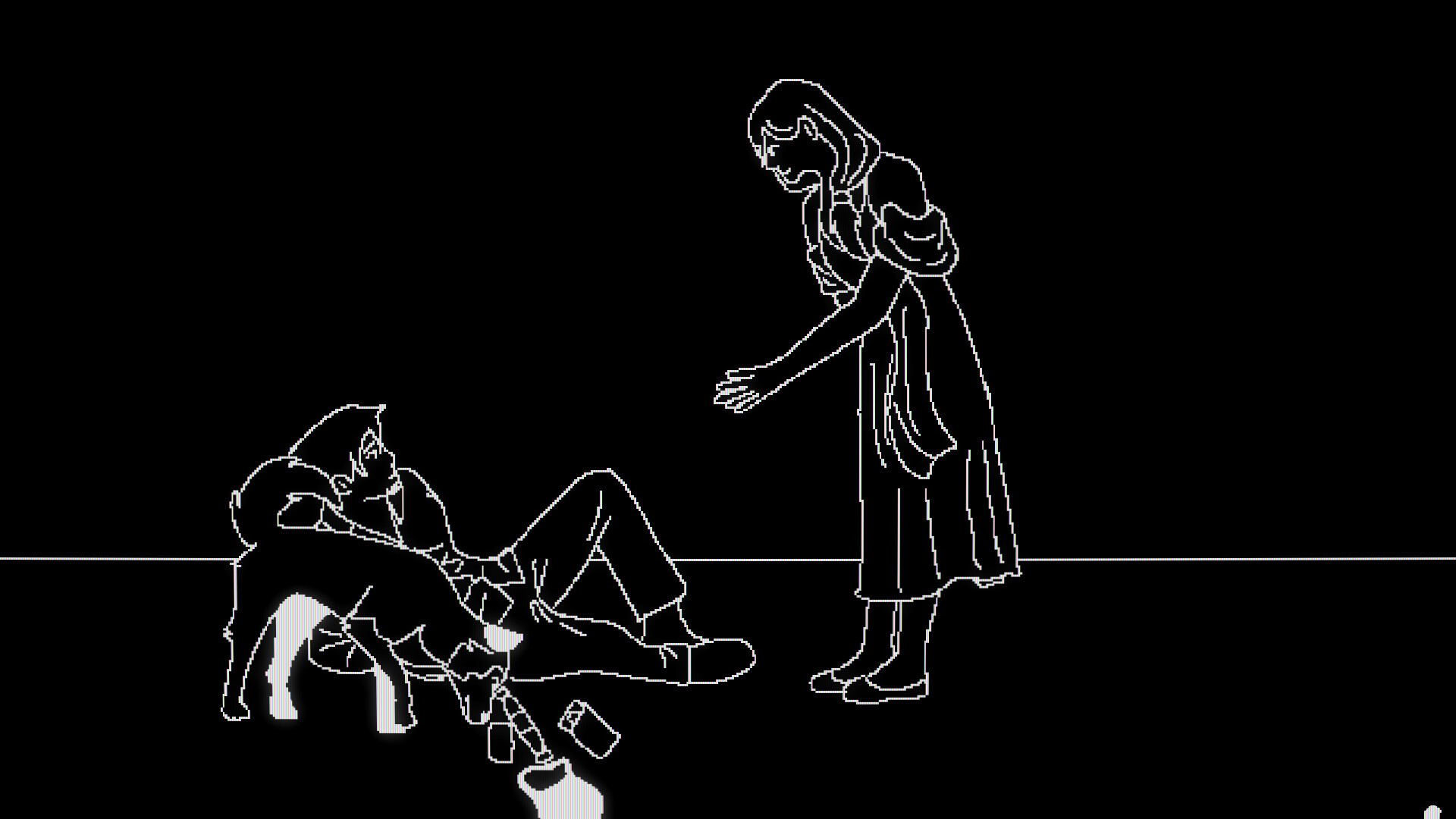
One of the game's chalk-drawing-style story cutscenesImage: FunB4nan -
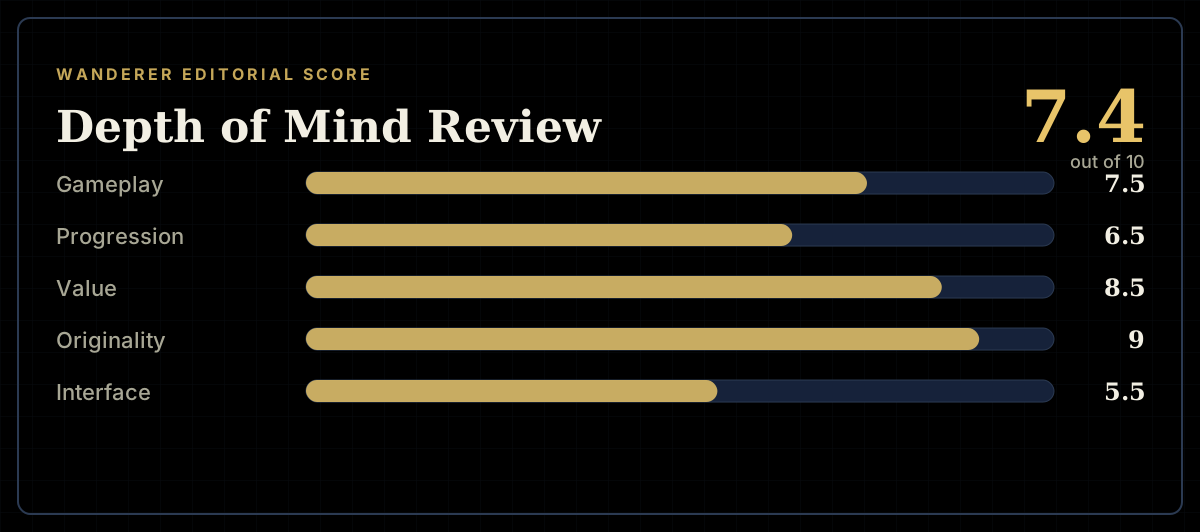
How the review scores each part of the gameWanderer Editorial -
The short versionWanderer Editorial