
Game review
Heroes of Magic and Steel Review
8 / 10
- Developer
- Gaister Studios
- Publisher
- Farmando XP
- Released
- 28 May 2026
- Platforms
- ["Windows"]
- Genre
- Strategy
A Hex-Grid Deckbuilder Built Around Committing to Every Card
Heroes of Magic and Steel is a tactical deckbuilder from Gaister Studios that trades the single-avatar structure of Slay the Spire-style roguelites for a full three-hero party, fought out across hexagonal battle grids rather than a simple lane of enemies. Rather than reshuffling a deck round after round, the game's core mode strips out card cycling entirely: every card played is gone for the rest of the run, permanently spent rather than recycled back into the draw pile. That single rule reframes the entire deckbuilding loop — a card isn't a repeatable tool to lean on, but a one-time resource to be committed at the right moment, and the game explicitly frames this as forcing players to "think ahead from the very first battle" rather than optimise loops turn after turn. Players who prefer a faster, more forgiving pace aren't locked out of that decision entirely: an alternative mode with traditional card cycling is available alongside the no-recycling default, letting the harder commitment-based ruleset stay optional rather than mandatory.
Three Heroes, One Team, and a Hex Grid That Rewards Positioning
Where many deckbuilders hand the player a single character and a single deck, Heroes of Magic and Steel is built around fielding three heroes per run and combining their individual card pools into a single shared strategy. Reviews consistently single this team-composition layer out as the game's strongest hook: one reviewer who tried three different hero combinations across two full runs — one in the demo, one in the finished game — praised how "the heroes all feel different and have their own strengths and weaknesses," while another wrote that "team composition changes the way you play" so thoroughly that they lost two hours to the game without noticing. That layered structure — building a deck for an individual hero, then layering three of those decks together into one coherent team strategy across a hex-gridded battlefield — is what separates the game from a more conventional single-character deckbuilder, and it's the reason several reviewers who describe themselves as not normally into the genre call the game "quite addictive" or "amazing" regardless.
The hex grid itself adds a positioning layer that a straight lane-based deckbuilder wouldn't have: enemy factions are built to punish different approaches, with the store page describing factions that "overwhelm you with numbers," others that "punish positioning mistakes," and others still that "pressure your hand and deck to create tough turns," meaning no single team comp or card strategy carries a player through every run unmodified. Reviews back this up in practice, describing runs that reward adapting hero picks and card priorities to whichever faction shows up rather than executing one memorised, always-correct build.
A Comic-Style Story Between Fights, Not Just a Ladder of Battles
Between battles, Heroes of Magic and Steel tells its story through illustrated, comic-style panels rather than plain text or voiced cutscenes, giving the run-based structure a framing narrative rather than leaving it as a pure mechanical ladder. Reviews consistently praise the art direction that carries this narrative layer, with players calling the artwork and character design a reason they "fell in love" with the game on first install, and one longtime deckbuilder fan writing that "it's been years since I have played a card game as fun as this one," specifically citing the game's soundtrack alongside its strategic depth. Not every reaction to the visual style has been positive — one negative review dismissed the character designs as "seriously lame" and said they "look like furries" — but that critique is an outlier against a broader, consistent chorus of reviews praising the presentation, and it reads as a matter of personal taste in character design rather than a shared complaint about quality or polish.
Permanent Upgrades Give Failed Runs Lasting Value
As a roguelite, individual runs in Heroes of Magic and Steel are expected to end — the store page and reviews both describe reaching a final boss without necessarily beating it as a normal, even satisfying outcome for an early run — but progress carries forward through permanent upgrades to cards and heroes between attempts. That meta-progression layer is what several reviews credit for the game's addictive replay loop: one player wrote that "continuous upgrade style encourages experimentation with the various characters," turning failed runs into groundwork for stronger future ones rather than wasted time. Reviews also note the game offers a playable demo, and more than one review explicitly credits trying that demo first as what convinced them to buy the full release — a reasonable path for anyone still deciding whether the no-recycling ruleset and hex-grid team management will click for them.
A Full-Price Roguelite With No Live-Service Trappings
At NZ$30.99 (currently discounted 30% to NZ$21.69), Heroes of Magic and Steel is priced and structured as a complete, single-player roguelite rather than a free-to-play or seasonal live-service product — there's no premium currency, gacha card acquisition or energy system mentioned anywhere in the reviews sampled, and Steam Achievements and Cloud saves round out a straightforwardly traditional release. That's a notably clean monetisation profile for a deckbuilding genre that, on mobile especially, leans heavily on booster-pack microtransactions, and it means the permanent-upgrade progression system reviews praise is earned entirely through play rather than gated behind spending.
Verdict
Heroes of Magic and Steel earns its Very Positive Steam standing by taking a familiar deckbuilding-roguelite skeleton and reworking two of its core assumptions — a single hero becomes a three-hero team, and a recyclable deck becomes a one-shot resource — without losing the genre's addictive replay loop in the process. The hex-grid positioning and faction variety keep runs from collapsing into one repeatable solution, and the comic-style narrative and character-focused art give the run-based structure a framing rarely found in the genre. Character-design taste won't land for everyone, and the reviewer pool is still modest at just over fifty reviews, but for deckbuilder and tactics fans looking for something that changes the genre's core rules rather than reskinning them, this is a strong, fairly priced pick.
Screenshots
-
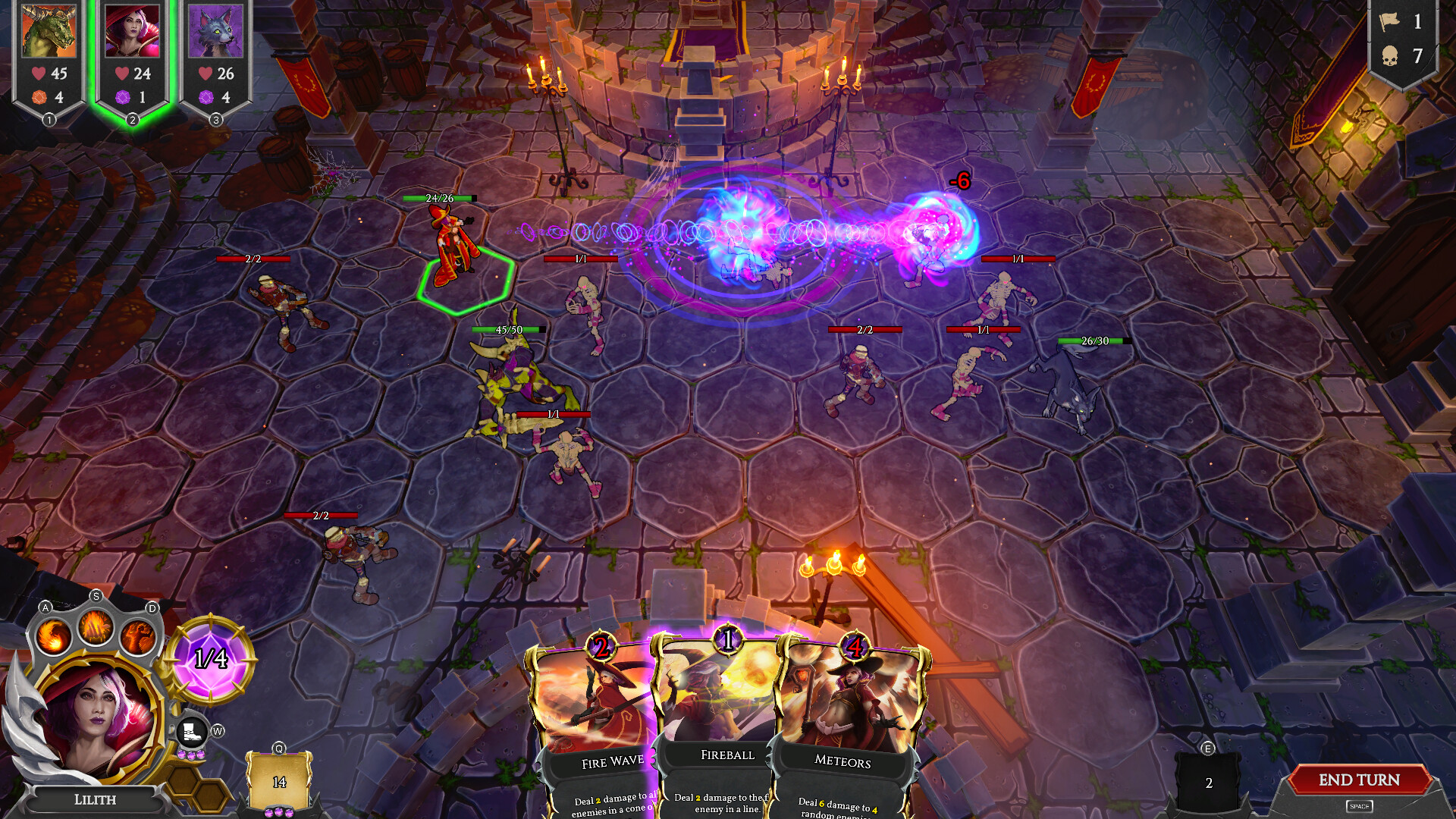
A mage's fire spells light up a hex-gridded battlefield crowded with skeletons and goblinsImage: Gaister Studios via Steam -
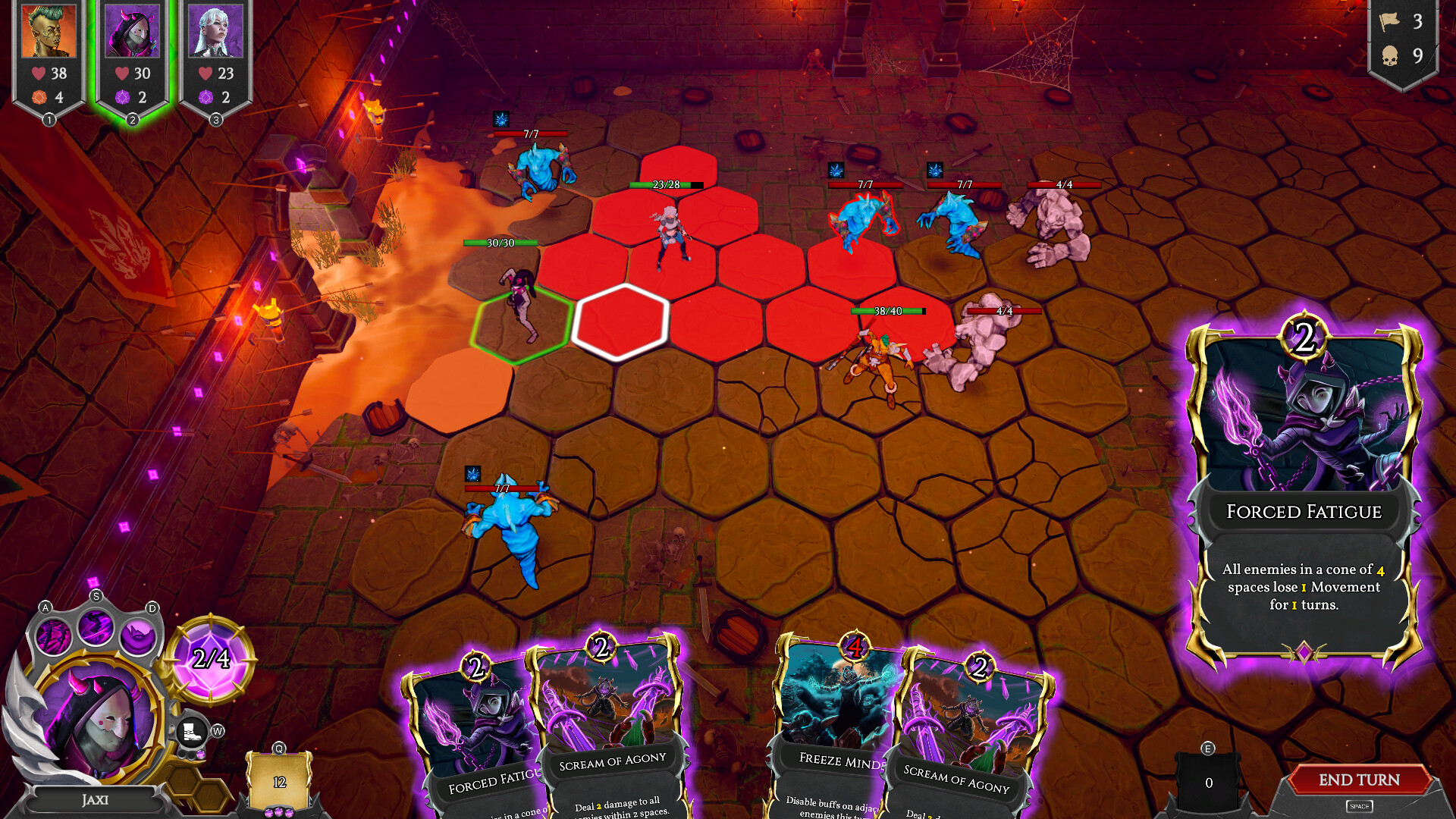
Positioning and card choice both matter — red hexes mark an incoming enemy attack zoneImage: Gaister Studios via Steam -
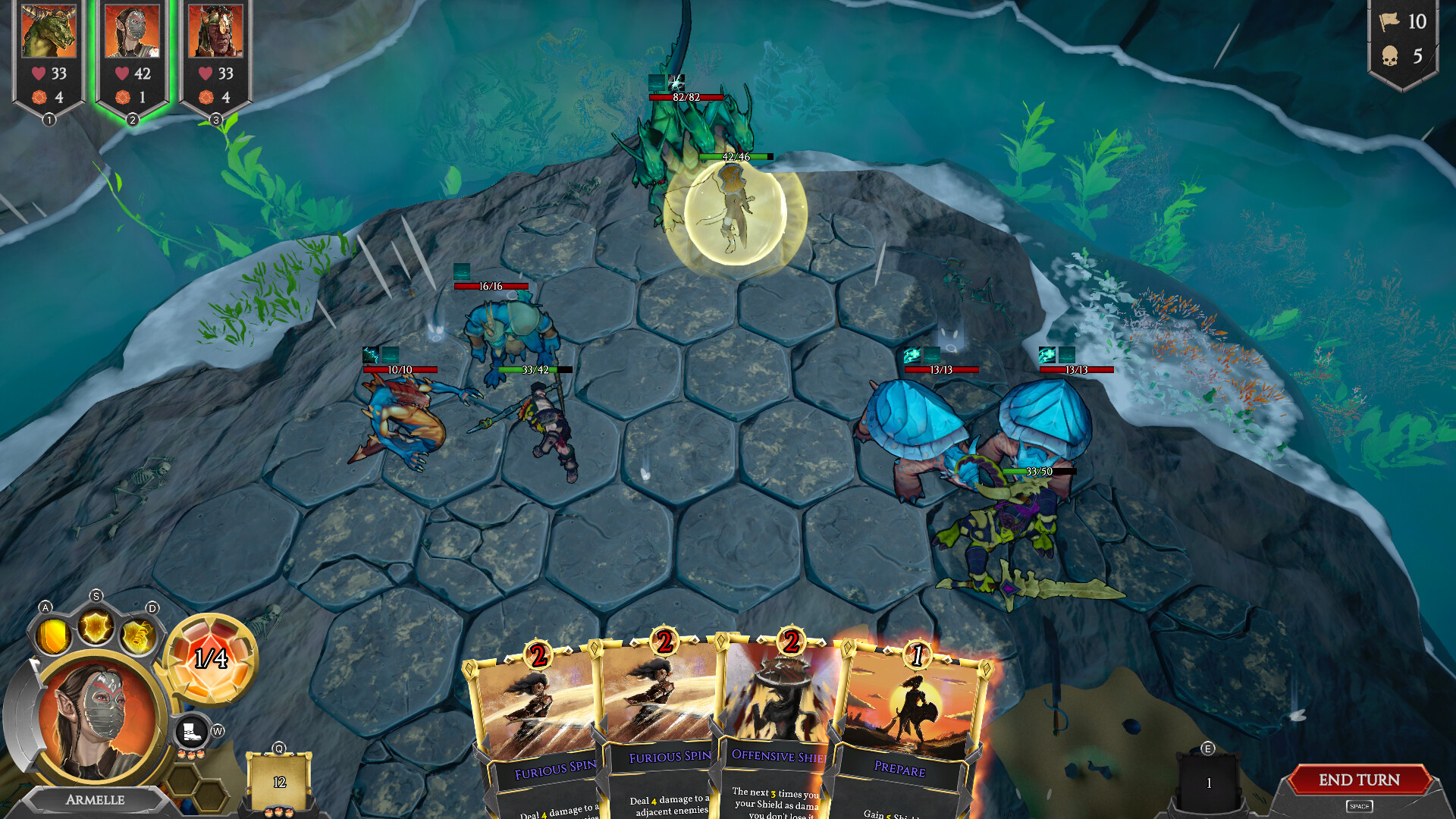
A late-run boss encounter against a dragon, backed up by turtle-shelled enemiesImage: Gaister Studios via Steam