
Game review
Conjurers Review
7.5 / 10
- Developer
- Carl Treadway
- Publisher
- indie.io
- Released
- 28 July 2026
- Platforms
- ["Windows"]
- Genre
- Strategy
A Turn-Based Tactics Game Where the Zodiac Is Your Army
Conjurers casts the player as one of eight rival Conjurers, each bound to a distinct creature type, fighting to claim control of a fantasy Zodiac before challenging an endgame boss called the Immortal Aquarius. One reviewer summed up the pitch neatly as "a unique tactical RPG/deck builder hybrid with monster-collector elements mixed in," and that hybrid framing runs through every system: victories don't just clear a level, they tear a defeated Conjurer's creatures from their command and fold them permanently into the player's own growing deck. It's a structure that rewards the kind of patient, cumulative strategy-building the genre's fans look for, built solo by developer Carl Treadway and published through indie.io.
Terrain, Positioning, and a Deck That Grows Through Conquest
Combat plays out on grid battlefields where terrain is an active participant rather than backdrop — high ground, hazards, and battlefield layout all affect the power, movement, and utility of the roughly 60 animated creatures spread across eight creature types (Humans, Prowlers, Hoofed Beasts, Winged Beasts, Lizards, Serpents, and Polypods). The signature system is hybridisation: combining creature types produces named fusions, so a Hoofed-Human becomes a Minotaur, a Polypod-Prowler forms a Manticore, and a Winged-Lizard gives rise to a Dragon. One reviewer called the pacing "open-ended and forgiving, with the ability to grind and sideboard your deck constantly," and noted the game "mixes colorful sprites with sketchbook-style bestiary entries and short story scenes, giving an element of implicit worldbuilding rather than in-depth storytelling" — praise echoed by another player who specifically recommended reading the creature descriptions and called the strategic depth "incredibly deep."
A Fair but Forgiving AI, With Scalable Difficulty
Conjurers ships with a graduated AI difficulty curve rather than a single fixed opponent, ranging from a Level 1 AI that "plays simply and attacks directly" up to a Level 5 that "considers every card, creature, and order of play." One detailed review credited the design with playing fair but flagged that fairness as a double-edged sword, writing that "the AI seems to play fair, which does limit the overall difficulty somewhat" — a fair-but-gentle opponent that suits players who want room to experiment with hybrid builds without being punished early, though it may leave veteran tactics players wanting the higher AI tiers to bite harder. The same reviewer praised the game as "light-weight" and "decently polished for a solo indie game with a unique charm," and noted it "actually works well with a gamepad" alongside "some nice retro midi music." Beyond the scalable AI, the developer also built in three dedicated boss battles specifically designed, per the store page, "to punish poor positioning and careless deckbuilding" — a deliberate difficulty spike aimed at players who've grown comfortable against the standard AI tiers and need a sharper test of whether their hybrid deck actually holds together under pressure.
Tooltips and Onboarding: The Sharpest Complaint
Not every reaction was positive. The most critical review in the sample focused squarely on the game's interface and onboarding, writing that Conjurers "lacks a lot of tooltips and just generally feels clunky," and comparing it unfavourably to established tactics-RPG touchstones like Fire Emblem, Nephilim Saga, and Vesteria Saga without finding the same hook. That reviewer bought the game on sale and still didn't feel it was worth the price for them — a useful counterweight to the otherwise strongly positive sample, and a signal that Conjurers' 10-minute guided tutorial may not fully bridge the gap for players expecting a more heavily annotated interface out of the box. It's worth noting the developer does provide a guided tutorial and in-game tooltips intended to teach the rules in about 10 minutes, so the complaint appears to be about depth of on-screen guidance during actual combat once players move past that opening tutorial, rather than a total absence of onboarding.
A Single Upfront Price for a Deep, Replayable Tactics Game
At NZ$17.99 with no discount at the time of writing, Conjurers is priced as a one-time purchase with no monetisation layer of any kind — no loot boxes, subscriptions, or paid content beyond the base game. It also ships with a genuinely broad accessibility toolkit for a solo-developed release, including full controller support (with dedicated DualShock and DualSense support), a keyboard-only option, a mouse-only option, adjustable text size, colour alternatives, and support for play without timed input, alongside Steam Cloud saves, achievements, leaderboards, and an included level editor. For a tactics game built around long-term deckbuilding and creature collection, that combination of a fair price and a persistent, save-anywhere structure makes it easy to dip in and out across long play sessions. Conjurers also supports online PvP alongside its single-player campaign against the Zodiac's rival Conjurers, and includes Steam Leaderboards, giving the hybridisation-focused deckbuilding an additional, longer-term competitive outlet once a player has built up a full roster of fused creatures.
Verdict
Conjurers delivers a genuinely distinctive turn-based tactics game, wrapping deckbuilding and monster-collector hybridisation around classic grid combat in a way reviewers consistently describe as deep and charming, with terrain-driven positioning and a scalable AI that rewards long-term mastery. Its rough edge is the interface — tooltip coverage that at least one player found clunky enough to sour an otherwise interesting premise — but for tactics and deckbuilder fans willing to push through a learning curve, the fair asking price, extensive accessibility options, and a 60-creature Zodiac worth mastering make it a strong pick within the fantasy strategy space.
Screenshots
-
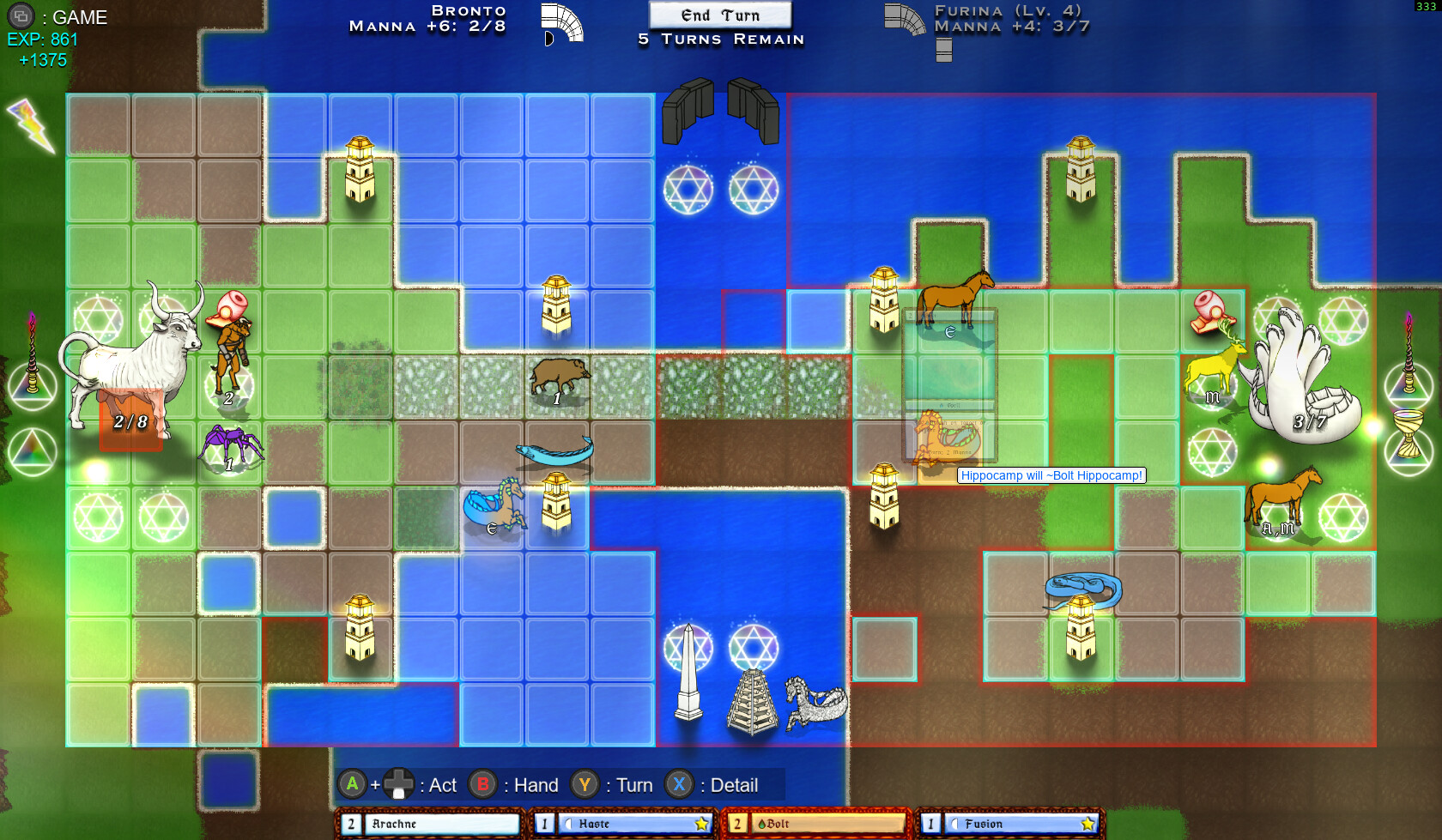
Combat plays out on terrain-driven grid maps, with towers, water, and zodiac sigils affecting how creatures can move and actImage: indie.io via Steam -
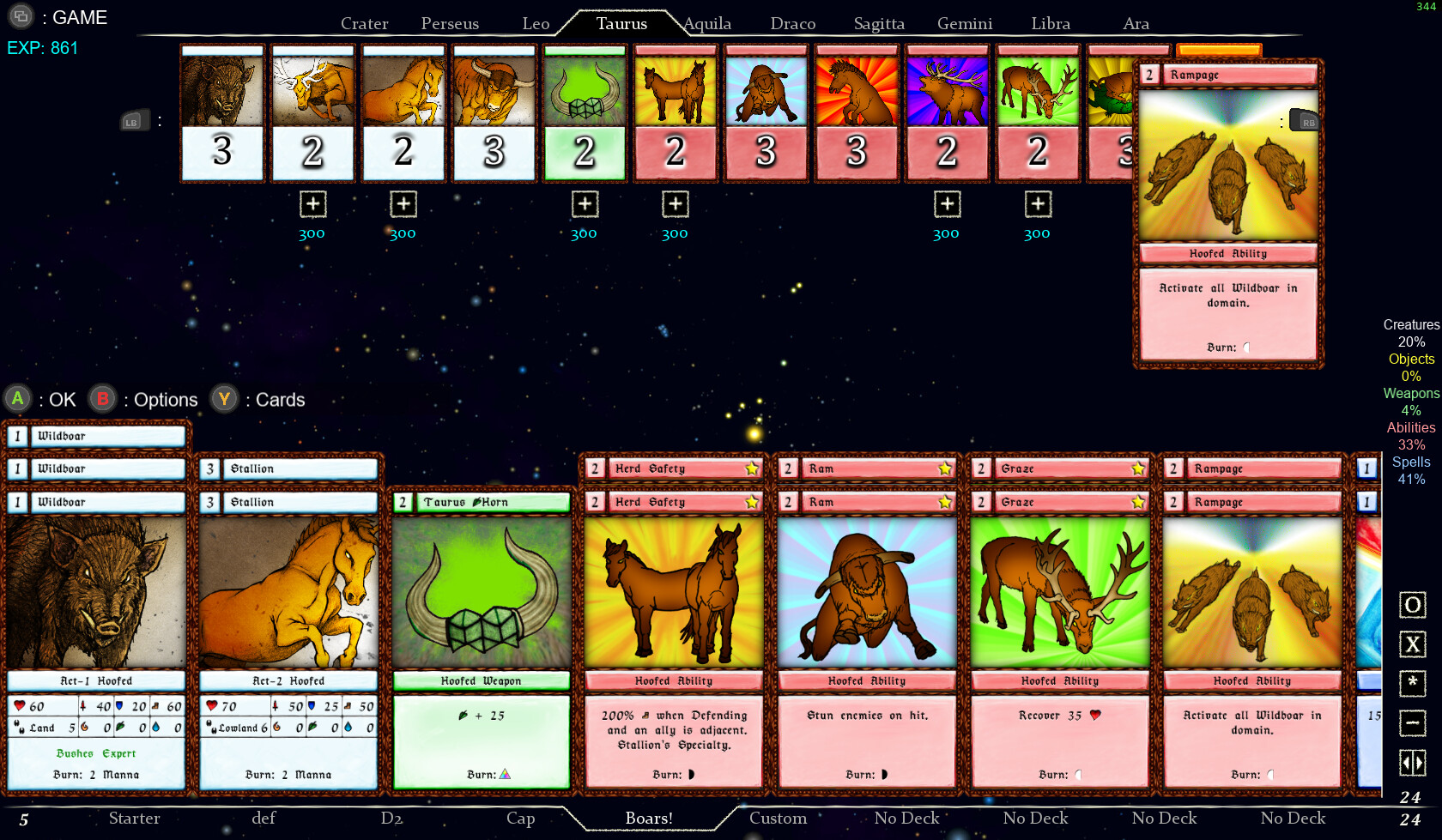
The constellation deckbuilding screen lets players browse and add hoofed-type creatures and abilities to their Taurus deckImage: indie.io via Steam -
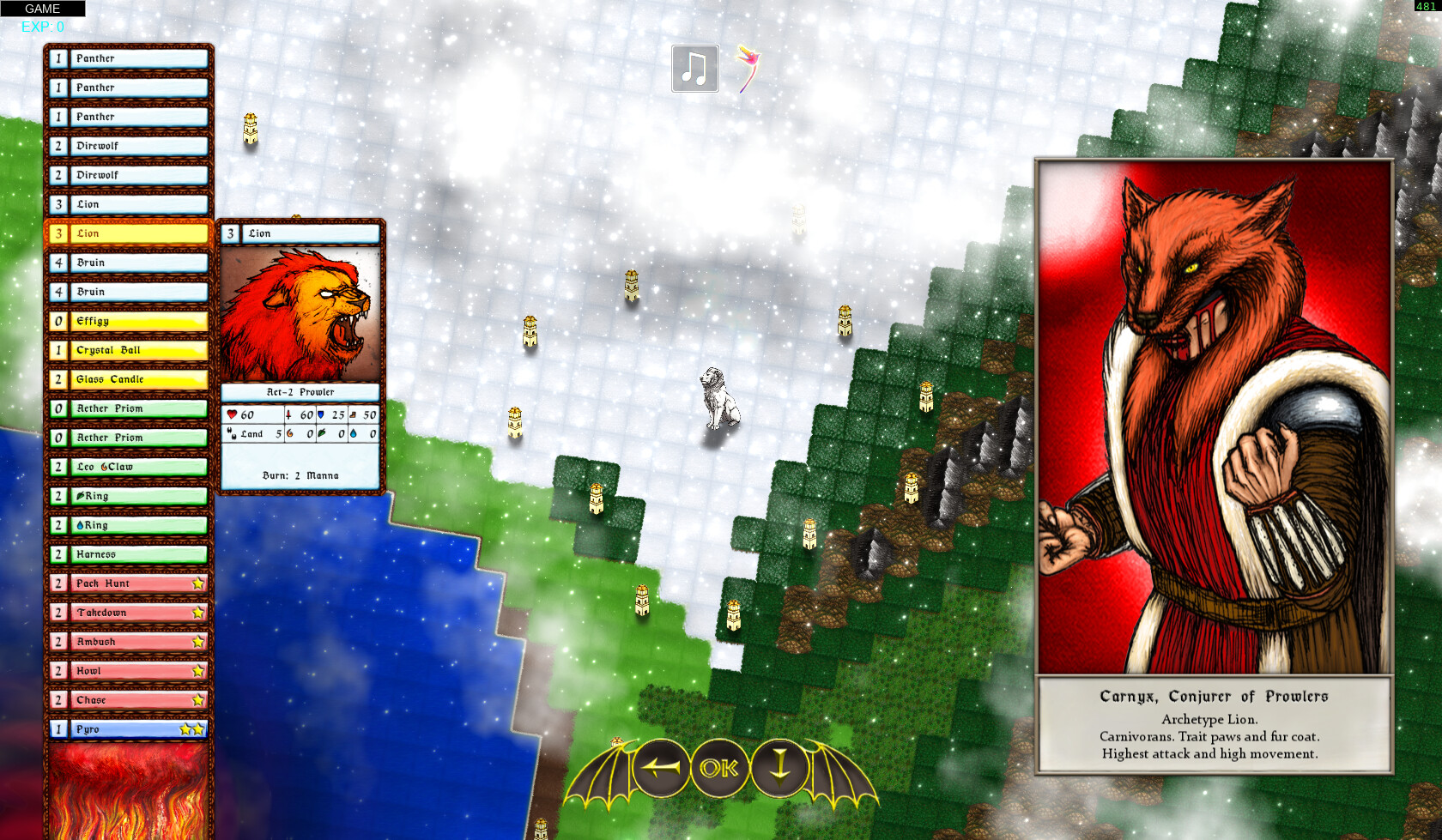
Rival Conjurers like Carnyx, Conjurer of Prowlers, command their own creature archetypes across the overworld mapImage: indie.io via Steam