
Game review
Fallen Isekai Review
6 / 10
- Developer
- Meet Future
- Publisher
- Meet Future
- Released
- 18 August 2026
- Platforms
- ["Windows"]
- Genre
- RPG
A Fourth Consecutive Launch With No Reviews to Cite
Fallen Isekai released on Steam on 18 August 2026, and despite being on sale for over a month by the time of writing, it still has zero Steam user reviews. That's a longer gap between release and first review than the last few 0-review titles covered here, which makes the caveat worth restating with extra weight: this review draws entirely on the developer's own store page description of the game's systems, not on any verified play or player account, and a launch that's gone over a month without picking up a single review is worth noticing as a signal in itself about how much attention the game has attracted so far, separate from any judgment about its actual quality.
An Isekai Premise Built Around Five Warring Races
The framing story follows Lin Mo, "once an ordinary person in the real world," who arrives on the continent of Akara after a plane crash pulls him through a mysterious rift. The store page describes a land "torn apart by conflict between five races" — Wingfolk, Yokai, Undead, Aquatic, and Dragon — with Lin Mo drawn into their "long-buried grudges" after his first battle to defend a village called Karl Village. It's a familiar isekai setup, but the five-race conflict gives the game's card and hero systems a clear organising structure to build around, with each race described as having "their own enemies, card themes, and trial mechanics" within the game's central tower challenge, rather than the races existing purely as narrative window dressing.
Three-Lane Positioning Layered Onto Deckbuilding
Mechanically, Fallen Isekai is described as a "three-lane tactical card roguelike," with battles taking place across top, middle, and bottom lanes that each affect "unit attacks, defense, and skill targeting." Players summon creatures, equip heroes, move cards on the field, and lean on "graveyard, discard, and skill-chain mechanics" to gain an advantage — a structure that adds a positional, board-state layer on top of the deckbuilding decisions common to the genre, rather than resolving everything through card draws and hand management alone. The store page lists 388 collectible cards for deckbuilding, spread across multiple story heroes who each bring "a different race, skill set, and combat role," which on paper gives players a wide pool of archetypes to build toward as new cards, heroes, and resources unlock through the story.
From Ruined Village to a Fifty-Floor Tower Challenge
Between battles, the game centres on Karl Village, described as "more than a menu screen" and instead "your foothold in another world." As the story advances, the village is said to gradually unlock facilities including tents, storage, a training ground, tavern, workshop, and a tower portal — a persistent home base that grows alongside the player's progress through the main story rather than existing as a static hub from the outset. That kind of visible, incremental stronghold growth is a common structural choice in card-based RPGs precisely because it gives players a tangible sense of progress between runs, beyond just accumulating better cards, though whether the pacing of that unlock curve feels rewarding or padded out is impossible to judge without any player account to check it against.
The game's structure splits roughly into a guided story mode and a standalone roguelike challenge: 23 story stages carry the main isekai narrative featuring the five races, while a separate 50-floor tower is described as "the core roguelike challenge," giving players somewhere to keep testing and refining a deck long after the story stages are cleared. That two-track structure — a fixed narrative campaign plus an open-ended tower to climb — is a sensible way to give a card-based RPG both a defined ending and ongoing replay value, letting players who want a complete story experience get one, while giving deckbuilding-focused players a much longer-term goal to chase in the tower without needing the story to keep expanding to support it.
A Mid-Range Price for a Card RPG With No Reviews Yet
At NZ$15.75 with no discount at the time of writing, Fallen Isekai sits at a reasonable mid-range price for a single-player card RPG with this much described content — 388 cards, 23 story stages, a 50-floor tower, and a growing stronghold — and there's no mention on the store page of any monetisation layer beyond the base purchase. That price feels fair for the scope described, but a card-heavy roguelike lives or dies on card balance and variety in actual play, which is exactly the kind of thing a month-old, review-free launch leaves completely unverified. Prospective buyers drawn to the five-race isekai premise should treat the total lack of community feedback as a real gap rather than assume the quiet launch reflects nothing more than an unlucky lack of attention.
Verdict
Fallen Isekai pitches a fairly ambitious three-lane tactical card roguelike wrapped around a five-race isekai story, with a large card pool, a growing stronghold, and a substantial 50-floor tower to extend play well past its 23 story stages. Like the last several titles covered in this run, it remains completely unreviewed by Steam's user base more than a month after release, which is a longer review-free stretch than usual and worth treating as its own small data point alongside the usual caveat that everything here reflects the developer's pitch rather than verified play. For isekai and tactical-deckbuilder fans specifically, the premise and feature list are appealing enough to be worth a look, but this is a purchase that currently has to be made on the strength of a store page alone.
Screenshots
-
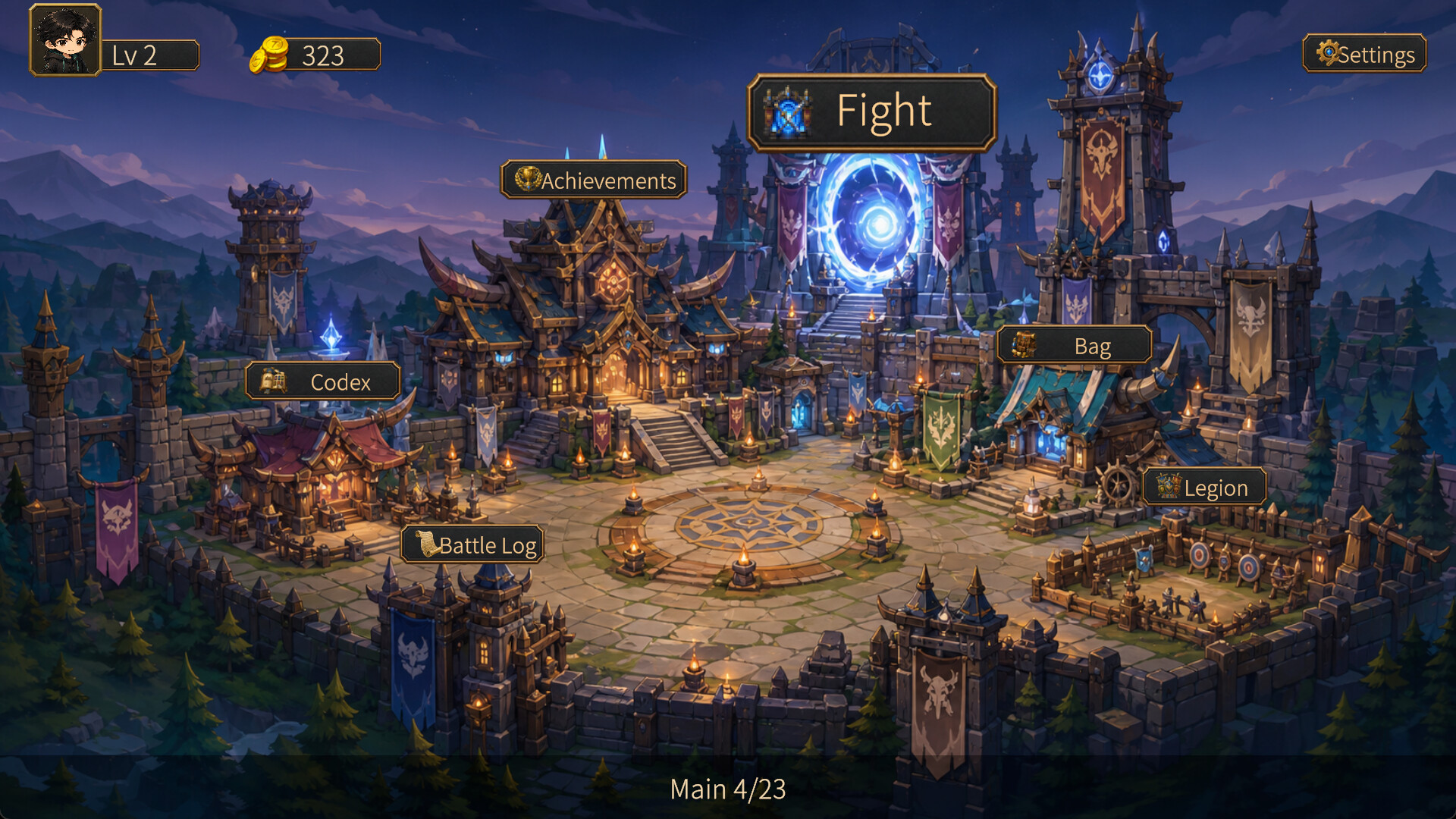
The Karl Village hub tracks story progress with a stage counter alongside menus for the Codex, Bag, and Legion screensImage: Meet Future via Steam -
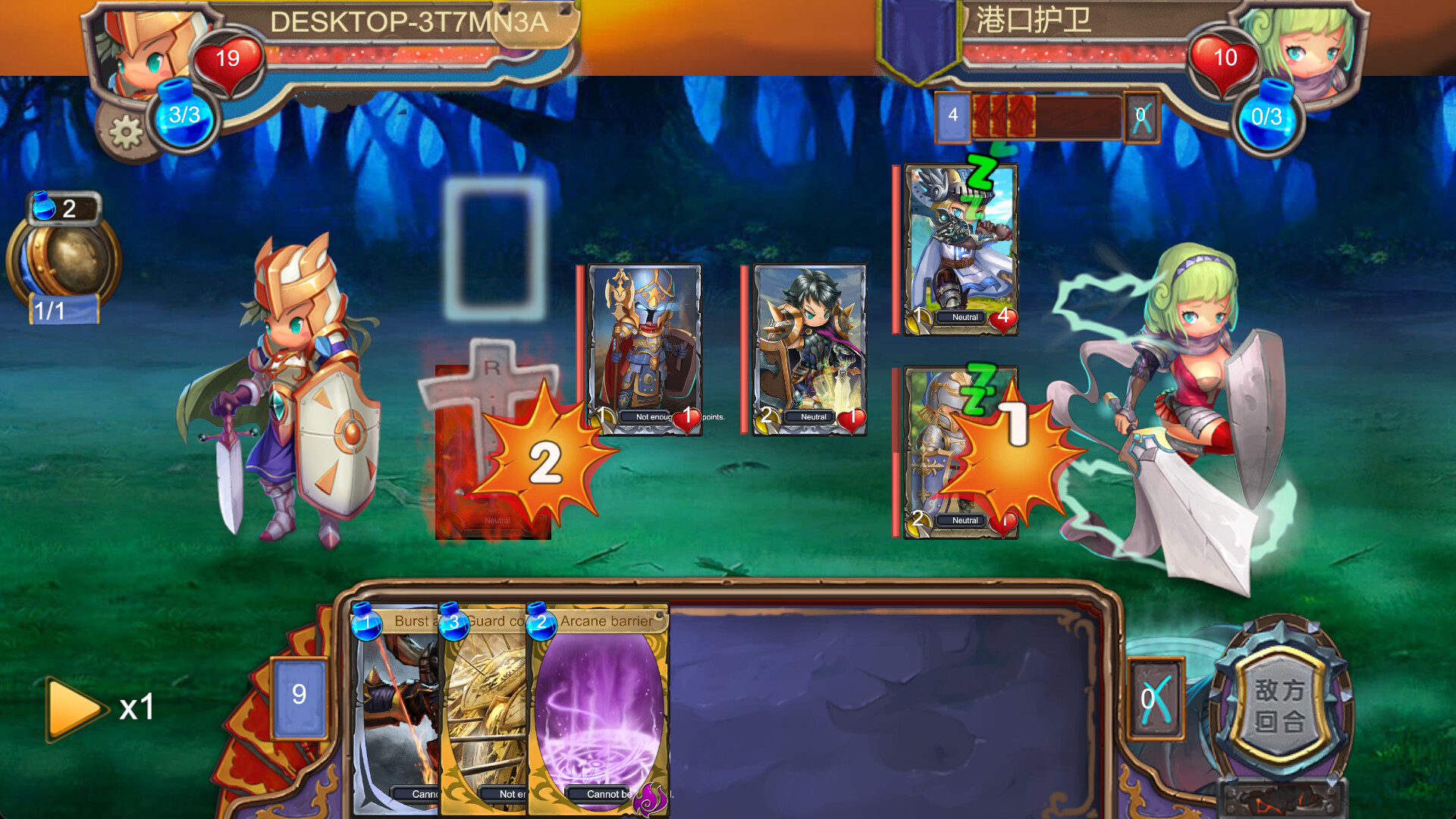
Battles unfold across lanes of summoned unit cards, with player and enemy heroes tracked by health bars at the top of the screenImage: Meet Future via Steam -
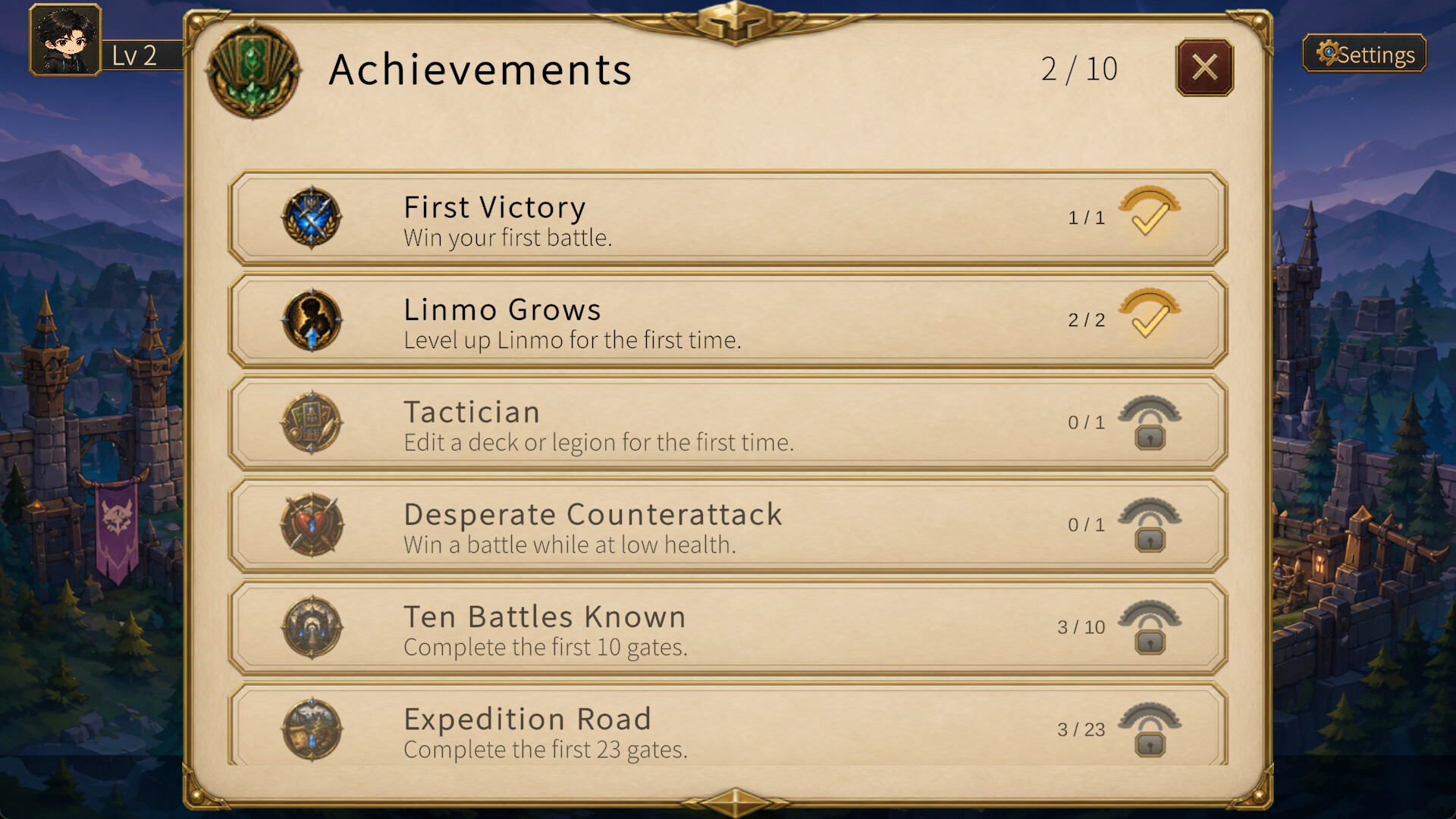
The achievements list ties directly into the game's structure, tracking milestones like levelling up Lin Mo and clearing the first 23 story gatesImage: Meet Future via Steam