
Game review
Ember Covenant Review
6 / 10
- Developer
- UAB Dimetris
- Publisher
- UAB Dimetris
- Released
- 2 September 2026
- Platforms
- ["Windows"]
- Genre
- RPG
A Fifteenth Consecutive Launch Without a Single Review
Ember Covenant released on Steam on 2 September 2026 and currently has zero Steam user reviews, extending an unbroken run of unreviewed launches covered in this stretch of the schedule to fifteen. That's an unusually quiet start for a roguelike deckbuilder, a genre with an active and vocal community that tends to pick apart a new release's card pool and balance within days of launch — the absence of any reaction at all so far makes this one purely a case of visibility, not necessarily quality. This review is built entirely from the developer's own store page description, not from verified play.
Sacrificing Cards to Fuel a Shared Furnace
The central mechanic is stated as a deliberate bargain: "the cards you sacrifice can strengthen both sides of the battle." Burning a card removes it from the current fight, grants Ember, and raises the Heat — a resource the player can then "spend on your next play, build Ward, or press an advantage before the enemy turns the Furnace against you." That's a genuinely distinctive twist on the deckbuilder-roguelike formula's usual resource-management tension: rather than a purely player-side economy, the shared Furnace means every burned card is a double-edged decision, since the same power that helps the player escalates the threat the enemy can eventually turn back around. Whether that tension resolves into interesting decision-making or into a mechanic players learn to avoid triggering altogether is exactly the kind of thing that only shows up once a community has spent real time probing the system's edges.
Five Keepers, Five Different Bargains
Players begin with a choice between two starting characters — "Mora, the Kindling Witch, or Brother Kaminas of the Iron Penitents" — with three further Keepers unlockable through play, each carrying "a different gift, burden, and approach to the deck." Framing each character's identity explicitly around both a gift and a burden fits neatly with the game's central sacrifice mechanic, suggesting the developer intends each Keeper to interact with the Furnace system differently rather than simply reskinning the same deck with different card art. Card upgrades, relics, and "the choices you carry along the road" round out the customisation layer, which is a familiar shape for the genre but a reasonable one if the five Keepers turn out to meaningfully diverge in how they approach the burn-for-power trade-off.
Sequencing Sigils Into Litanies
Beyond individual card plays, the store page describes a sequencing layer built around "Sigils" that combine to complete "Litanies," with the reward visible in advance so players can "see the reward, plan your sequence, and decide which cards to play and which to burn." That's a useful bit of transparency for a genre where hidden information can sometimes tip from tense into simply frustrating — knowing the payoff ahead of time turns the burn-or-keep decision into a genuine puzzle rather than a guess. At shrines, players can also "inspect a card's Kindle improvement before committing to it," which extends that same preference for legible decision-making into the game's permanent-upgrade system as well — a contrast with genre entries that hide an upgrade's exact numbers until after it's already been applied, forcing trial and error rather than deliberate planning.
That emphasis on visible information before commitment runs through the whole design as described: seeing a Litany's reward before deciding whether to chase it, inspecting a Kindle improvement before locking it in, and presumably being able to gauge the Furnace's building Heat before deciding whether one more burn is worth the risk. If that consistency holds across the full game rather than just its marketed highlights, it suggests a developer prioritising informed, deliberate choices over the kind of blind gambles that can make some roguelikes feel more like luck management than strategy.
A Branching Pilgrimage Across Four Acts
Structurally, a run takes the shape of "a branching path through four acts of battles, elite encounters, events, shrines, rest sites, and bosses," framed narratively as a "dark-fantasy pilgrimage" to reclaim four Seals, complicated along the way by accumulating "Debts." Persistent progression between runs comes through something called the "Cinder Tree," a familiar meta-progression device for the genre that should soften the sting of a failed run by carrying some benefit forward regardless of outcome. The store page also mentions "animated Keeper portraits, boss cinematics, and music for each kind of scene," which is a reasonably ambitious level of presentation polish for a solo-developed release, and save backups with export and import support are a small but welcome quality-of-life detail for a genre where players often want to preserve a favourite run's state.
At NZ$12.49 with no discount at the time of writing, that's a fair mid-range price for a genre where established competitors often sit both above and below that mark, and there's no mention on the store page of any monetisation beyond the base purchase. English is the only listed supported language, which narrows its reach but isn't unusual for a small solo-developed title.
Verdict
Ember Covenant brings a genuinely distinctive twist to the roguelike-deckbuilder formula, turning card sacrifice into a shared resource that empowers both the player and their enemy, layered with visible-reward Sigil sequencing and five Keepers built around individually different bargains. Like every other title covered in this stretch, it remains completely unreviewed by Steam's user base at the time of writing, so whether the Furnace's push-your-luck tension actually plays out as intended, and whether the five Keepers diverge enough to justify separate playthroughs, are unverified claims rather than confirmed strengths. Its fair price and unusually legible design language around sequencing and upgrades make it a reasonable pick for deckbuilder fans looking for a fresh hook, with the standing caveat that this assessment rests entirely on the developer's own description rather than anyone's actual playthrough.
Screenshots
-
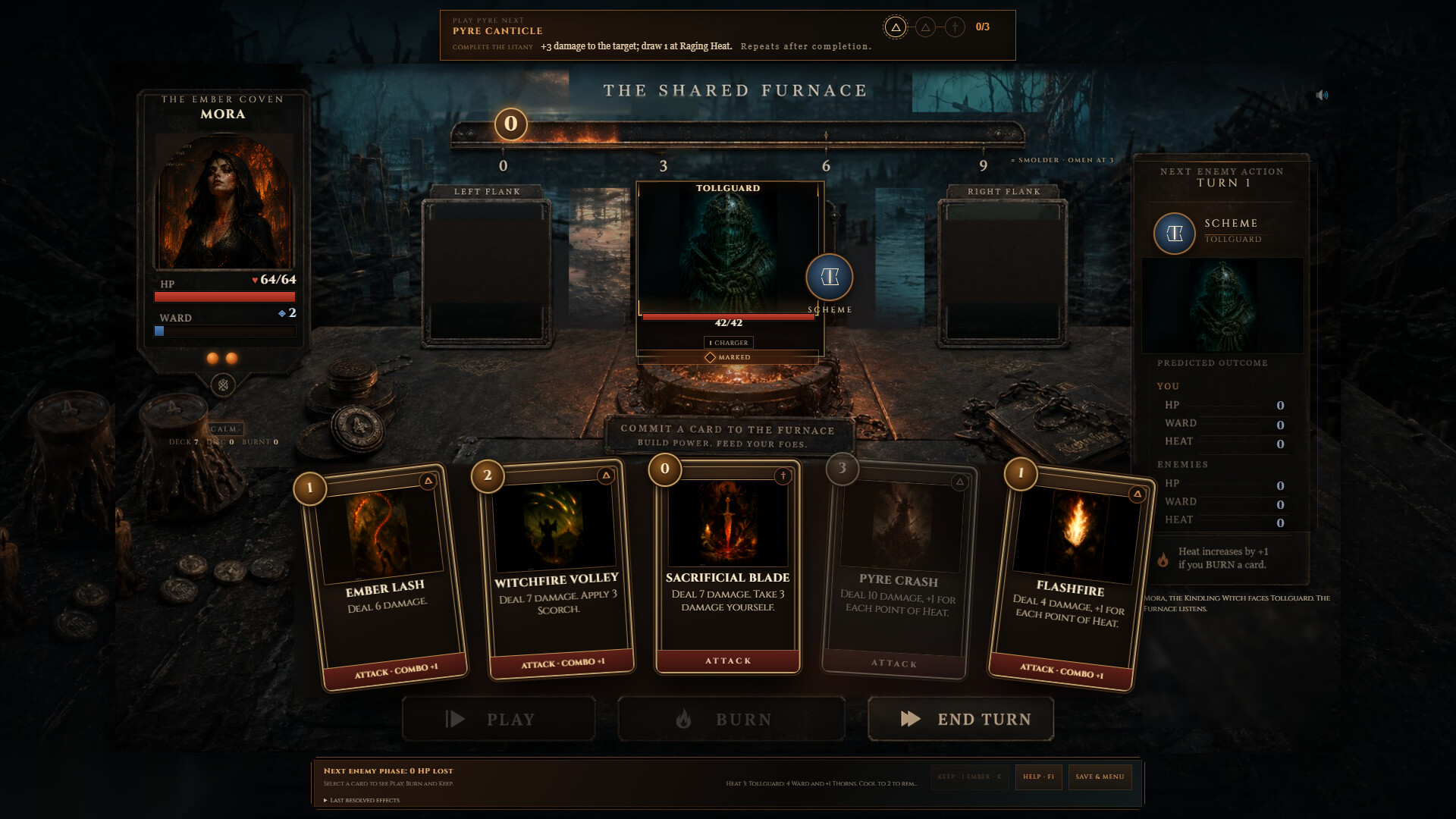
The Shared Furnace meter tracks Heat at the top of the screen, while a predicted-outcome panel previews what both sides stand to gain or lose before a card is playedImage: UAB Dimetris via Steam -
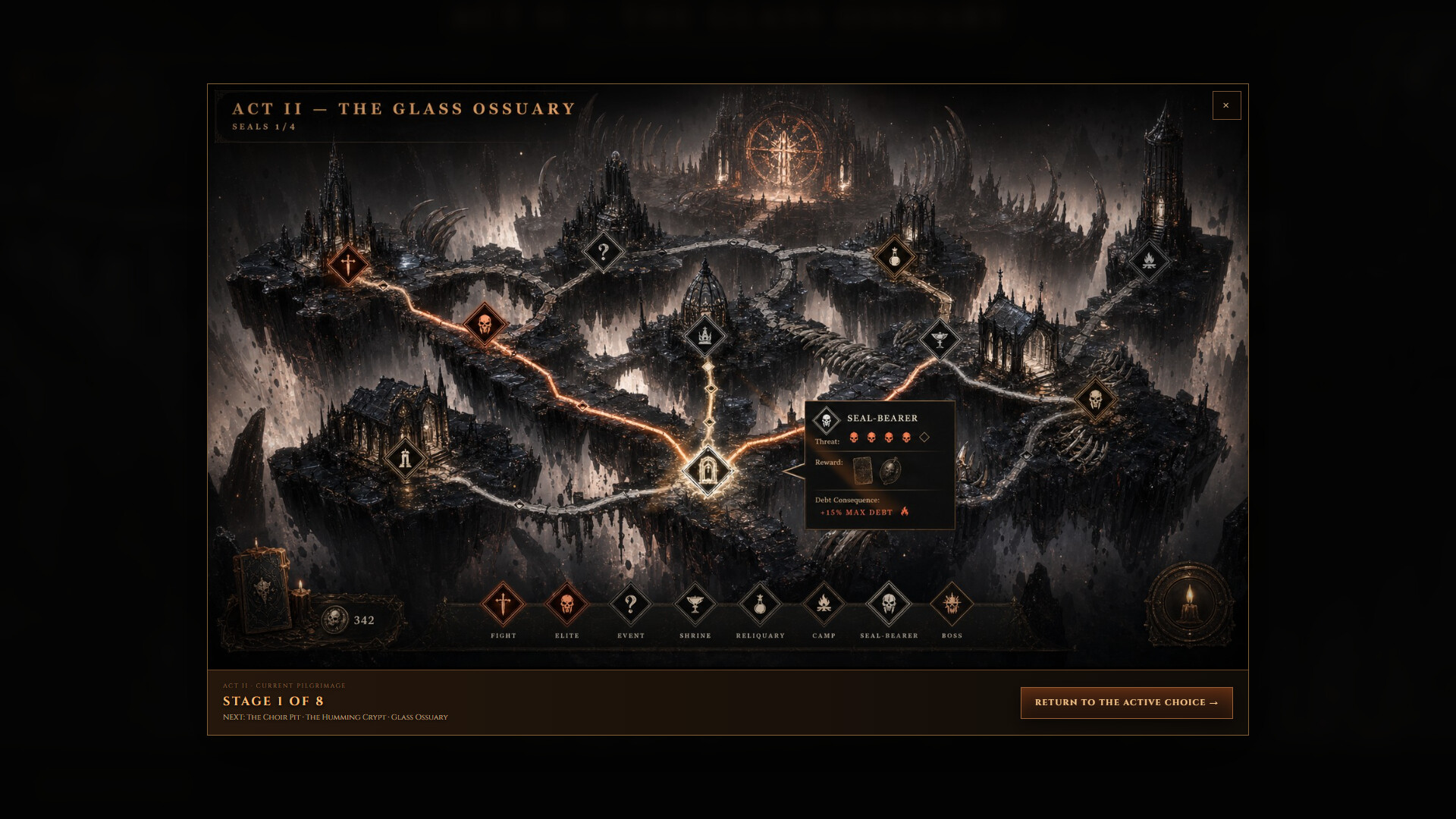
Each act's branching map previews a node's threat, reward, and Debt consequence before the player commits to a pathImage: UAB Dimetris via Steam -
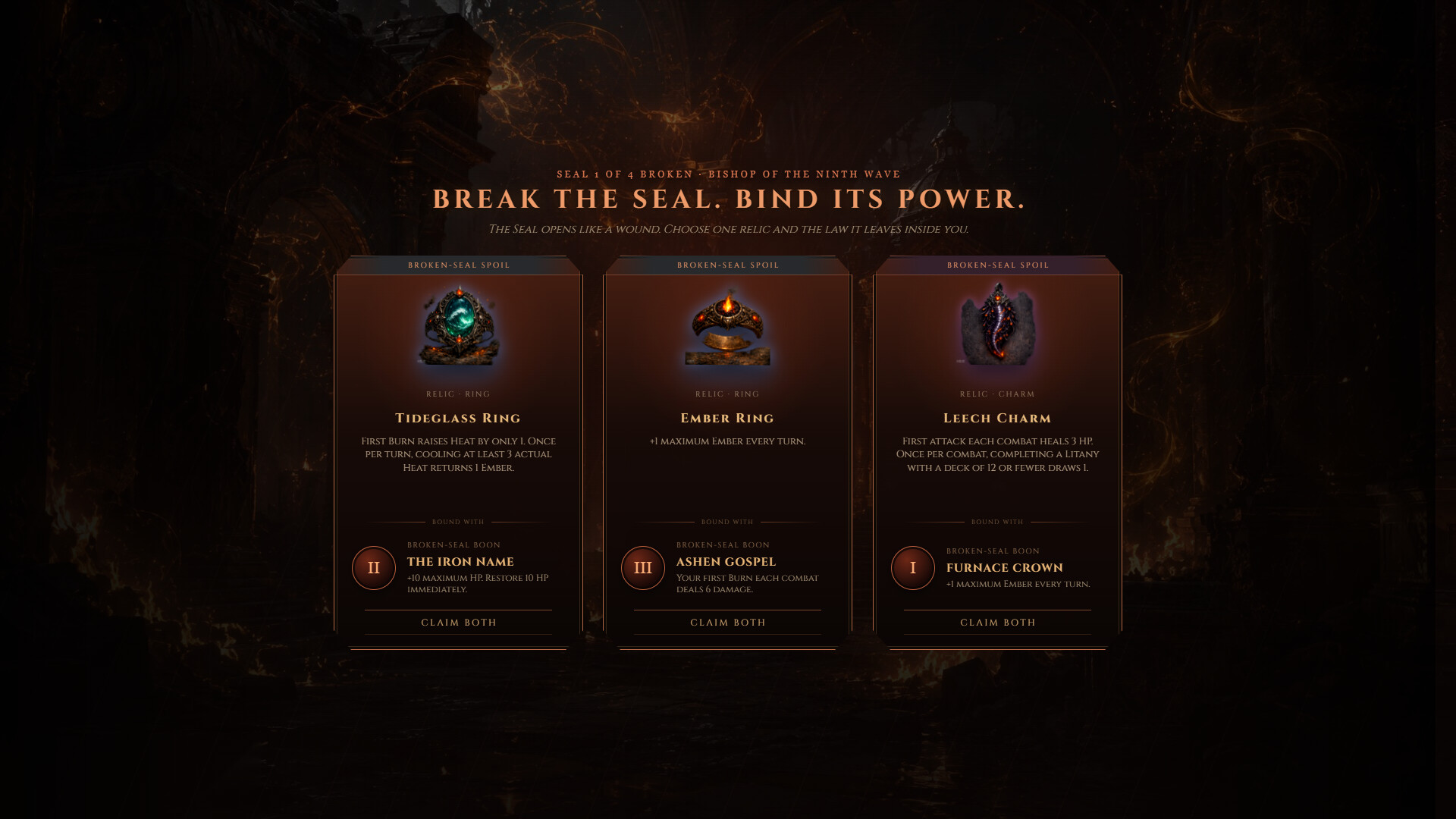
Breaking a Seal after a boss fight offers a choice between three paired relic-and-boon rewards, each altering how the Furnace or combat behaves for the rest of the runImage: UAB Dimetris via Steam