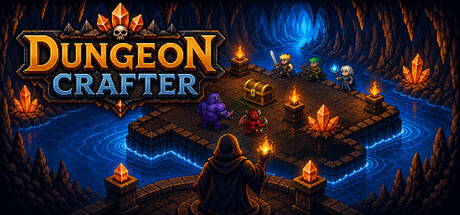
Game review
Dungeon Crafter Review
6 / 10
- Developer
- Fintasys Studio
- Publisher
- Fintasys Studio
- Released
- 17 August 2026
- Platforms
- ["Windows"]
- Genre
- RPG
A Thirteenth Consecutive Launch Without a Single Review
Dungeon Crafter released on Steam on 17 August 2026 and currently has zero Steam user reviews, extending an unbroken run of unreviewed launches covered in this stretch of the schedule to thirteen. That's a notable gap for a game whose core hook — inverting the usual dungeon-crawler relationship by putting the player in the Dungeon Master's seat rather than the adventurer's — depends entirely on how satisfying it feels to build and watch a trap spring, something no amount of store-page description can substitute for. This review is built entirely from the developer's own store page description, not from verified play.
Building the Trap, Not Springing It
The premise is stated plainly: "Dungeon Crafter is a turn-based rogue-like strategy game where you are not the hero. You are the Dungeon Master." Each round begins with a build phase — placing and rotating path tiles, positioning monsters, and laying effects such as "fire, poison, ice, lightning, blood" — before an "Adventurer Round" sends a hostile intruder through whatever labyrinth the player has assembled, with the explicit goal of stopping them "before he reaches the end." That's a meaningfully different power fantasy from the genre's usual hero-vs-dungeon framing, closer in spirit to tower-defense design than to a typical roguelike deckbuilder, since the player's agency is expressed entirely through preparation rather than direct real-time control once the adventurer starts moving.
Combining Effects Into a Machine
The store page describes a combination system as the central strategic layer: "three matching monsters or effects can be combined into stronger variants," letting a dungeon "grow from round to round into an increasingly dangerous machine." Layered on top of individual monster placement, that combination mechanic suggests the interesting decisions aren't just where to put a single trap, but which effects to stack together for compounding damage types — a fire-and-oil combination behaving differently from an ice-and-lightning one, for instance, though the store page doesn't specify exact interactions between the six listed effect types. Whether those combinations create genuinely distinct strategic archetypes, or converge on one or two clearly optimal builds once players work out the strongest combination, is exactly the kind of balance question that only shows up after a community has spent real time optimising against the system.
The dungeon itself is built from "rotatable path tiles," giving the player control over the physical route an adventurer must take in addition to what waits along it — reinforcing choke points or extending the path to buy more space for traps sits alongside monster placement as a second lever of control, which is a reasonable way to keep the build phase from being purely about picking the strongest individual pieces.
Escalating Stakes Through Special Rounds
The store page frames pacing around a hard structural deadline: "a run is decided no later than round 20," with "dangerous Special Rounds" arriving at rounds 6, 11, 16, and 20, during which "the adventurer must be defeated" outright rather than merely slowed. Critically, surviving a Special Round doesn't reset the threat — during those rounds, "your boss also joins the fight at the end of the dungeon," meaning the player's own strongest unit gets drawn into direct combat rather than staying safely in reserve. That's a clever way to force periodic high-stakes checkpoints onto what would otherwise be an open-ended building phase, and it gives a run's difficulty curve a clear, telegraphed shape rather than a smooth, indistinct ramp. The consolation for defeating an adventurer early is that "he returns as a weakened opponent" on subsequent attempts, which suggests failure within a run still contributes some lasting pressure reduction rather than resetting the threat to full strength each time.
Progression Layered on a Roguelike Shell
Beyond the moment-to-moment building, Dungeon Crafter layers in a levelling and shop system: damaging the adventurer grants experience, level-ups offer a single upgrade choice among several options, and a shop lets players "buy new tiles, monsters, effects, and items, lock valuable offers, or reroll the selection." That's a familiar structure for anyone who's played a roguelike deckbuilder, just reapplied to dungeon architecture instead of a hand of cards, and multiple difficulty levels alongside "unlockable adventurers, bosses, items, and achievements" suggest the developer is aiming for replayability across many runs rather than a single fixed challenge. At NZ$15.75 with no discount at the time of writing, that's a fair asking price if the promised depth of monster and effect combinations holds up across repeated runs, though it sits noticeably higher than several other 0-review indie RPGs covered in this stretch, and there's no mention on the store page of any monetisation beyond the base purchase.
Verdict
Dungeon Crafter pitches a genuinely inverted take on the dungeon-crawler formula, casting the player as architect and jailer rather than hero, with a turn-based build-and-defend loop built around combinable monster and effect placements and a hard-deadline Special Round structure that forces real strategic commitment by round 20. Like every other title covered in this stretch, it remains completely unreviewed by Steam's user base at the time of writing, so whether its combination system supports genuinely varied strategies rather than one dominant build, and whether the tension of watching an adventurer navigate a hand-built trap actually delivers on the premise, are unverified claims rather than confirmed strengths. Its higher-than-average price for this stretch makes it a slightly bigger bet than most, but its distinctive Dungeon-Master framing makes it a reasonable pick for strategy-RPG fans specifically curious about that inverted premise, with the standing caveat that this assessment rests entirely on the developer's own description rather than anyone's actual playthrough.
Screenshots
-
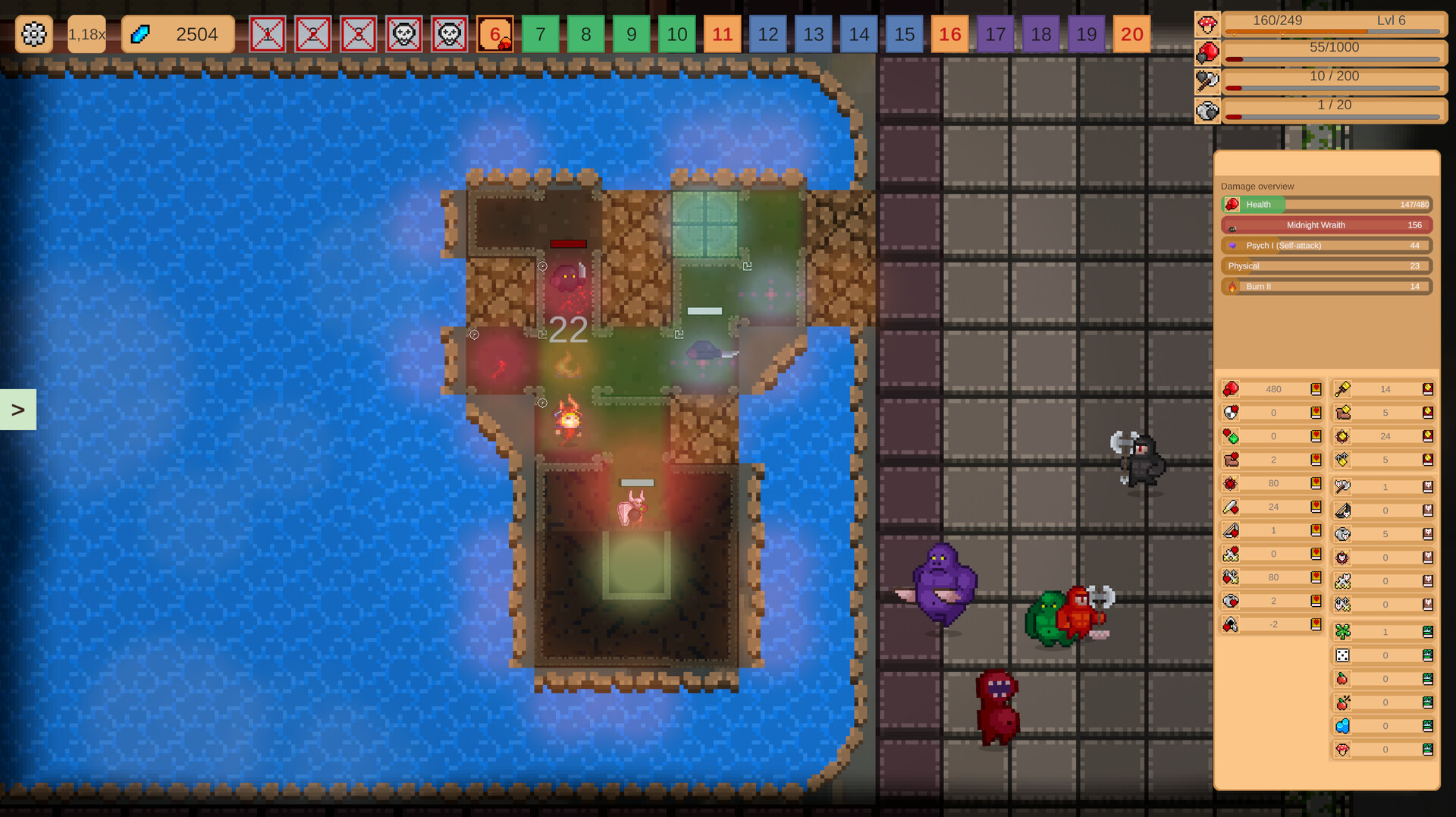
A round-number tracker along the top flags upcoming Special Rounds, while a live damage-overview panel breaks down exactly what is hurting the intruding adventurerImage: Fintasys Studio via Steam -
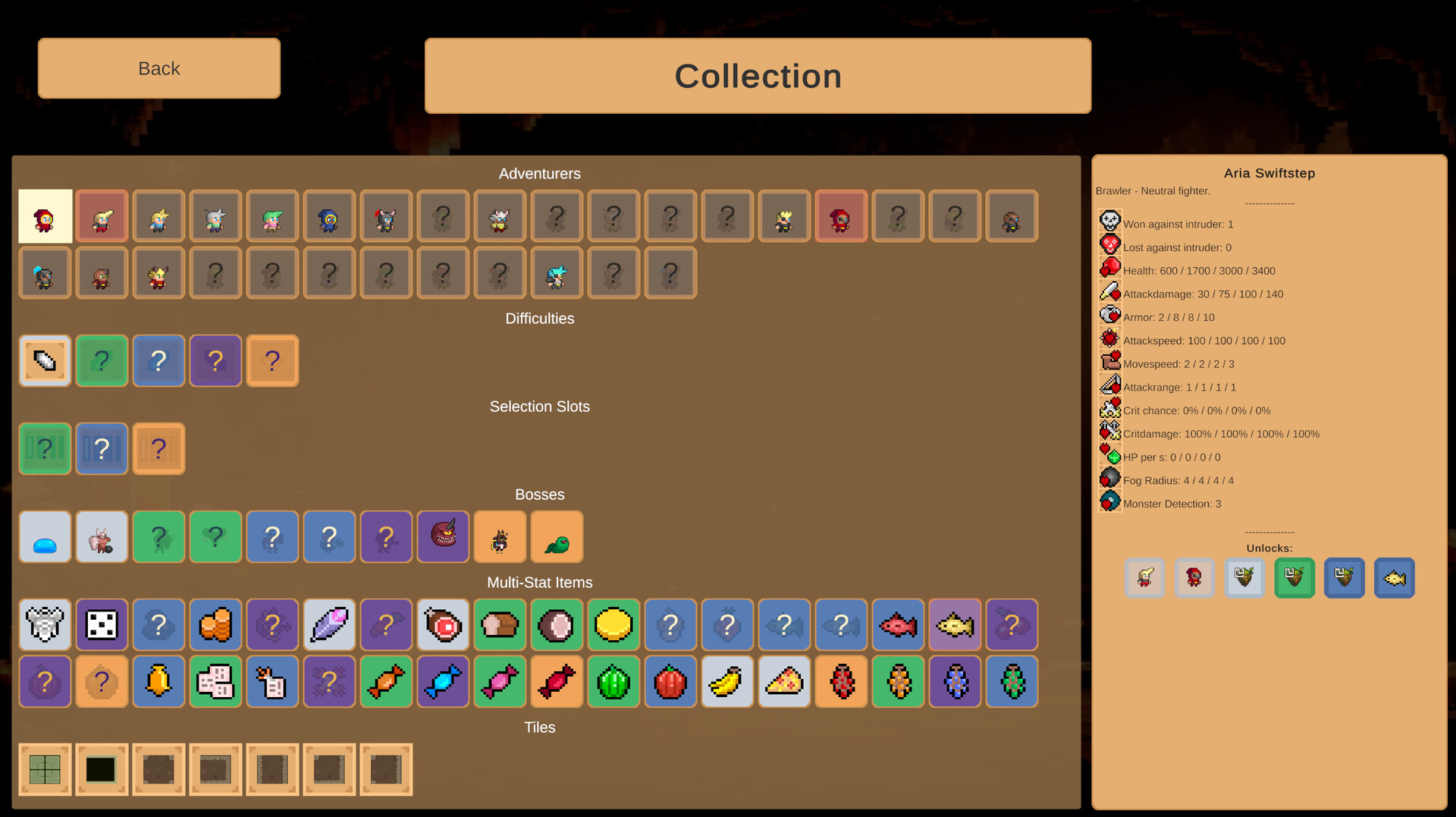
The Collection screen tracks unlockable adventurers, bosses, and items behind question-mark silhouettes, with detailed stat breakdowns like this one for the adventurer Aria SwiftstepImage: Fintasys Studio via Steam -
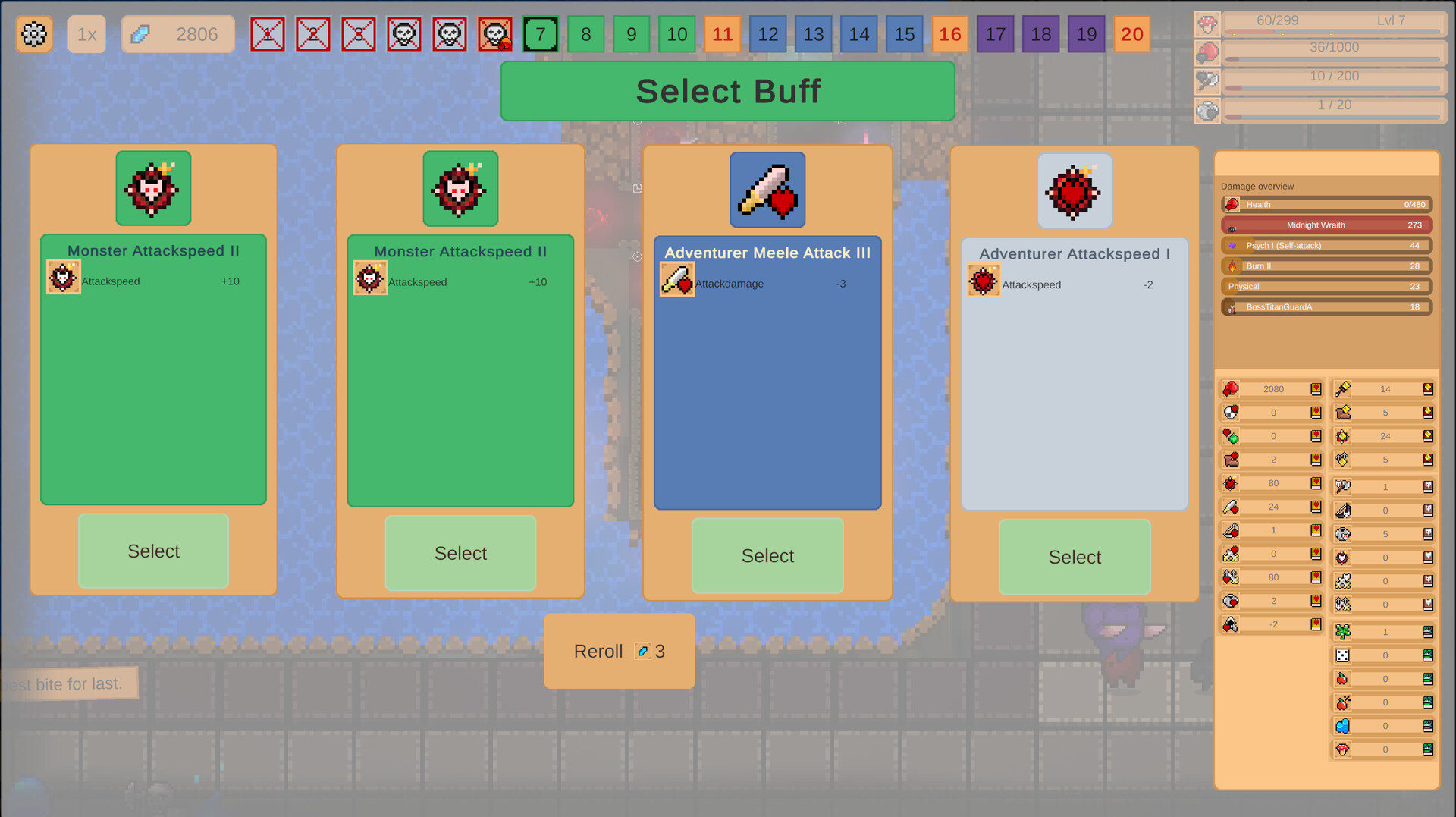
Levelling up presents a choice of upgrade cards, several of which weaken the intruding adventurer rather than directly strengthening the player's monstersImage: Fintasys Studio via Steam