
Game review
Arxanum Idle Review
7 / 10
- Developer
- XWnZA GAMES
- Publisher
- XWnZA GAMES
- Released
- 4 September 2026
- Platforms
- ["Windows", "Linux"]
- Genre
- RPG
A Fallen Deity's Idle Revenge Story
Arxanum Idle casts the player as a fallen deity, stripped of power and betrayed by their fellow Guardians, clawing a way back to godhood through a medieval fantasy world built around a deliberate hybrid of idle and active play. The developer is upfront that there's "no wrong choices in how you choose to play" — the game runs and progresses in the background like any idle title, but it also rewards active attention with hands-on squad management, equipment upgrades, and tactical battles whenever the player wants to engage directly. It's a single-developer release with, at the time of writing, only one Steam review on record, but that review carries real weight: the player logged over 85 hours before writing "a great idle game with a lot to do," adding that it has "a slow start but after a day game opens up more." That's the kind of endorsement that only comes from someone who actually stuck with a game's systems long enough to see them open up, even if it's not enough on its own to call a genre consensus.
A Consistent Story Arc From Goblins to Gods
Rather than treating its narrative as an afterthought bolted onto idle mechanics, Arxanum Idle is built around what its own store page calls "a consistent story": players start out dueling weak goblins, work through progressively dangerous monsters, and eventually face down the deities and gods of the game's own universe as the stakes of the fallen-deity premise escalate. That structure gives the idle loop a narrative throughline that a lot of the genre skips entirely in favor of pure number-crawling, and it means the medieval fantasy setting isn't just window dressing for a spreadsheet of upgrade multipliers — there's an actual arc from "weak nobody" to "godslayer" for the player to work toward as squads level up and dungeons get harder.
Eighteen Activities Built Around Base Management
Beyond combat, the game leans heavily on a base-building and crafting loop the store page describes as spanning 18 different activities: upgrading the player's base, growing plants, brewing potions, discovering and fusing jewels, and taking on mercenary quests among others. It's a broader spread of parallel systems than many idle RPGs bother building out, and it gives players who'd rather tend a home base than grind dungeons a genuine alternative path to progress — squad members recruited and trained through these systems feed directly back into how well-equipped a party is when it's sent out on expeditions. The design intent seems to be giving players multiple viable ways to spend idle time productively, rather than funneling everyone toward the same single upgrade currency.
Twenty Playable Characters and Tactical, Turn-Based Combat
When it's time to fight, Arxanum Idle switches into a tactical, turn-based battle mode built around 20 playable characters spread across 7 classes, each with its own passive abilities and skills. Squads face down more than 60 unique enemies across 20 dungeons, with bosses dropping new weapons, armor, and equipment that feed back into the base-management loop. The store page frames success as being about "finding the best team compositions and strategies against every boss," which suggests the tactical layer is meant to matter rather than being a passive animation playing out over pre-determined stat checks — a meaningful distinction for a game that could otherwise have leaned entirely on background number-crunching. Twenty characters across seven classes is also a genuinely broad roster for a solo-developed idle title, giving players real room to experiment with squad composition rather than settling on one obviously-optimal team early and sticking with it for the rest of the game.
No Rebirth Treadmill, No Microtransactions
Two design decisions stand out as explicit rejections of common idle-genre conventions. First, Arxanum Idle has no "rebirth mechanic" of the kind that resets a player's progress in exchange for permanent multipliers — the store page promises players will "constantly grow stronger without ever having to start from zero," which removes one of the more grindy, repetitive loops that idle games often lean on to artificially extend playtime. Second, and just as notable, the game is built entirely around a single upfront purchase: "zero microtransactions... no premium currency, items, or progress-skipping mechanics exist in Arxanum Idle—and there never will be." For a genre where premium currencies and progress-skipping purchases are close to the default business model, that's a meaningfully different pitch, and it lines up with the one available review's framing of the game as something to sit with and let unfold over time rather than pay to accelerate.
Verdict
Arxanum Idle is a hybrid idle/active fantasy RPG that backs up its pitch with real structural substance: a 20-dungeon, 60-plus-enemy tactical combat layer, 20 playable characters across seven classes, an 18-activity base-management loop, a story arc that actually escalates from goblins to gods, and a business model built entirely around a single purchase rather than a premium-currency treadmill. Its single Steam review is a genuine limitation on how confidently any of this can be called a settled community verdict, but an 85-hour-plus playtime behind that one recommendation, paired with an unusually detailed and coherent feature list for a solo release, points to a game that rewards sticking with it past a slow opening rather than one that's thin once the marketing copy is stripped away. Idle RPG fans willing to bet on a young, thinly-reviewed release should find a game that respects both their time and their wallet.
Screenshots
-
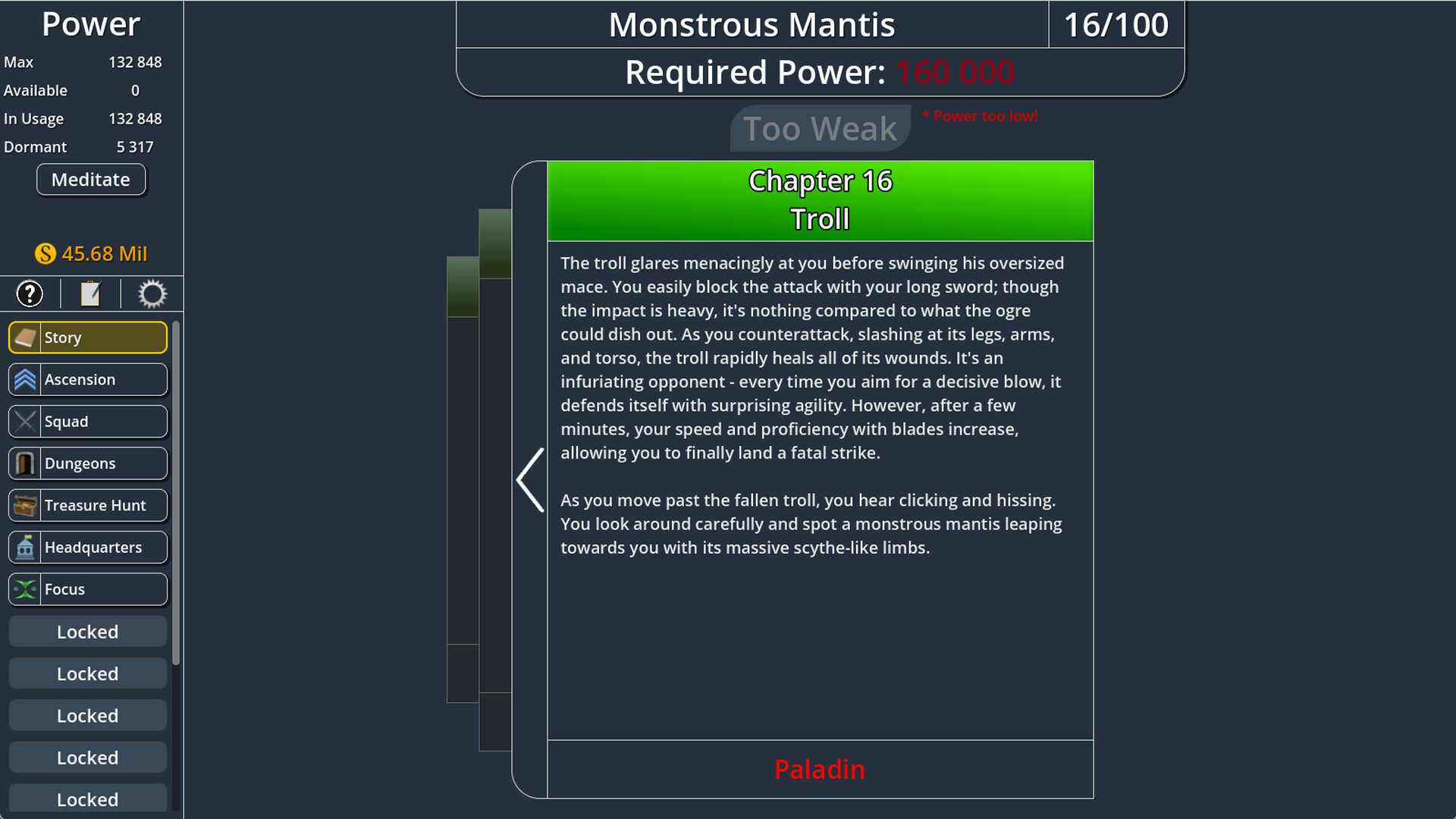
Story chapters like this Troll encounter pair narrative text with a Power stat that gates access to tougher enemies further alongImage: XWnZA GAMES via Steam -
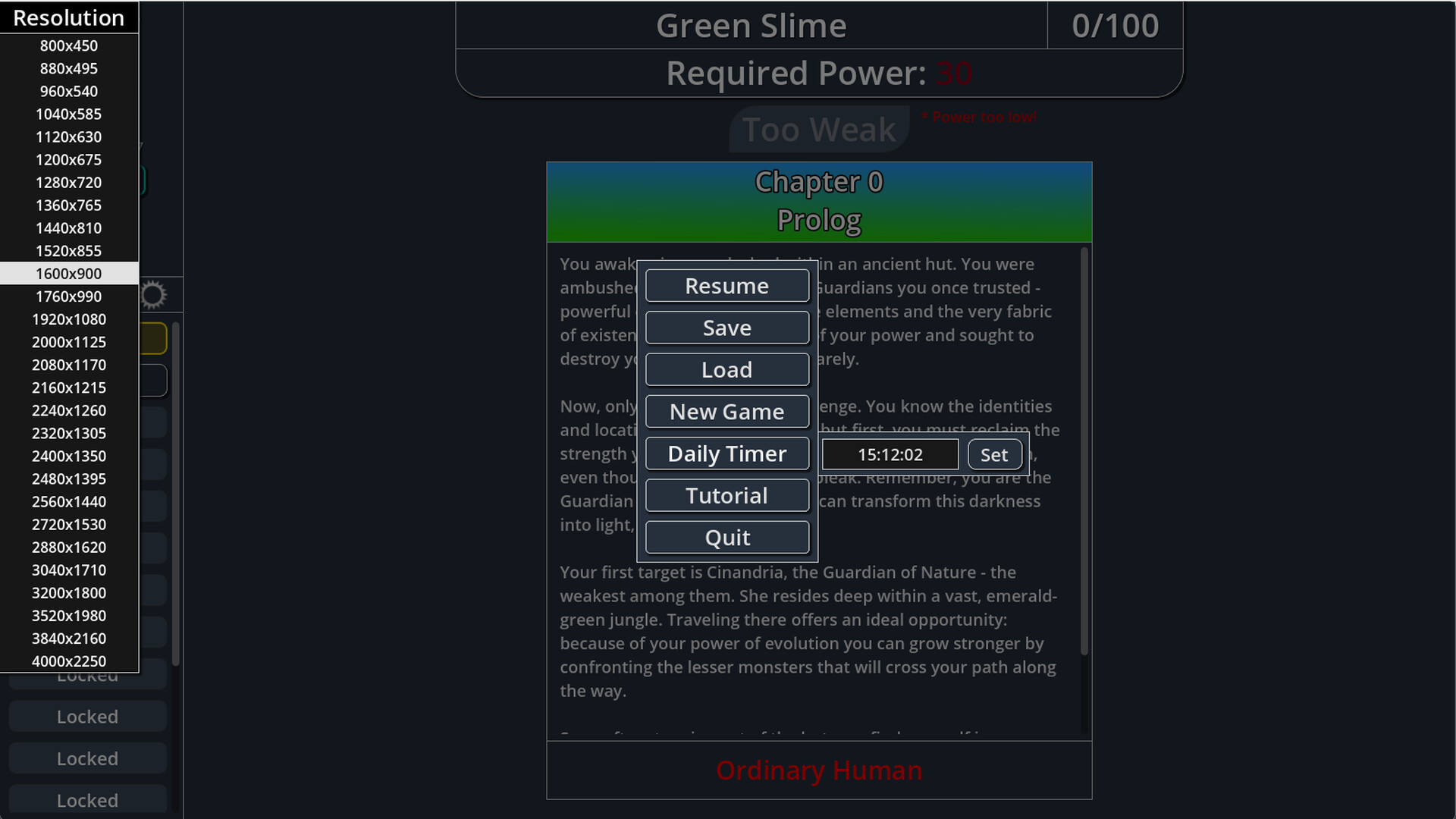
The prologue sets up the fallen-deity premise, naming Cinandria, Guardian of Nature, as the first target on the road back to powerImage: XWnZA GAMES via Steam -
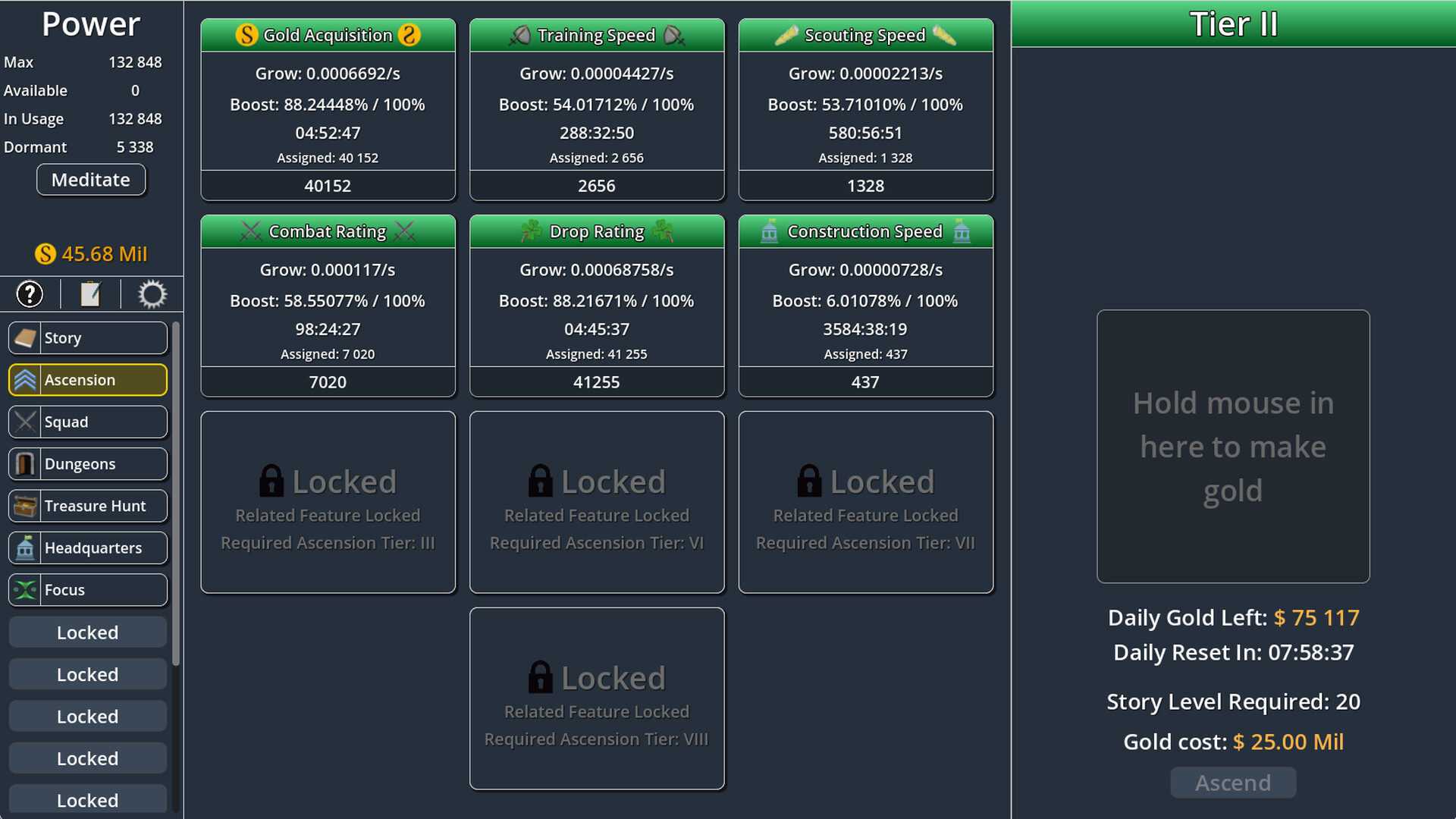
The Ascension screen lays out long-term stat boosts like Combat Rating and Drop Rating, with higher tiers gated behind story-level requirementsImage: XWnZA GAMES via Steam