
Game review
Dune Rancher Review
6.5 / 10
- Developer
- Jestercraft
- Publisher
- Jestercraft
- Released
- 4 February 2026
- Platforms
- ["Windows", "Linux"]
- Genre
- RPG
The Fifth Entry in a Solo Dev's "24 Games in 24 Months" Project
Dune Rancher is a first-person clicker-and-incremental game built around a single premise: a desert ranch powered by a "Moonwell" that generates Moondust, the resource behind every upgrade, robot and weapon in the game. It's a small, cheap release — NZ$4.49 with no discount at the time of writing — and reviews frame it accurately as a scoped, low-stakes indie project rather than an ambitious systems-heavy incremental game. One detailed review situates it precisely: "Dune Rancher is the fifth entry in the '24 games in 24 months' project and continues to deliver content that is fair for the price," a framing that several other reviews echo without knowing the specific project name, repeatedly describing the game as honest, small-scope value rather than an underdelivering cash grab. Developer Jestercraft is also singled out by name across multiple reviews for being unusually responsive both on Steam and in the game's Discord, with one reviewer writing that "the dev cares about it and the community" and pointing to active bug-fixing and community engagement as a reason to trust the purchase despite the game's rough edges.
Point, Shoot, Automate: A Genuine Incremental Loop, Not Idle Dressing
The core loop pairs first-person clicking and light combat against Desert Spirits trying to steal your Moondust with a conventional incremental progression curve: spend resources on upgrades, then spend more resources on robots that automate the collection process entirely, freeing the player to move toward passive "number go up" play once the early manual grind is out of the way. Reviews consistently confirm this transition happens as advertised rather than staying a permanent clicking chore, with one reviewer breaking the game down structurally as "Idle/Incremental Prestige — yes, you get one upgrade for the next two restarts. Active Play — starts off only active, goes more into idle later." That's a meaningfully accurate self-assessment of the genre balance: this isn't a passive background idler from minute one, but it does graduate toward automation the way genre veterans expect, and reviews treat that graduation as one of the game's more successfully executed systems.
More than one review flags the loop's addictive pull specifically, with one describing it as "a terrifying example of how easy it is to delve into addiction," recounting losing track of time chasing "just one more upgrade." Others are more measured, calling it "a neat, albeit short incremental game" that's "well worth the money you can spend elsewhere" given the asking price, which is the more common tone across the review sample: genuine, if modest, enjoyment scaled to genuinely modest expectations.
No Save Persistence and No Item Descriptions Are the Two Real Complaints
Two specific criticisms recur often enough across reviews to be worth flagging directly rather than treating as isolated gripes. The first is a missing save feature: one reviewer wrote plainly, "I really like this game but I really wish there was a save feature. Every time I close the game and boot it back up I have to start over from the beginning," a limitation that cuts directly against the appeal of an incremental game meant to be returned to in short sessions over time. The second is a lack of in-game explanation for what upgrades and items actually do, with one review noting "I wish the items and upgrades had descriptions, because you don't really know what anything does," and another separately confirming they "tried shooting at enemies with the resource gun since it was a weapon" purely through trial and error rather than any in-game guidance. Neither issue is described as game-breaking, but both point to a UI and onboarding layer that hasn't had as much polish applied to it as the core collection loop.
Built in Construct 3, and It Shows — For Better and Worse
Several reviews independently identify the game as built in Construct 3, a lightweight engine associated with small solo and indie teams, and reactions to that choice split along expected lines. One reviewer wrote approvingly that they "didn't know Construct 3 can make games like these," praising smooth performance and clean mechanics as evidence the engine choice paid off; a separate review specifically confirmed the game "played in its entirety on Steam Deck with no issue," a meaningful data point for anyone considering it as a handheld pick-up-and-play incremental. Set against that, multiple reviews report minor bugs: a camera that intermittently resets, brief moments of lost control that self-correct, and visual glitches when passing through certain wall textures. None of these are described as save-corrupting or run-ending, but the pattern across several independent reviews suggests they're real and recurring rather than isolated hardware quirks.
A Two-Dollar Idle Toy With No Predatory Systems
At NZ$4.49 with a single upfront payment and Steam Achievements as the only structural addition, Dune Rancher carries none of the monetisation baggage that plagues much of the mobile-adjacent idle genre — no energy timers, no premium currency, no gacha loot boxes, and reviews don't mention any monetisation friction whatsoever, which for an incremental game specifically is worth calling out as a genuine point in its favour. Achievement hunters in particular seem well served: one review opens simply with "42/42 achievements, review time!" treating full completion as a realistic goal for a single sitting rather than a padded, artificially extended grind.
Verdict
Dune Rancher doesn't aim high, and it mostly delivers exactly what it promises: a cheap, honestly scoped incremental game about growing a desert ranch from manual clicking into automated Moondust production, backed by a developer reviews repeatedly credit for genuine responsiveness to bugs and community feedback. The missing save feature and unexplained item systems are real shortcomings worth going in aware of, and nobody should expect deep systems at this price point — but as a two-dollar-range idle diversion with no predatory monetisation anywhere in sight, it's a reasonable, low-risk pick for genre fans working through a backlog of small indie incrementals.
Screenshots
-
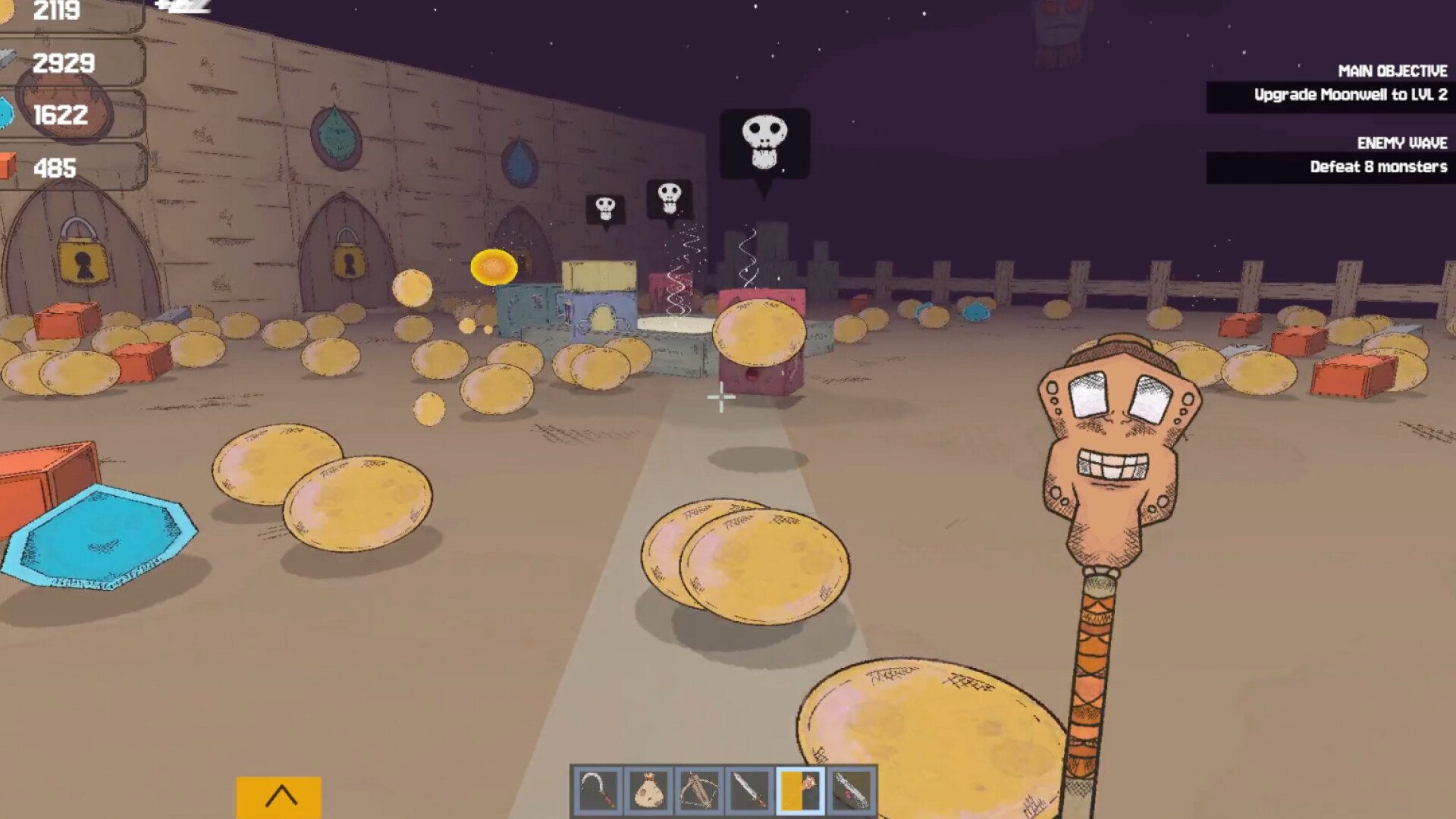
Moondust discs litter the ranch yard as the player works toward the "Upgrade Moonwell to LVL 2" objectiveImage: Jestercraft via Steam -
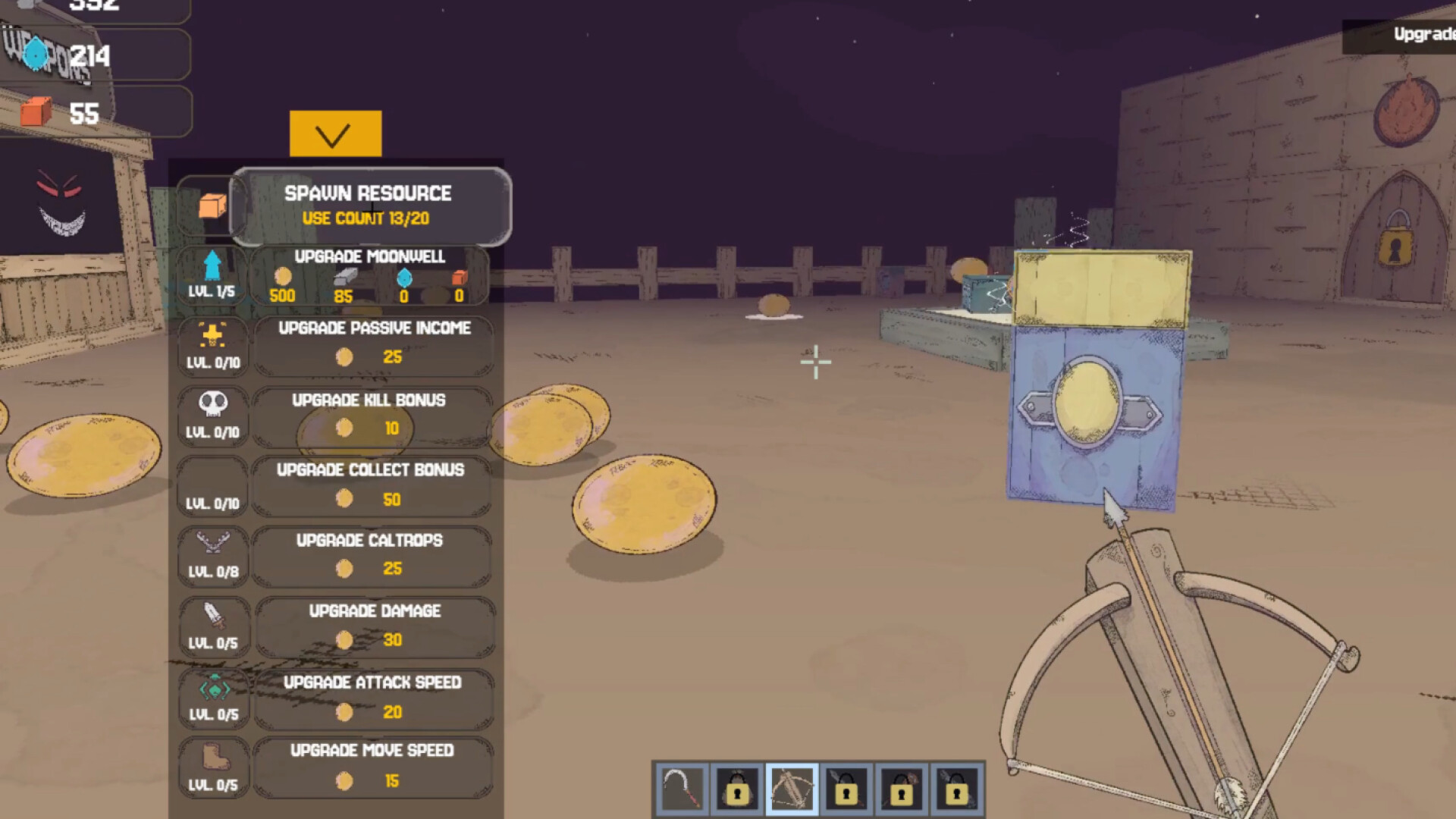
The upgrade menu lists the game's core incremental purchases, from Moonwell upgrades to combat stat boostsImage: Jestercraft via Steam -
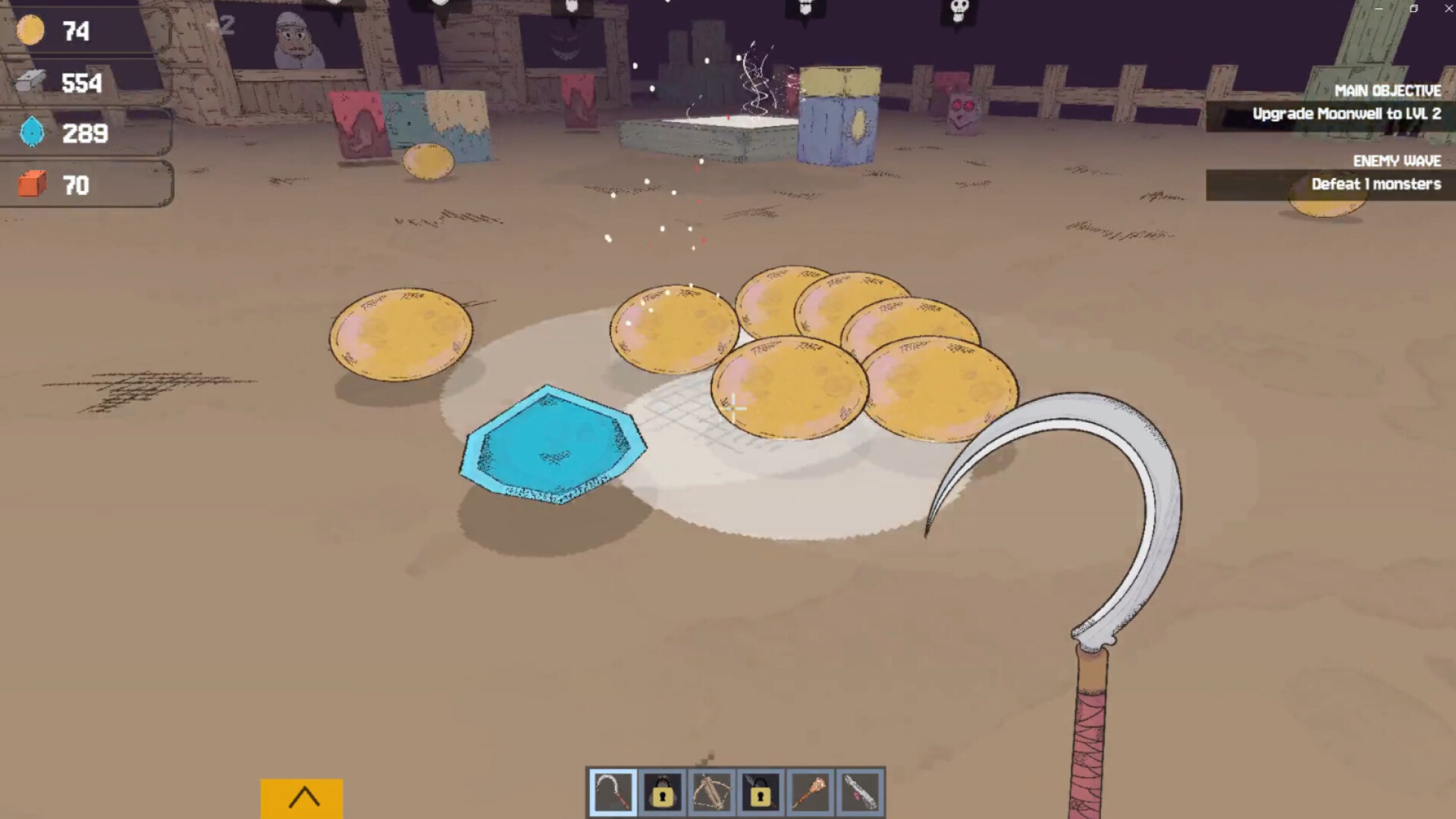
Wielding the scythe while collecting Moondust and gems during an enemy waveImage: Jestercraft via Steam