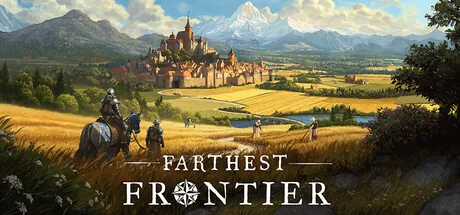
Game review
Farthest Frontier
7.5 / 10
- Developer
- Crate Entertainment
- Publisher
- Crate Entertainment
- Released
- 23 October 2025
- Platforms
- Windows
- Genre
- City-Building Survival Simulation
- Monetisation
- One-time purchase for the base game; an optional paid cosmetic-and-utility DLC, Cats and Dogs, was added in May 2026
- Players
- Single-player only, no co-op
The short version
Farthest Frontier takes the no-money, self-sufficient city builder that Banished popularised in 2014 and gives it the farming system, disease model and tech tree that genre always seemed to be missing, then finally gives it something Banished never had: real endgame goals in the form of monuments and victory conditions, added at the 1.0 launch. Three years in Early Access and sixteen major updates bought it a Very Positive Steam rating and an 83 on Metacritic, and the developer kept shipping free content after launch rather than walking away.
It also bought it the genre's oldest problem back: once the tech tree stops handing out new buildings, a meaningful share of players — in reviews written in 2023 and reviews written last month — describe the same mid-game plateau, the same erratic worker pathing, and a simulation that visibly strains once a town passes a couple hundred residents.
Biggest strengths
- The crop-rotation, soil-fertility and disease-prevention systems are more detailed than almost anything else in the genre, and it's the system critics and players cite most often
- Monuments and victory conditions, added at the 1.0 launch, finally give the "no money, self-sufficient town" formula an actual endgame goal instead of an open-ended sandbox with nowhere to go
- Pacifist mode and adjustable raider, disease and disaster settings let the same map run as either a tense survival fight or a slower building exercise
Biggest weaknesses
- Worker AI still routes goods and repairs unreliably once a town grows past a couple hundred residents, a complaint that runs from the 2022 Early Access build straight through to reviews posted in mid-2026
- Simulating that population size taxes the CPU hard enough that recent reviews report overheating and stutter regardless of GPU horsepower — this is a simulation-load problem, not a graphics-settings one
- The 1.0 rebalance swung combat difficulty for a number of players, who report villagers now dying to raiders and predators that used to be manageable
Who it's for: Colony-sim veterans who want the deepest farming and disease systems the genre currently offers, and anyone who bounced off Banished's shallow midgame and wants to know if its clearest successor actually fixed that problem.
Our recommendation: Worth the NZ$29.99 asking price for the first fifty to eighty hours it takes to push a town through the full tech tree, less certain as a hundred-hour game — buy it for the farming and the survival tension, not for the promise of an endless city.
7.5 / 10
Type "Farthest Frontier is" into a Steam review and the sentence almost always finishes with "Banished, but." Banished, but with a real tech tree. Banished, but with crop rotation and soil fertility instead of a single generic farm tile. Banished, but with sixteen diseases instead of one abstract health bar. It's not an unfair comparison — Crate Entertainment, the studio behind the action RPG Grim Dawn, built Farthest Frontier squarely on the foundation Banished laid in 2014, and spent three years in Early Access filling in almost everything that game left out. What's more interesting is what happens after the comparison: Farthest Frontier hits the same wall Banished did, just later and with more systems standing around when it happens.
A survival game wearing a city builder's clothes
The pitch is close to Banished's — no money, no trade for trade's sake, a town that lives on whatever its people can grow, gather or craft — but the execution goes several layers deeper. Sixteen raw materials, nineteen food types split across foraging, fishing, hunting and twelve distinct crops, and thirty-two crafted goods feed a production chain that actually rewards reading the land before committing to it. The farming system in particular earns its reputation: crop rotation matters, soil fertility depletes and has to be managed, and pushing too much farmland into the wrong soil type or skipping a rotation cycle produces a genuinely visible decline in yield rather than a number quietly dropping in a menu somewhere. Disease works the same way. Dysentery, scurvy, frostbite, rabies and eventually the bubonic plague all have specific, learnable causes — dirty water, poor diet, missing footwear, unmanaged vermin — which turns town planning into something closer to a public-health problem than a spreadsheet exercise.
None of that is forced. A pacifist toggle removes raiders and combat entirely for players who just want the survival-logistics puzzle, while the difficulty sliders for disease, disasters and invaders can be pushed the other way for a genuinely brutal opening. That range is one of the game's real strengths: the same town-planning skills apply whether the map is trying to starve you or just quietly testing your patience.
What 1.0 actually added
The headline change at the October 2025 launch wasn't cosmetic. A revamped, 142-point tech tree replaced the earlier progression, and — more importantly for a genre that has always struggled with a finish line — monuments and victory conditions arrived for the first time, giving players an actual goal beyond "keep the town alive indefinitely." That single addition addresses the exact complaint that follows Banished around to this day: a game like this eventually runs out of new problems to solve, and having a monument to build toward at least gives the second half of a long game somewhere to point. Bridges, dozens of new buildings and a policy system for shaping how a town governs itself rounded out the update, and April 2026's free 1.1 patch kept the momentum going with gridless building and a guided onboarding path for new players — a genuine acknowledgment that the game's early hours had been intimidating for exactly the kind of player it's trying to attract.
It's a stronger post-launch story than most Early Access graduates manage, and it shows up in the numbers: Very Positive across more than 24,000 Steam reviews (86% positive) and an 83 on Metacritic, sitting alongside 1.2 million copies sold and 1.6 million wishlists accumulated during Early Access.
The complaint that never went away
Set the review timestamps against each other and a specific pattern falls out. A negative review from August 2022, in the first week of Early Access, describes a "beautiful game, nice farming system, trash resource management and no actual balance." A negative review from July 2026 — nine months after 1.0 and fourteen months after that — opens with almost the same list: "The biggest problem with Farthest Frontier isn't balance, difficulty, or complexity. It's that the game constantly wastes the player's time." Reading through a full sample of negative reviews, roughly a third were written after the October 2025 launch, and they're not relitigating settled Early Access grievances — they're making fresh ones. One reviewer with over 25,000 minutes logged calls the 1.0 state "not fully cooked," suggesting readers wait for a 2.0 that hasn't been announced. Another, writing in November 2025, says the game "began Early Access with a strong core and beautiful aesthetic, but the 1.0 release disappointingly failed to evolve beyond it."
The specific, recurring technical complaint is worker logistics. Villagers path past a nearby storehouse to reach a farther one, repair queues stall without a manual nudge, and once a town clears roughly two hundred residents the AI visibly starts losing the thread — the exact same shape of complaint Banished has carried for over a decade, just arriving a bit later in this game's longer, denser tech tree. Performance compounds it rather than sitting apart from it: at that same population threshold, several 2026 reviews describe machines running hot and stuttering regardless of GPU class, which points to the simulation itself being CPU-bound rather than a graphics-settings problem players can simply turn down. One reviewer's diagnosis — "the GPU usage only sits around 40%" while the game still struggles — is a fair summary of what a few dozen other reviews describe in less technical language.
The 1.0 rebalance introduced a newer complaint on top of the older ones: several players who'd been managing raiders comfortably for years report villagers now dying too easily to threats that used to be survivable, a swing that reads as the kind of overcorrection that happens when a studio tunes combat against feedback gathered from a different build.
What the achievement data adds
Steam's global achievement percentages for Farthest Frontier corroborate the shape of the problem without spelling out a single dramatic cliff. The most commonly earned achievement across the game's 74-strong list sits at 41.7% of all owners — already meaning a majority of people who own the game haven't cleared even its most accessible milestone. From there the curve declines steadily rather than falling off a single edge: it's already under 10% by the game's third dozen achievements, and the long tail of late-game and mastery achievements sits at a fraction of a percent. That's a smoother decay than the "everyone quits at the same wall" pattern some idle and incremental games show, which fits a game this systemically dense — there isn't one obvious stopping point, just a wide spread of players who each hit their own ceiling somewhere in the tech tree rather than at a shared milestone.
Value and what comes with it
At NZ$29.99, discounted from a NZ$49.99 list price at the time of writing, Farthest Frontier is priced like a substantial, systems-heavy release rather than an indie curiosity, and for the first fifty-plus hours it takes to work through the full tech tree it earns that price. The one thing worth flagging for anyone coming from Banished's flat, one-and-done purchase model is that Farthest Frontier has started building outward from the base game: Cats and Dogs, a paid DLC adding companion animals, arrived in May 2026 for NZ$8.74. It's optional and doesn't gate core systems, but it's a first step toward the kind of ongoing monetisation Banished never touched, and worth watching if more paid content follows.
Final verdict
Farthest Frontier does what a spiritual successor is supposed to do: it takes a genuinely distinctive premise and builds out everything the original left thin, and the farming and disease systems it adds are, on their own, worth the price of admission for anyone who found Banished's version too shallow. The monuments and victory conditions added at 1.0 are a real structural improvement that gives the genre's classic formula something to build toward for the first time. What keeps it at 7.5 rather than higher is that the game's oldest, least glamorous problem — villagers who can't be trusted to manage their own logistics once a town gets large, and a simulation that strains under its own population — followed it from the first week of Early Access all the way through the 1.0 launch and into 2026, and a meaningful slice of the people who bought it at "1.0" are saying, in effect, that the milestone didn't move the needle on the thing they actually wanted fixed.
Anyone drawn to a town that keeps ticking along on its own systems rather than waiting for direct input every second might also find something familiar in Wanderer, where progression continues to accumulate whether or not you're actively steering it.
Pros and cons
Pros
- The crop-rotation, soil-fertility and disease-prevention systems are more detailed than almost anything else in the genre, and it's the system critics and players cite most often
- Monuments and victory conditions, added at the 1.0 launch, finally give the "no money, self-sufficient town" formula an actual endgame goal instead of an open-ended sandbox with nowhere to go
- Pacifist mode and adjustable raider, disease and disaster settings let the same map run as either a tense survival fight or a slower building exercise
- Fully parameter-adjustable random map generation plus Steam Workshop support keeps individual towns from converging on one ideal layout
- Crate Entertainment shipped a free major update, 1.1, six months after the 1.0 exit rather than treating the version number as a finish line
Cons
- Worker AI still routes goods and repairs unreliably once a town grows past a couple hundred residents, a complaint that runs from the 2022 Early Access build straight through to reviews posted in mid-2026
- Simulating that population size taxes the CPU hard enough that recent reviews report overheating and stutter regardless of GPU horsepower — this is a simulation-load problem, not a graphics-settings one
- The 1.0 rebalance swung combat difficulty for a number of players, who report villagers now dying to raiders and predators that used to be manageable
- A real share of the negative reviews written after the October 2025 1.0 launch still describe the game as feeling unfinished, arguing the milestone patch didn't resolve Early Access's core complaints
- Windows only, no controller support, and no multiplayer or co-op of any kind
Screenshots
-
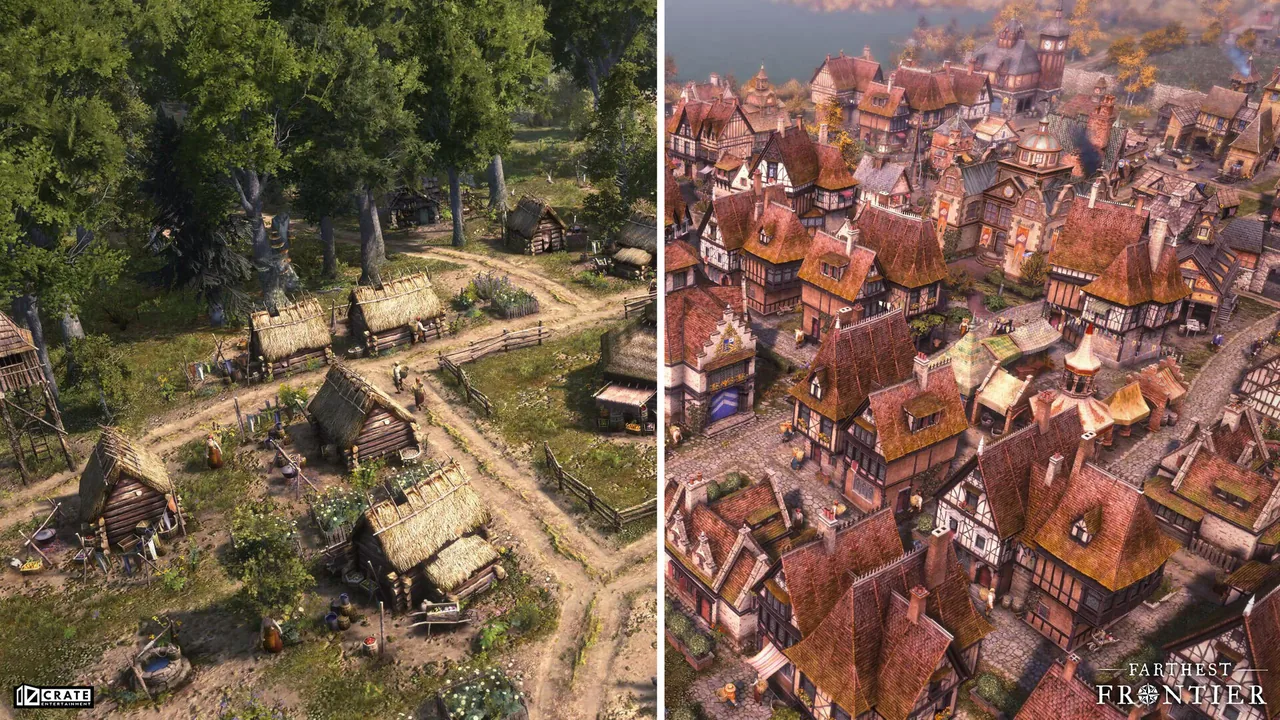
Farthest FrontierImage: Crate Entertainment via Steam -
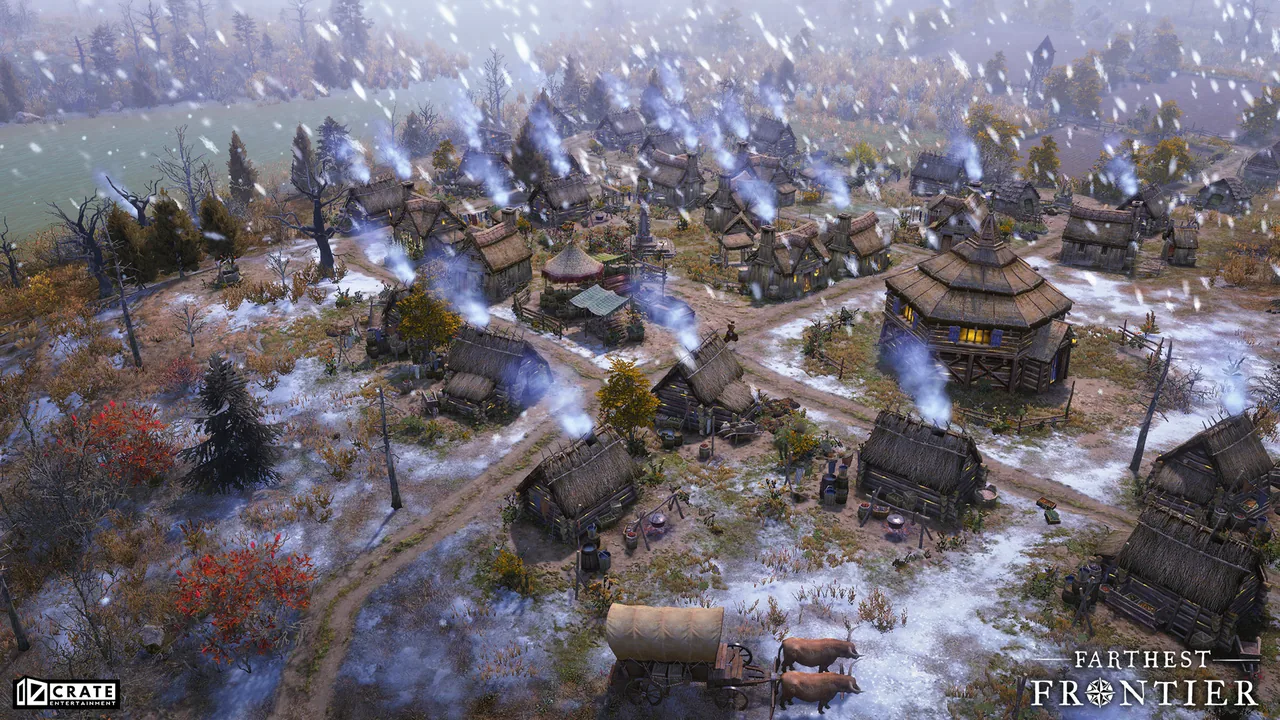
Farthest FrontierImage: Crate Entertainment via Steam -
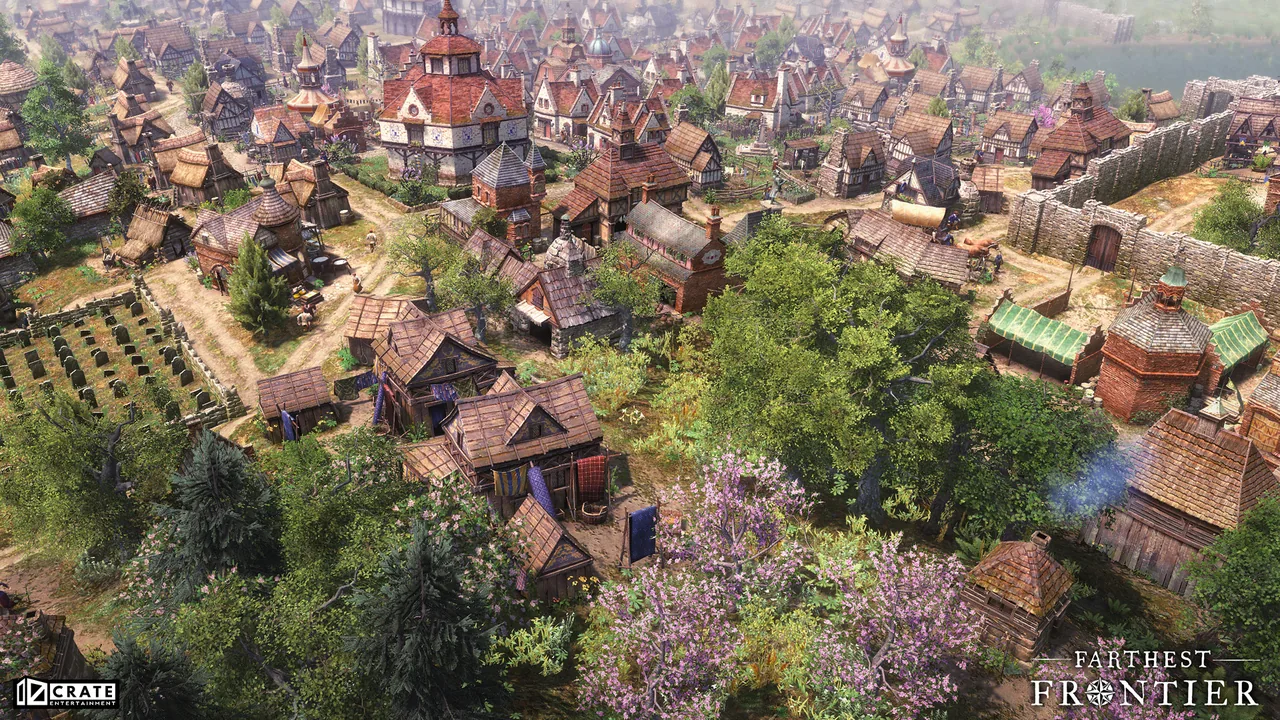
Farthest FrontierImage: Crate Entertainment via Steam -
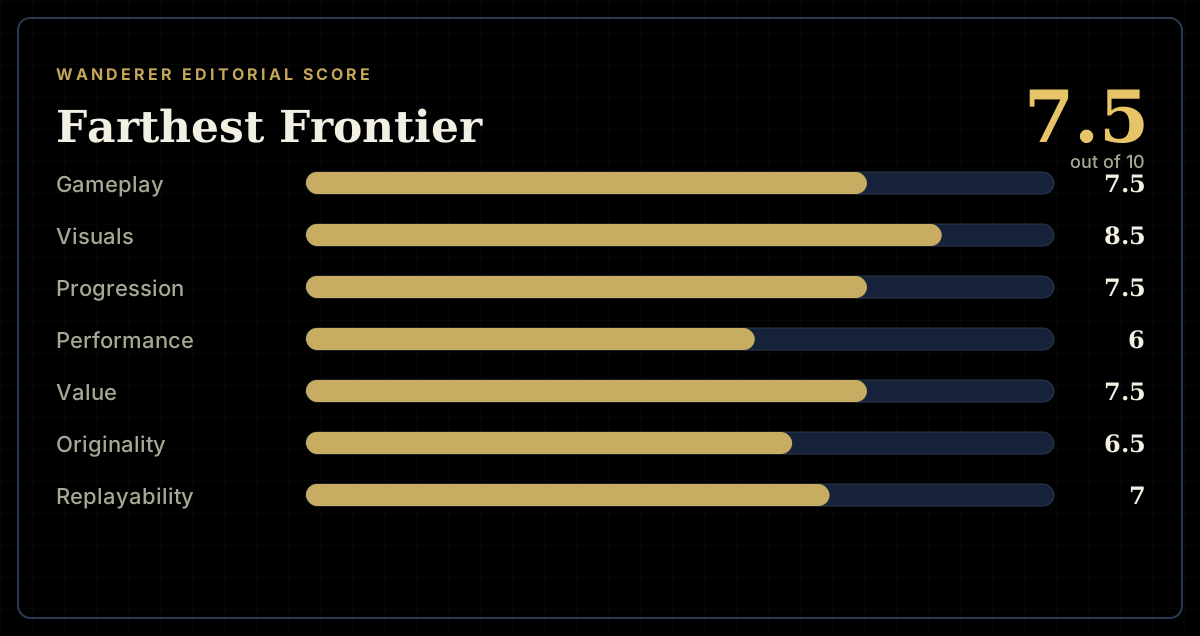
How the review scores each part of the gameWanderer Editorial -
The short versionWanderer Editorial