Game review
Songs of Syx
7.5 / 10
- Developer
- Gamatron AB
- Publisher
- Gamatron AB
- Released
- 21 September 2020
- Platforms
- Windows, macOS, Linux
- Genre
- City-building and grand strategy simulation
- Monetisation
- Premium, one-off purchase. No DLC, no expansions, no cosmetic store, no premium currency and no subscription of any kind — the entire six years of Early Access content has shipped as free updates to the base purchase
- Players
- Single-player only; there is no co-op, competitive mode or shared-world feature, and none is on the public roadmap
The short version
Songs of Syx sells itself on a number most colony sims never touch — tens of thousands of individually simulated citizens and soldiers, run by a single developer, for a single flat price. That number is real, and it changes what kind of game this actually is: you stop managing people and start managing a population, with food chains, industry, religion, race relations, immigration and an empire beyond your walls all competing for the same finite labour pool. It's a genuinely different kind of colony sim, not just a bigger one.
The cost of that scale is the interface, and it is a real cost, not a footnote. Information is buried behind menus that assume you already know where to look, the tutorial covers the first hour and stops, and getting a city past its first few thousand citizens without outside help is close to impossible. Six years into Early Access, with no fixed date for 1.0, this is a spreadsheet-lover's game before it's anything else — extraordinary for the player willing to read a wiki, and actively hostile to anyone who isn't.
Biggest strengths
- Citizens and soldiers are simulated in the tens of thousands rather than the dozens most colony sims manage, and the engine stays smooth doing it
- Food production, industry, services, religion, race relations and immigration are genuinely interconnected, not decorative sliders bolted onto a building list
- The empire and military layer beyond the walls turns a strong city into a geopolitical actor, with real diplomacy and battles fielding armies up to 50,000 units
Biggest weaknesses
- Essential information is buried behind cryptic tooltips and multi-layered menus, and even veteran players report never fully memorising the interface
- The built-in tutorial only covers the earliest hours, leaving mid-game systems like research staffing and army logistics to be learned from outside guides
- Several core systems get noticeably harder to manage the more successful a city becomes, with research and military logistics singled out as the worst offenders
Who it's for: Players who already enjoy Dwarf Fortress or RimWorld for the systems rather than the story, who don't mind a wiki tab staying open for the first twenty hours, and who specifically want to manage a city-state rather than a household. A poor fit for anyone who wants a colony sim to explain itself, or who's hoping for individual colonists with names and grudges — at this scale, nobody gets one
Our recommendation: Buy it if the idea of running population-level logistics for a city of thousands genuinely appeals to you, and go in expecting to spend real time in the Steam Workshop guides or the wiki before the interface stops fighting you. Skip it, for now, if you want a finished 1.0 game or a colony sim that teaches itself — this is still Early Access, and the roadmap has no fixed end date
7.5 / 10
Every colony sim eventually asks you to care about a person. RimWorld gives that person a backstory and a mental-break threshold. Dwarf Fortress gives them a body map and a grudge they'll remember for years. Songs of Syx looks at that convention and drops it entirely — there is no colonist screen with a name, a mood bar and a list of favourite foods, because by the time a city here is worth playing, it has thousands of citizens and you were never going to read all their profiles anyway. Gamatron AB's solo-developed fantasy city builder asks a genuinely different question from its peers: what happens to a management sim when the unit of decision stops being a person and becomes a population? Six years into Early Access, with a Very Positive rating holding steady across more than six thousand Steam reviews, the answer is interesting enough to carry the game — right up until you open a menu.
Scale as a design goal, not a spec line
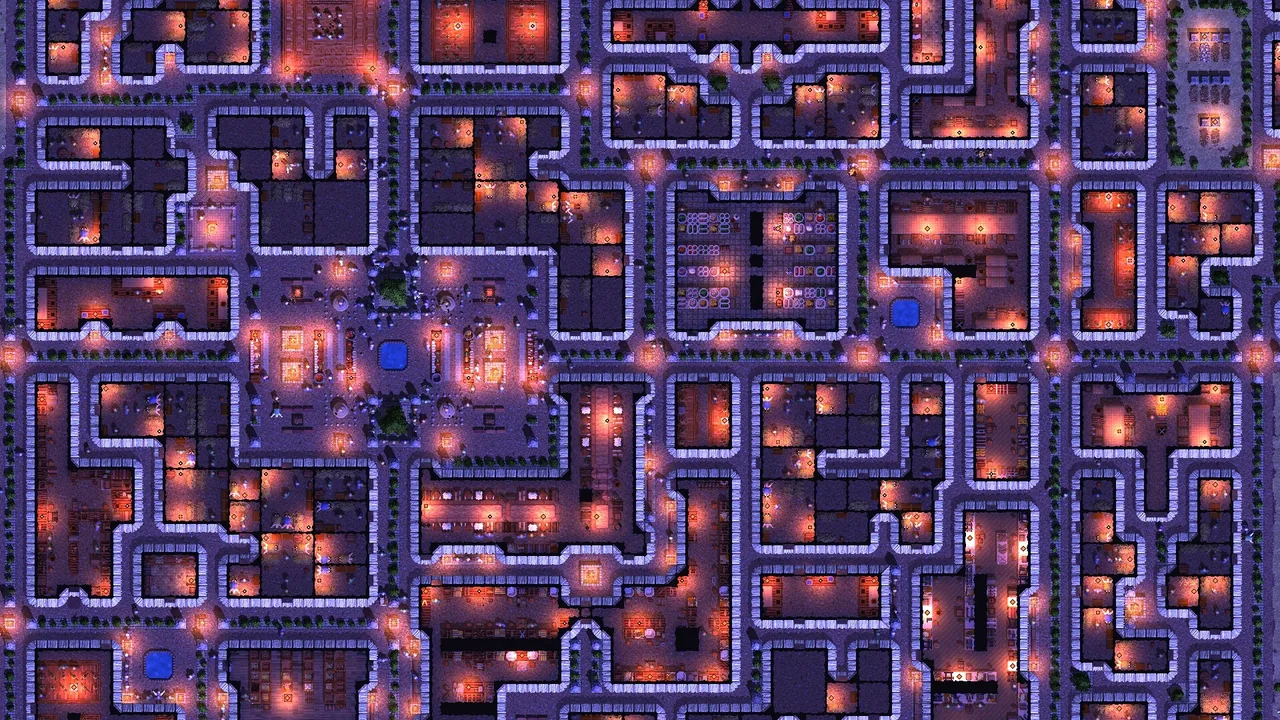
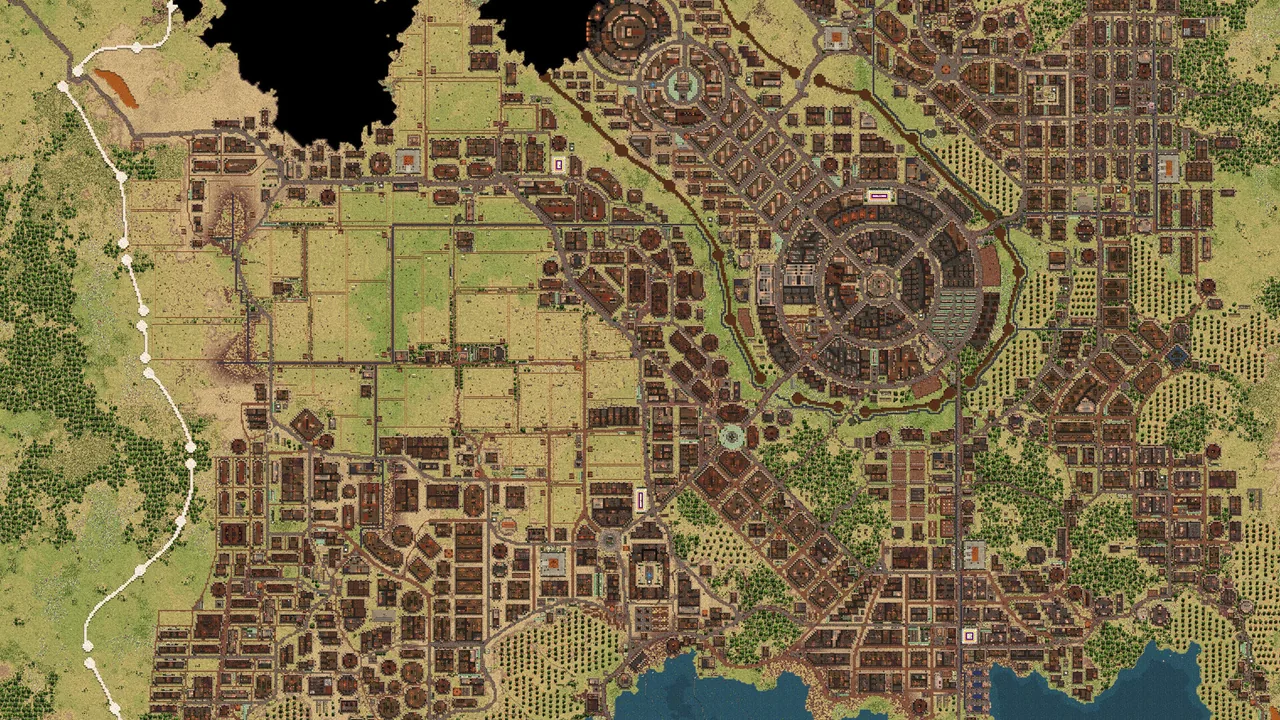
"Tens of thousands of citizens and soldiers" is the developer's own framing on the Steam store page, and it isn't marketing padding — the game's battle system is built to field armies of up to 50,000 individual units, and city population figures in the tens of thousands are treated as a normal, reachable state rather than a theoretical ceiling. Player accounts of actual play settle into a wide band beneath that: cities in the low thousands are common, players report a soft cap emerging somewhere in the low five figures as logistics start to strain, and getting meaningfully further than that becomes its own late-game project. That gap between the headline number and what typically gets reached matters less than what the number does to the game's structure either way. Dwarf Fortress and RimWorld both let a settlement grow large, but both are still, fundamentally, asking you to track individuals — who's tired, who's angry, who just lost a friend. Songs of Syx makes that tracking impossible by design and replaces it with something else: you stop asking "is this dwarf happy" and start asking "does this district have enough grain," and that shift changes the entire genre of decision you're making, turn after turn.
The systems doing the actual work
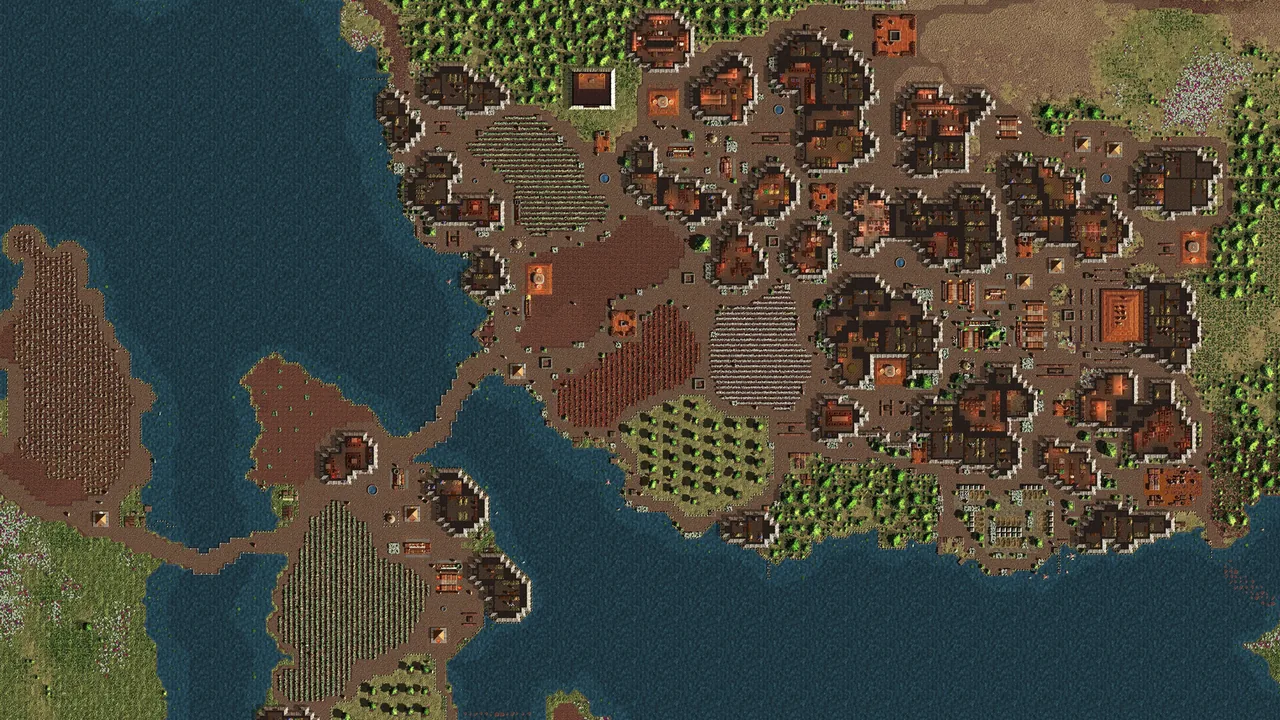
Underneath the population count sits a genuinely interlocking set of simulations rather than a checklist of building types. Food isn't one resource but a chain — farming, ranching, fishing and food processing each have their own throughput, storage and spoilage considerations, and a city that gets the balance wrong doesn't just run low on one item, it starves a specific district while another sits fine. Industry chains raw materials through multiple production stages before they become usable goods, which means a shortage three steps upstream shows up as a mysterious stall three steps downstream, exactly the kind of indirect failure that rewards a player who's actually built a mental model of the supply chain rather than one clicking through a build menu. Services, religion and race relations layer on top of that economic base: different playable races have different needs, tolerances and social frictions, immigration brings in more of whichever races are willing to settle, and managing a genuinely multi-race population means balancing housing, religious accommodation and labour assignment against groups that don't always want the same things. None of these are decorative — a city that ignores race relations or religious needs generates the unrest that eventually breaks it, the same way a city that ignores food generates famine.
The layer that separates this from a pure city builder is what happens once a city is strong enough to matter beyond its own walls. Diplomacy, trade agreements and warfare with neighbouring settlements turn a successful city into a geopolitical actor, and the empire-management systems the developer has been building toward — vassal nobility, expanded diplomacy — are explicitly the centrepiece of what's still coming before 1.0. It's the one part of the design that currently reads as unfinished rather than merely dense, and it's worth knowing that going in: the walls-in city sim is the most complete part of the package right now, and the empire game around it is still being built in public.
The interface is the actual crux
For a game this systemically ambitious, the interface isn't a secondary complaint — it's close to the whole review. Player feedback is remarkably consistent on this specific point regardless of how much someone otherwise loves the game: essential information sits buried behind menus that assume prior knowledge rather than surfaced where a decision is being made, tooltips are frequently described as cryptic or simply absent where they're needed most, and completing what should be a simple action — trading a single resource, say — can mean navigating several layers of submenu to get there. This isn't the RimWorld problem of a dense-but-learnable UI that mods eventually smooth out, and it isn't quite Dwarf Fortress's old terminal-command wall either. It's closer to both at once: a genuinely large amount of interconnected information with comparatively little of it surfaced contextually, and — unlike Dwarf Fortress, which got a full commercial interface rebuild in 2022 — no equivalent overhaul has shipped here yet. Long-time players consistently describe the interface as something you eventually work around through memorised habit rather than something the game teaches you, and more than one has noted that even after a hundred hours they still can't reliably recall which button does what. That's the honest state of it: learnable, not solved.
The tutorial doesn't close that gap. It covers the opening hour or two — founding a settlement, getting basic food and shelter running — and then stops well short of research management, army logistics, or the immigration and religion systems that define the mid-game. Reviewers have compared the experience of moving past the tutorial to reading a children's book and then being handed a physics textbook, and while that's a deliberately unkind way to put it, the underlying complaint is fair: this is a game that expects a wiki tab open for a long time, and it doesn't apologise for that expectation anywhere in its own onboarding.
Early Access, six years in
Songs of Syx entered Early Access on 21 September 2020, on top of development the sole developer — credited on Steam simply as Jake, working under the one-person studio Gamatron AB — describes as reaching back to 2015. The update cadence since launch has been genuinely steady rather than sporadic: V70 "Riders of Doom" landed in December 2025 with a war-focused overhaul of cavalry and battle mechanics, and V71 "Reign of Terror" followed on 15 June 2026 with a rebuilt law, order and slavery system, each shipped as a substantial free update rather than a minor patch. The developer's own roadmap post from March 2026 frames V71 as effectively the last big content pass before 1.0, with remaining priorities centred on nobility, empire management and a proper campaign and tutorial — but the same post declines to commit to a date, and the project's history of shifted timelines means that's worth taking at face value rather than optimistically. This is not a stalled Early Access title; the cadence and scope of what's shipped in the last twelve months alone would be a strong year for most funded studios, let alone one person. It is, however, still explicitly unfinished, with the tutorial and empire layer the developer names as the biggest gaps.
Who this is actually for
Be honest about the audience here, because the game itself is. This is built for players who like systems more than stories, who are comfortable being bad at something for the first several hours, and who genuinely enjoy the process of reading a wiki or a Workshop guide to understand a mechanic the game never explained itself. If that description doesn't appeal, nothing about the scale or the price should override that — the interface will be the first thing you notice, and it doesn't get meaningfully friendlier the longer you look at it, only more familiar. For the player it is built for, though, there's very little competition at this specific scale. RimWorld is a better game at telling stories about individuals, because it's built to track individuals; it simply isn't built to run a city of ten thousand people, and doesn't try to be. Dwarf Fortress commits just as hard to systemic honesty — geology, individual psychology, generational history — but stays deliberately small in population so that honesty stays affordable to simulate. Songs of Syx is the one asking what a colony sim looks like once you deliberately give up the individual in exchange for the population, and there's real value in a genre this crowded having at least one entry willing to ask that question all the way through.
Value
At NZ$35.99 with zero DLC six years into active development, Songs of Syx is priced closer to a small indie than to the scope it's actually delivering — a noticeably cleaner proposition than RimWorld's expansion ladder or the soundtrack add-ons attached to most of its genre peers. Everything shipped since 2020, including two major systems overhauls in the last eight months alone, has landed as a free update to the same purchase. For a player confident they want this specific kind of game, that's about as fair a deal as premium PC pricing gets right now.
Verdict
7.5 out of 10. Songs of Syx earns its comparisons to Dwarf Fortress and RimWorld by doing something neither of them attempts: running a genuinely population-scale simulation, with interconnected food, industry, services, religion, race relations and an empire layer beyond the walls, all while staying smooth at a scale that would bring most colony sims to a crawl. That's a real, distinctive achievement for a single developer, and the six-year update record backs it up.
What keeps it below the genre's best isn't ambition, it's presentation. The interface buries information it should surface, the tutorial abandons you right where the real game starts, and 1.0 remains a promise without a date. Buy it for the systems, not for a smooth first afternoon — and go in already planning to lean on a guide.
Pricing, platform and release details checked 2 August 2026.
Pros and cons
Pros
- Citizens and soldiers are simulated in the tens of thousands rather than the dozens most colony sims manage, and the engine stays smooth doing it
- Food production, industry, services, religion, race relations and immigration are genuinely interconnected, not decorative sliders bolted onto a building list
- The empire and military layer beyond the walls turns a strong city into a geopolitical actor, with real diplomacy and battles fielding armies up to 50,000 units
- One flat NZ$35.99 purchase with zero DLC six years into development, refreshingly clean for a project this ambitious
- A single developer has shipped substantial free content updates roughly twice a year since the 2020 Early Access launch without losing momentum
- Steam's Very Positive rating has held at 94% across 6,251 reviews rather than spiking on one patch and fading
Cons
- Essential information is buried behind cryptic tooltips and multi-layered menus, and even veteran players report never fully memorising the interface
- The built-in tutorial only covers the earliest hours, leaving mid-game systems like research staffing and army logistics to be learned from outside guides
- Several core systems get noticeably harder to manage the more successful a city becomes, with research and military logistics singled out as the worst offenders
- Six years into Early Access, 1.0 has no committed date beyond the developer's own "when I am happy with it"
- Visual presentation stays purely functional throughout, with no attempt at the spectacle a city of this scale might suggest
- Invasion and siege bugs, including cases of a city getting stuck permanently besieged, still surface between major versions
Screenshots
-
Songs of SyxImage: Gamatron AB via Steam -
Songs of SyxImage: Gamatron AB via Steam -
Songs of SyxImage: Gamatron AB via Steam -
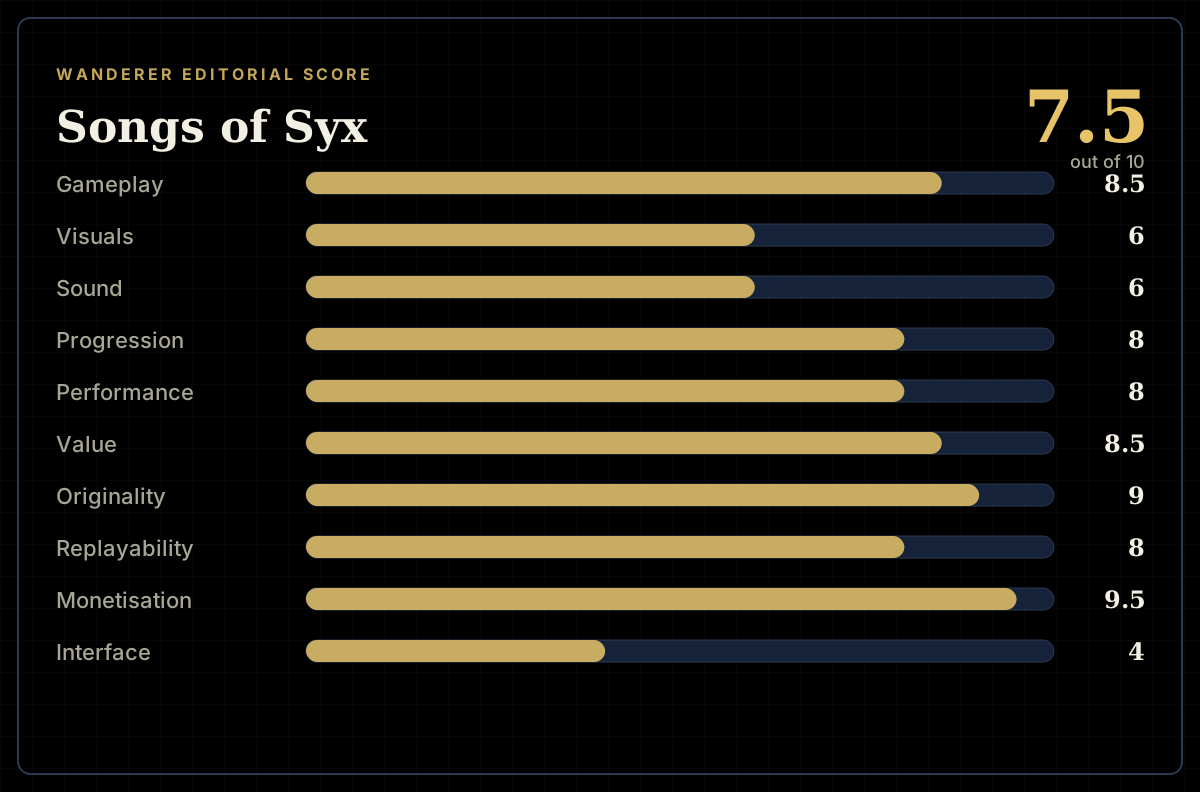
How the review scores each part of the gameWanderer Editorial -
The short versionWanderer Editorial