Game review
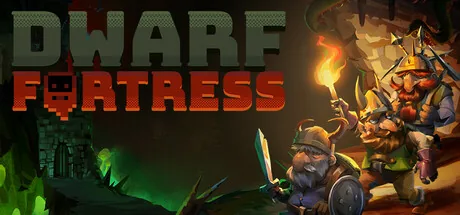
Dwarf Fortress
8 / 10
- Developer
- Bay 12 Games
- Publisher
- Kitfox Games
- Released
- 6 December 2022
- Platforms
- Windows, macOS, Linux
- Genre
- Simulation
- Monetisation
- One-time purchase, no DLC or in-app purchases.
- Players
- Single-player only
The short version
Dwarf Fortress lets players found and manage a colony of dwarves in a procedurally generated fantasy world, simulating everything from individual dwarves' personalities and grudges to centuries of invented history. Steam's aggregate reads Very Positive at 95% of 25,871 English-language reviews — the largest corpus this outlet has covered — and this review read the 100 most-helpful negative reviews of 1,337 total, alongside a wide sample of the positive side.
Its reputation is earned: the positive sample is dominated by genuinely unmatched emergent stories — a mayor punching a giant boar to death, a dwarf secretly sculpting nothing but snails out of spite, an entire fortress lost to a flock of sparrows — that reviewers on both sides agree no other game replicates at this depth. What this review's negative sample reveals, though, is that even many loyal, thousand-hour-plus players write reluctant negative reviews out of respect for the game rather than genuine enthusiasm for its current state: a UI reviewers say remains clunky even after the Steam overhaul, a genuinely brutal onboarding curve that several reviewers say is worse than comparable colony sims like RimWorld, and specific, well-documented performance problems as fortresses grow, with reviewers citing bug-tracker entries open for over a decade. A smaller cluster of reviewers separately allege Kitfox Games has removed Steam Workshop mods it disagreed with, a claim this review could not independently verify.
Biggest strengths
- Genuinely unmatched emergent storytelling, with reviewers on both sides sharing specific, vivid moments no other game in the genre replicates at this depth
- An immense, genuinely singular simulation of individual dwarf personalities, grudges, and relationships layered on top of centuries of procedurally generated world history
- The Steam release is a real accessibility improvement over the original free version, credited by longtime players as making the game newly approachable with graphics and mouse controls
Biggest weaknesses
- A UI that reviewers, including thousand-hour-plus veterans, consistently describe as clunky even after the Steam overhaul, with basic actions like mass-deleting zones or designating a single staircase still difficult or unavailable
- A genuinely brutal onboarding curve that multiple reviewers coming from RimWorld, Factorio, or similar games specifically say is far steeper than expected, requiring constant wiki reference
- Well-documented performance degradation as a fortress grows in size and complexity, a long-standing issue reviewers say has its own dedicated wiki page for mitigation strategies
Who it's for: Colony-sim and emergent-narrative enthusiasts prepared to invest real time fighting an unforgiving interface and learning curve for a depth of simulation no other game matches.
Our recommendation: A genuine landmark worth experiencing for the emergent stories alone — but go in expecting real friction with the UI and onboarding, and lean on the wiki from day one.
8 / 10
Introduction
Dwarf Fortress lets players found and manage a colony of dwarves in a procedurally generated fantasy world, simulating everything from individual dwarves' personalities and grudges to centuries of invented history. Developed by Bay 12 Games and published by Kitfox Games, the Steam release launched on 6 December 2022 at NZ$46.49, adding graphics and a redesigned interface atop the long-running free classic. Its 25,871 English-language reviews sit at 95% positive, Very Positive — the largest review corpus this outlet has covered. Given that scale, this review read the 100 most-helpful negative reviews of the 1,337 total, alongside a wide sample of the positive side.
Genuinely unmatched emergent storytelling
The praise here isn't abstract — it's built entirely from specific, vivid moments that reviewers share unprompted. "Two giant boars wandered in and ate a bunch of children. They then also killed and ate three dwarfs who attempted to help the children. My mayor then walked up to the giant boars and killed them both with her bare hands," reads one of the most-upvoted reviews in this entire sample. Another: "Told my dwarves to make silver statues for my meeting hall. Noticed that EVERY single statue was of a snail. Looked at my metal smith's personality assuming she adores snails. Turns out she 'absolutely detests snails' and she's just showing her disdain through art." A third, more succinctly: "Going from playing Rimworld to playing Dwarf Fortress is like going from reading about Cthulhu to meeting him in person."
A UI that even veterans still call clunky
What this review's negative sample reveals, consistently, is that many critical reviewers are thousand-hour veterans writing reluctant negative reviews, not newcomers bouncing off unfairly. "3 years later and you still can't designate an individual up or down stair," reads one review with 34 hours logged at the time of a later edit, adding that "modding is still more complicated and unwieldy than it needs to be." Another, with 486 hours: "I spent 10 minutes deleting 200 bedroom zones one by one slowly and painfully because there's no way to mass delete zones." A player with 2,075 hours structures an entire review around six specific, itemised problems with the interface despite deep affection for the game underneath it.
A genuinely brutal onboarding curve
Reviewers coming from comparable colony sims are unusually consistent about how much steeper this game's learning curve is. "I have played 200 hours of Rimworld (maybe that's my problem) and am not new to the colony builder games. For a game that is very complicated the tutorial is incredibly brief," reads one. Another, with prior experience in Rimworld, Factorio, Europa Universalis, Stellaris, and Crusader Kings: "Those are all GOOD GAMES. Dwarf Fortress will never be part of those in my heart," citing constant wiki dependence for basic actions. A specific, well-documented performance issue compounds this at the endgame: "Once you have a mature, multilevel fortress, fps death is close... They even have an entire wiki page on fps- the synopsis to avoid it? Don't make a big base."
An unverified modding allegation
A smaller cluster of reviewers raises a separate, more specific concern this review could not verify. "Kitfox censors Steam workshop and delete any mods they don't personally agree with," reads one detailed review. This review found no independent corroboration beyond the reviewers' own accounts and is reporting the claim with attribution rather than asserting it as fact.
Verdict
Dwarf Fortress remains a genuine landmark — this review's full sample confirms its capacity for specific, unmatched emergent storytelling holds up completely, and its influence on the entire modern colony-sim genre is undeniable. But this review's negative sample also reveals real, well-documented friction that persists years after the celebrated Steam release: a UI even loyal veterans call clunky, a brutal onboarding curve, and performance problems with their own dedicated wiki page. Worth experiencing for the depth alone — just go in with the wiki bookmarked and patience for a genuinely difficult game.
Pros and cons
Pros
- Genuinely unmatched emergent storytelling, with reviewers on both sides sharing specific, vivid moments no other game in the genre replicates at this depth
- An immense, genuinely singular simulation of individual dwarf personalities, grudges, and relationships layered on top of centuries of procedurally generated world history
- The Steam release is a real accessibility improvement over the original free version, credited by longtime players as making the game newly approachable with graphics and mouse controls
- Directly influential on the entire modern colony-sim genre, including RimWorld and Oxygen Not Included, which reviewers repeatedly reference as easier entry points into the same ideas
Cons
- A UI that reviewers, including thousand-hour-plus veterans, consistently describe as clunky even after the Steam overhaul, with basic actions like mass-deleting zones or designating a single staircase still difficult or unavailable
- A genuinely brutal onboarding curve that multiple reviewers coming from RimWorld, Factorio, or similar games specifically say is far steeper than expected, requiring constant wiki reference
- Well-documented performance degradation as a fortress grows in size and complexity, a long-standing issue reviewers say has its own dedicated wiki page for mitigation strategies
- Reviewers cite specific bug-tracker entries open for over a decade, and report crashes and lost progress even in the commercial Steam release
- A cluster of reviewers separately allege Kitfox Games has removed Steam Workshop mods it disagreed with, a claim this review could not independently verify
Screenshots
-
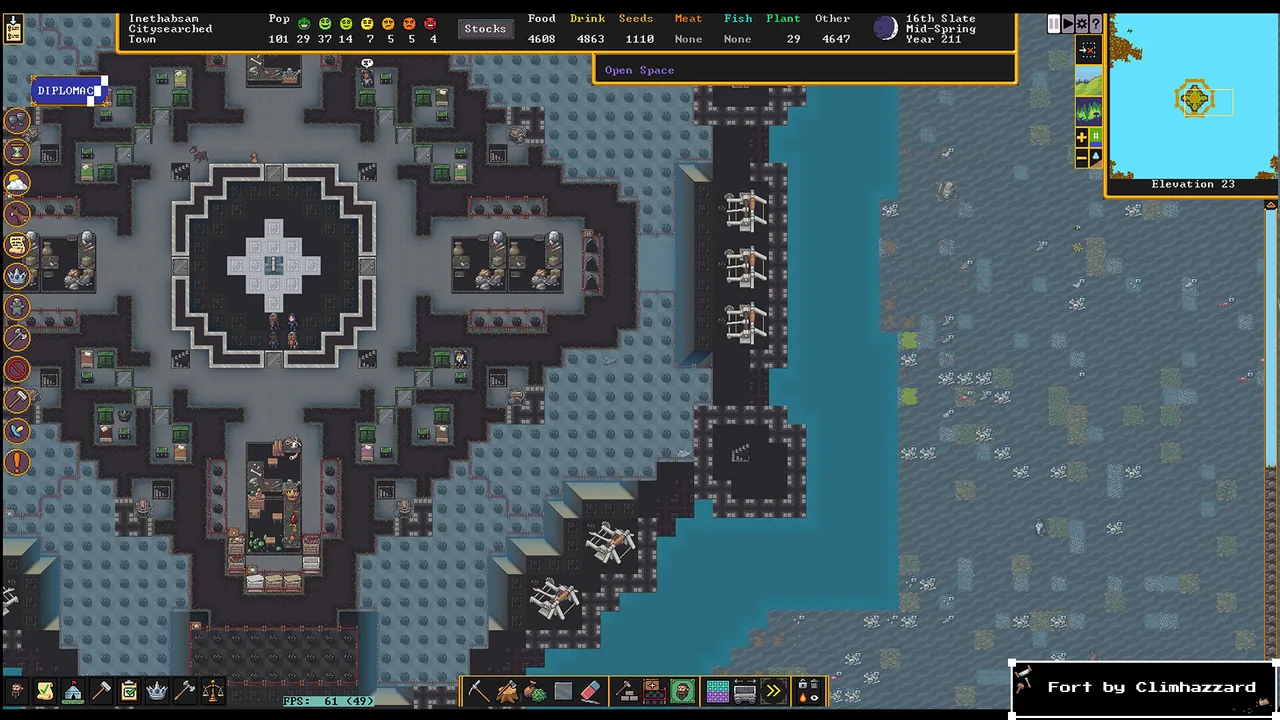
Dwarf FortressImage: Kitfox Games via Steam -
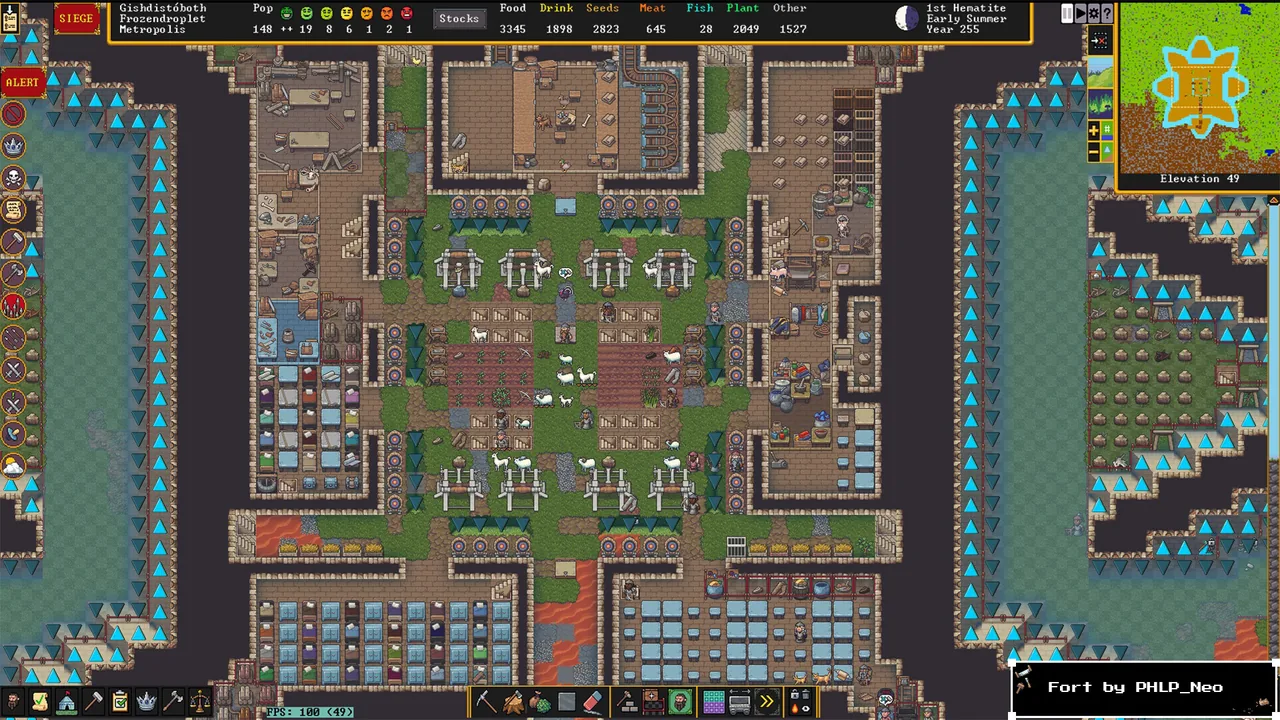
Dwarf FortressImage: Kitfox Games via Steam -
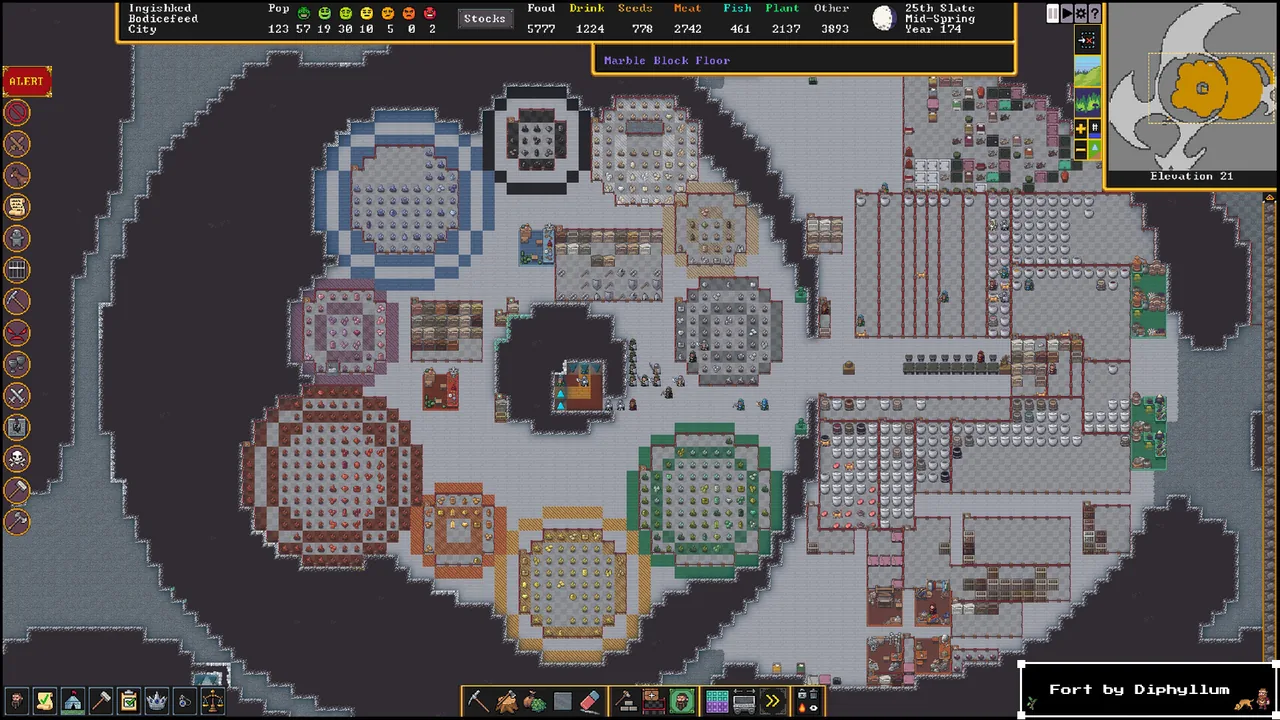
Dwarf FortressImage: Kitfox Games via Steam -
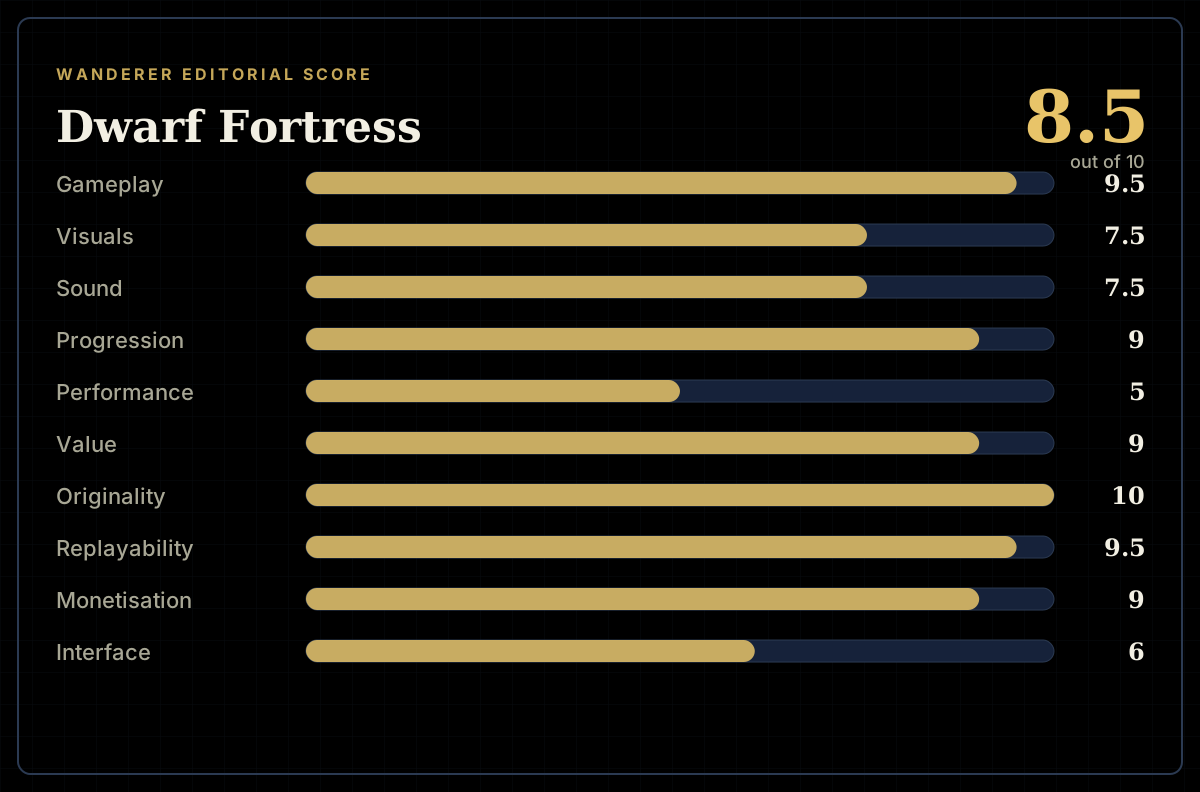
How the review scores each part of the gameWanderer Editorial -
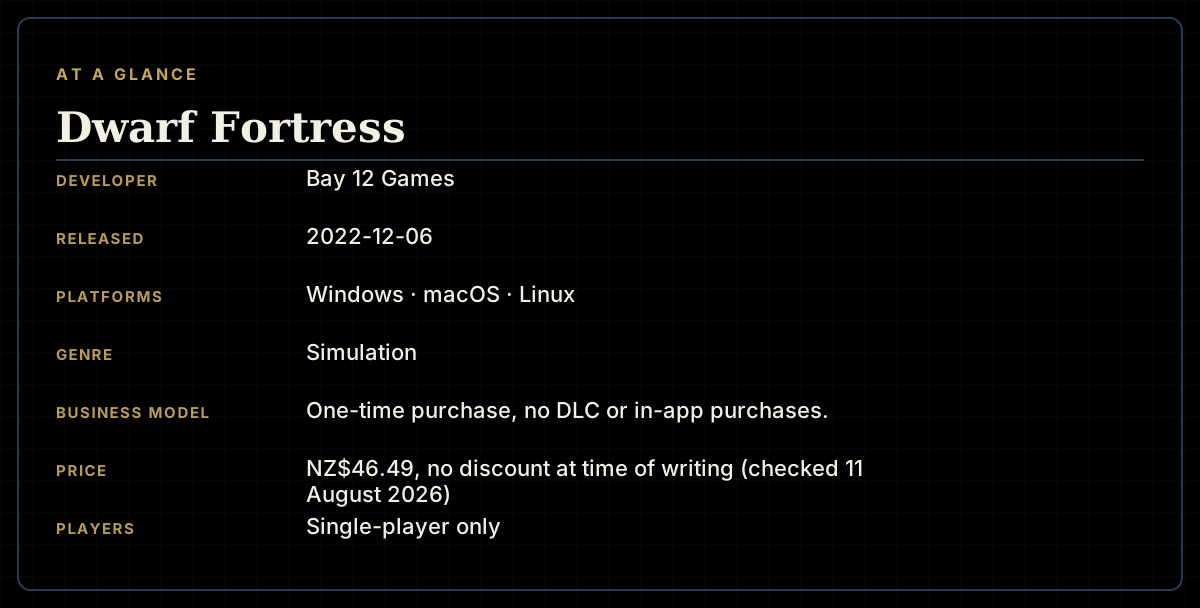
The essentials at a glanceWanderer Editorial -
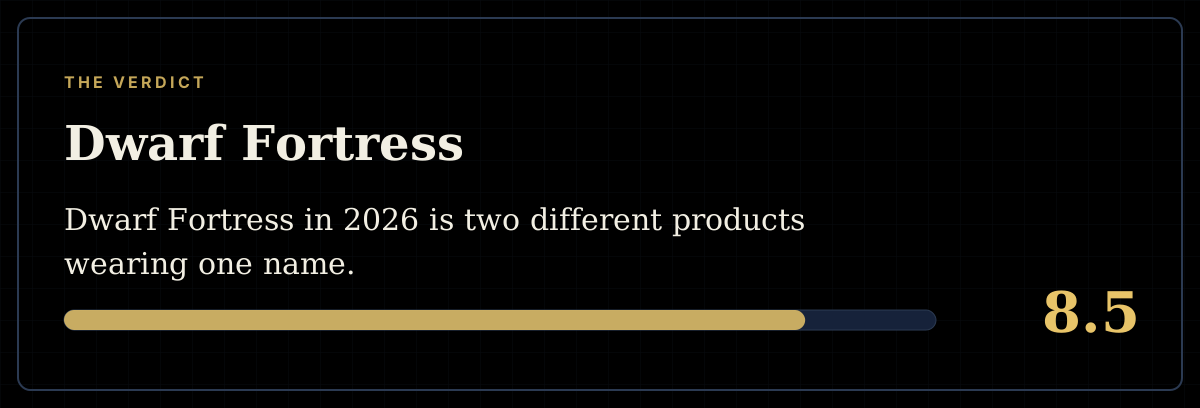
The short versionWanderer Editorial