
Game review
Dear Magical Girls
8.5 / 10
- Developer
- GIGABlock Studio
- Publisher
- Jungle Game Lab
- Released
- 31 July 2026
- Platforms
- Windows
- Genre
- Tower Defense
- Monetisation
- Free to play; no in-game store, no IAP
- Players
- None; fully single-player
The short version
Dear Magical Girls asks a simple question its own tagline answers with a knife's edge of irony: "Even when it hurts, even when it breaks you, a magical girl should always smile, right?" Arin is four years into the job of protecting her city's mana stones, running on sleepless shifts and emergency dispatches, and the game around her is a tower-defense strategy built on reshaping a living barrier — moving its vertices to control which resource nodes fall inside your defended territory — to hold back waves of beasts from the Otherworld.
A hundred and twenty-nine of its first hundred and thirty-one reviewers recommend it, a reception rare enough on its own, but what stands out reading through the sample is how many players reach for the exact same reference point unprompted: Madoka Magica, cited independently by reviewers writing in English, Korean and Japanese. Two of those reviewers go further and identify where the game actually comes from — a release from KRAFTON's "Jungle Game Lab," a developer-incubator program that quietly ships small, free games from emerging teams without much fanfare. For a project built that way, in that timeframe, the reception is remarkable.
Biggest strengths
- A genuinely distinctive core mechanic — reshaping a barrier by moving its vertices to control territory and resource flow — that reviewers repeatedly single out as fresh for the genre
- A well-told, tonally sharp story that an unusually large number of independent reviewers, across English, Korean and Japanese, spontaneously compare to Madoka Magica, treating the game's shift from a cute premise into something darker as genuinely earned rather than derivative
- Completely free with no monetisation of any kind, prompting a recurring, half-joking complaint across the review sample that players wish they could pay for it
Biggest weaknesses
- Almost every reviewer describes the game as too short, typically finishing in around one to one and a half hours, with "I wish it was longer" as close to a universal sentiment as this review has seen in any sample
- One detailed Korean-language review argues the tower-defense strategy flattens out in the back half, where simply increasing tower count comes to dominate over the positioning and directional decisions the barrier-reshaping mechanic initially promises
- A Traditional Chinese review makes a related point about build variety, arguing that stacking attack speed alone clears most of the game's content without needing to seriously weigh alternative weapon or module combinations
Who it's for: Tower defense fans and magical-girl genre fans alike, especially anyone who enjoyed Madoka Magica's tonal turn from cute premise to something much darker underneath.
Our recommendation: An easy, strong recommendation — it costs nothing, takes about an hour and a half, and delivers a genuinely distinctive tower-defense mechanic wrapped around a short but well-told story. The only real complaint is that there isn't more of it yet.
8.5 / 10
Free games rarely arrive with much fanfare, and Dear Magical Girls arrived with almost none. One Korean-language review explains exactly why, and identifies precisely where it came from: this is a release from KRAFTON's "Jungle Game Lab," a developer-incubator program that periodically ships small, free games built by emerging teams — "no major promotion, they just show up in your Steam recommendations one day," as the reviewer puts it, drawing a line to the program's past releases. A Japanese-language review corroborates the same origin independently, describing it as a six-month build cycle culminating in a free public release. For a project built under those constraints, in that window, the reception it's earned is genuinely remarkable: 129 of its first 131 reviewers recommend it.
Reshape the barrier, hold the line
The premise sets an unusually specific tone for the genre before a single tower goes down. Arin is four years into life as a magical girl, tasked with protecting the mana stones that keep her city's magical infrastructure running, and the game's own tagline does the emotional work up front: "Even when it hurts, even when it breaks you, a magical girl should always smile, right?" The tower-defense mechanics built around that premise draw specific, repeated praise for doing something genuinely different with the genre's usual formula. Rather than placing static towers across a fixed map, players reshape a living barrier by moving its vertices, controlling which resource nodes fall inside the defended area and how the battlefield's geometry itself works for or against incoming waves. One English-language review describes the resulting feel as "almost like a slight hint of StarCraft mixed with a TD game," while a Polish-language review reaches for a different, equally specific comparison: an atmosphere reminiscent of Katana Zero, both in mood and colour palette. A Korean-language review sums up the mechanical hook plainly: never having played a defense game before, they found the combination of shifting territory and simultaneous offense-and-defense "novel" enough to fully win them over.
The Madoka comparison, made independently and repeatedly
What sets this review sample apart from most is how consistently one specific reference point surfaces without any apparent coordination between reviewers. An English-language review describes the story as "reminiscent of Madoka Magica (and is likely inspired by it), yet it possesses its own depth." A separate English review, independently, opens with "being meguca is suffering" — genre shorthand assuming the reader already knows the reference. A Japanese-language review describes the game's entire tone as feeling like "a mix of Madoka Magica and Magia Record" compressed into something instantly legible. A different English review guesses, based on the protagonist's design, that "Madoka Magica was a major influence." That's at least four independent accounts, across three languages, converging on the same specific touchstone without any of them referencing each other — strong evidence that the game's tonal shift from a cute premise into something considerably darker is landing exactly as intended, rather than reading as an accident of genre convention.
A Russian-language review adds a layer of praise the Madoka comparison alone doesn't fully capture, focusing specifically on the story's treatment of burnout and the erosion of work-life boundaries: "an important theme about burnout and the place of work in a person's life... people increasingly face these questions, and this theme deserves to be raised and discussed." That same reviewer connects the theme directly to the game's price, noting that giving something away freely resonates with a story partly about doing meaningful work without being properly compensated for it. A Traditional Chinese review goes further still, doing the narrative's own math: by the story's internal logic, Arin is dispatched on emergency call roughly 2.14 times per day on average, and experiences only about 14 days a year not on standby — a detail the reviewer uses to illustrate just how bleak the setting's underlying "world in decline" premise really is, dressed up in a cute pixel-art shell.
Real, specific limits — and a transparent developer
The criticism in the sample is consistently minor and specific rather than broad, which is itself notable for a 98% positive rating. The single most common complaint, by a wide margin, is length: most reviewers report finishing in roughly an hour to ninety minutes, and "I wish it was longer" recurs so often it borders on a running joke, alongside multiple reviewers explicitly wishing they could pay money for more of it. One detailed Korean-language review offers the most substantive mechanical critique in the sample, arguing that the barrier-reshaping system's promise of genuine positional and directional strategy erodes in the later stages, where simply adding more towers comes to dominate over careful placement decisions — a specific, thoughtful complaint from someone who clearly engaged deeply with the system rather than bouncing off it. A Traditional Chinese-language review raises a related point about build depth, suggesting that stacking attack speed alone clears most content without needing to weigh alternative weapon and module combinations seriously. A Spanish-language review catches a small, concrete bug: the in-game description for the Lightning module is copy-pasted from the Cannon module rather than describing its own effect, discovered only because the reviewer tested it directly rather than trusting the tooltip.
Worth noting separately, since it touches on a topic this review has flagged carefully in other titles: Dear Magical Girls' developer posted an official, plainly worded notice on 1 August disclosing that the game collects anonymised gameplay logs — tied to a randomly generated installation ID rather than any personal identifier — specifically to improve stage balance, analyse weapon and ability effectiveness, and understand where players die, retry or drop off. The same notice states directly that this data "will not be used for advertising, marketing, credit scoring, or sale to third parties." That's a meaningfully different situation from a vague or disputed practice — it's a clear, dated, sourced statement from the developer about exactly what's collected and why, worth citing as fact rather than treating skeptically.
Final verdict
Dear Magical Girls is a short, free, quietly exceptional tower-defense game that earns its overwhelming reception the hard way — a genuinely distinctive core mechanic, a story told with enough specificity and restraint that dozens of players independently reach for the same high-bar comparison, and a developer who's both patched quickly since launch and been transparent about what data the game collects and why. The complaints that exist are real but narrow: it's short, its late-game strategy narrows more than its early promise suggests, and one minor tooltip bug slipped through. None of that dents what's clearly one of the strongest free releases in recent months for anyone even slightly drawn to its premise.
Recommended without hesitation — it costs nothing and takes under two hours, and the story alone is worth that investment regardless of how the tower defense lands for you personally.
Players who want that same sense of a small, dedicated protector holding a line against encroaching threats, sustained across a persistent world rather than a single short campaign, may also want to look at Wanderer.
Pros and cons
Pros
- A genuinely distinctive core mechanic — reshaping a barrier by moving its vertices to control territory and resource flow — that reviewers repeatedly single out as fresh for the genre
- A well-told, tonally sharp story that an unusually large number of independent reviewers, across English, Korean and Japanese, spontaneously compare to Madoka Magica, treating the game's shift from a cute premise into something darker as genuinely earned rather than derivative
- Completely free with no monetisation of any kind, prompting a recurring, half-joking complaint across the review sample that players wish they could pay for it
- An active post-launch patch cadence, with three separate update notes in the first four days after release, showing real ongoing developer attention
- A transparent, plainly worded developer privacy notice explaining exactly what anonymised gameplay data is collected for game-balance purposes and stating clearly it is never used for advertising, marketing, or sold to third parties
Cons
- Almost every reviewer describes the game as too short, typically finishing in around one to one and a half hours, with "I wish it was longer" as close to a universal sentiment as this review has seen in any sample
- One detailed Korean-language review argues the tower-defense strategy flattens out in the back half, where simply increasing tower count comes to dominate over the positioning and directional decisions the barrier-reshaping mechanic initially promises
- A Traditional Chinese review makes a related point about build variety, arguing that stacking attack speed alone clears most of the game's content without needing to seriously weigh alternative weapon or module combinations
- A Spanish-language review flags a specific, minor bug: the Lightning module's in-game description is a copy of the Cannon module's text rather than its own, which the reviewer only caught by testing it directly
- As a short, free release from a developer-incubator program rather than a funded studio, there's no confirmed plan yet for a longer sequel or expansion, despite clear player appetite for one
Screenshots
-

Dear Magical GirlsImage: Jungle Game Lab via Steam -
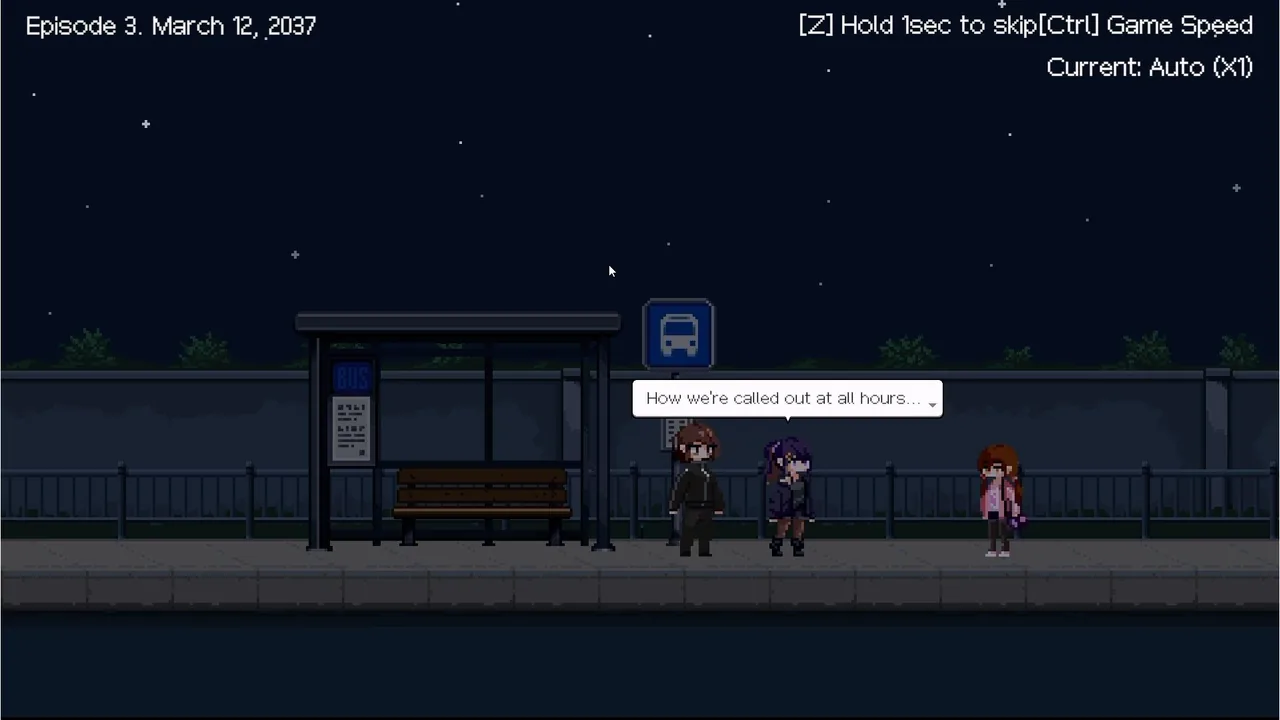
Dear Magical GirlsImage: Jungle Game Lab via Steam -
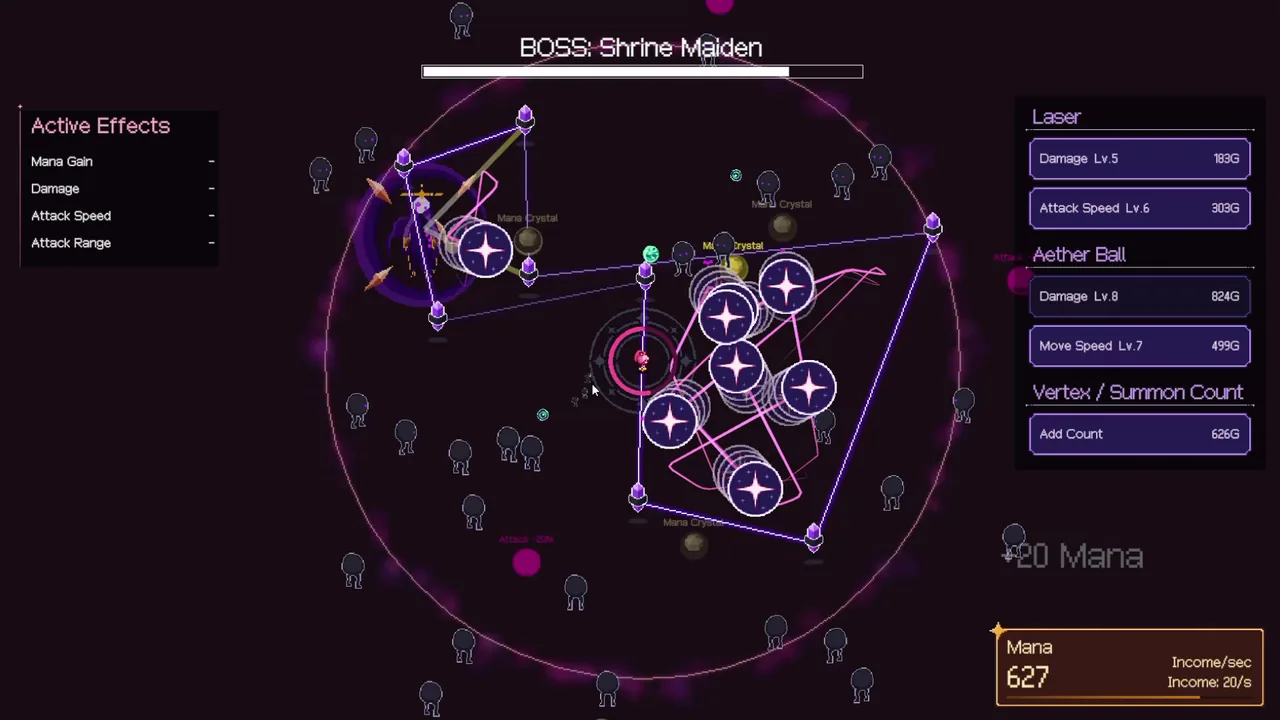
Dear Magical GirlsImage: Jungle Game Lab via Steam -

How the review scores each part of the gameWanderer Editorial -

The game at a glanceWanderer Editorial -
The short versionWanderer Editorial