Game review
Dwerve
6 / 10
- Developer
- Half Human Games
- Publisher
- Half Human Games, Electronic Sheep Games
- Released
- 31 May 2022
- Platforms
- Windows
- Genre
- Tower Defense, Action RPG, Dungeon Crawler
- Monetisation
- One-time purchase, plus an optional soundtrack
- Players
- Single-player only
The short version
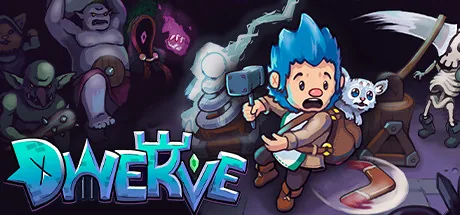
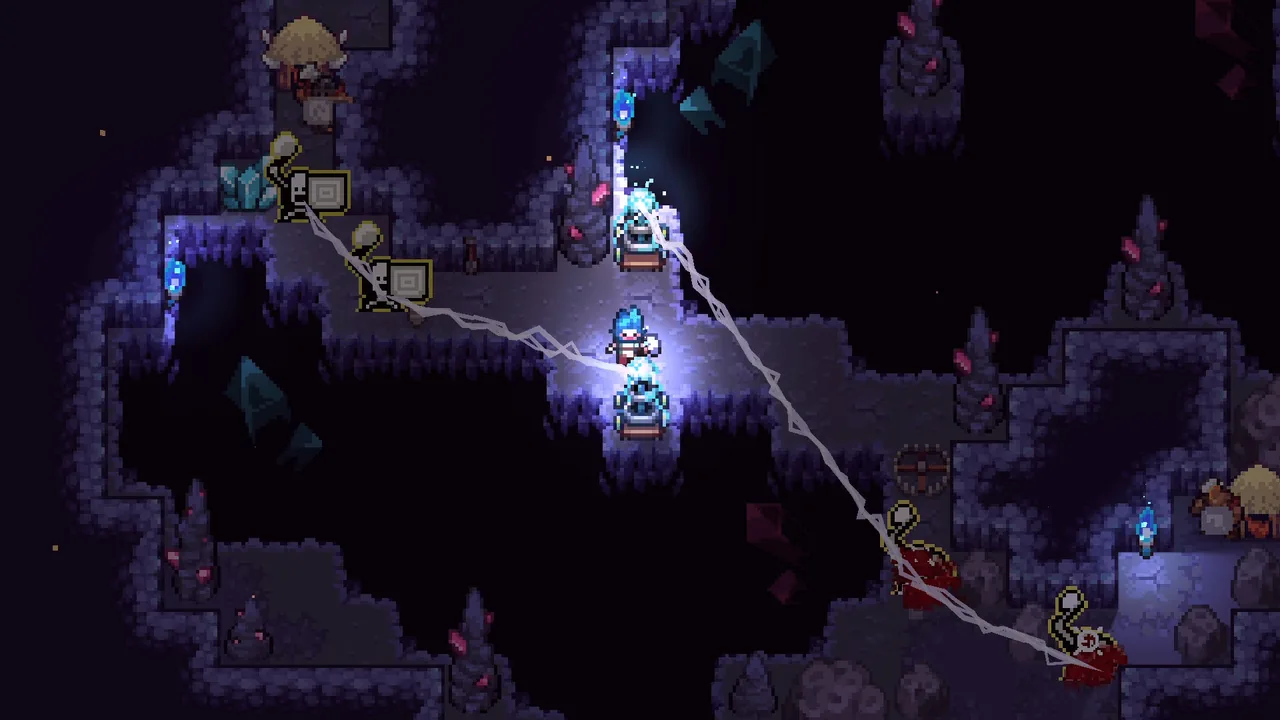
Dwerve sends a young dwarf through a ruined kingdom, placing turrets and traps to fend off waves of enemies in real time while exploring a Zelda-inspired overworld. Developed and co-published by Half Human Games, it released 31 May 2022 after several years of visible development following a Kickstarter campaign, and sits at Mostly Positive, 76.6% across 235 English-language reviews. Art direction and presentation draw consistent, genuine praise. What holds this back is a specific, widely repeated complaint about the tower-defense system at the game's core: reviewers, including many who backed the project years in advance and had followed its development closely, describe a strategic layer far shallower than the "tower defense dungeon crawler" pitch implied, with too few towers active at once and too little real planning time before combat begins.
Biggest strengths
- Art direction and presentation draw consistent, genuine praise, with the Zelda-inspired overworld and character design earning specific compliments even from reviewers otherwise critical of the game
- The core combat idea — using turrets and traps to fend off enemies while a slow, frail character maneuvers around them — is credited by several reviewers as a distinctive and initially engaging concept
- The story and lore are described as reasonably compelling by a meaningful share of reviewers, giving the world more narrative texture than a pure tower-defense game usually offers
Biggest weaknesses
- The single most repeated complaint concerns the tower-defense system's limited scope: players can typically have only three or four turrets active at once out of a small available roster, which multiple reviewers say leaves little room for the kind of build variety or strategic depth the genre and the game's own marketing promise
- Combat is frequently described as reactive rather than planned, with enemies ambushing the player mid-exploration rather than allowing the careful setup time classic tower-defense games are built around, which several reviewers specifically contrast with genre touchstones like Orcs Must Die! or Dungeon Defenders
- A meaningful share of reviewers describe padding between combat encounters — fetch tasks involving keys, levers and chests — as tedious rather than meaningfully paced exploration
Who it's for: Fans of Zelda-style pixel-art adventures who want a light tower-defense layer without deep strategic demands; a poor fit for tower-defense fans expecting genuine base-building complexity or long-time backers hoping for the fuller vision years of updates implied.
Our recommendation: A genuinely lovely-looking game whose central mechanic doesn't offer as much strategic depth as its premise promises — worth a shot on a sale for the art and story, temper expectations for the combat.
6 / 10
Introduction
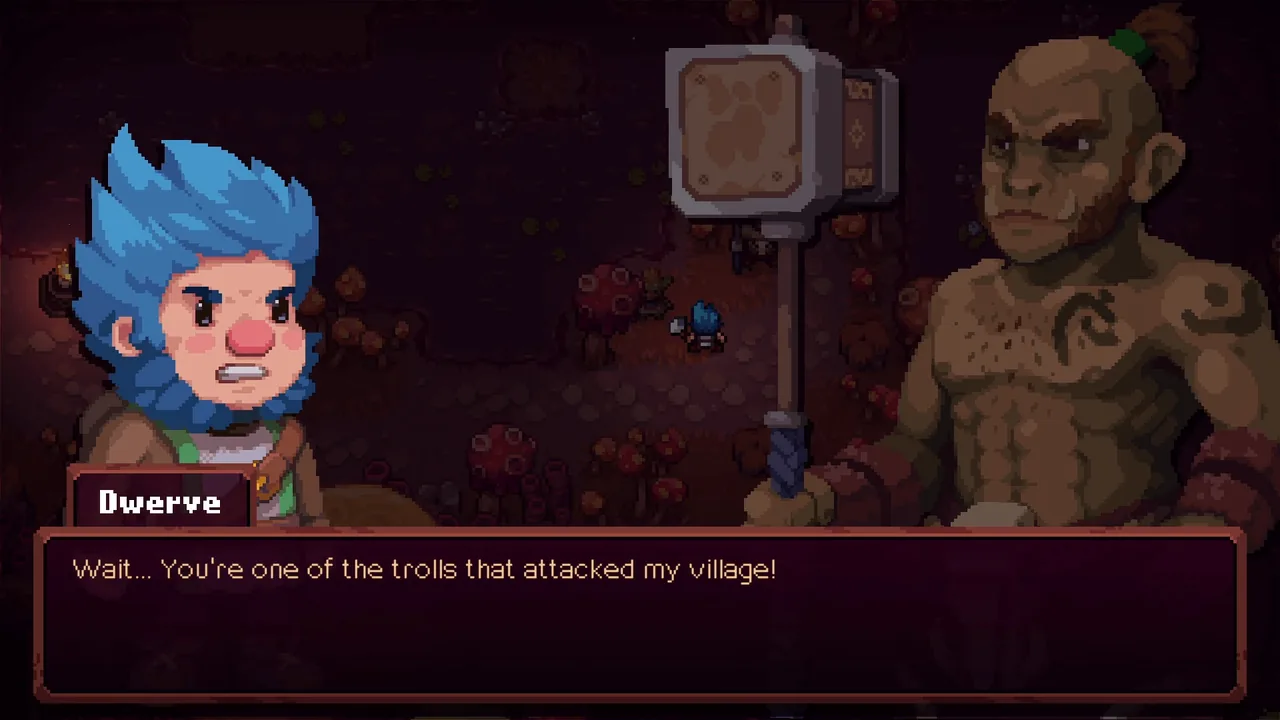
Dwerve sends a young dwarf through the ruins of a fallen kingdom, placing turrets, traps and spinning blades to punch, zap and dismantle waves of enemies while exploring a colourful, Zelda-inspired overworld full of puzzles and lore. Developed and co-published by Half Human Games following a public, multi-year Kickstarter-backed development process, it released 31 May 2022 and sits at Mostly Positive, 76.6% across the 235 English-language reviews this review reads a substantial share of, including the entire negative sample. What's notable about this corpus is how many of its reviewers, on both sides of the recommend line, had been following the game's development for years before release — this isn't a review base discovering the game cold, and their disappointment carries the specific weight of long anticipation rather than a snap judgement.
A world worth exploring, even for critics
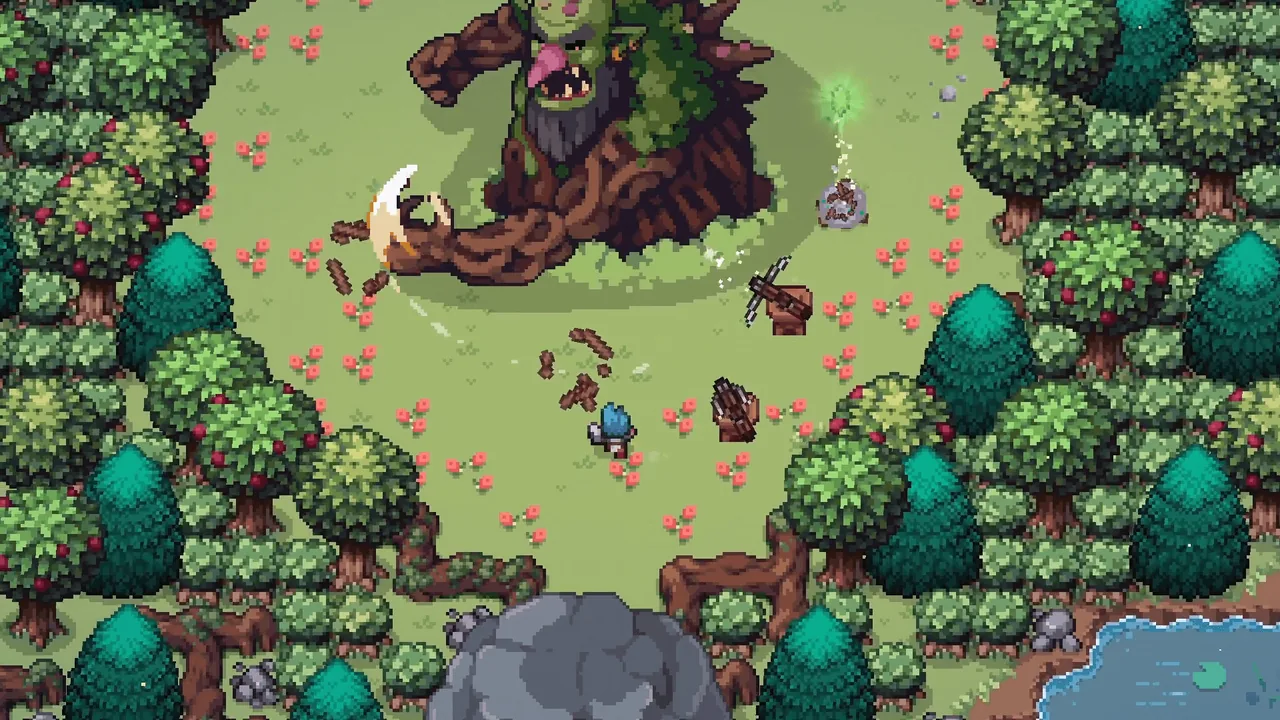
Start with what draws consistent praise across nearly the entire sample. Dwerve's art direction and overall presentation earn genuine, specific compliments, with reviewers repeatedly comparing the overworld favourably to classic Zelda games — one detailed review, part of a curated "greatest games" list, opened by asking directly whether the game is a masterpiece and answered that it "looks like an old Legend of Zelda" game in the best sense. The story and lore draw their own real, if more modest, praise as giving the world genuine texture rather than existing purely as a backdrop for combat encounters. Even the game's harshest critics in this sample tend to open their reviews by crediting the visual craft before moving into more detailed complaints about the systems underneath it.
The tower-defense system that doesn't deliver what it promises
Here's the specific, widely repeated criticism worth centring this review on. Dwerve markets itself explicitly as "an epic action-adventure with tower defense combat," and a large share of reviewers — including several who had followed the game's development for years specifically because of that pitch — report the actual system falls well short of genre expectations. The most concrete version of the complaint concerns scope: players typically have access to only three or four active turrets at a time from a small overall roster, which multiple reviewers say leaves little room for the kind of build experimentation and strategic layering that defines the genre. One detailed 22-vote review put a number on the frustration directly: "A tower defence game with a limit of 4 towers. Poor progression, limited to 6 power crystals or 3 turrets for the majority of the game," describing the resulting upgrade options as boring flat damage percentages rather than meaningfully different strategic choices.
A closely related complaint concerns pacing and structure. Several reviewers specifically contrast Dwerve unfavourably with established tower-defense touchstones like Orcs Must Die! and Dungeon Defenders, where careful pre-fight planning is central to the experience — here, reviewers describe combat as frequently ambush-driven, forcing turrets to be placed reactively rather than as part of a considered strategy. One reviewer summarised the mismatch precisely: "I get ambushed and have to just frantically drop tower[s]" rather than surveying an encounter and planning a defence in advance, which undercuts the deliberate, puzzle-like satisfaction the genre usually offers.
A years-long anticipation that colours the disappointment
What makes several of these reviews worth reading in full rather than skimming for keywords is how explicitly they're framed around years of prior investment. One 189-vote review, one of the highest-voted in the entire sample, opened by noting the reviewer had been "following, playtesting, and supporting Dwerve for a long time — a few years at least," before delivering a detailed, measured critique of exactly where the final game fell short of what that years-long engagement led them to expect. Another reviewer described trying the demo, giving detailed feedback, and returning for the full release specifically to see whether that feedback had shaped the final game — only to report "the gameplay hasn't changed." That's a different, more specific kind of disappointment than ordinary launch-week criticism: these are reviewers who genuinely wanted this exact game to succeed and were positioned, through years of engagement, to notice precisely where it didn't evolve the way they'd hoped.
Polish gaps and a shorter-than-expected campaign
A smaller cluster of complaints concerns technical execution: reviewers report glitches, unclear indicators for puzzle-relevant switches, and incomplete controller support specifically affecting menu navigation, with one backer noting they were unable to get past the start menu using a controller despite the game listing full controller support. Length draws its own modest complaint, with at least one reviewer reporting an eight-hour campaign shorter than the world-building had led them to expect, with hopes for two or three additional areas that never materialised.
Where players actually get to
Steam's achievement data shows a notably steep engagement curve for a linear, story-driven game: the top achievement sits at 67.3%, but completion drops sharply from there, with several mid-tier achievements in the 25-28% range and the hardest, completionist-tier unlocks under 1% — consistent with a game whose front-loaded charm doesn't fully sustain player engagement all the way through, echoing the pacing and depth complaints documented above.
Final Verdict
Dwerve is a genuinely lovely-looking game with real narrative ambition, let down specifically by the mechanic its own marketing leads with. The tower-defense system, judged against the genre it explicitly invokes, offers less strategic depth than reviewers — many of them long-invested backers who wanted exactly this game to work — say they were promised, with too few active turrets, too little planning time, and upgrade paths several call boring rather than build-defining. If you go in expecting a charming, Zelda-flavoured adventure with a light combat layer rather than a genuine tower-defense strategy game, there's a pleasant few hours here. If the "tower defense dungeon crawler" pitch is what's drawing you in specifically, the reviewers who waited years for exactly that say, with real specificity, that it doesn't fully arrive.
Pros and cons
Pros
- Art direction and presentation draw consistent, genuine praise, with the Zelda-inspired overworld and character design earning specific compliments even from reviewers otherwise critical of the game
- The core combat idea — using turrets and traps to fend off enemies while a slow, frail character maneuvers around them — is credited by several reviewers as a distinctive and initially engaging concept
- The story and lore are described as reasonably compelling by a meaningful share of reviewers, giving the world more narrative texture than a pure tower-defense game usually offers
- The developer's years-long, publicly visible development process is acknowledged by several reviewers as genuine effort, even by those disappointed with the final mechanical result
Cons
- The single most repeated complaint concerns the tower-defense system's limited scope: players can typically have only three or four turrets active at once out of a small available roster, which multiple reviewers say leaves little room for the kind of build variety or strategic depth the genre and the game's own marketing promise
- Combat is frequently described as reactive rather than planned, with enemies ambushing the player mid-exploration rather than allowing the careful setup time classic tower-defense games are built around, which several reviewers specifically contrast with genre touchstones like Orcs Must Die! or Dungeon Defenders
- A meaningful share of reviewers describe padding between combat encounters — fetch tasks involving keys, levers and chests — as tedious rather than meaningfully paced exploration
- Reviewers report a lack of overall polish, including glitches, unclear puzzle indicators, and incomplete controller support that leaves some menus unusable without a mouse and keyboard
Screenshots
-
DwerveImage: Half Human Games via Steam -
DwerveImage: Half Human Games via Steam -
DwerveImage: Half Human Games via Steam -
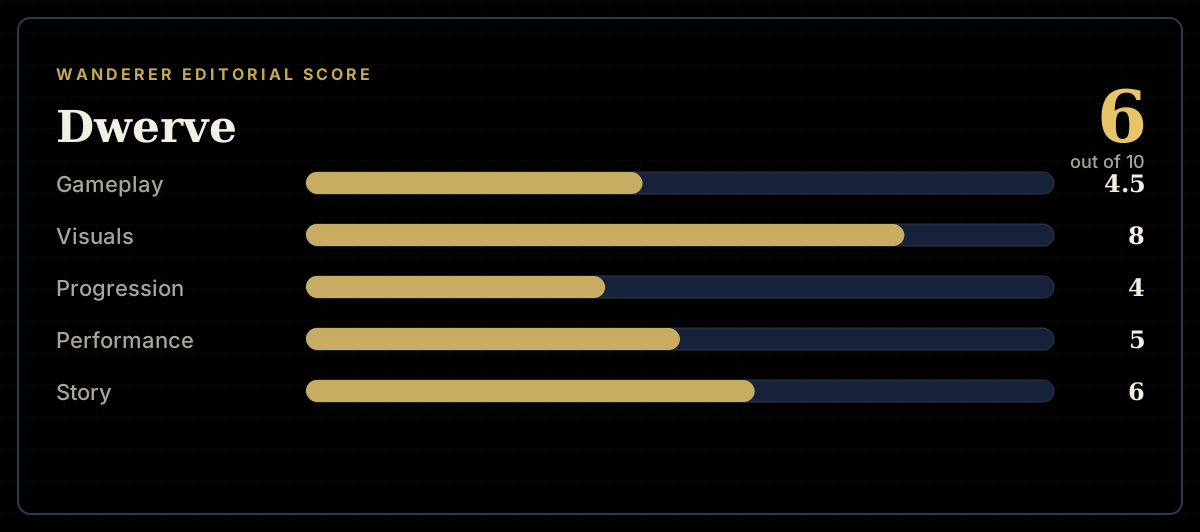
How the review scores each part of the gameWanderer Editorial -
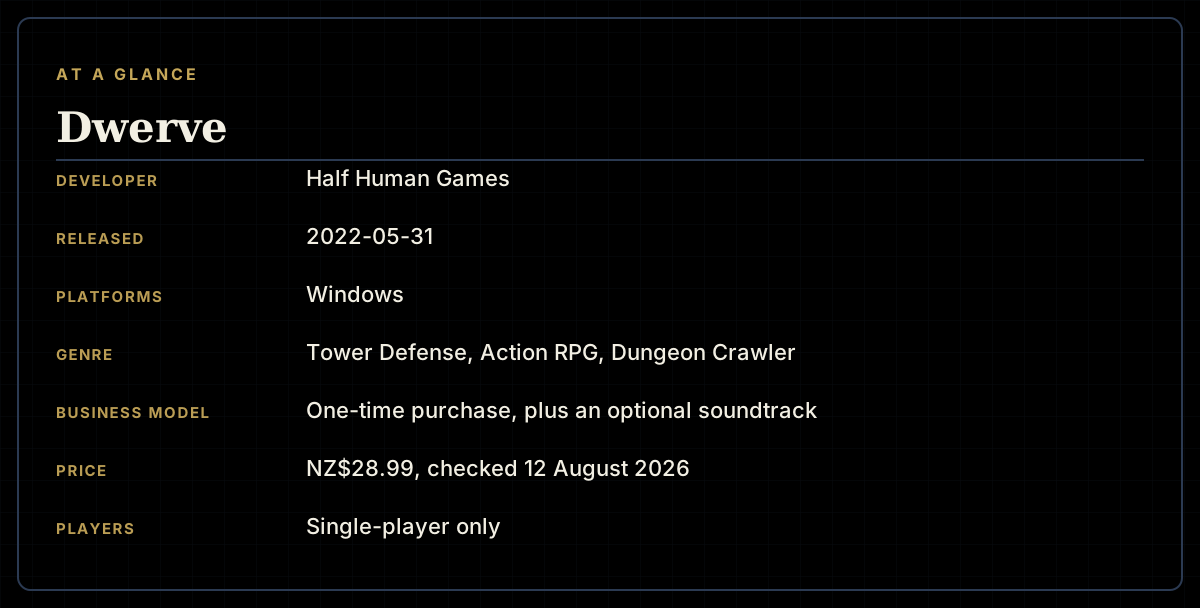
The essentials at a glanceWanderer Editorial -
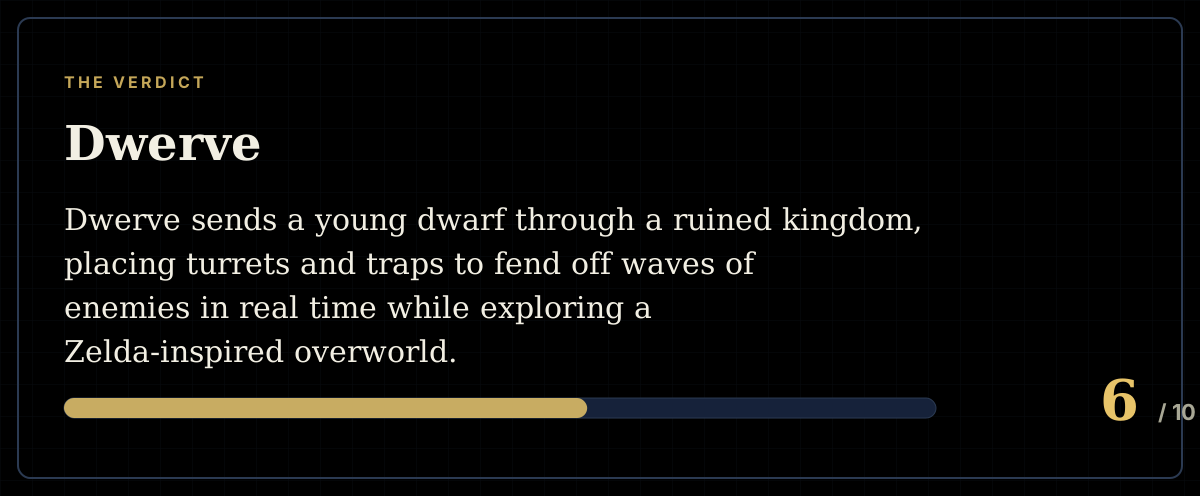
The short versionWanderer Editorial