Game review
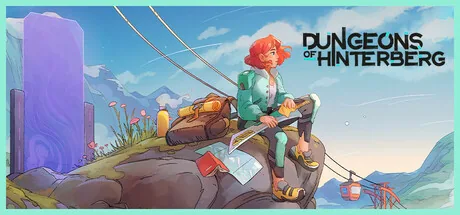
Dungeons of Hinterberg
8 / 10
- Developer
- Microbird Games
- Publisher
- Curve Games
- Released
- 18 July 2024
- Platforms
- Windows
- Genre
- Action RPG
- Monetisation
- One-time purchase. No in-app purchases or DLC.
- Players
- Single-player only
The short version
Dungeons of Hinterberg follows Luisa, a burnt-out lawyer who quits her job to go dungeon tourism in the Austrian Alps, where magical dungeons have become an extreme sport for influencers, pro athletes and gap-year backpackers alike. It sits at Very Positive across 2,357 Steam reviews (93% positive), and its achievement data confirms what the reviews say: players consistently follow through, with the opening achievements clearing 80-87% of the player base and even the deep completionist ones settling in the high single digits rather than collapsing to nothing.
The available negative sample is vanishingly small -- two English reviews out of 158 negatives worldwide -- and even inside the overwhelmingly positive majority the same mild caveat recurs constantly: the hack-and-slash combat is straightforward almost to the point of being restful, which some players love as a deliberate design choice and a handful find genuinely boring. Nobody in the sample disputes that the writing, the social systems and the Alpine setting are doing the real work.
Biggest strengths
- A genuinely distinctive setting -- a modern Austrian ski town where dungeon delving is a tourist industry -- that reviewers repeatedly call the game's best idea
- A day/night, social-sim-adjacent structure that lets you alternate between combat and building relationships with named townsfolk, and both sides are written well enough that neither feels like a chore blocking the other
- Distinct, varied dungeon design that leans on different traversal tools -- climbing, snowboarding, elemental puzzle mechanics -- rather than reusing one combat loop with new wallpaper
Biggest weaknesses
- Combat is intentionally uncomplicated, and while most reviewers read that as restful pacing, a minority find it boring by the midgame
- A platformer-style camera lock that triggers in specific traversal sections is singled out by at least one reviewer as the one mechanic that actively works against the game's otherwise smooth 3D movement
- A relatively short main story -- most reviewers finish in the 20-40 hour range including substantial side content -- which caps replayability once the achievements are cleared
Who it's for: Fans of Zelda-style action-adventure who want a shorter, story-forward game built around character relationships as much as combat, and anyone who likes a genuinely distinctive setting -- modern-day magical realism rather than another medieval fantasy kingdom.
Our recommendation: A strong pick, especially at its current 70%-off price. Go in expecting a cozy, narrative-led adventure rather than a combat-focused action-RPG, and the easy fights stop being a complaint and start being exactly the pace the game is going for.
8 / 10
Extreme sport, day job
Dungeons of Hinterberg opens with a joke that turns out to be the whole thesis of the game: Luisa, a corporate lawyer somewhere in her mid-twenties, quits her job and books a holiday to Hinterberg, a small Austrian Alpine town that has rebranded itself around a very specific tourist attraction -- magical dungeons that erupted from the mountainside years earlier, now treated less like an apocalyptic threat and more like an extreme sport. Locals run guesthouses, sell gear, coach amateur delvers and post influencer content about their runs, and the game asks you to spend your days either exploring one of the surrounding dungeons or hanging out in town building relationships with the people who live there. It released in full on 18 July 2024 from Microbird Games, published by Curve Games, and sits at Very Positive on Steam -- 2,357 reviews, 93% positive, with an English-language negative sample so small (two reviews) that it barely qualifies as a pattern at all.
That premise -- dungeon crawling as a wellness-tourism side hustle rather than a world-ending crisis -- is doing an enormous amount of work, and reviewers credit it directly. "It is not set in a medieval fantasy world, but modern times," one review explains, "and dungeon crawling is an extreme sport with everything that goes along with it. Pro Athletes, Amateurs, Influencers, Trainers, a whole corporate machine." Setting a Zelda-shaped structure -- clear a themed dungeon, gain a new traversal tool, use it to reach the next area -- against a contemporary, faintly satirical backdrop is a genuinely uncommon choice in a genre that defaults to medieval fantasy almost by reflex, and it gives the writing somewhere real to go: burnout, corporate escape, found family and small-town belonging sit comfortably alongside monster fights in a way that would feel dissonant in a more straight-faced setting.
Two halves, one rhythm
Structurally, the game runs on a day/night cycle that more than one reviewer compares directly to Persona: spend the daylight hours in a dungeon, then return to town in the evening to talk to townsfolk, deepen friendships and manage Luisa's own stats and gear. Neither half is optional padding for the other. The social side gives dungeons and combat narrative stakes -- fighting alongside or for people you've actually gotten to know -- and the dungeon side gives the social scenes somewhere to cash out the tools and stats you've been building. "Perfect balance of friendship building, exploration and combat," reads one review, and "the social element add[s] to the story and never feel[s] like something you have to do" reads another, independently making the same point about a structure that could easily have felt like two separate games stapled together.
The dungeons themselves earn genuine praise for variety, and this is where the game's Zelda inheritance shows most clearly and most successfully. Rather than reusing one combat arena with reskinned textures, each dungeon leans on a different traversal identity -- climbing gear in one, a snowboard for descending an alpine dungeon at speed in another, elemental puzzle tools elsewhere -- and reviewers who came in expecting a "shallow indie hack & slash" specifically call out being surprised by how much breadth the format actually has. One reviewer flags a single exception worth noting: a section that switches to a fixed, platformer-style camera is specifically criticised as the one mechanic that works against the otherwise smooth, freely rotating 3D movement the rest of the game establishes -- a small, specific complaint rather than a structural one, but a real one from someone otherwise enjoying the traversal design.
The one honest weakness: combat
If there is a single thing keeping Dungeons of Hinterberg from a higher score, the review section names it with striking consistency: the combat is simple, and for most players that is a feature, not a bug, but it is not universal. "Combat is easy but ok maybe on the boring side," reads one review that otherwise praises almost everything else about the game. "No complex mechanics or puzzles, but it's amazing," reads another, treating the same simplicity as a feature rather than a flaw. A third describes actively growing to prefer the story and puzzle sections over combat as playtime went on -- "I was just dealing with the combat to get to the puzzles and story" -- which is a genuinely useful distinction for anyone deciding whether this game is for them: it rewards players who want an adventure game with light action attached, and will underwhelm anyone hoping for a combat-first action-RPG with real mechanical depth. The achievement data supports the "easy but consistent" read directly -- one reviewer notes reaching full completion by roughly day 30 of an in-game calendar that clearly runs well past that point, and the achievement percentages bear out a game that most engaged players see through to a genuine finish rather than bouncing off partway.
Presentation carrying the weight
Where the review section reaches for its strongest, most consistent praise is presentation. The art direction -- warm, painterly and specific to the Alpine setting rather than generic fantasy green -- comes up in nearly every review sampled, alongside a soundtrack multiple reviewers single out by name as one of the best things about the game. "Loved the art and music which did a great job helping me get into the headspace of the main character," reads one representative review, and the "incredible ost" gets an unprompted callout in another. For a studio's apparent debut at this scale, that level of consistent presentation praise across hundreds of hours of combined reviewer playtime is a genuinely strong signal, not a fluke of a few generous early adopters.
Verdict
Dungeons of Hinterberg succeeds by refusing to be the game its genre trappings suggest. It borrows Zelda's dungeon-and-new-tool structure and wraps it around a contemporary, warmly written story about burnout and belonging in a ski town that treats magic dungeons as a tourist economy, and the combination works far better than the premise alone would suggest -- reviewers who expected a shallow hack-and-slash consistently report being won over by the writing, the social systems and the sheer variety the dungeons find within a deliberately simple combat framework. The one honest weakness -- combat that stays easy and uncomplicated from the first hour to the last -- is exactly the trade-off that lets everything else breathe, and whether that reads as a flaw or a feature depends entirely on what kind of action-RPG you came looking for. At its current discounted price it is close to an easy recommendation regardless.
Pros and cons
Pros
- A genuinely distinctive setting -- a modern Austrian ski town where dungeon delving is a tourist industry -- that reviewers repeatedly call the game's best idea
- A day/night, social-sim-adjacent structure that lets you alternate between combat and building relationships with named townsfolk, and both sides are written well enough that neither feels like a chore blocking the other
- Distinct, varied dungeon design that leans on different traversal tools -- climbing, snowboarding, elemental puzzle mechanics -- rather than reusing one combat loop with new wallpaper
- A widely praised art direction and soundtrack that reviewers credit with carrying the game's tone even when the moment-to-moment mechanics are simple
Cons
- Combat is intentionally uncomplicated, and while most reviewers read that as restful pacing, a minority find it boring by the midgame
- A platformer-style camera lock that triggers in specific traversal sections is singled out by at least one reviewer as the one mechanic that actively works against the game's otherwise smooth 3D movement
- A relatively short main story -- most reviewers finish in the 20-40 hour range including substantial side content -- which caps replayability once the achievements are cleared
- Puzzle design, while varied across dungeons, doesn't let its own traversal tools interact with each other in especially clever ways, according to more analytical reviews
Screenshots
-
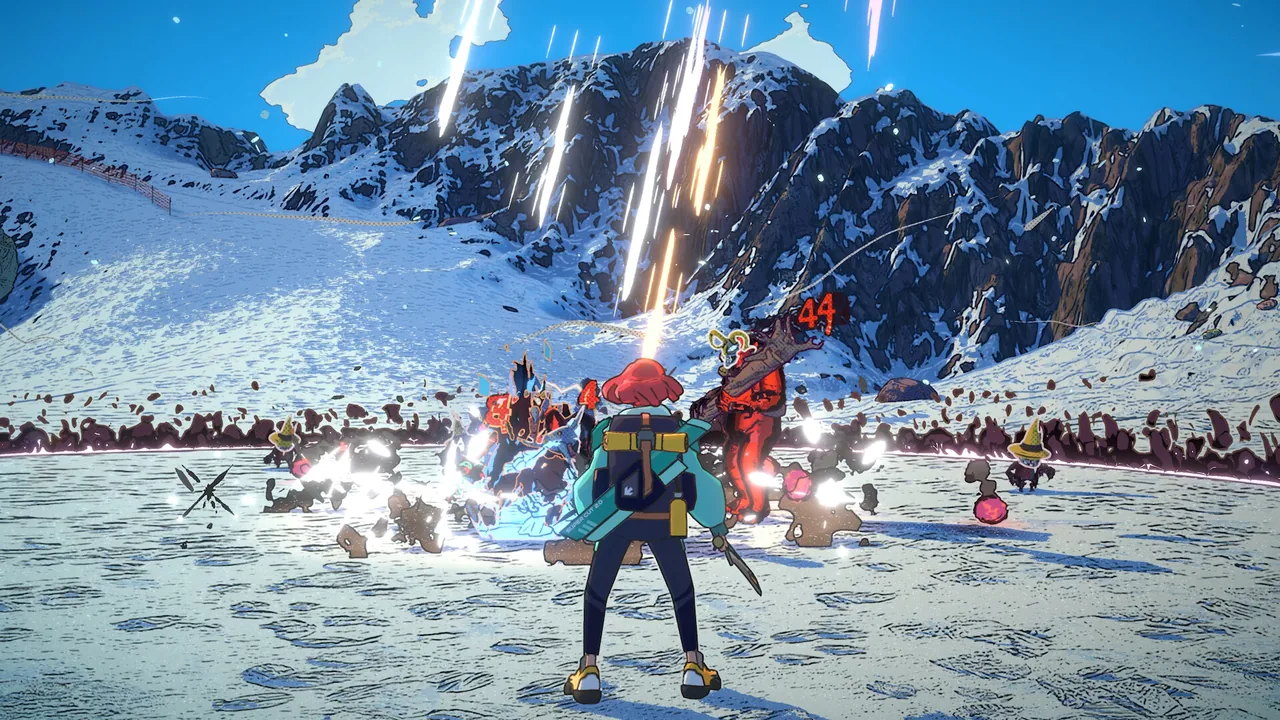
Combat leans on elemental spells and a comic-book-inked art style rather than mechanical complexityImage: Curve Games via Steam -
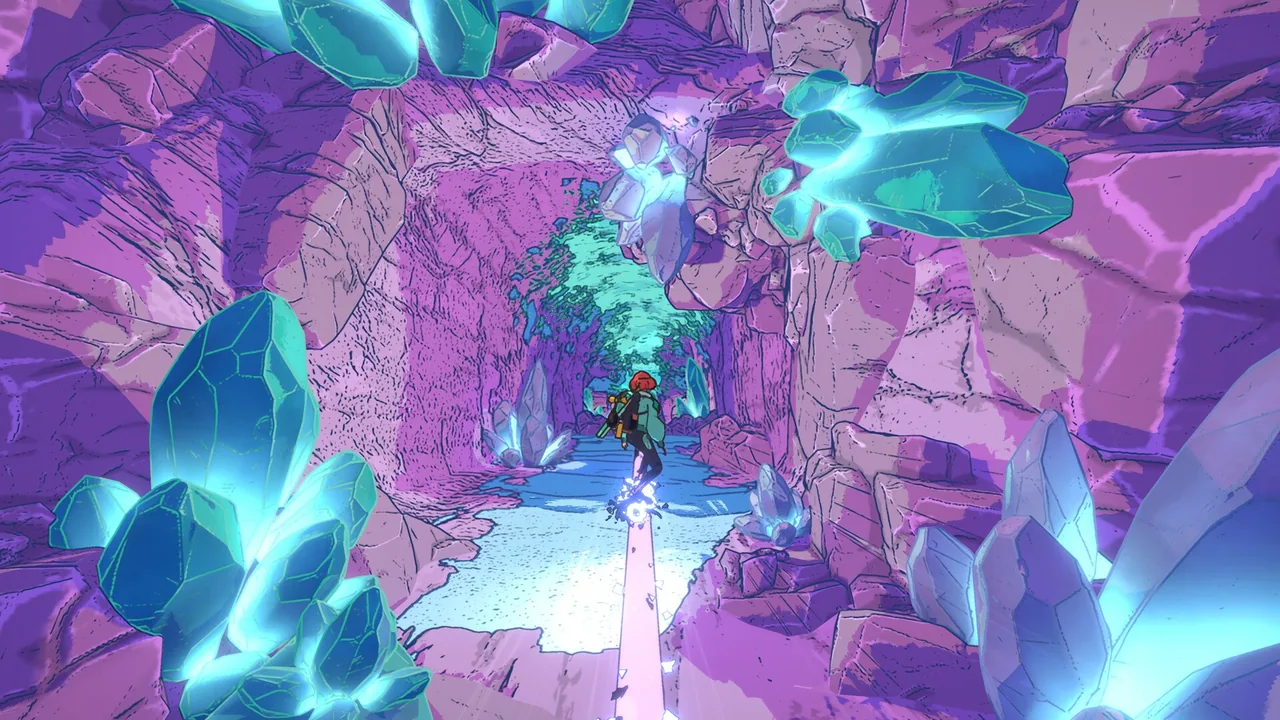
One of the dungeons built around snowboarding traversal rather than combatImage: Curve Games via Steam -
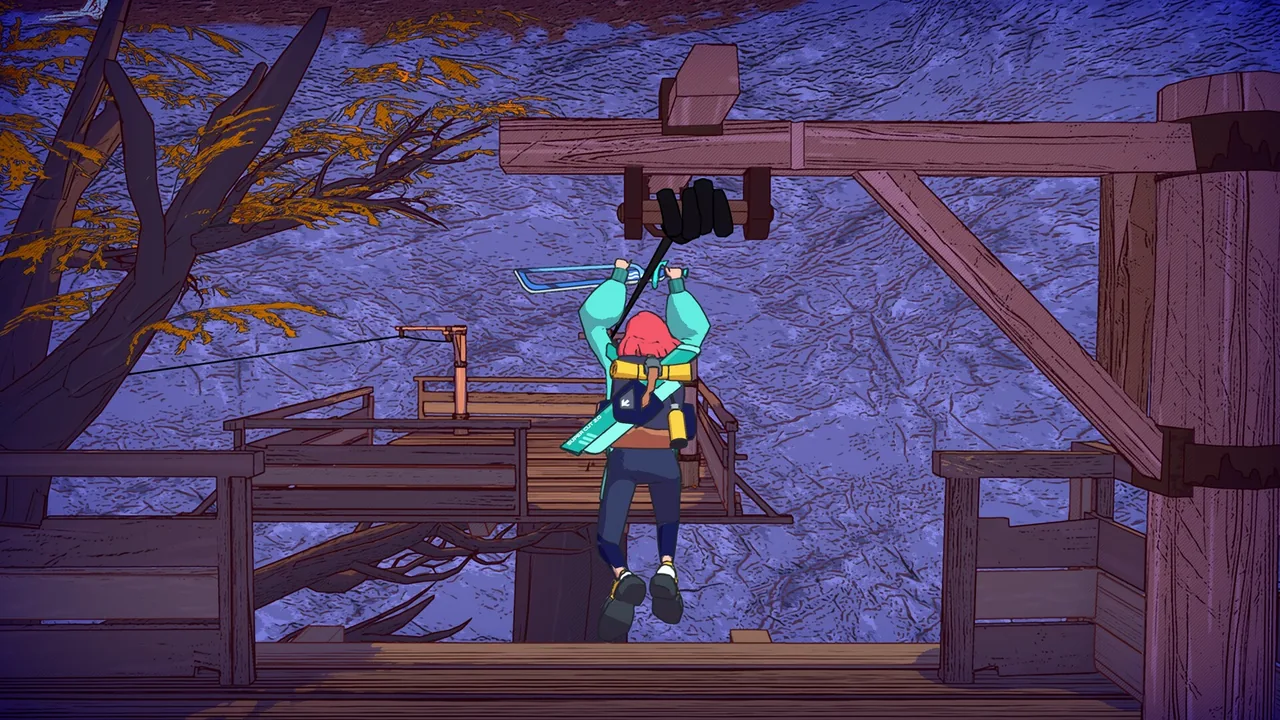
Traversal tools like zip lines vary from area to area rather than reusing one set of mechanics throughoutImage: Curve Games via Steam -
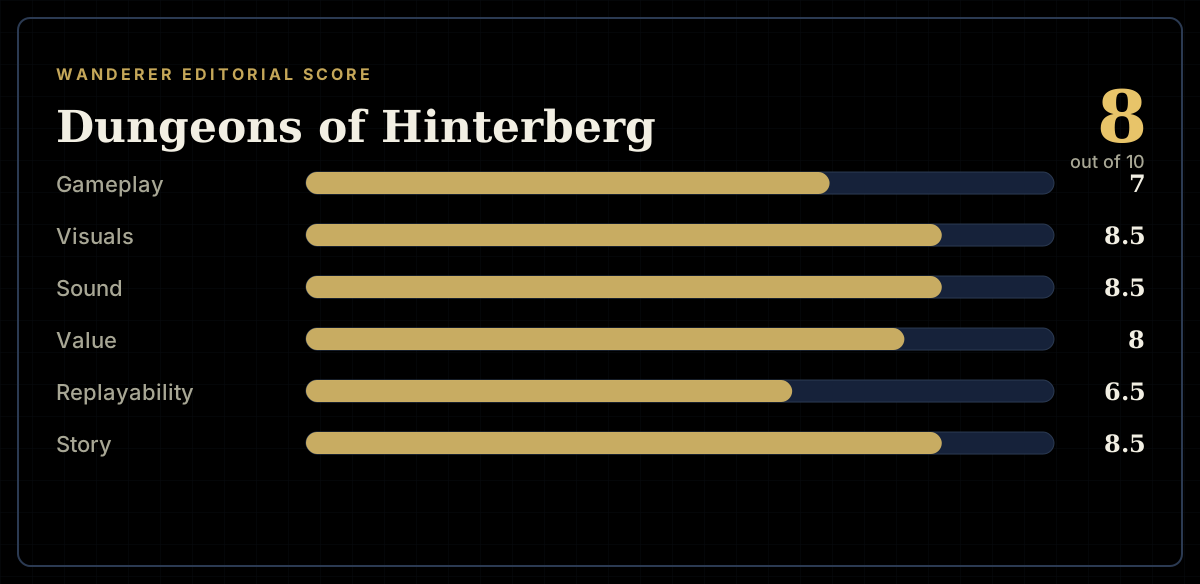
How the review scores each part of the gameWanderer Editorial -
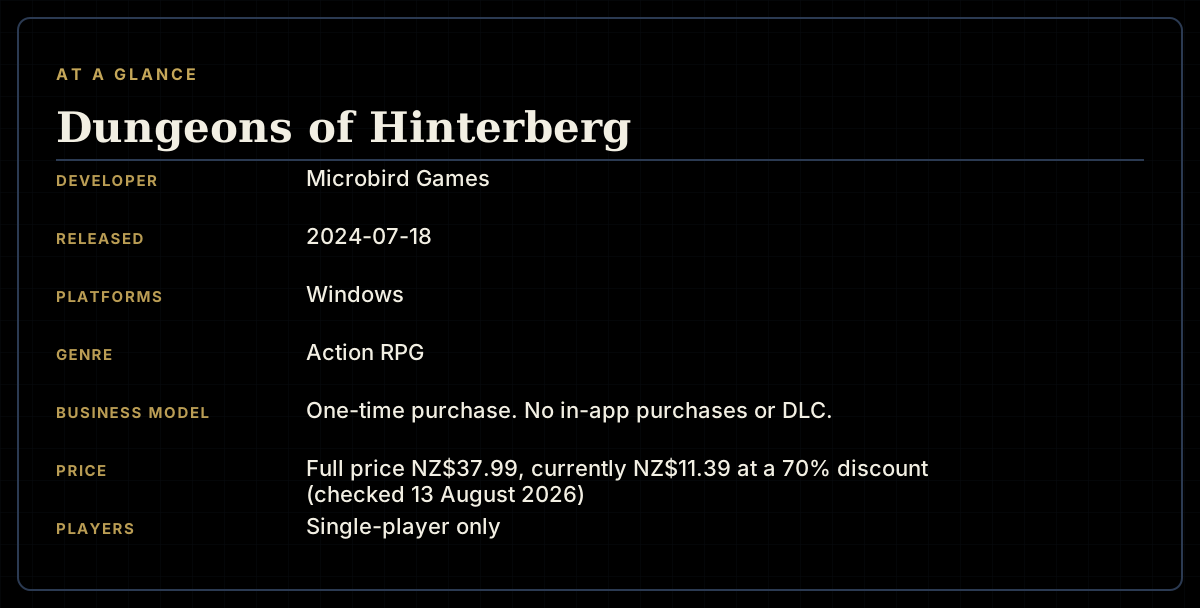
The game at a glanceWanderer Editorial -
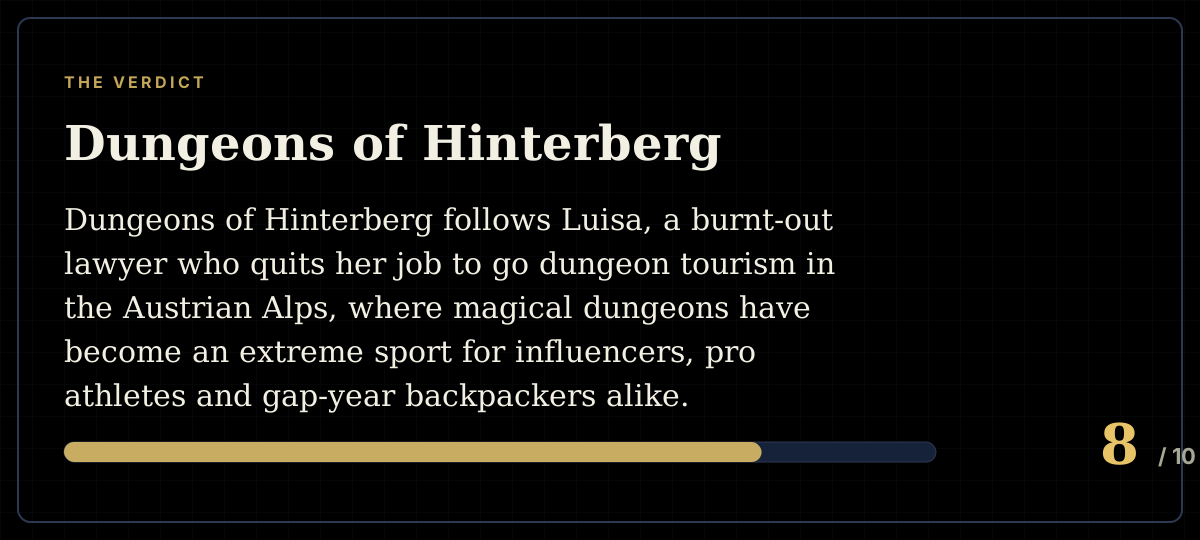
The short versionWanderer Editorial