Game review
HackHub - Ultimate Hacker Simulator
7 / 10
- Developer
- HotBunny
- Publisher
- Games Operators / G-DEVS.com
- Released
- 26 January 2026
- Platforms
- Windows
- Genre
- Hacking Simulation
- Monetisation
- One-time purchase, no in-app purchases, no DLC. Listed at NZ$17.49 with a 20% 1.0 discount bringing it to NZ$13.99 — checked 3 August 2026. The store page is currently also running a promotional giveaway banner, though no reviewer mentions it.
- Players
- Online PvP with cross-platform support, alongside the single-player campaign, plus Steam Workshop support for community content
The short version
HackHub stages the hacker fantasy well — a convincing desktop, real tool names, missions that escalate from reconnaissance to database infiltration, and a story that pulls you along. For someone who has never used a terminal, that's a genuinely enjoyable way in, and the 1.0 build is substantially better received than the Early Access one was. The catch is that it's on rails. There is usually one correct sequence, the game frequently tells you what to type without explaining why, and the people who actually do this for a living describe a puzzle game rather than a sandbox.
Biggest strengths
- The presentation sells it — a sleek, convincing desktop and terminal that make the fantasy work without needing prior knowledge
- Real tool names and a mission arc from reconnaissance through to infiltration give the campaign a coherent escalation
- Genuinely accessible: the game teaches command syntax to people who have never typed one, which is a legitimate achievement
Biggest weaknesses
- Linear to a fault; multiple reviewers describe a single correct path through each mission and little room to improvise
- It tells you what to type more often than it explains why, so the knowledge doesn't transfer the way the framing implies
- Practitioners find the underlying model thin — tools share names with the real ones without behaving much like them
Who it's for: Newcomers curious about hacking games who want a guided, story-led introduction, and players who enjoyed the aesthetic of Hacknet-style games. Not for security professionals or anyone who wants an open sandbox — Grey Hack and NITE Team 4 are the names the disappointed reviewers keep reaching for.
Our recommendation: Worth fourteen dollars as a gateway game, and the 1.0 is the version to buy — the worst reviews all date from the Early Access months. Go in expecting a linear campaign with a terminal aesthetic rather than a simulation you can break in unintended ways, and check the Workshop before deciding, since community missions are where the freedom is likely to come from.
7 / 10
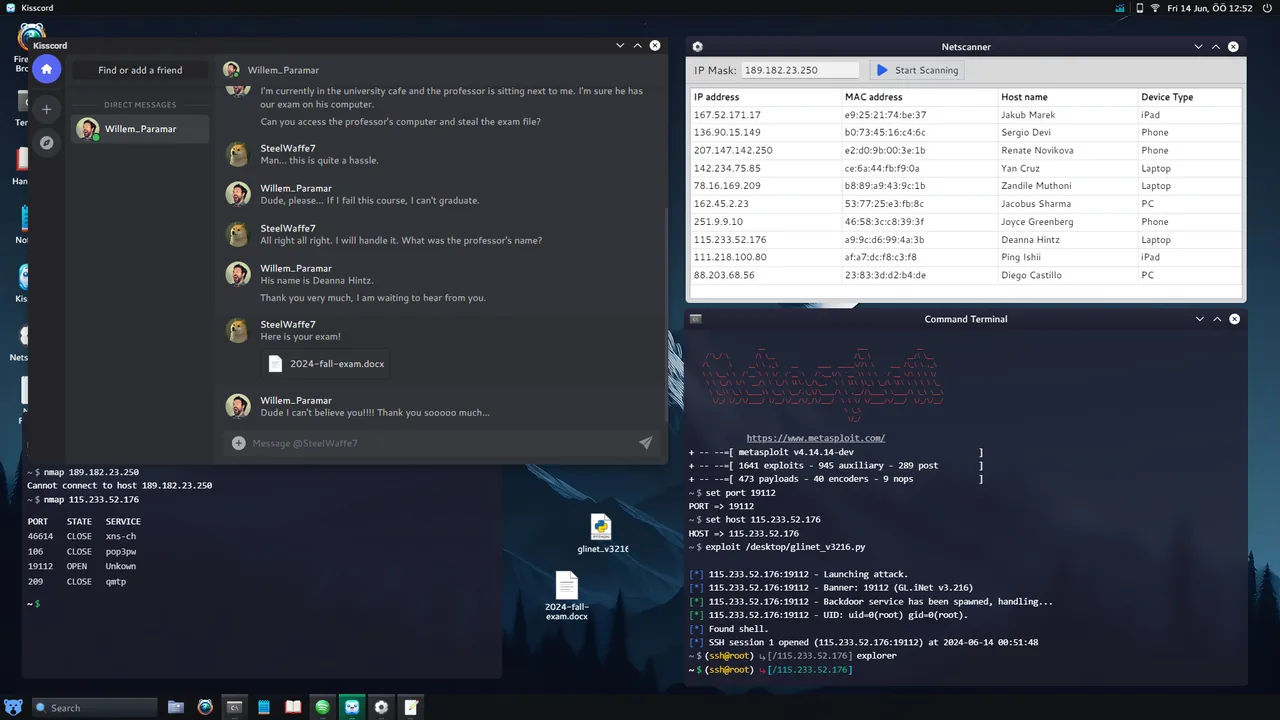
The tools in HackHub have the right names. You run nslookup to resolve a host, nmap to see what ports are open, hydra to grind at a login. Anyone who has spent time in a terminal will recognise all three, and that recognition is most of what the game is selling.
What happens when you run them is where opinions split, and they split along a very clean line: how much you already know.
The fantasy, staged well
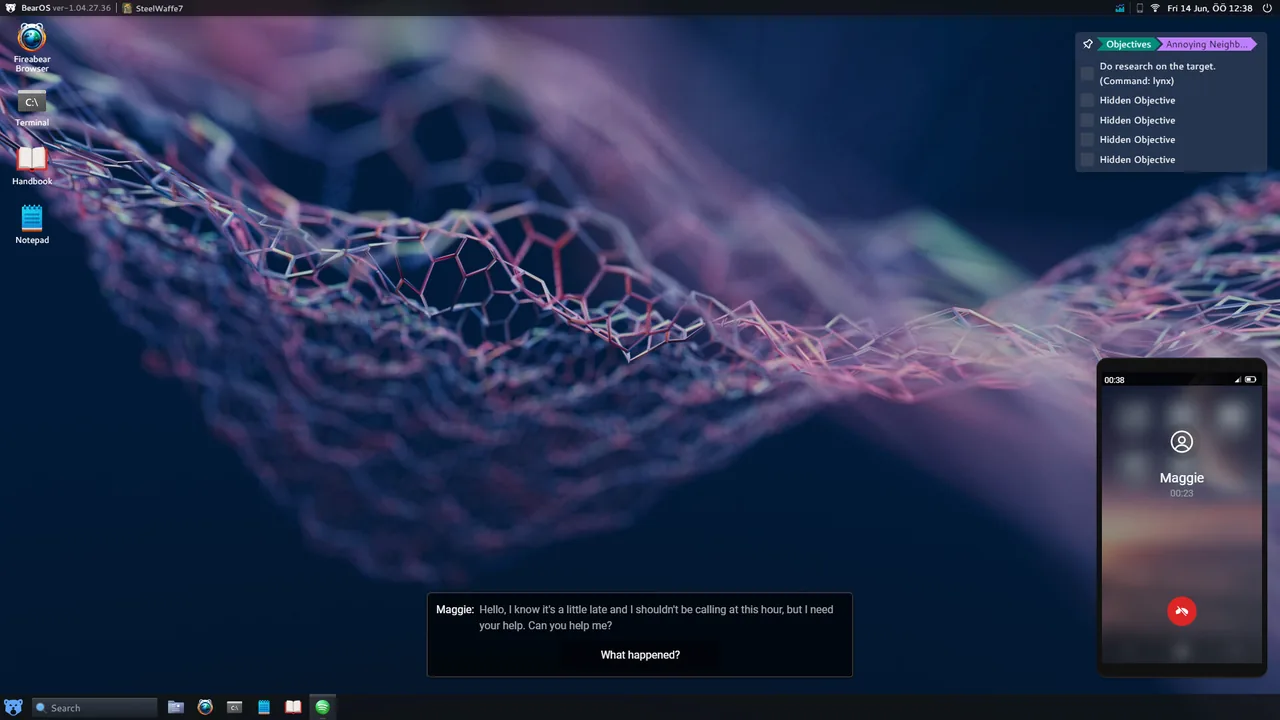
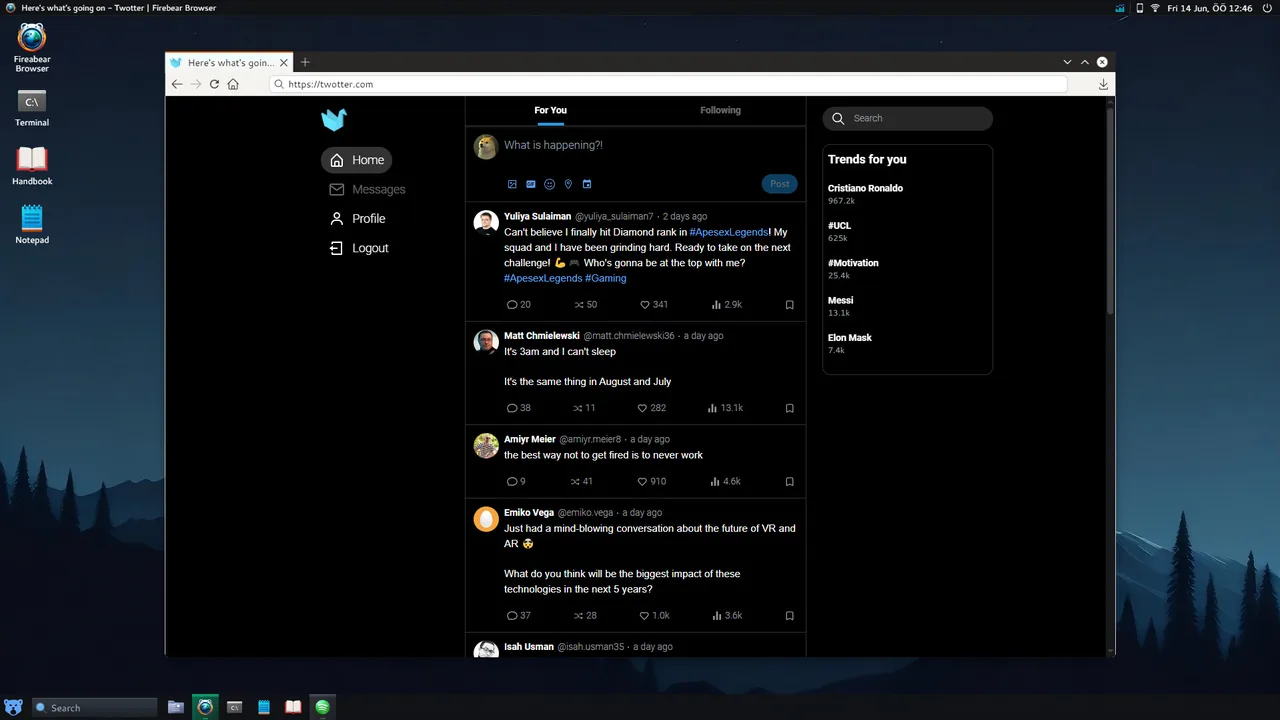
For a player with no background, HackHub is a good time. The desktop is convincing, the terminal looks and behaves the way films have taught everyone to expect, and the missions escalate sensibly — map a network, find a way in, get at a database, deal with the consequences. There's a story threaded through it that reviewers describe as immersive, and the presentation is sleek enough that the fantasy holds up.
It also teaches. A player who has never typed a command in their life will finish the campaign knowing what a port scan is for and roughly how one reads. That's a real achievement and it explains the 90% rating: the audience this is built for is being served exactly what it wanted.
The 1.0 release, which landed on 1 August after six months in Early Access, appears to have consolidated that. Of the hundred most recent reviews, 87% are positive with a median playtime near nine hours, and the negative reviews cluster in February — during Early Access — rather than now. Anyone weighing the store page should know the harshest criticism there is describing a build that has since been finished.
Where the professionals get off
The most useful reviews come from people who do this for a living, and they're consistent.
A site reliability engineer with a Linux, networking and security background enjoys the genre and still can't recommend this one. Another reviewer with nearly fifty hours logged lands on a thumbs-down while conceding that the game invokes the hacker fantasy well. Their complaint isn't that it's simplified — every game in this niche simplifies — but that the simplification goes all the way down. Tools share names with real ones without sharing much behaviour, command lines don't reflect how the real ones parse, and the model of file systems and operating systems underneath is thinner than the interface implies.
The structural version of the same complaint is linearity. Missions have one correct sequence. Several players describe being told precisely what to type without being told why, which produces the odd experience of completing a hacking mission without having solved anything. One calls it colour-by-numbers; another, with eleven hours in, says it plays more like a puzzle game than a sandbox and wants the freedom the premise promises.
That's the honest ceiling on this game. It is a guided campaign with terminal aesthetics, not a system you can probe for unintended solutions, and the reviewers reaching for Grey Hack and NITE Team 4 as alternatives are pointing at exactly the difference.
What might change that
Two features suggest the developers know. There's Steam Workshop support, which in a game like this is where genuine variety tends to come from — community missions can supply the open-endedness the campaign doesn't. And there's cross-platform PvP, which is an unusual thing to build into a game of this shape and could go somewhere interesting if the player base sustains.
Neither is proven yet. The Workshop is days old at 1.0 and the multiplayer barely features in the reviews. But they're the reason to keep an eye on this rather than filing it as finished.
For readers who want the deeper end of this niche, Bitburner remains the one that treats scripting as the actual game rather than the costume — free, brutal, and utterly uninterested in whether you're having a good time in the first hour.
Verdict
HackHub is very good at the thing it's actually doing and slightly dishonest about what that thing is. "Ultimate Hacker Simulator" implies a sandbox; what you get is a well-produced linear campaign that hands you real tool names and walks you through using them. For a newcomer that's an excellent, confidence-building fourteen dollars. For anyone with professional exposure it will feel like a rail-shooter about their job.
Seven out of ten, and the number would be lower if the game were priced or positioned as the simulation its title claims. Buy it as a gateway, not as a sandbox — and if you find yourself wanting to break the rules rather than follow them, that's the sign you've outgrown it and should look at the harder games in the genre.
Players who prefer systems that reward experimentation over instruction — where the world keeps running whether or not you typed the expected command — may also enjoy Wanderer.
Pros and cons
Pros
- The presentation sells it — a sleek, convincing desktop and terminal that make the fantasy work without needing prior knowledge
- Real tool names and a mission arc from reconnaissance through to infiltration give the campaign a coherent escalation
- Genuinely accessible: the game teaches command syntax to people who have never typed one, which is a legitimate achievement
- Steam Workshop support and scripting hooks point at a longer life than the campaign alone provides
- Reception improved markedly at 1.0 — the recent sample runs 87% positive with a median playtime near nine hours
Cons
- Linear to a fault; multiple reviewers describe a single correct path through each mission and little room to improvise
- It tells you what to type more often than it explains why, so the knowledge doesn't transfer the way the framing implies
- Practitioners find the underlying model thin — tools share names with the real ones without behaving much like them
- Shallower than the established competition in this niche, and that comparison comes up repeatedly in the critical reviews
- The campaign is short enough that several Early Access players finished it and wanted more sandbox afterwards
Screenshots
-
HackHub - Ultimate Hacker SimulatorImage: G-DEVS.com via Steam -
HackHub - Ultimate Hacker SimulatorImage: G-DEVS.com via Steam -
HackHub - Ultimate Hacker SimulatorImage: G-DEVS.com via Steam -
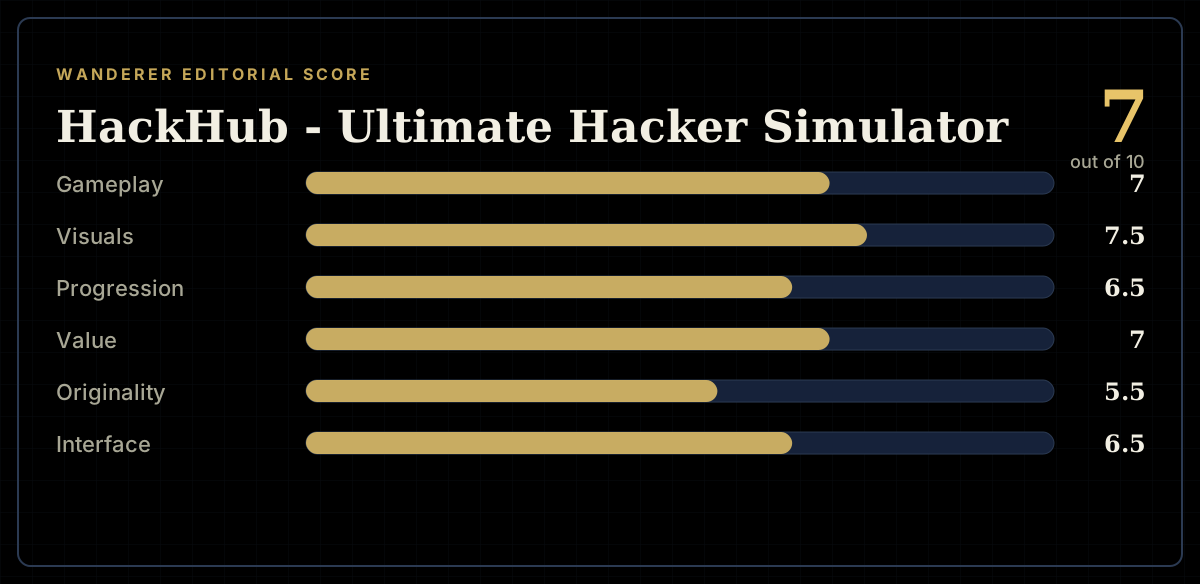
How the review scores each part of the gameWanderer Editorial -
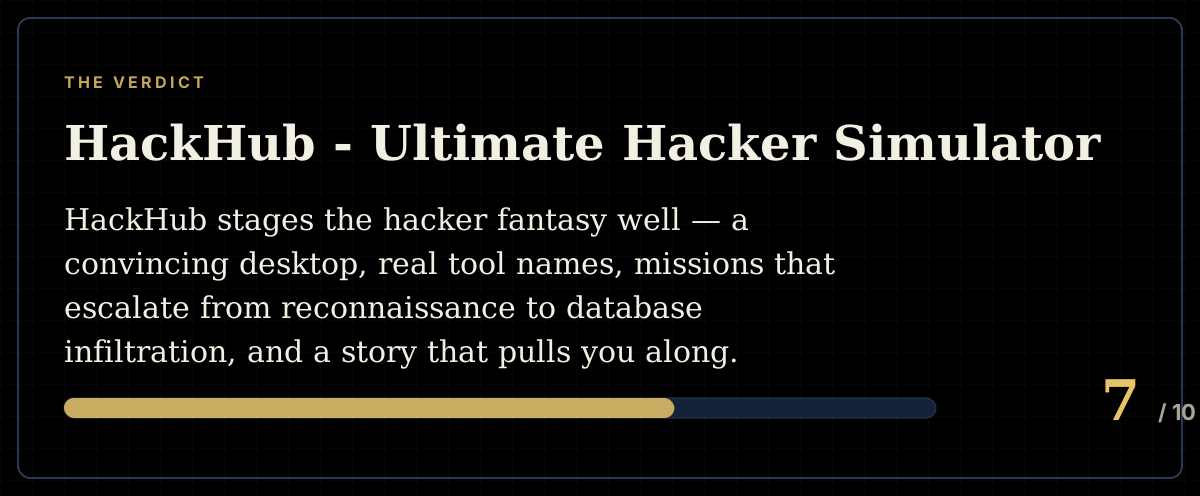
The short versionWanderer Editorial