
Game review
A Bumpy Ride
7.5 / 10
- Developer
- Cosmoporium Games
- Publisher
- Cosmoporium Games
- Released
- 1 May 2026
- Platforms
- Windows
- Genre
- Action, Adventure, Casual, Indie, Simulation, Strategy
- Monetisation
- One-time purchase
- Players
- Single-player
The short version
A Bumpy Ride, released 1 May 2026, takes the beloved train-driving passenger and freight runs from The Legend of Zelda: Spirit Tracks and builds them into a full, standalone cozy game, chibi animal passengers, a DS-inspired art style, and momentum-driven train physics included. Its review sample is dominated by genuine nostalgia and affection, with reviewers repeatedly describing exactly the game they'd wished existed for over a decade. That warmth sits alongside a real, well-documented performance problem, particularly on Steam Deck, and a cluster of specific mechanical frustrations around uncontrollable passenger selection and unforgiving day-end cutoffs.
Biggest strengths
- A near-universal chorus of reviewers describe A Bumpy Ride as exactly recreating, and expanding on, the beloved train-driving passenger and freight sections of The Legend of Zelda: Spirit Tracks, right down to a similar control layout and DS-inspired pixelated art style
- Momentum-based train physics give the driving itself real weight and feel, with reviewers praising details like a whistle that changes pitch based on how hard it's pulled and visible day-night and seasonal cycles across the world
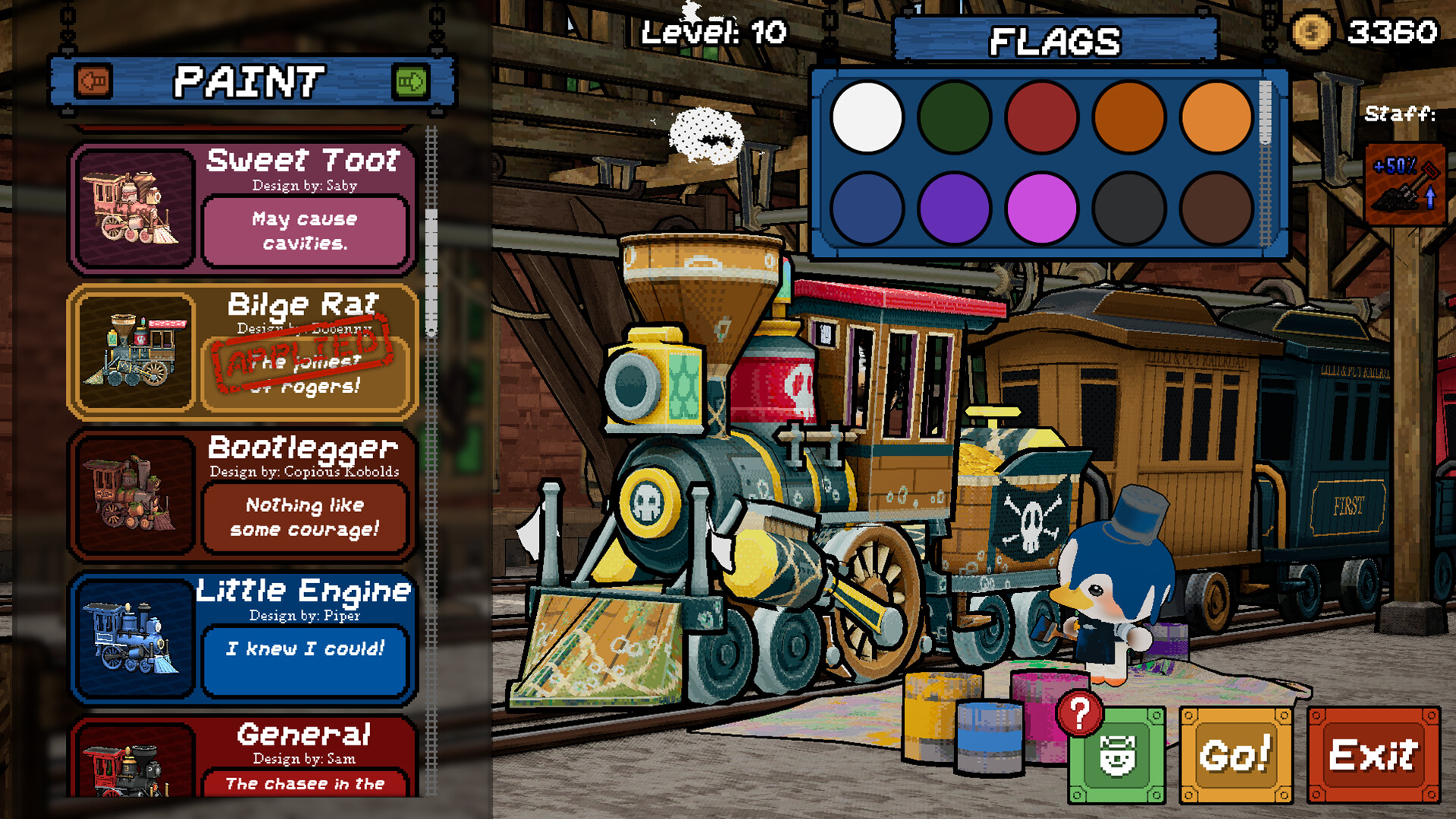
- Extensive cosmetic customization, unlockable train skins, upgrades, and staff members, paired with a charming, detail-dense world, earns consistent praise for rewarding both casual play and dedicated completionists
Biggest weaknesses
- A significant cluster of reviews, especially from Steam Deck owners, describe poor and inconsistent performance, low or unstable frame rates even on minimum settings, for a game with visually simple graphics, several attributing it to the choice of Unreal Engine 5
- Passengers cannot be selected or declined before boarding, and can't be removed once aboard without a specific late-game staff unlock, meaning players are often stuck ferrying unwanted riders to destinations they didn't plan to visit
- The in-game day ends on a hard, unforgiving cutoff with no grace period, so a delivery missed by even a second of lateness is lost entirely, a frustration several reviewers say is worsened by the semi-random routing of passengers and other AI trains sharing narrow single-lane track
Who it's for: Anyone who played the train sections of Spirit Tracks and wished the whole game were just that, plus fans of low-stakes cozy exploration games in the vein of A Short Hike or Animal Crossing.
Our recommendation: A genuinely lovely, deeply nostalgic cozy train game that's easy to fall for, though Steam Deck owners and players sensitive to performance issues should check current optimization discussions first, and everyone should expect a shorter main campaign than the asking price might suggest.
7.5 / 10
A Bumpy Ride puts the player at the controls of a small, adorable steam locomotive, ferrying chibi animal passengers and freight between stations across an open, whimsically rendered 19th-century frontier. Released 1 May 2026 by Cosmoporium Games, its premise is disarmingly specific: take the beloved passenger and freight side-missions from The Legend of Zelda: Spirit Tracks and build an entire standalone game around just that. Its review sample makes clear the developers understood exactly what made those sections work, and delivered on that promise with real care, though a well-documented performance problem and a handful of specific mechanical frustrations keep it from being a completely frictionless recommendation.
Exactly the game Spirit Tracks fans wanted
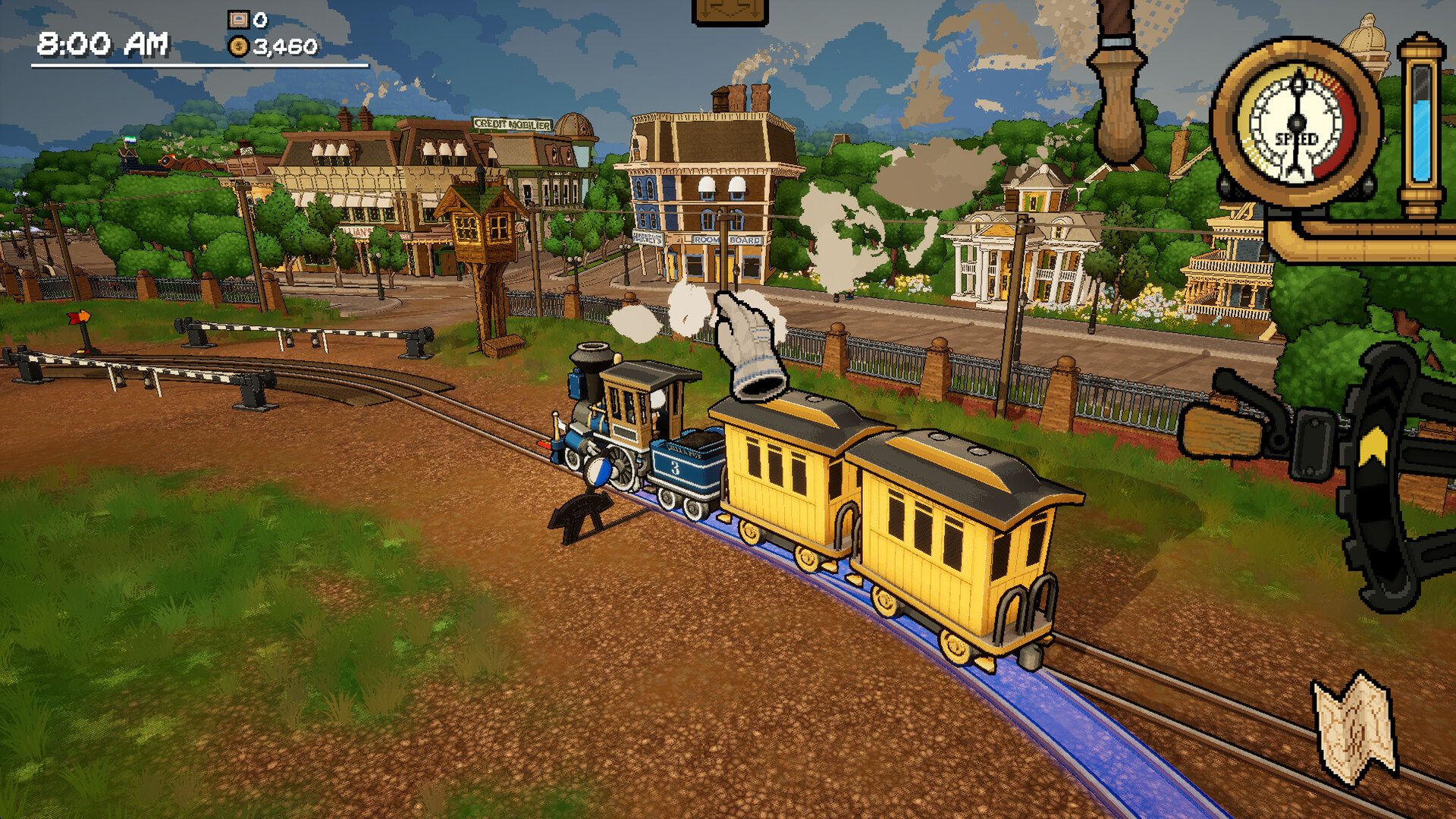
The single most consistent theme across this review sample, appearing in reviews of wildly different lengths and tones, is direct, often emotional comparison to Spirit Tracks. Reviewers repeatedly describe having wanted a standalone version of that game's train sections for years, sometimes over a decade, and finding A Bumpy Ride delivers exactly that experience without the surrounding dungeon-crawling and loading screens. The DS-inspired pixelated art style, complete with an optional toggle to sharpen the graphics for players who'd rather skip the nostalgia filter, earns specific praise, as does the game's evident affection for real railroading: reviewers describe signage, lineside structures, and locomotive variants clearly designed by people who understand trains, not just people layering a cute aesthetic onto a vehicle. The train's momentum-based physics, whistle sound design that changes pitch based on how hard it's pulled, and small touches like a rising sun and moon marking day and night are called out repeatedly as evidence of genuine craft beneath the cozy surface.
A well-documented performance problem
Set against that warmth is a specific, frequently repeated technical complaint: the game runs poorly for many players, especially on Steam Deck, despite visuals that several reviewers explicitly describe as simple enough that the performance cost is hard to justify. Reports range from unstable 30fps with dips under 15fps in more demanding areas, to outright crashes on loading a new day, to one especially detailed account of graphical corruption affecting all bodies of water after lowering settings. Several reviewers explicitly trace the issue to the developers' choice of Unreal Engine 5 for a game of this visual scope, with one noting the irony of being unable to maintain a stable framerate in a "DS-era" looking game while running much more demanding titles smoothly. It's not universal, plenty of reviewers report smooth performance on capable PCs, but the cluster of specific, detailed Steam Deck complaints is large and consistent enough to be a real risk factor for anyone hoping to play on Valve's handheld specifically.
Passengers you can't say no to
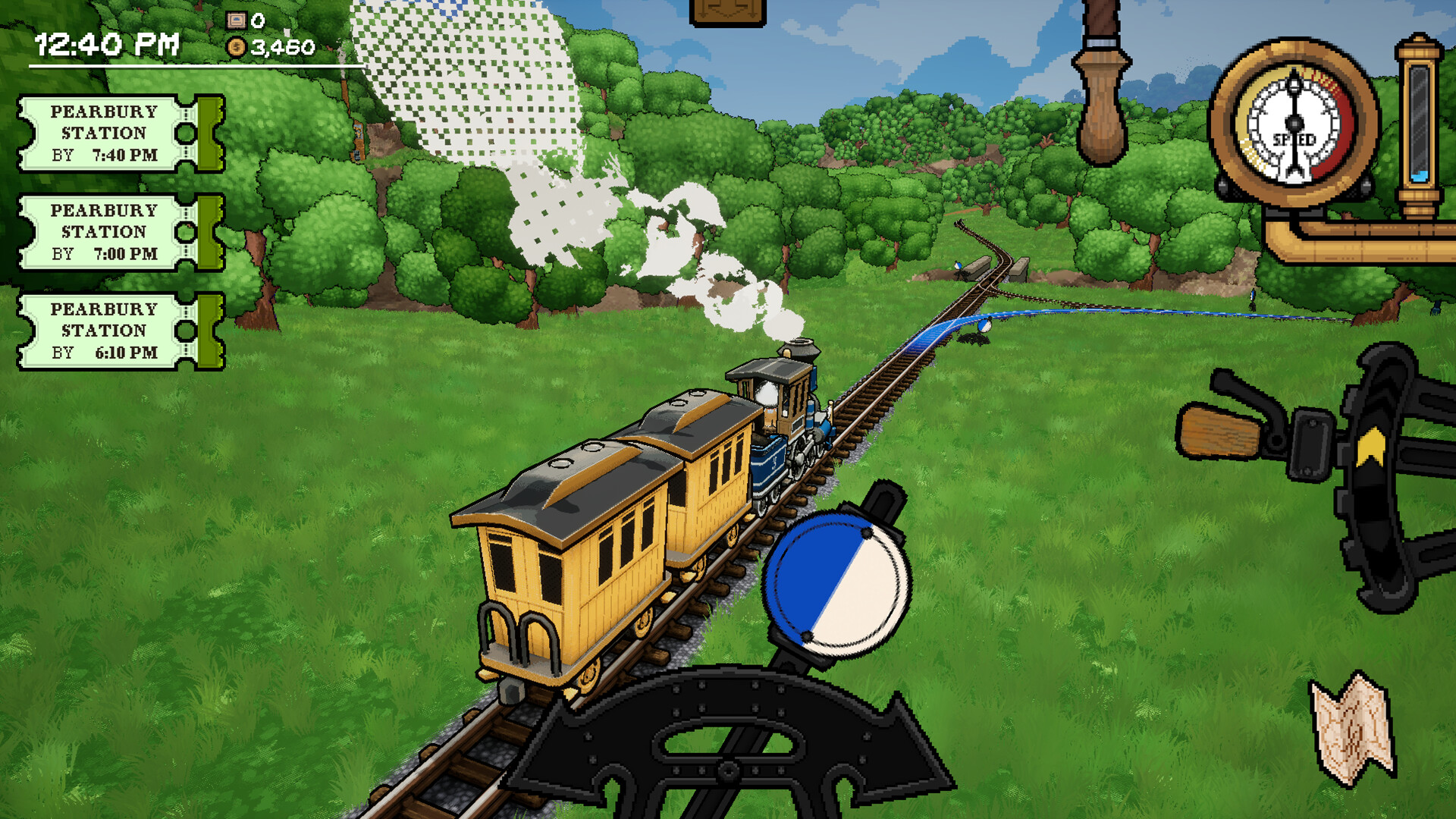
A specific and well-corroborated mechanical frustration concerns passenger control. There is no way to see where a waiting passenger wants to go, or to decline boarding them, before they're already aboard, and no way to remove an unwanted passenger once they've boarded without spending a staff slot on a specific late-game unlock that comes at the cost of another useful bonus. Reviewers describe this leading to days where the train ends up dragged toward destinations the player never intended to visit, compounded by a genuinely unforgiving day-end mechanic: when in-game time runs out, any delivery in progress is simply lost, no matter how close to completion, with no grace period offered. One especially detailed review describes the combination of these two systems as feeling less like flexible player choice and more like being handed "two or three antidotes to handle four or five poisons," acknowledging the design may be intentional but finding it frustrating rather than engaging in practice.
Charming, but shorter than expected
A meaningful portion of the review sample, including many enthusiastically positive reviews, notes that the main campaign is on the short side, commonly cited in the five-to-ten-hour range to reach the credits, with the post-campaign "endless mode" doing solid but not extensive work to extend playtime further. Reviewers describe the loop becoming noticeably more repetitive once the map has been fully explored and most upgrades unlocked, with several explicitly requesting future content drops, additional locomotives, or an international-themed expansion to give the well-received core loop more room to grow. This isn't generally framed as a dealbreaker, most reviewers who raise it still recommend the game unreservedly, but it's a specific, repeated data point about the game's total playtime relative to a roughly NZ$22 asking price.
A handful of smaller quality-of-life gaps
Beyond the headline issues, several reviewers raise smaller but specific complaints: no windowed mode or resolution settings are available, the camera must be manually reoriented at every track curve rather than following automatically, the interactive hitbox for refilling water at tender stops is described as fussier than it needs to be, and controller support, while functional, is described by more than one reviewer as feeling like an afterthought compared to the mouse-and-keyboard experience, with map navigation in particular singled out as fiddly on a gamepad. None of these individually derail the experience, but together with the larger performance and passenger-control complaints, they point to a genuinely lovable game that could still use a round of post-launch polish.
Final Verdict
A Bumpy Ride succeeds at an unusually specific and well-chosen premise: it's the standalone Spirit Tracks train game an entire generation of players didn't know they wanted, delivered with real craft, charm, and evident love for both trains and the source material it's riffing on. That affection comes through clearly in its Overwhelmingly Positive reception. But it's not without real, well-documented rough edges, a performance problem serious enough to affect the Steam Deck experience specifically, an unforgiving day-end mechanic paired with passenger controls that don't give players enough agency, and a main campaign shorter than some will expect for the price. Worth buying without hesitation for anyone with fond Spirit Tracks memories, but Deck-focused players in particular should check current performance discussions before boarding.
Pros and cons
Pros
- A near-universal chorus of reviewers describe A Bumpy Ride as exactly recreating, and expanding on, the beloved train-driving passenger and freight sections of The Legend of Zelda: Spirit Tracks, right down to a similar control layout and DS-inspired pixelated art style
- Momentum-based train physics give the driving itself real weight and feel, with reviewers praising details like a whistle that changes pitch based on how hard it's pulled and visible day-night and seasonal cycles across the world
- Extensive cosmetic customization, unlockable train skins, upgrades, and staff members, paired with a charming, detail-dense world, earns consistent praise for rewarding both casual play and dedicated completionists
Cons
- A significant cluster of reviews, especially from Steam Deck owners, describe poor and inconsistent performance, low or unstable frame rates even on minimum settings, for a game with visually simple graphics, several attributing it to the choice of Unreal Engine 5
- Passengers cannot be selected or declined before boarding, and can't be removed once aboard without a specific late-game staff unlock, meaning players are often stuck ferrying unwanted riders to destinations they didn't plan to visit
- The in-game day ends on a hard, unforgiving cutoff with no grace period, so a delivery missed by even a second of lateness is lost entirely, a frustration several reviewers say is worsened by the semi-random routing of passengers and other AI trains sharing narrow single-lane track
- A meaningful number of reviewers describe the main campaign as short, commonly citing five to ten hours to reach the credits, with the loop feeling noticeably more repetitive once the map is fully explored and unlocked
Screenshots
-
A Bumpy RideImage: Cosmoporium Games via Steam -
A Bumpy RideImage: Cosmoporium Games via Steam -
A Bumpy RideImage: Cosmoporium Games via Steam