Game review
Chaos Warrior
7.5 / 10
- Developer
- myolden
- Publisher
- myolden
- Released
- 1 September 2026
- Platforms
- Windows, Linux
- Genre
- RPG
- Monetisation
- One-time purchase
- Players
- Single-player
The short version
Chaos Warrior, released 1 September 2026 by solo developer myolden, is an unpretentious NES-style JRPG that wears its Dragon Quest and early Final Fantasy influences openly, right down to its ancient-evil-sealed-away-100-years-ago premise. Its review sample is unanimously Positive, and the recurring theme across nearly every review is value: for around eight New Zealand dollars, reviewers describe a tight eight-to-fifteen-hour adventure that strips out the more tedious friction of the games it's imitating, shared inventory, saving anywhere, retrievable gold after a defeat, a fast-travel warp flute, while keeping the turn-based combat and grinding loop that made those games work in the first place.
Biggest strengths
- Nearly every reviewer treats the price, under eight New Zealand dollars, as the headline selling point, repeatedly describing it as an easy purchase regardless of how the rest of the game lands for them personally
- A well-judged length, most reviewers finish the main game and its bonus dungeon somewhere between eight and eighteen hours, with several specifically praising it for concluding before the formula wears thin
- Genuinely useful modern quality-of-life additions layered onto a classic formula: saving anywhere outside battle, a shared party inventory, retrievable gold after a party wipe instead of a permanent loss, a fast-travel warp flute, and adjustable battle text speed
Biggest weaknesses
- Reviewers are consistent that the game is openly, deliberately derivative, one describes it as "not unique in any way," and several are explicit that anyone looking for a fresh take on the genre rather than a loving homage should adjust expectations accordingly
- There's no character creation or class-switching, stats increase automatically at each level up, and one detailed review notes the game functionally lacks much of a story beyond its opening premise
- A handful of reviewers report minor bugs at launch, including display settings not persisting between sessions and one specific ability that could leave its targeting cursor stuck off screen, along with an initial font legibility issue that has since been patched
Who it's for: Fans of classic Dragon Quest and Final Fantasy who want a short, modernized throwback rather than a deep or innovative RPG, and players looking for a low-cost, low-commitment weekend adventure.
Our recommendation: An easy recommendation at its price point for anyone with fondness for NES-era JRPGs, delivering exactly what it promises without overstaying its welcome, though players looking for originality or narrative depth should look elsewhere.
7.5 / 10
Chaos Warrior doesn't pretend to be anything other than what it is. An ancient evil, sealed away a century ago, has returned, and it's up to a small party of pre-set heroes to stop it, in a structure and presentation lifted directly from the earliest Dragon Quest and Final Fantasy games. Released 1 September 2026 by solo developer myolden, previously known in the classic Doom mapping scene, it's a first commercial release that leans entirely on execution rather than ambition, and its unanimously Positive review sample suggests that bet paid off.
An honest homage, not a reinvention
Reviewers are consistent, almost to a person, that Chaos Warrior isn't trying to reinvent anything. One review calls it "not unique in any way," another describes it as "formulaic and perfunctory in the extreme," and a third notes it "functionally doesn't have a story" beyond its opening setup. None of this is presented as a fatal flaw. Instead, reviewers frame it as an accurate description of what the game is trying to be: a clean, well-executed tribute to NES-era Dragon Warrior and early Final Fantasy, right down to specific mechanical touches like a shared party inventory and pre-defined ability unlocks at each level rather than freeform character building. For players who grew up with those games, several reviewers describe the familiarity itself as the main appeal, one calling it simply "a modern Dragon Quest classic."
Modern conveniences grafted onto old bones
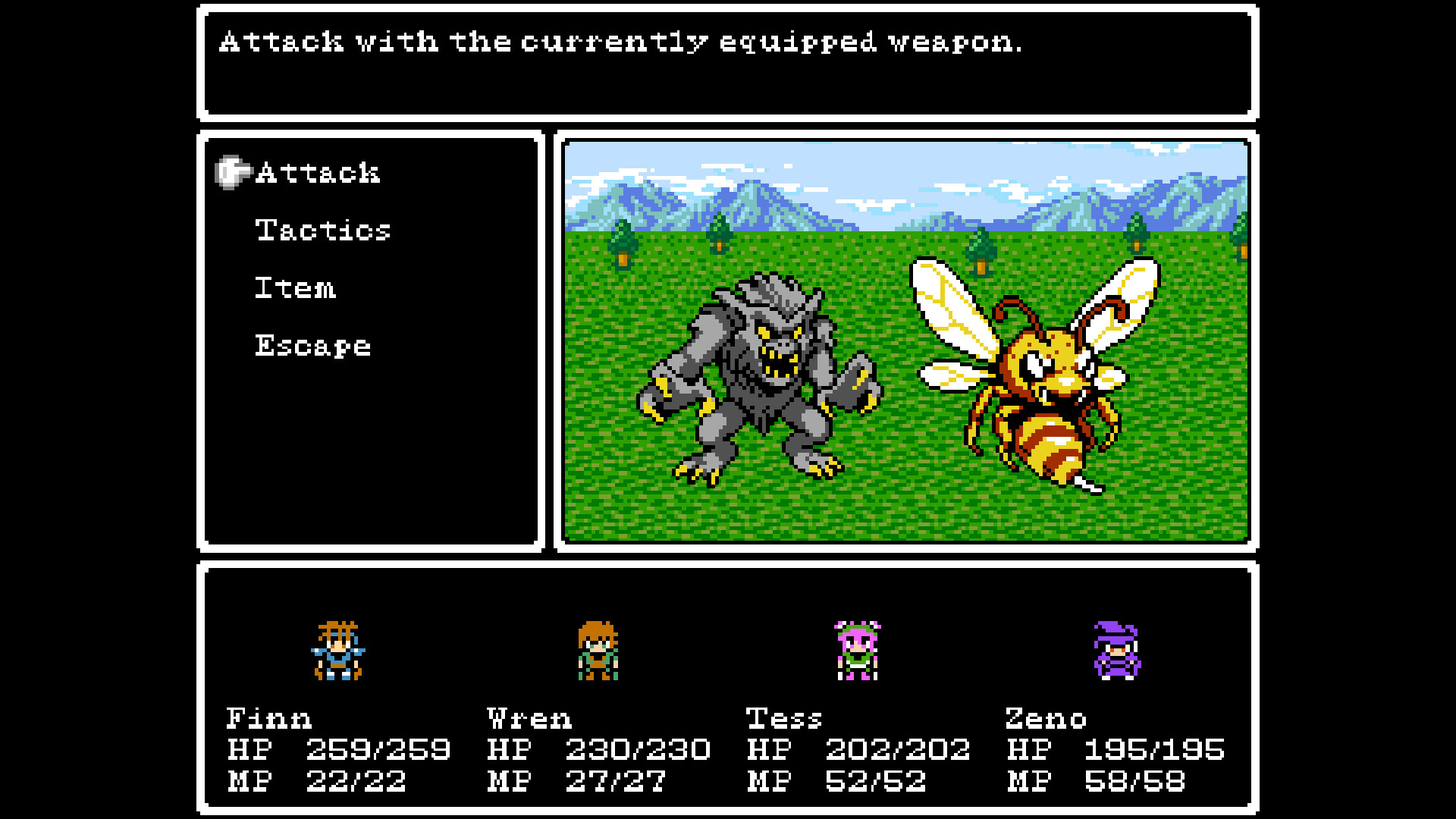
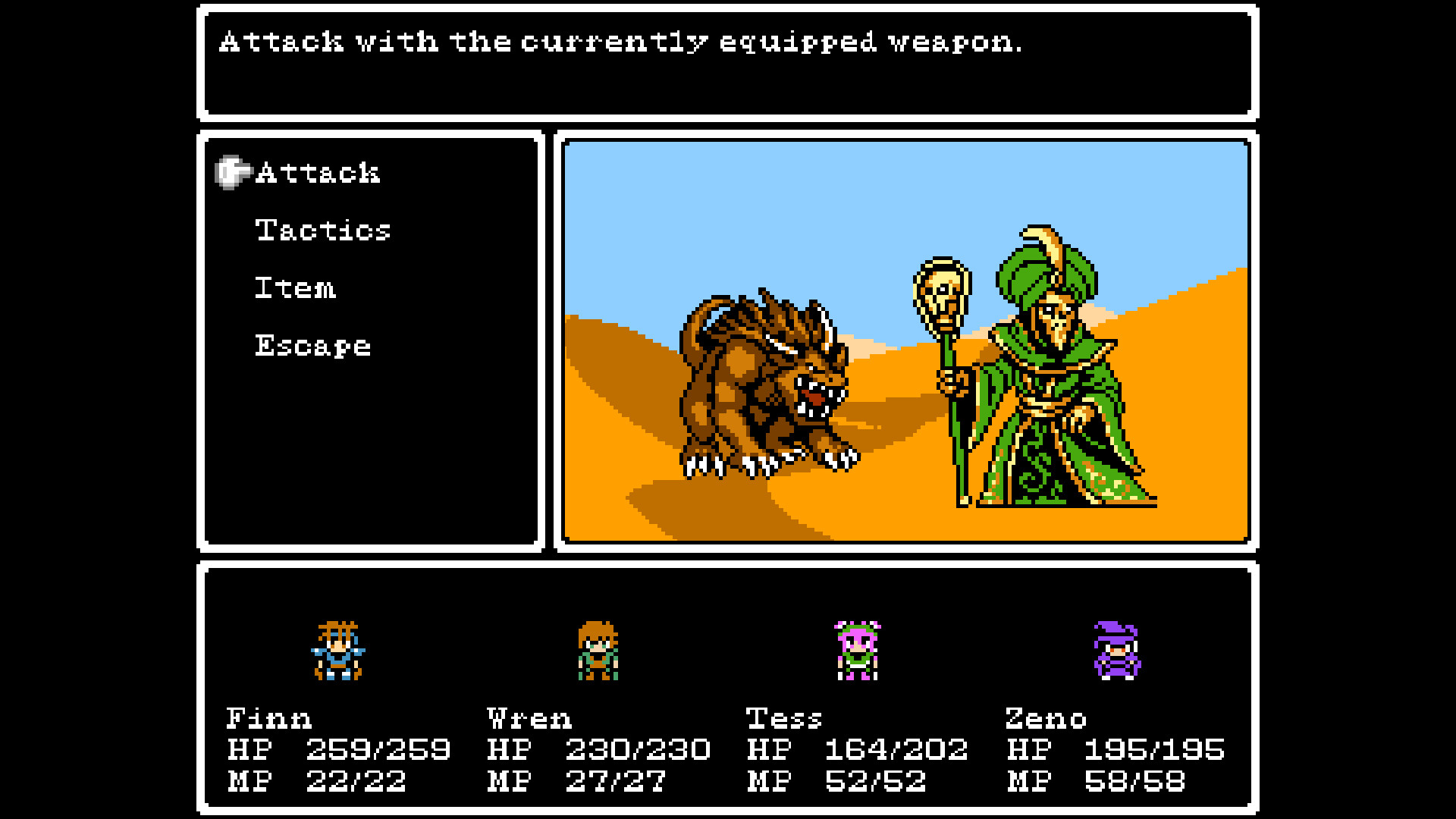
What separates Chaos Warrior from a pure nostalgia exercise, according to the sample, is a consistent set of quality-of-life improvements layered onto the classic structure. Reviewers repeatedly list the same handful of fixes: the ability to save anywhere outside of battle or dungeons rather than only at specific inns or checkpoints, a shared inventory across the whole party instead of individually limited item slots, gold that's dropped rather than permanently lost after a party wipe, and a fast-travel warp flute available early on. Combat itself is described as fast and clean, built around an auto-attack option and menus reviewers call snappy, with adjustable battle text speed letting players tune the pacing to their preference. One reviewer summarizes it as Dragon Quest "with modern QoL," and that framing recurs often enough across the sample to treat as the game's defining pitch.
Short, deliberately, and reviewers are grateful for it
Length comes up constantly, and almost always as a positive. Most reviewers report finishing the main story and a bonus dungeon somewhere between eight and eighteen hours, with several specifically praising the game for ending before its formula gets old. One reviewer who describes not having grown up with the classic JRPGs it's imitating still found themselves drawn in purely on the strength of its pacing and modest scope, noting the game "stays entertaining and concludes before it starts to get old." Grinding is present, this is explicitly an homage to games built around it, but reviewers describe it as calibrated rather than punishing, with levels climbing quickly during short, deliberate grinding sessions rather than requiring hours of tedious backtracking.
Where the game shows its seams
The criticism that does surface in the sample is consistently minor rather than structural. A handful of reviewers report launch-period bugs: display and fullscreen settings not persisting between sessions, one specific thief ability that could leave its targeting cursor stuck off-screen requiring a manual workaround, and an early font legibility issue, an "L" rendering like the number 1, that the developer patched after being flagged by players. One reviewer running the game on Linux needed to manually force Proton compatibility since it wasn't set by default, though it then ran without further problems. A more mechanical complaint from a detailed review notes that with only a single accessory slot and frequent, punishing status effects like charm, blind, and silence used against the player, certain boss fights effectively force specific defensive equipment choices, narrowing what would otherwise be a wider range of viable builds.
Room to explore off the marked path
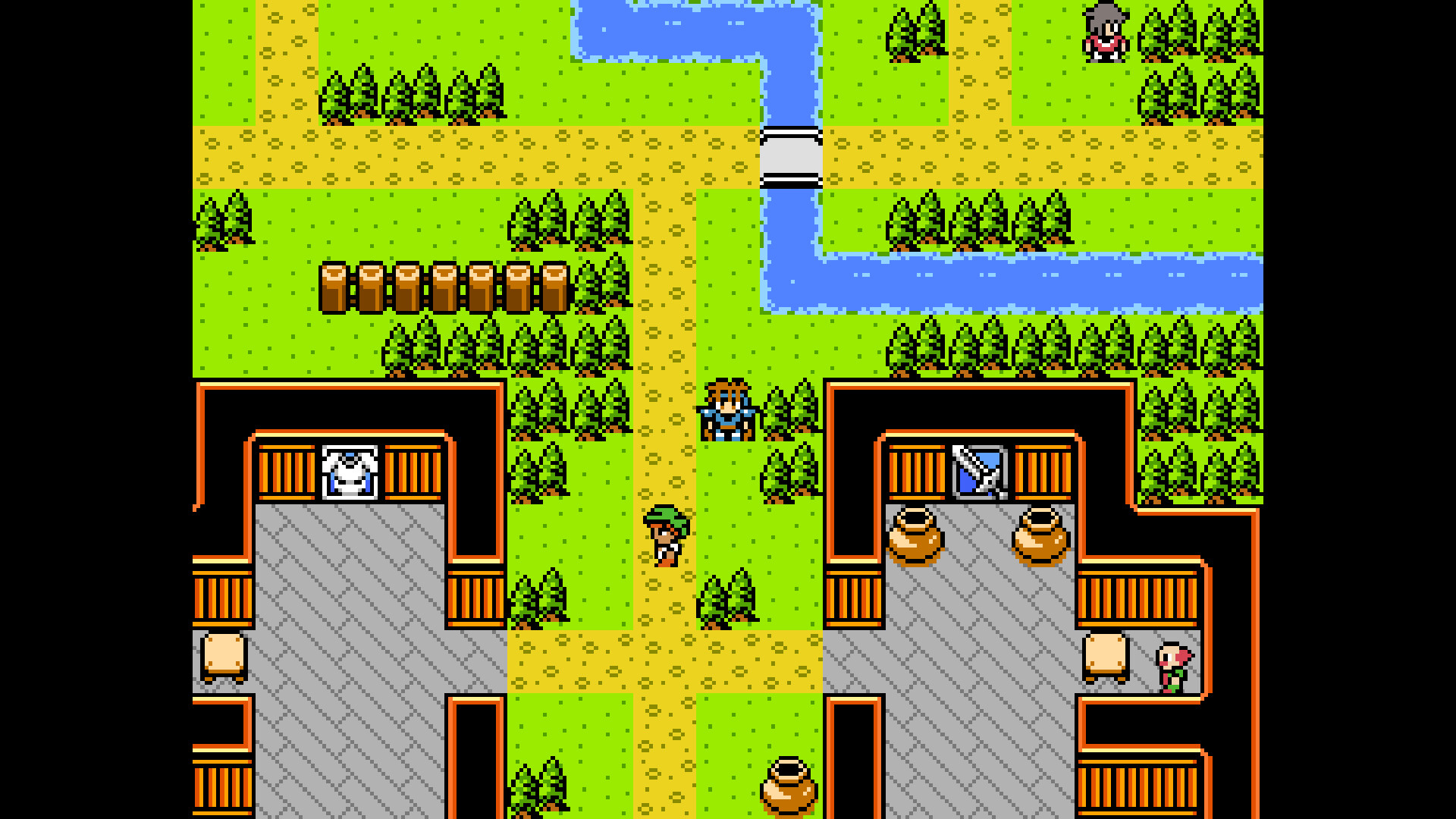
A few reviewers highlight a specific structural touch that stands out against the game's otherwise straightforward, linear presentation: the world map and dungeons reward players willing to wander away from the intended route. One reviewer describes deliberately heading to a town well out of the expected order and being rewarded with an armor piece that made a party member nearly invincible for the next couple of dungeons, calling the moment exactly the kind of sequence-breaking discovery classic JRPGs were built to allow. Others mention a helpful in-menu world map and a main-quest guide that keeps the central objective clear even during detours, though more than one reviewer notes there's no dedicated log for side content, so tracking optional objectives is left entirely to memory, a small but deliberate nod to how little hand-holding these games originally offered.
A game reviewers keep describing in terms of value
Almost every review in the sample, whether glowing or comparatively lukewarm, returns to the same point: at around eight New Zealand dollars, Chaos Warrior is difficult to regret buying. Multiple reviewers describe it explicitly as costing less than a cup of coffee, and even the more measured reviews, one comparing it to a "forgettable yet pleasant midsummer movie," frame that as a description of modest but genuine satisfaction rather than disappointment. One reviewer goes further, suggesting the game's fundamentals are worth studying by anyone interested in building their own old-school JRPG, calling it a "masterclass" in the basics of the genre even without pushing beyond them.
Final Verdict
Chaos Warrior succeeds by being honest about its ambitions and disciplined about its execution. It isn't trying to modernize or subvert the Dragon Quest formula, it's trying to deliver a clean, faithful, quality-of-life-improved version of it at a price that makes the question of whether to buy almost moot, and its unanimous Positive review sample suggests that's exactly what most players wanted from it. Reviewers are candid that there's little here for players hoping for originality or narrative ambition, but just as consistent that within its chosen lane, a short, affordable, well-paced throwback, it delivers cleanly and without padding. For fans of NES-era RPGs looking for a weekend's worth of familiar comfort, it's an easy recommendation.
Pros and cons
Pros
- Nearly every reviewer treats the price, under eight New Zealand dollars, as the headline selling point, repeatedly describing it as an easy purchase regardless of how the rest of the game lands for them personally
- A well-judged length, most reviewers finish the main game and its bonus dungeon somewhere between eight and eighteen hours, with several specifically praising it for concluding before the formula wears thin
- Genuinely useful modern quality-of-life additions layered onto a classic formula: saving anywhere outside battle, a shared party inventory, retrievable gold after a party wipe instead of a permanent loss, a fast-travel warp flute, and adjustable battle text speed
- Combat that reviewers describe as snappy and well-paced thanks to an auto-attack option and quick menus, with enough skill and debuff variety, including punishing status effects like charm, blind, and silence, to keep encounters from feeling rote
- A developer reviewers repeatedly describe as responsive on the Steam forums, with at least one reviewer noting a specific font legibility complaint was fixed in a patch shortly after launch
Cons
- Reviewers are consistent that the game is openly, deliberately derivative, one describes it as "not unique in any way," and several are explicit that anyone looking for a fresh take on the genre rather than a loving homage should adjust expectations accordingly
- There's no character creation or class-switching, stats increase automatically at each level up, and one detailed review notes the game functionally lacks much of a story beyond its opening premise
- A handful of reviewers report minor bugs at launch, including display settings not persisting between sessions and one specific ability that could leave its targeting cursor stuck off screen, along with an initial font legibility issue that has since been patched
- The game is grindier than some other modern retro-inspired RPGs by design, and reviewers note a single accessory slot combined with frequent, punishing status effects can force players into narrow, defensive equipment choices during boss fights
- Windows-only at a system level, at least one Linux reviewer needed to manually force Proton compatibility since the game didn't default to it, though it then ran without further issues
Screenshots
-
Chaos WarriorImage: myolden via Steam -
Chaos WarriorImage: myolden via Steam -
Chaos WarriorImage: myolden via Steam