
Game review
Sea of Stars
8.5 / 10
- Developer
- Sabotage Studio
- Publisher
- Sabotage Studio
- Released
- 29 August 2023
- Platforms
- Windows, Nintendo Switch, Nintendo Switch 2, PlayStation 4, PlayStation 5, Xbox One, Xbox Series X|S, iOS, Android
- Genre
- Turn-Based RPG
- Monetisation
- Premium, one-off purchase; both post-launch content drops are free, no in-game purchases
- Players
- Single-player campaign with optional local co-op for up to three players (added post-launch)
The short version
Sea of Stars doesn't pretend it isn't built from Chrono Trigger's parts, and most of what it does with them justifies the borrowing. Timed hits on both offence and defence keep turns mechanically live, a lock-breaking system turns enemy tells into a real positioning puzzle, and a day/night switch that Valere and Zale control directly reshapes both combat and platforming puzzles rather than just reskinning the sky.
What it doesn't solve is the writing. The systems are more inventive than their 1995 ancestor; the plot and cast, running on the same well-worn beats, mostly aren't. Two free post-launch drops — a co-op mode and a genuinely substantial expansion — make the value case as strong as the combat does.
Biggest strengths
- Timed hits on both attack and defence keep every turn mechanically active rather than a menu you click through on autopilot
- The lock-breaking system makes enemy elemental resistances a real positioning puzzle, not a stat check
- Live Mana and multi-character combo attacks give fights a build-toward-a-payoff rhythm the genre's menu combat usually lacks
Biggest weaknesses
- The plot runs through familiar chosen-hero beats and several outlets have called its cast under-developed relative to the mechanics around them
- Locks occasionally demand a specific element or party member you don't have active, which can turn a fight into rearranging your line-up rather than reacting to it
- Fishing, cooking and the tabletop minigame are pleasant pacing breaks but shallow next to the combat and puzzle systems they sit beside
Who it's for: Turn-based RPG players who grew up on Chrono Trigger and Super Mario RPG and want that rhythm modernised without being replaced, plus anyone curious what a lock-and-combo layer adds to a genre usually built on menu selection alone.
Our recommendation: A confident buy at its unchanged US$34.99, made better value by two free post-launch content drops rather than paid DLC. Go in for the combat, the pixel art and the score, and treat the story as agreeable rather than the reason you finish it.
8.5 / 10
Sea of Stars doesn't hide what it's built from. Two young heroes with sun and moon powers, a turn-based structure with no random encounters, pixel art pitched squarely at the SNES-era RPG aesthetic — Sabotage Studio names Chrono Trigger as an influence in its own marketing rather than letting players spot it. That's a specific kind of dare: when a game tells you exactly which classic it's measuring itself against, the only honest review question is whether it does anything that classic didn't, or whether it's a beautifully executed cover version. The answer sits in the space between those two options, and it's worth working through system by system rather than settling for "very good homage" and moving on.
The lock-breaking system: tactics, or a timer with extra steps
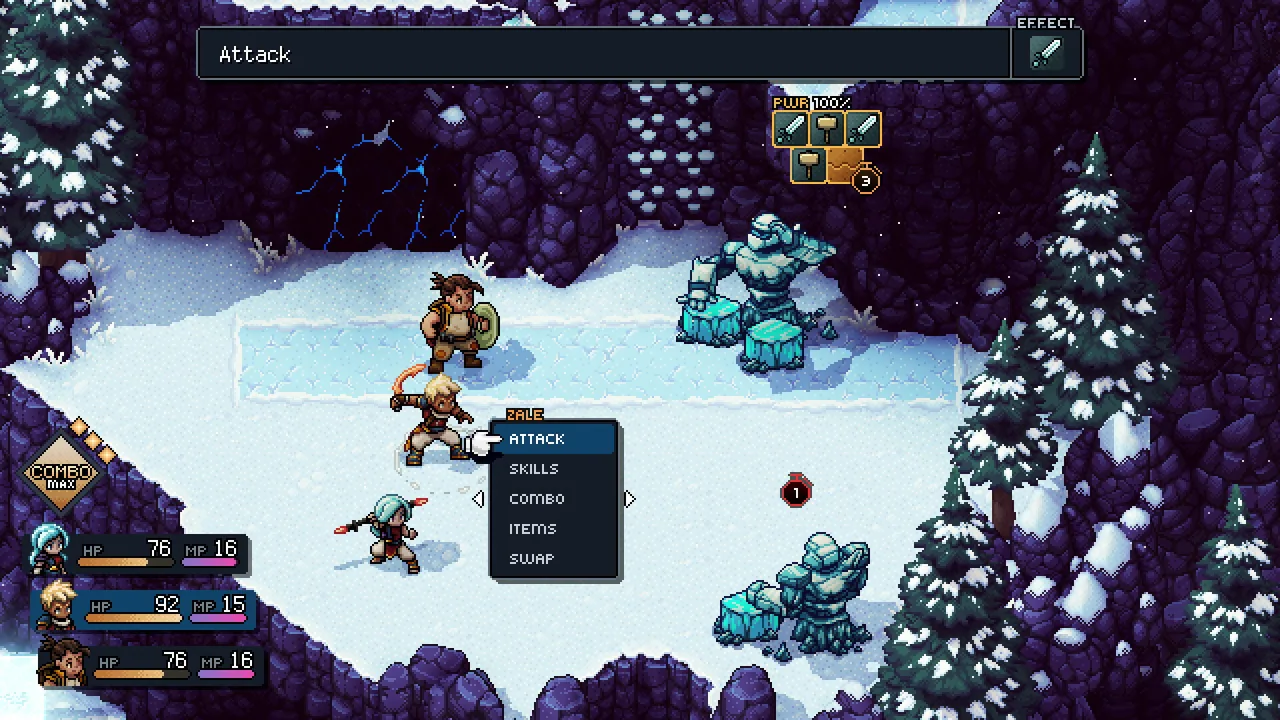
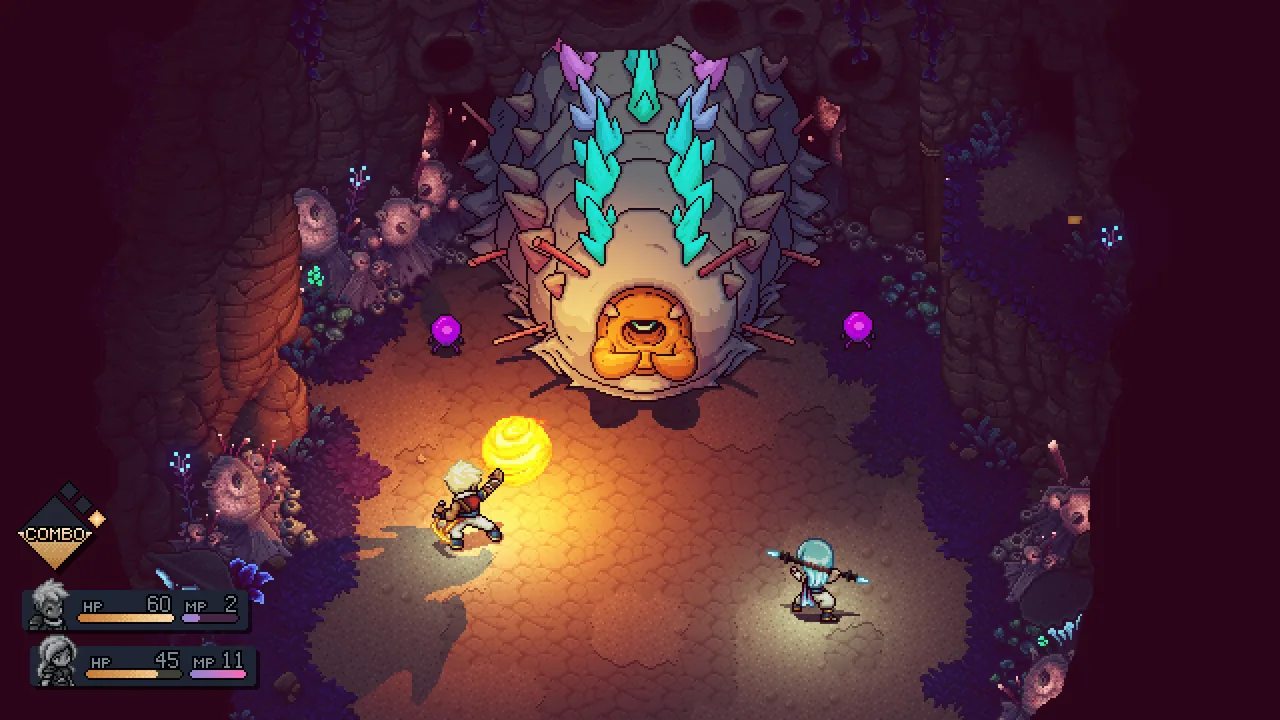
The headline addition to the turn-based formula is the lock. Certain enemy attacks — usually the dangerous ones — arrive with a multi-turn charge and a visible or hidden elemental "lock" that specific attack types can break, either interrupting the attack outright or reducing what it does. It sounds like Chrono Trigger's own dual- and triple-tech system crossed with a boss-gate mechanic from a modern action game, and in practice it lands closer to the latter: locks turn "who do I attack" into "what does this specific enemy need broken, and do I have the right character active to do it."
That's a real tactical question, not busywork, when the game gives you the information to answer it — an obviously coloured lock icon you can plan around a turn in advance. It curdles into busywork on the encounters that hide the lock type or require a character who isn't currently in your active three, because the fix isn't a better read of the fight, it's shuffling your line-up and eating the turn you needed to spend attacking. Sea of Stars lets you swap active and reserve party members mid-fight without a hard penalty, which keeps this from being a wall, but it also means the system's most interesting moments — correctly reading a lock and having the answer already on the field — sit right next to its most annoying ones, where the answer exists but isn't currently equipped. On balance it's a genuine improvement on menu-select combat: it gives you a reason to track enemy intent rather than just their health bar, which is more than most throwback JRPGs bother to add.
Timed hits sit underneath all of this exactly where Super Mario RPG and Paper Mario put them — press the button as your attack lands for bonus damage, press it again as the enemy's attack connects for a damage-reducing block. It's not a new idea, but it's well tuned here: the windows are generous enough on default difficulty that a miss feels like your own timing rather than the game's, and landing them consistently is what turns an average fight into a short one, which is the right incentive structure for a mechanic you'll be doing hundreds of times over a campaign.
Live Mana adds the third layer. Landing hits releases mana you absorb rather than banking as a resource bar you top up passively, and spending it on Zale and Valere's combined Sun-and-Moon attacks — or later, combos that pull in the rest of the six-person roster — is where the combat's rhythm actually lives: build mana through good timing, spend it on a boss-sized combo at the moment it matters, repeat. None of the three systems is individually radical. Stacked together, they make Sea of Stars's combat noticeably busier, in the good sense, than the games it's citing as ancestors.
Day and night as a tool, not a skybox
The other system worth taking seriously is the day/night cycle, because it's the clearest example of the game doing something its 1995 reference points genuinely didn't. Valere and Zale can flip between day and night more or less on demand using their Eclipse magic, and the switch isn't cosmetic — specific puzzles require a shadow that only exists at night, specific platforming routes only appear under one state, and certain enemies or encounter triggers change behaviour depending on which one is active. It's the same instinct as a light/dark or past/present toggle in other adventure games, but folded into the same button the combat uses, so it never feels like a separate minigame bolted onto the RPG — it's one more thing your two leads' powers do, alongside absorbing enemy mana and breaking locks.
This is where the "well-made tribute" framing undersells the game a little. The combat systems are elaborations on ideas the genre already had. The day/night mechanic, tied directly to player agency rather than a clock or a location trigger, is closer to an original contribution, and it's used consistently enough across both puzzles and exploration that it reads as a design pillar rather than a gimmick saved for one dungeon.
Fishing, cooking, and the relics you don't have to touch
Sea of Stars surrounds its main systems with a layer of optional activities — fishing at set locations, gathering ingredients to cook at campfires for consumable buffs, a tabletop minigame called Wheels, a boat you sail between islands. None of it is deep on its own terms. Cooking converts ingredients into stat-buff food with a shallow ingredient list; fishing is a timing minigame with a small pool of catches; Wheels is a pleasant diversion rather than a system with real depth. Judged as standalone mechanics they're thin next to the combat and puzzle design carrying the rest of the game, and that gap is real rather than a matter of taste — nobody is going to point to the cooking system as a reason to play this over another RPG.
Judged as pacing tools rather than systems in their own right, they do their job. A turn-based RPG this combat-forward benefits from a reason to stop and breathe between dungeons, and fishing at a quiet dock does that more gracefully than another cutscene would.
The accessibility side is worth crediting on its own merits. Sea of Stars offers a set of optional assist toggles — separate from difficulty presets — that let a player reduce incoming damage, smooth out the timed-hit windows, or adjust other combat variables independently of each other, rather than forcing a binary choice between the intended experience and an easy mode that changes everything at once. That granularity is a genuinely player-respecting design choice for a combat system this reliant on reaction timing, and it's the kind of detail that's easy to skip and easy to notice when a game bothers to include it.
Where the writing doesn't keep pace
Here's the honest divergence between presentation and substance, and it's worth being specific rather than gesturing at "the story is weak." The setup — two Children of the Solstice combining sun and moon magic against the Fleshmancer's creations — is a serviceable chosen-hero framework, and outlets that praised the story tended to call it approachable and sincere rather than ambitious. The more consistent critical thread, though, is that the cast doesn't develop the way the presentation implies they will: two co-leads introduced with equal weight who stay fairly interchangeable across the runtime, side characters who get an arc-shaped introduction and then don't complete it, and a plot that telegraphs its turns clearly enough that surprise is rarely on the table. That's not a minority opinion scattered across a couple of harsh reviews — it's the single most repeated critical note attached to this game since launch, sitting alongside near- universal praise for everything else.
It matters more here than it might in a shorter or more mechanically focused game, because Sea of Stars is explicitly inviting a comparison to RPGs whose casts are still discussed decades later. Holding a Chrono Trigger-shaped mirror up to your own story is a confident move, and it's the one place the confidence isn't fully earned. None of this makes the writing bad exactly — it's pleasant, well-paced, and never actively grating — it's that "pleasant" is a noticeably lower bar than the combat and art direction are clearing at the same time.
The presentation case, and why it holds up
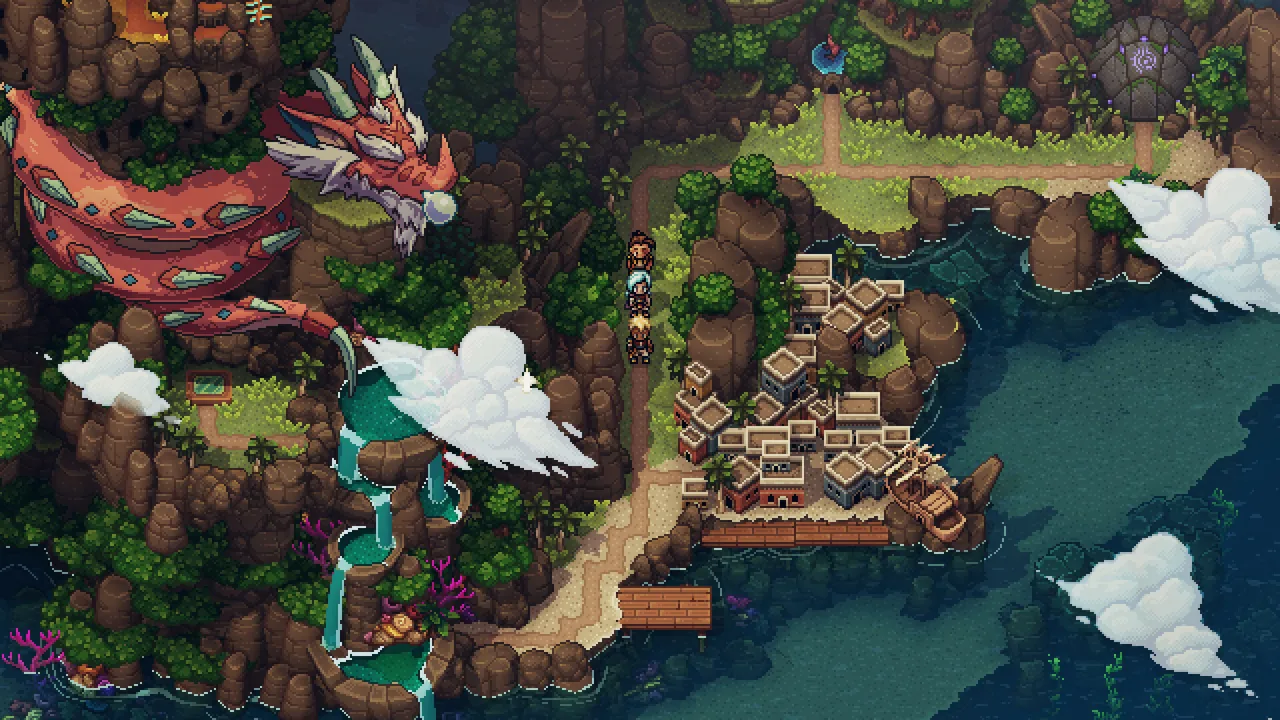
Set the writing aside and the rest of the presentation is close to unimpeachable. The pixel art is consistently held up as some of the best the genre has produced this decade — lighting, water reflections and animation work that make a deliberately retro art style read as current rather than nostalgic pastiche. Composer Eric W. Brown wrote the bulk of the score, with Yasunori Mitsuda — Chrono Trigger's own composer — contributing tracks after backing the game's Kickstarter, and the result holds up next to the genre touchstones it's drawing from rather than coasting on the association. A CA$1.6 million campaign from over 25,000 backers, and a studio that grew from seven people to twenty-five during development, is the kind of production story that usually produces something scrappier than this actually looks and sounds.
Post-launch: two free drops instead of a paid roadmap
What's happened to Sea of Stars since its August 2023 launch is unusual enough to fold into the value case directly. Rather than a season pass or a run of small paid cosmetic DLC, Sabotage shipped two substantial free updates: Dawn of Equinox in November 2024 added local co-op for up to three players plus combat revisions, and Throes of the Watchmaker in May 2025 is a genuinely sizeable expansion — a circus-themed post-game area called Horloge, new playable classes for existing leads, a new joinable character, and by the developer's own account over eight hours of new content, all at no additional charge. A June 2026 "Sunset Edition" update and a Nintendo Switch 2 release folded that content into the base package for anyone arriving now.
That's a genuinely different monetisation story from most premium RPGs of this scale, and it's the strongest part of the value argument: a single US$34.99 purchase, unchanged nearly three years later, that has only grown in scope since launch rather than being nickel-and-dimed afterward.
Verdict
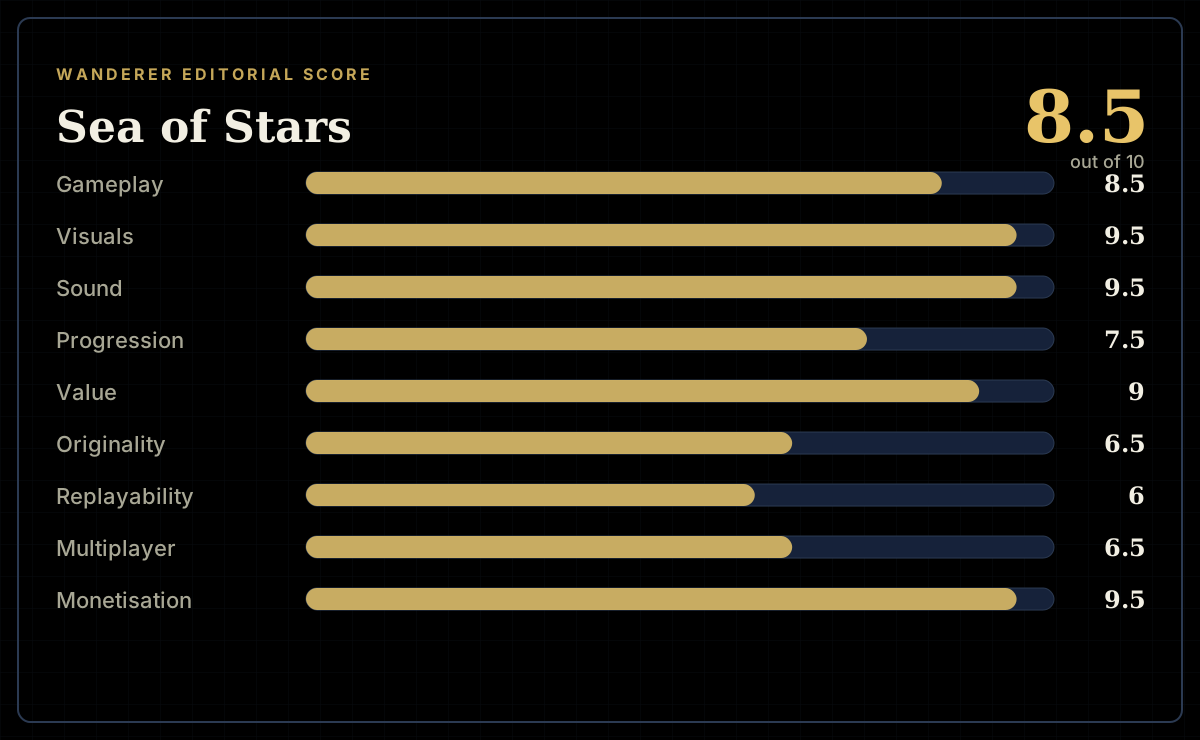
Sea of Stars set out to prove that Chrono Trigger's combat structure had more room in it, and on the mechanical side, it does. The lock-breaking system gives elemental typing a real tactical purpose rather than a damage-multiplier footnote, timed hits keep every turn something you're doing rather than watching, and the day/night mechanic is the clearest evidence that Sabotage was building on its influences rather than just recreating them. The pixel art and score are genuinely among the best examples currently in the genre, and two free post-launch content drops make the value case stronger than almost any comparable premium RPG released in the last three years.
It settles at eight and a half rather than higher because the writing is the one place this game plays it safer than the systems around it demand — a cast introduced with real presence that mostly doesn't develop, and a plot that rarely surprises. That's a real shortfall against the specific classics this game invites comparison to, not a minor nitpick. Buy it for the combat, the art and the astonishing amount of free content Sabotage kept adding; don't expect the story to be the reason you remember it.
Price and Steam review data checked 30 July 2026.
If a lock-breaking, timed-hit combat system with a real day/night mechanic sounds like your kind of turn-based fight, Wanderer runs a slower, persistent take on the same instinct to keep combat active rather than menu-driven.
Pros and cons
Pros
- Timed hits on both attack and defence keep every turn mechanically active rather than a menu you click through on autopilot
- The lock-breaking system makes enemy elemental resistances a real positioning puzzle, not a stat check
- Live Mana and multi-character combo attacks give fights a build-toward-a-payoff rhythm the genre's menu combat usually lacks
- Day/night is a direct player-controlled tool that changes puzzles and unlocks specific enemy vulnerabilities, not a cosmetic cycle
- Widely acclaimed pixel art and a score co-written by Chrono Trigger composer Yasunori Mitsuda
- Two free post-launch content drops, including an eight-hour paid-feeling expansion, with no in-game purchases anywhere
Cons
- The plot runs through familiar chosen-hero beats and several outlets have called its cast under-developed relative to the mechanics around them
- Locks occasionally demand a specific element or party member you don't have active, which can turn a fight into rearranging your line-up rather than reacting to it
- Fishing, cooking and the tabletop minigame are pleasant pacing breaks but shallow next to the combat and puzzle systems they sit beside
- A single, mostly linear main path with light co-op appeal means little reason to run the campaign twice
Screenshots
-
Sea of Stars: Sunset EditionImage: Sabotage Studio via Steam -
Sea of Stars: Sunset EditionImage: Sabotage Studio via Steam -
Sea of Stars: Sunset EditionImage: Sabotage Studio via Steam -
How the review scores each part of the gameWanderer Editorial -
The short versionWanderer Editorial