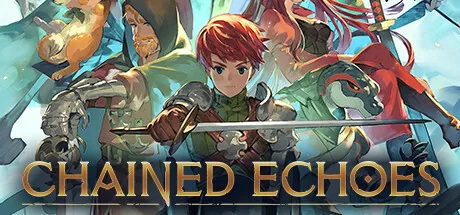
Game review
Chained Echoes
8 / 10
- Developer
- Umami Tiger (Matthias Linda)
- Publisher
- Deck13 (Deck13 Spotlight)
- Released
- 8 December 2022
- Platforms
- Windows, macOS, Linux, PlayStation 4, PlayStation 5, Xbox One, Xbox Series X|S, Nintendo Switch
- Genre
- JRPG
- Monetisation
- Premium, one-off purchase; one paid story expansion (Ashes of Elrant), no other in-game purchases
- Players
- Single-player only
The short version
Chained Echoes earns its reputation on one system: the Overdrive gauge, a heat bar that turns every turn into a live decision about pushing your advantage or bailing out before you overheat. It's a genuine rethink of what a turn-based JRPG asks you to manage, and combined with zero random encounters and a full heal after every fight, it removes the attrition grind the genre has leaned on since the SNES without losing the tension that grind was supposed to create.
It doesn't hold that standard for the full runtime. The back half loosens its grip on both pacing and plot, the crystal equipment system asks for more bookkeeping than its ideas justify, and Sky Armor's mech battles never develop the depth of the system they keep interrupting.
Biggest strengths
- The Overdrive gauge replaces MP hoarding with active heat management, rewarding attention to a shifting sweet spot on every single turn
- No random encounters and a full heal after each fight put the entire difficulty conversation on individual encounter design rather than resource attrition
- The Grimoire Shard skill tree and crystal-slot equipment system reward planning a build around synergy and slot layout instead of chasing a bigger number
Biggest weaknesses
- Steam's negative reviews repeatedly describe Overdrive combat settling into one obviously correct action once heat management becomes a chore rather than a live decision
- Ordinary overworld encounters swing harder than several story bosses in the back half, so difficulty stops tracking story progression
- Acts three and four unravel the plotting and character work the first half built carefully, and the ending is the game's most consistently criticised element
Who it's for: Turn-based RPG players who want a genuine mechanical argument under the pixel art, not just a nostalgia trip — and who can tolerate a story that outruns its own resolution in the final third.
Our recommendation: A confident buy at NZ$30.99 for a 30-to-40-hour campaign with no random encounters and no in-game purchases beyond one optional paid expansion. Go in for the Overdrive combat and the score; expect the story and the crystal system to ask more patience than they repay.
8 / 10
Every write-up of Chained Echoes reaches for the same line about a solo developer paying tribute to Final Fantasy VI and Chrono Trigger, and then stops there as if the pixel art were the whole pitch. It isn't. The thing actually worth arguing about is the Overdrive gauge — a heat bar sitting under every fight that replaces the genre's oldest resource, MP, with something that has to be actively managed turn by turn rather than hoarded and spent. That's a real design proposition, not a coat of retro paint, and it's the reason this game is worth taking seriously past its opening hour rather than filed away as another nostalgia exercise.
The Overdrive gauge: a genuine rethink of turn-based tension
Here's how it actually works. A needle sits on a bar split into a yellow warm-up zone, a green Overdrive zone in the centre, and red overheat zones at both ends. Almost every action — yours or the enemy's — pushes the needle right, so the gauge climbs on its own over the course of a fight whether you're paying attention to it or not. Land the needle in green and the whole party gets rewarded: roughly 25% more outgoing damage, 15% less incoming damage, and skills cost half their usual TP. Let it run into red and you take the inverse penalty at the worst possible moment, usually right as a boss is winding up something dangerous.
The trick that makes it more than a meter to watch is the counter-mechanic: a rotating icon next to the gauge flags a skill category — attack, magic, healing, buff, whatever — and using that specific type of move while its icon is active yanks the needle sharply back left. That turns every turn into two questions instead of one: what does this fight need right now, and does it also happen to be the move that keeps the gauge where you want it? Most of the time those two answers line up naturally, which is when the system sings — it's rewarding you for reading a fight correctly rather than making you choose between winning and heat-managing.
The complaint that shows up constantly in Steam's negative reviews is what happens when they stop lining up: once a player has learned the pattern, "defend" or "switch character" becomes the reliably safe way to cool the gauge, and a system built to reward active engagement can collapse into a single correct button for stretches of a fight. That's a fair criticism and it's specific rather than vague grumbling — it's the system working exactly as designed producing a genuinely duller outcome than its own best moments promise. It doesn't undo what Overdrive gets right in its first fifteen hours, but it means the gauge asks less of a player who's mastered it than it did of the same player in Act One, which is the wrong direction for a mechanic a JRPG leans on for its entire length.
No MP, no random encounters, full heal — what the game trades away
The Overdrive gauge is one half of a deliberate rejection of the genre's attrition model; the other half is structural. There are no random encounters — every fight is a visible enemy on the map, avoidable if you route around it — and the whole party heals to full the instant a battle ends. Classic JRPGs built entire dungeons around the tension of not knowing whether your MP would survive to the boss door; Chained Echoes throws that tension out entirely and bets that individually well-designed encounters are more interesting than the dread of running out of resources between them.
That bet mostly pays off. Removing the "do I have enough left for the boss" calculation means every fight can be judged purely on its own terms — is this a good puzzle right now — without a run of trash fights quietly draining the tank before the encounter that actually mattered. It also removes a classic RPG's built-in reason to grind, and the game leans into that: character power grows mostly through equipment and skill unlocks rather than raw levels, so farming random battles for experience simply isn't the loop here. What it loses is the specific kind of dread that made older JRPGs' dungeon design feel higher-stakes — walking into a boss room on fumes because you misjudged a corridor is a real feeling this game has opted out of on purpose. Whether that's a net gain depends entirely on whether you think that dread was ever good design or just an artifact of 1990s hardware limitations forcing scarcity onto players. Chained Echoes clearly believes the latter, and the argument holds up better than most attempts at the same thesis.
Grimoire Shards and the crystal grid: build choice, with a cost
Levelling here doesn't hand out flat stat increases on a timer. Winning fights earns Grimoire Shards, spent in a skill tree for new moves, passive abilities, or direct stat bumps — a small but real choice about what kind of character you're building rather than a number that goes up automatically. Equipment layers a second system on top: crystals with rank, size and purity values slot into gear, and fusing crystals together raises their rank and unlocks or strengthens a passive effect once it hits certain thresholds.
On paper that's a genuinely interesting alternative to conventional levelling — it turns gearing up into a real optimisation problem about slot economy rather than a straight upgrade path. In practice, the bookkeeping outpaces the payoff. Equipment tops out at four crystal slots but only ever applies three abilities regardless of how many you've fitted, purity limits how many times a crystal can anchor a fusion, and the inventory fills with near-identical materials faster than the UI's auto-combine tool can meaningfully thin them out. Enough players have reported finishing the entire campaign while mostly ignoring the system that it's fair to call it optional in practice — which is a strange place for a mechanic this elaborate to land. The idea is sound; the interface built around it asks for more patience than the payoff justifies.
Sky Armor: the mech battles that never catch up
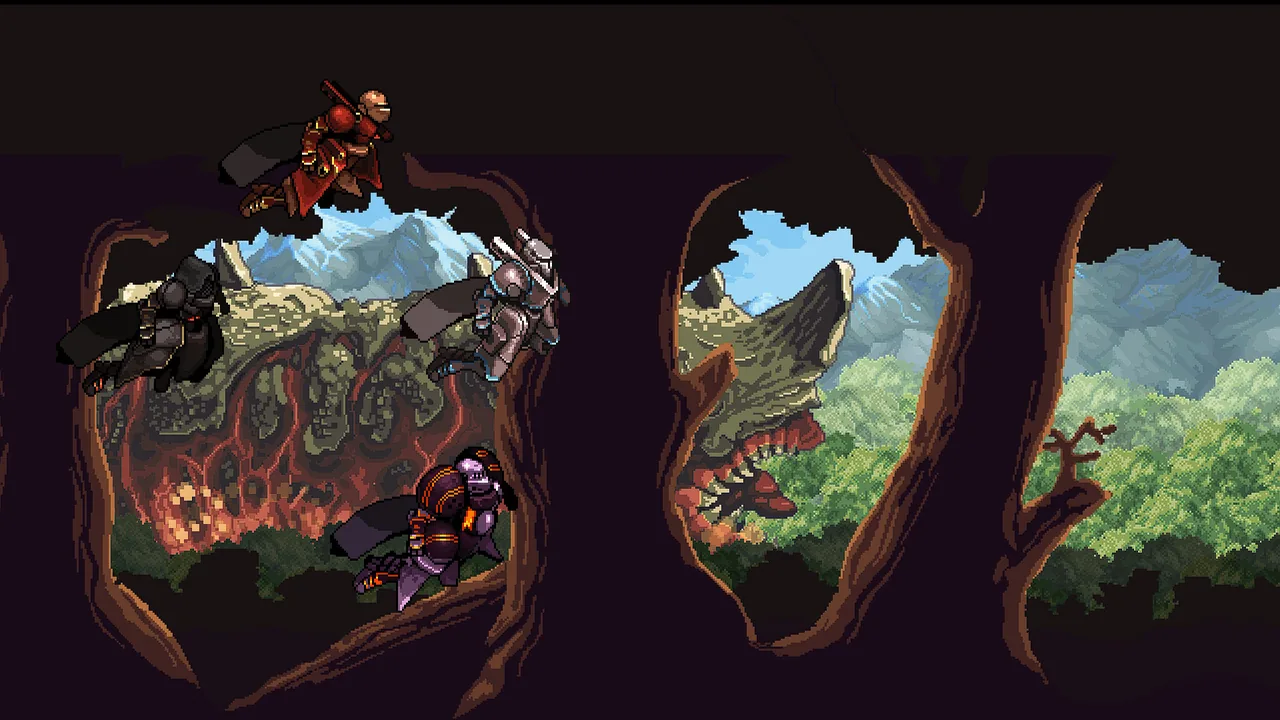
Roughly a third of the way in, the game adds a second combat mode entirely: Sky Armor, giant mechs fighting other mechs and airborne threats in their own battles. It reuses the Overdrive shape — a gauge with a neutral middle and overheat zones at both ends — but replaces skill-type counters with gear shifts: Gear 1 is the balanced default, Gear 2 trades defence for offence and pushes the needle one way, Gear 0 sacrifices your skill options for extra defence. The idea is the same risk curve as ground combat, restated through a different control scheme.
It doesn't earn its place next to the system it's borrowing from. Where ground combat's counter system rewards reading an enemy's pattern and answering it with the right skill type, gear shifting is closer to a single dial with three settings, and the tactical decision space shrinks accordingly. Sky Armor fights aren't bad, exactly — they're a serviceable spectacle break that keeps a thirty-plus-hour turn-based campaign from being one unbroken combat system for its entire length — but they read as a good idea that didn't get the additional two or three years of iteration the ground game clearly had, in a project where the developer had exactly that kind of time to spend elsewhere.
A political plot too big for its pixel frame, until it isn't
Chained Echoes doesn't play small on story ambition. Multiple kingdoms, a fractured empire, a religious order with its own agenda, and a cast that grows well past the usual four-to-six-hero JRPG roster all get set in motion across the opening acts, and for a long stretch the writing earns the scale — factions feel like they have separate interests rather than existing purely to oppose the party, and the game is confident enough to let plot threads sit unresolved rather than rushing every reveal.
That confidence runs out. The most consistent complaint in the game's own review base isn't about combat at all — it's that Acts Three and Four don't sustain what the first half built. Character arcs that were tracking toward something specific either resolve abruptly or don't resolve at all, new plot threads get introduced late enough that they can't be given proper room, and the ending is the single most criticised element attached to this game since launch — not a minority complaint scattered across a couple of harsh reviews, but the dominant thread running through otherwise glowing feedback. A seven-year solo project inevitably runs out of some kind of runway by the finish line, and it's the writing, not the combat systems, where that shows.
Where this sits against the rest of the retro-JRPG revival
Sea of Stars is the useful comparison here, because the two games are answering the same question — how do you modernise SNES-era turn-based combat — with opposite philosophies about resources. Sea of Stars keeps the JRPG's basic economy in place and adds timed hits and elemental locks on top of it; Chained Echoes throws the economy out entirely and replaces it with a live gauge that has to be managed every single turn rather than budgeted across a dungeon. Sea of Stars ends up the more polished, more consistently well-written game; Chained Echoes takes the bigger swing on the actual combat mechanics and connects more often than it misses, even if it doesn't sustain contact for the whole runtime. Readers who bounced off Sea of Stars for feeling too gentle should find Chained Echoes' heat-management tension a sharper, riskier version of the same instinct.
Verdict
The case for Chained Echoes doesn't need the solo-developer story to hold up, but it's worth stating plainly once: Matthias Linda built this over roughly seven years, wrote none of that history into the difficulty curve, and shipped a combat system that genuinely argues with forty years of JRPG convention rather than just referencing it. The Overdrive gauge is a real achievement — it fixes the specific tedium of random-encounter attrition without losing the tension that attrition was meant to provide, at least for as long as it keeps demanding your attention rather than teaching you its own best shortcut.
It settles at an 8 rather than higher because the second half doesn't hold the same standard the first half sets. The story loses its grip across Acts Three and Four, the crystal system asks for more spreadsheet work than its ideas repay, and Sky Armor never becomes more than a competent change of pace next to the ground combat it interrupts. None of that erases what the Overdrive system does right — it's still the most interesting rethink of turn-based resource management this genre's retro revival has produced — but a JRPG this long needs its back half to match its opening, and this one doesn't quite manage it.
Price and Steam review data checked 1 August 2026.
Pros and cons
Pros
- The Overdrive gauge replaces MP hoarding with active heat management, rewarding attention to a shifting sweet spot on every single turn
- No random encounters and a full heal after each fight put the entire difficulty conversation on individual encounter design rather than resource attrition
- The Grimoire Shard skill tree and crystal-slot equipment system reward planning a build around synergy and slot layout instead of chasing a bigger number
- Eddie Marianukroh's near-fifty-track score carries the game's tonal range from village theme to imperial war march without leaning on nostalgia alone
- A genuinely sprawling political plot across multiple kingdoms swings for a scope well beyond what its 16-bit presentation implies
- Solo developer Matthias Linda's near-seven-year build shows in how tightly the mechanical systems interlock, not just in the game's scale
Cons
- Steam's negative reviews repeatedly describe Overdrive combat settling into one obviously correct action once heat management becomes a chore rather than a live decision
- Ordinary overworld encounters swing harder than several story bosses in the back half, so difficulty stops tracking story progression
- Acts three and four unravel the plotting and character work the first half built carefully, and the ending is the game's most consistently criticised element
- The crystal system's rank, size and purity rules demand more manual sorting than the auto-combine tool resolves
- Sky Armor mech combat runs its own simplified gear-shift version of Overdrive that never earns the tactical depth of the fights it interrupts
- Optional side content can strand a save on a depleted resource without warning, forcing a detour mid-quest to recover
Screenshots
-
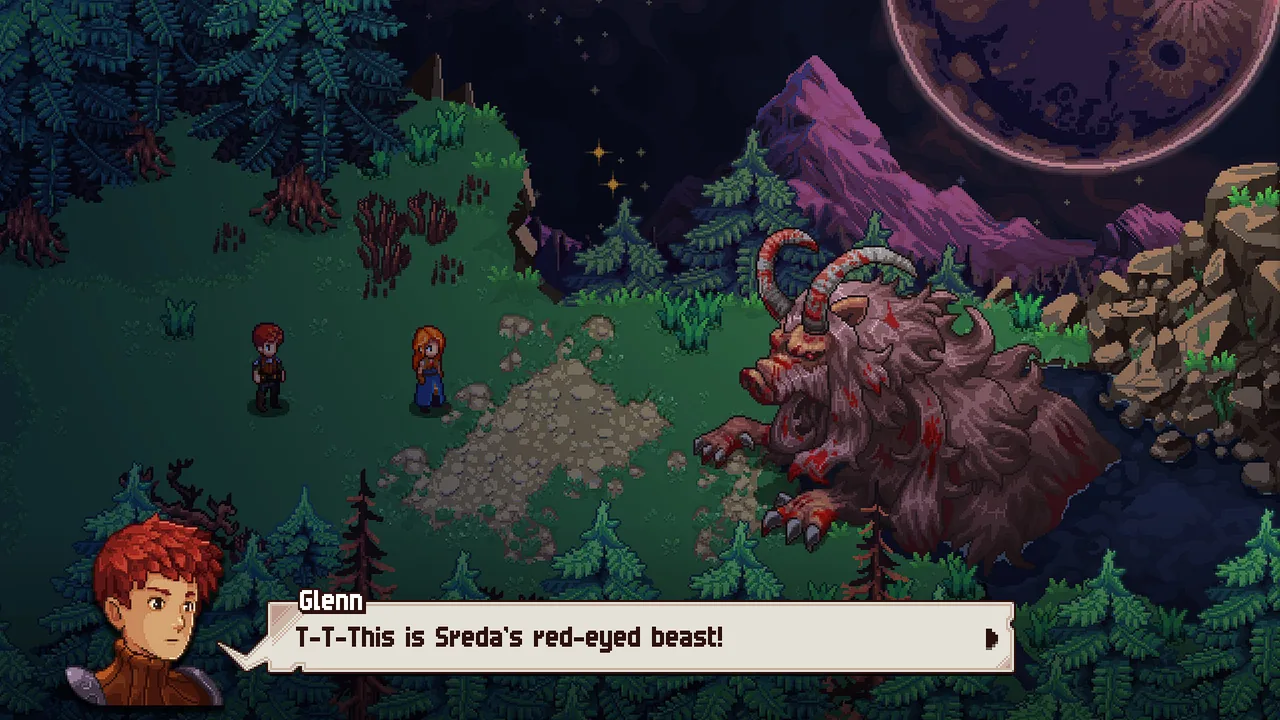
Chained EchoesImage: Deck13 via Steam -
Chained EchoesImage: Deck13 via Steam -
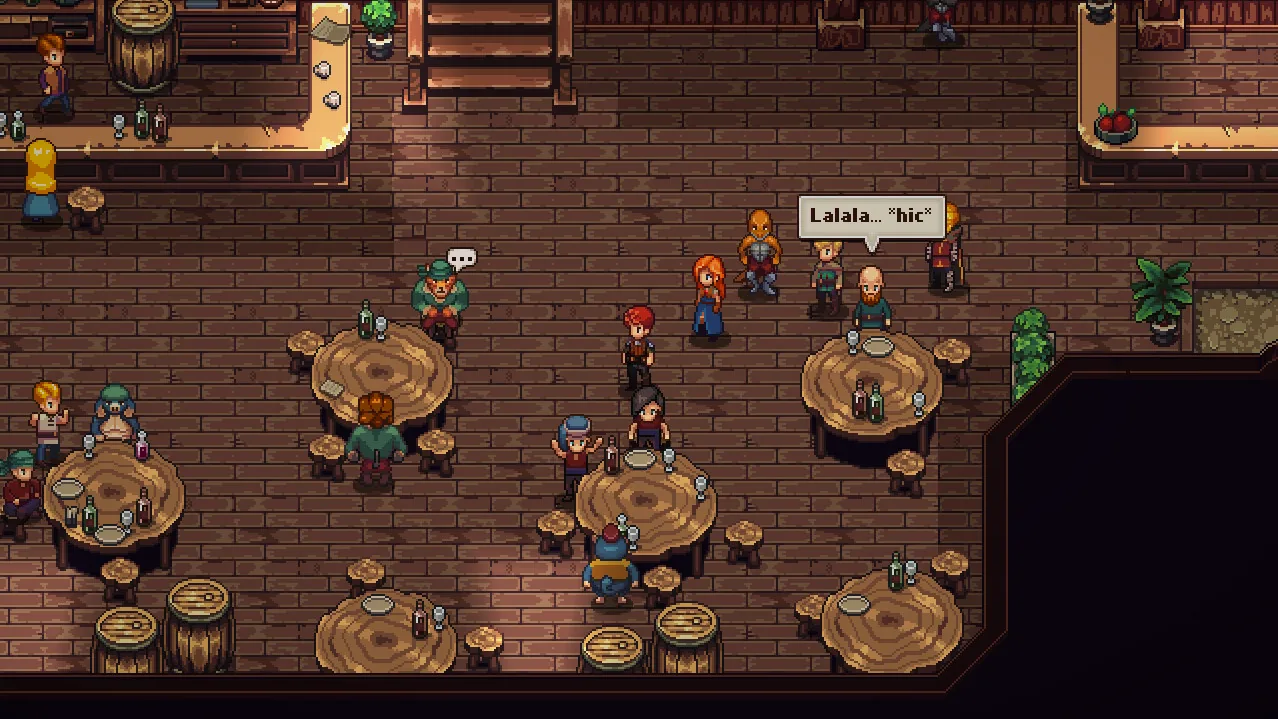
Chained EchoesImage: Deck13 via Steam -
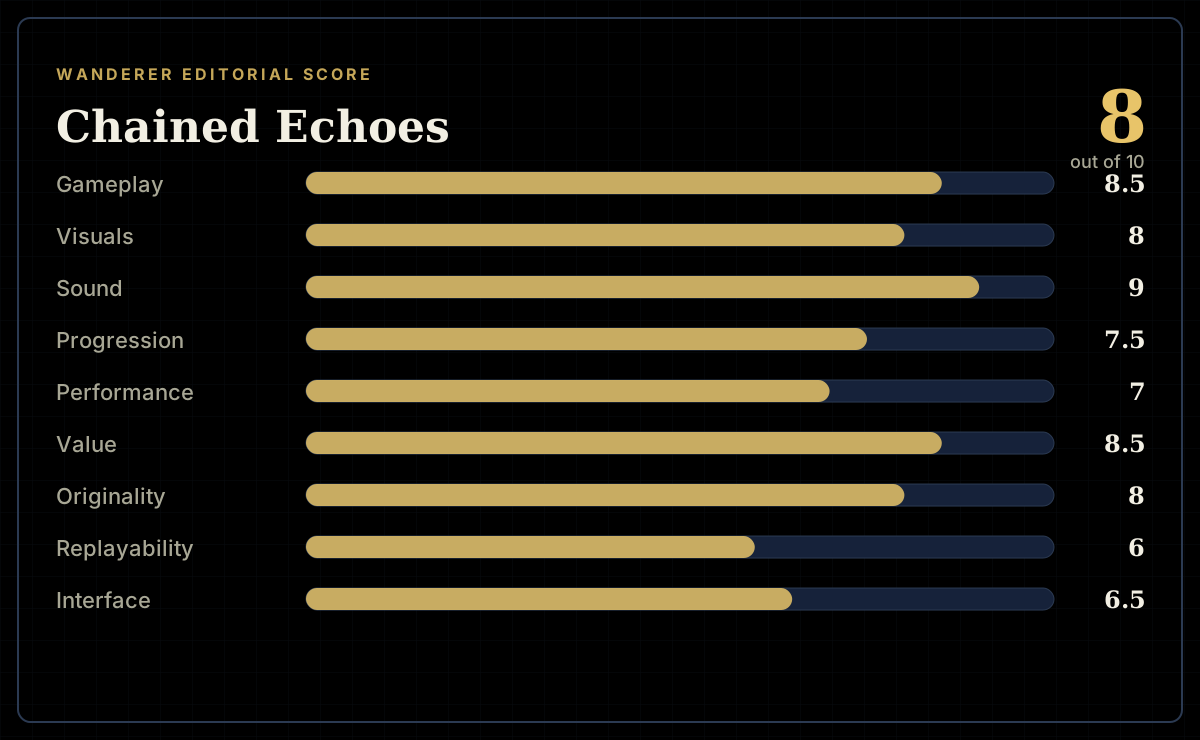
How the review scores each part of the gameWanderer Editorial -
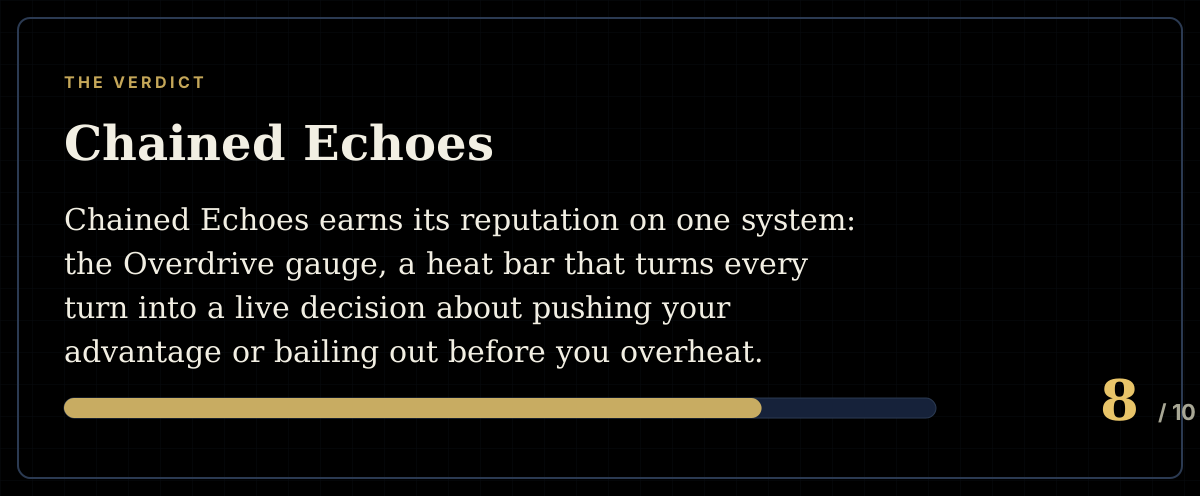
The short versionWanderer Editorial