
Game review
BOMBANANA!
7.5 / 10
- Developer
- Lefto Studio
- Publisher
- TARK
- Released
- 2 September 2026
- Platforms
- Windows, macOS
- Genre
- Casual, Indie, Co-op Party
- Monetisation
- One-time purchase
- Players
- Online co-op (3 players)
The short version
BOMBANANA! is a three-player co-op party game released 2 September 2026, in which each player takes on a monkey with a different sensory limitation, blind, deaf, or mute, and must communicate around it to defuse a shared bomb before time runs out. Its review sample is overwhelmingly positive, praising the concept as a genuinely fresh spin on the Keep Talking and Nobody Explodes formula and citing a strong amount of launch content for the price, but a recurring and serious thread flags that the deaf monkey role depends on audio cues the reviewers themselves, some of whom are actually deaf or hard of hearing, say they cannot hear, alongside smaller complaints about first-attempt puzzle clarity and voice-chat dependency.
Biggest strengths
- A genuinely novel three-way spin on the Keep Talking and Nobody Explodes formula, splitting sensory access to information across a blind, a deaf, and a mute player rather than the usual two-role bomb-defusal setup, earns consistent praise for feeling fresh rather than derivative
- Reviewers repeatedly highlight strong launch content for a budget price, thirty levels, an endless mode, a custom mode, a public lobby browser, and Steam achievements all present at release, which several reviewers explicitly contrast with thinner "friendslop" party games
- The chaos and physical comedy of the format, including the ability to slap or throw items at teammates mid-puzzle, is called out again and again as the source of the game's biggest laughs, with many reviewers reporting genuinely memorable multi-hour sessions with friends or strangers
Biggest weaknesses
- The most serious recurring complaint is accessibility, several reviewers who identify as deaf or hard of hearing report that the Deaf monkey role's Symbol Module relies on audio cues they cannot perceive, making entire puzzles effectively unplayable for them despite the role's name
- The game has no text-chat option, so players without a working microphone, or dealing with unreliable teammate audio, describe being unable to meaningfully participate at all, a problem several reviewers call out as the single fix that would most improve the game
- New module types are frequently described as nearly impossible to solve on a first attempt, since only one player can see the instructions and has no simplified way to relay them, forcing groups to fail a puzzle once just to learn how it works before attempting it properly
Who it's for: Groups of three friends (or willing strangers via the public lobby browser) looking for a louder, more physical cousin of Keep Talking and Nobody Explodes, and fans of chaotic communication-based party games in general.
Our recommendation: A genuinely inventive, frequently hilarious co-op puzzle game that delivers strong value at its price point for the right group of three, but players who are deaf or hard of hearing, or who don't reliably have two other people free to play with, should weigh the accessibility and matchmaking-community concerns raised repeatedly in its own review sample before buying.
7.5 / 10
BOMBANANA! drops three players into the roles of a blind, a deaf, and a mute monkey, each holding a piece of the information needed to defuse a shared bomb before the timer runs out. Released 2 September 2026 by Lefto Studio and published by TARK, it's an unmistakable descendant of Keep Talking and Nobody Explodes, but stretched to three simultaneous, sensorially limited players instead of the usual bomb-defuser-and-manual-reader pair. Its review sample is Very Positive, and the enthusiasm is easy to understand: reviewers describe genuinely chaotic, laughter-filled sessions built entirely around communication breaking down in interesting new ways. That said, the same sample raises a serious and specific accessibility concern about the Deaf role that any prospective buyer, and especially any deaf or hard-of-hearing player, should read closely before purchasing.
A three-way twist on a familiar formula
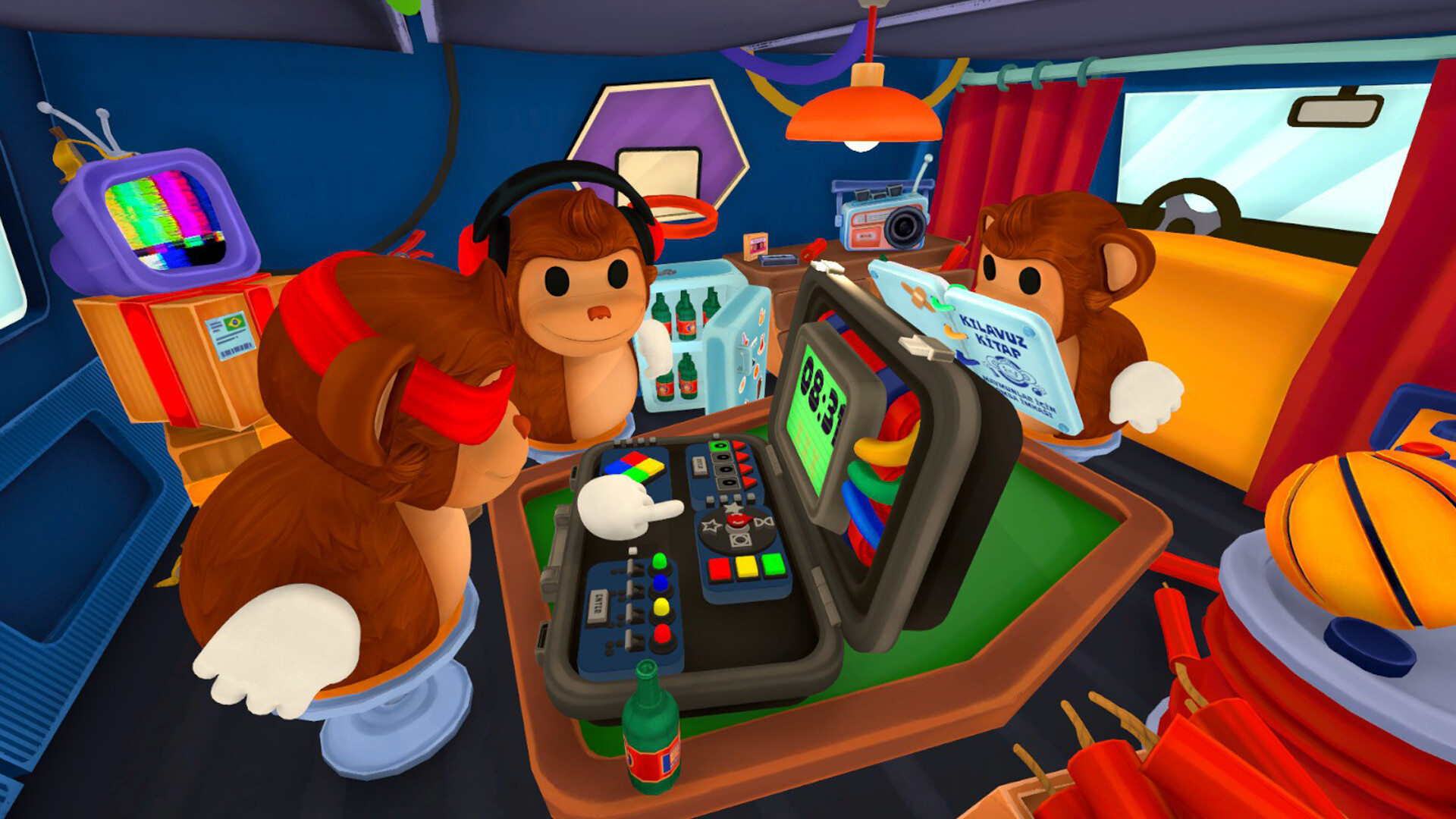
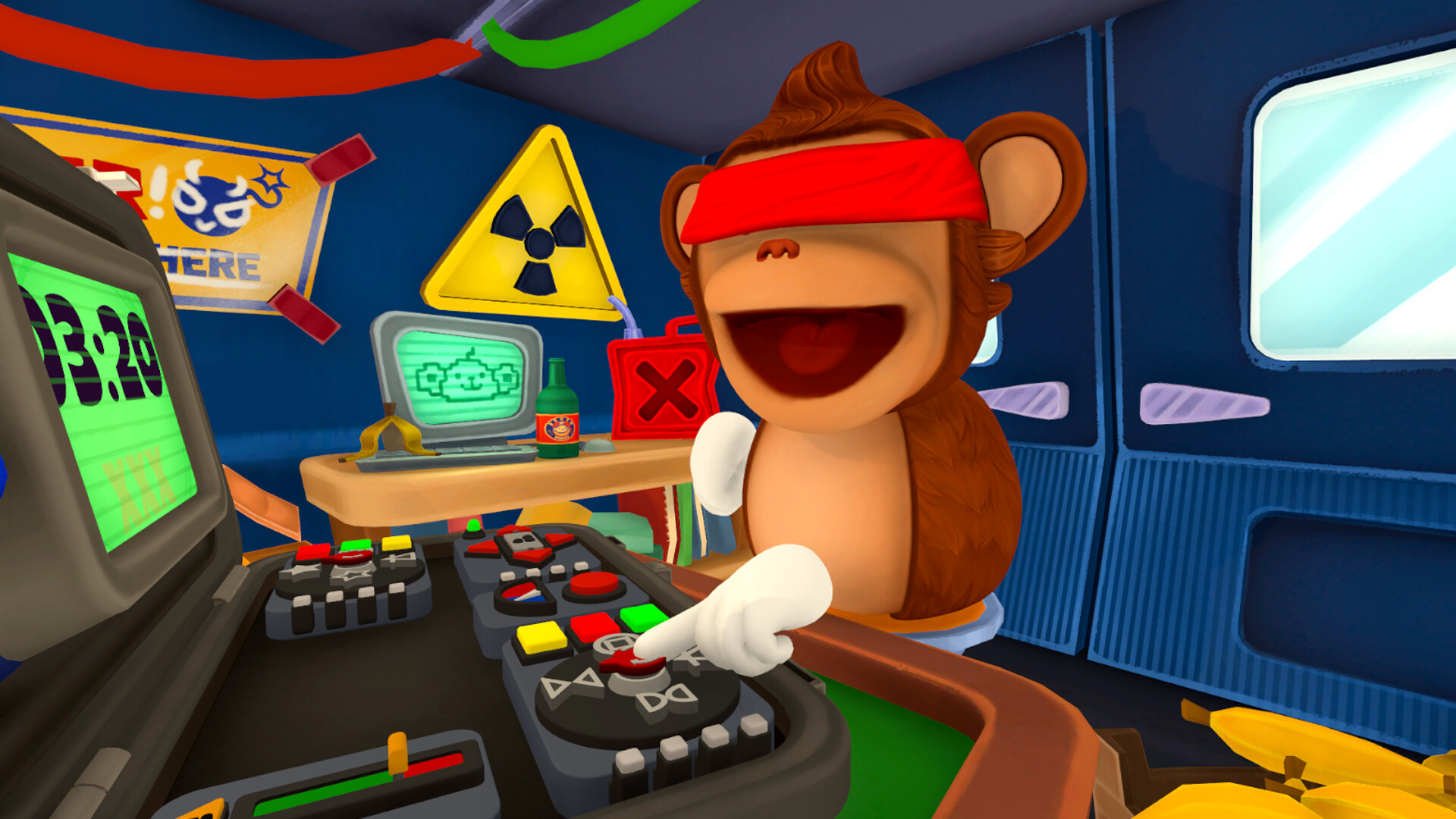
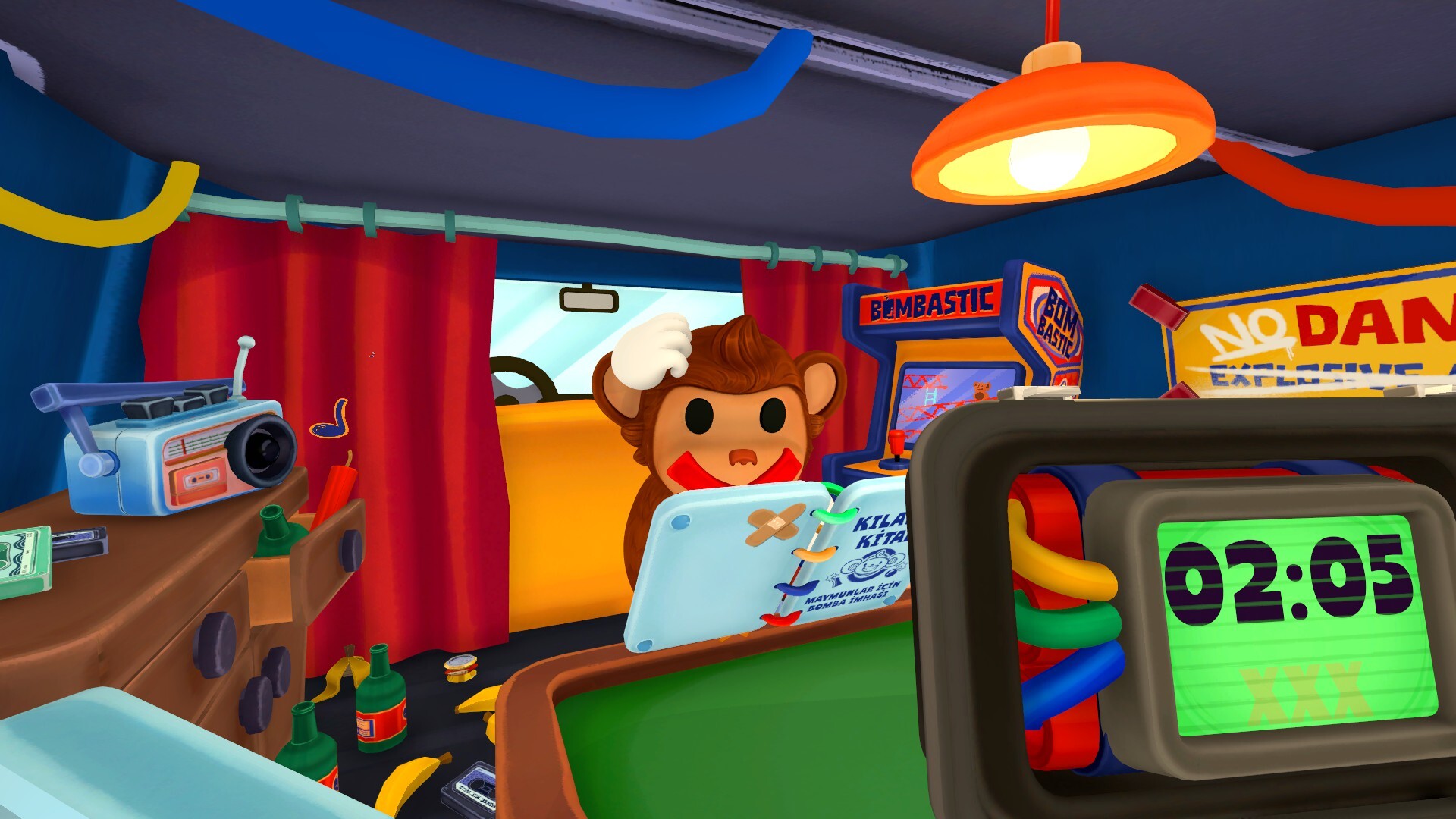
The core pitch, splitting bomb-defusal information across three players instead of two, turns out to be BOMBANANA!'s biggest strength according to its review sample. Where Keep Talking and Nobody Explodes hands one player a manual and the other a bomb, BOMBANANA! gives each of its three monkeys a different sensory handicap: the Blind monkey can act and press buttons but can't see the bomb clearly, the Deaf monkey can see and act but can't hear audio cues, and the Mute monkey holds a notebook of module instructions but can only communicate through gesture and pointing, never speech. Reviewers repeatedly praise how this reshuffles the usual two-role dynamic into something that feels genuinely new rather than a reskin, with modules requiring all three players to contribute rather than one player simply relaying instructions to another.
Strong content for the price at launch
A recurring theme across the positive reviews is how complete the game feels at launch for a budget-priced title. Thirty levels, an endless mode, a custom mode, and a public lobby browser for finding random teammates were all present on day one, alongside Steam achievements, and several reviewers explicitly praise Lefto Studio for shipping this much content rather than trickling it out post-launch. At roughly NZ$12.49, reviewers describe it as a straightforward, low-risk buy, particularly for groups who already have two friends willing to commit to a session, with several reporting five, six, or more hours spent clearing all thirty levels in a single sitting.
Comedy built from communication breakdown
The most consistently cited highlight isn't any individual puzzle but the social chaos the format generates. The ability to physically slap or throw items at teammates mid-puzzle comes up again and again as a comedic release valve when communication fails, and reviewers describe sessions with friends devolving into genuine, memorable hilarity as roles get confused and bombs explode anyway. A number of reviewers also report the public lobby browser works well for pairing with strangers, including cross-language sessions where players with limited shared vocabulary still managed to clear multiple levels together, several specifically recommending playing with randoms over friends for exactly that reason.
A real accessibility gap in the Deaf role
Set against that praise is a recurring and pointed criticism that deserves to be treated seriously rather than as a minor gripe: several reviewers who identify as deaf or hard of hearing report that the Deaf monkey's role, despite its name, still depends on audio. Specifically, the Symbol Module is described as requiring players to hear particular sounds to solve it, which multiple reviewers say makes that puzzle effectively unplayable if you genuinely cannot hear, undermining a role whose entire premise is built around deafness. Related to this, the game currently has no text-chat option, so players without a working or reliable microphone, whether due to disability, hardware issues, or simply not owning one, describe being functionally locked out of meaningful participation, a gap several reviewers call the single most important fix the developers could make.
Learning modules the hard way
A smaller but consistent secondary complaint concerns how new module types are introduced. Because only the Mute player can see the instruction notebook, and can only relay it through gesture, groups repeatedly describe needing to fail a new module once, sometimes taking several frustrating minutes, before everyone understands what's actually being asked of them. Some reviewers suggest a simplified, spoiler-free version of the instructions visible to the whole team, or an in-lobby practice mode, would resolve most of the frustration without undermining the puzzle-solving itself. A few reviewers also flag more minor annoyances: the gesture system built for the Mute role ends up underused since simple head movements for yes and no prove quicker in practice, there's no clean way to signal "zero" in numeric puzzles, and at least one reviewer with musical training reports the piano-based module's tuning doesn't match the notes it visually displays.
Built for three, which cuts both ways
Because the entire game is built around exactly three simultaneous roles, a handful of reviewers note that BOMBANANA! lives or dies on actually having two other people to play with. One reviewer bluntly frames it as an either/or proposition: buy it if you already have two friends committed to playing, and skip it otherwise, since the matchmaking community for a game this new and this specific was still fairly small at the time of review. Others report the opposite experience, using the public lobby browser to find two strangers on short notice and still clearing several levels back to back, but the underlying point stands, this isn't a game that gracefully supports solo play, two-player sessions, or long waits between matches, and anyone without a reliable trio should factor matchmaking population into the purchase decision alongside the accessibility concerns above.
Final Verdict
BOMBANANA! delivers on its central promise: three-player, sensorially-split communication puzzles that generate real chaos and real laughs, backed by a genuinely strong amount of content for a budget price at launch. For a group of three friends, or players willing to brave the public lobby browser, it's an easy recommendation. But its own review sample makes clear that the Deaf role's dependence on audible cues, and the total absence of a text-chat fallback, are not small oversights, they're accessibility gaps that shut out exactly the players the role's name implies it was designed for, and anyone considering the game should factor that in before buying.
Pros and cons
Pros
- A genuinely novel three-way spin on the Keep Talking and Nobody Explodes formula, splitting sensory access to information across a blind, a deaf, and a mute player rather than the usual two-role bomb-defusal setup, earns consistent praise for feeling fresh rather than derivative
- Reviewers repeatedly highlight strong launch content for a budget price, thirty levels, an endless mode, a custom mode, a public lobby browser, and Steam achievements all present at release, which several reviewers explicitly contrast with thinner "friendslop" party games
- The chaos and physical comedy of the format, including the ability to slap or throw items at teammates mid-puzzle, is called out again and again as the source of the game's biggest laughs, with many reviewers reporting genuinely memorable multi-hour sessions with friends or strangers
Cons
- The most serious recurring complaint is accessibility, several reviewers who identify as deaf or hard of hearing report that the Deaf monkey role's Symbol Module relies on audio cues they cannot perceive, making entire puzzles effectively unplayable for them despite the role's name
- The game has no text-chat option, so players without a working microphone, or dealing with unreliable teammate audio, describe being unable to meaningfully participate at all, a problem several reviewers call out as the single fix that would most improve the game
- New module types are frequently described as nearly impossible to solve on a first attempt, since only one player can see the instructions and has no simplified way to relay them, forcing groups to fail a puzzle once just to learn how it works before attempting it properly
- A handful of reviewers report the tuning on the piano-based module doesn't match the notes it displays, and several note the gesture system meant for the Mute role ends up underused in practice, since voice cues like "yes/no" head movements prove faster than the game's gestures
Screenshots
-
BOMBANANA!Image: TARK via Steam -
BOMBANANA!Image: TARK via Steam -
BOMBANANA!Image: TARK via Steam