Game review
Outer Wilds
9 / 10
- Developer
- Mobius Digital
- Publisher
- Annapurna Interactive
- Released
- 18 June 2020
- Platforms
- Windows
- Genre
- Exploration Mystery
- Monetisation
- One-time purchase, NZ$37.49. One paid story expansion, Echoes of the Eye, released separately. No microtransactions.
- Players
- Single-player only
The short version
Outer Wilds drops you into a 22-minute time loop, a tiny solar system, and almost no instructions, and asks you to build your own understanding of what's happening and why entirely through exploration. It's routinely called one of the best games of its era, and the 95.6% positive score across 106,069 reviews backs that up — reviewers consistently warn each other, urgently, to stop reading and just play it.
It's also a game whose single most-upvoted negative review has nothing to do with the game itself: backers who crowdfunded the project on the promise of Mac and Linux support say they were left out when the game launched as a timed Epic Games Store exclusive instead, delaying the Steam release by over a year — and neither platform has been delivered even now, years later. Worth knowing before you buy, separately from whether the game itself is for you.
Biggest strengths
- A genuinely unique structure — a small, fully knowable solar system and a time loop that turns every death into new information rather than a setback
- Investigation-driven discovery with no quest markers or hand-holding, widely praised as one of the purest "figure it out yourself" experiences in the medium
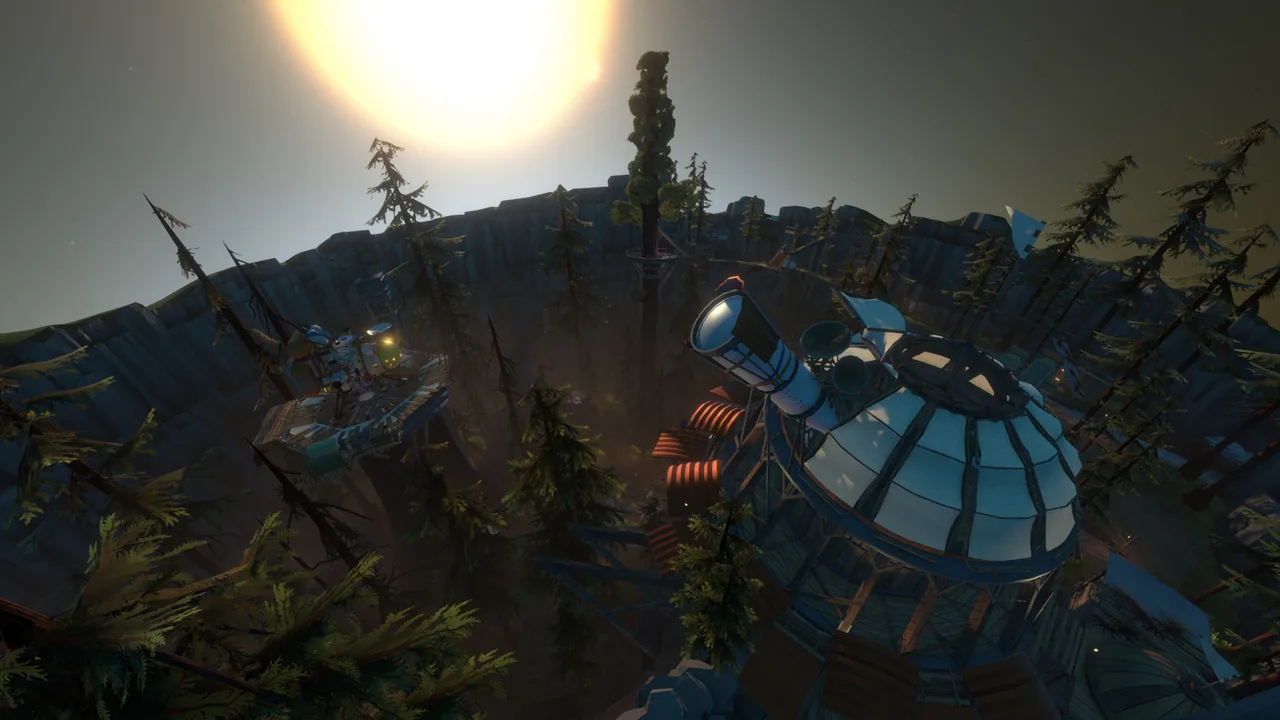
- A distinctive audio and visual identity, with reviewers specifically praising the score and the sense of place each planet has despite the tiny in-game scale
Biggest weaknesses
- The single most-upvoted negative review in the game's history documents a real, still-unresolved grievance: Fig crowdfunding backers were promised Mac and Linux versions that have never shipped, alongside a contested Epic Games Store timed-exclusivity deal that delayed the Steam release over a year
- The time-loop structure, combined with an oxygen and fuel timer, is explicitly cited by a meaningful share of negative reviewers as disorienting or stressful rather than freeing
- Motion sickness is reported by at least one reviewer as a significant, unexpected issue within the first ten minutes
Who it's for: Players who want to be handed a mystery with no hand-holding and piece it together themselves — this is closer to Myst than a typical adventure game. Less suited to anyone who finds time-limited, restart-heavy structures stressful, or players who want a guided or linear narrative.
Our recommendation: Buy it, and take the community's advice seriously — go in knowing as little as possible, skip trailers and let's plays, and give the first hour or two real patience before deciding whether the loop structure works for you. If crowdfunding promises matter to your purchase decisions, know that the Mac and Linux versions backers were promised have still never materialised, years after launch.
9 / 10
Not to be confused with The Outer Worlds — a completely different game from a different studio — Outer Wilds is the one reviewers keep telling each other, urgently, to stop reading about before playing. Its most-upvoted positive review, nearly 1,900 votes, opens with exactly that instruction: "STOP READING REVIEWS." That's an unusual thing for a review to say about itself, and it's a reasonable place to start, because it explains why this piece stays deliberately light on plot.
A solar system small enough to know completely
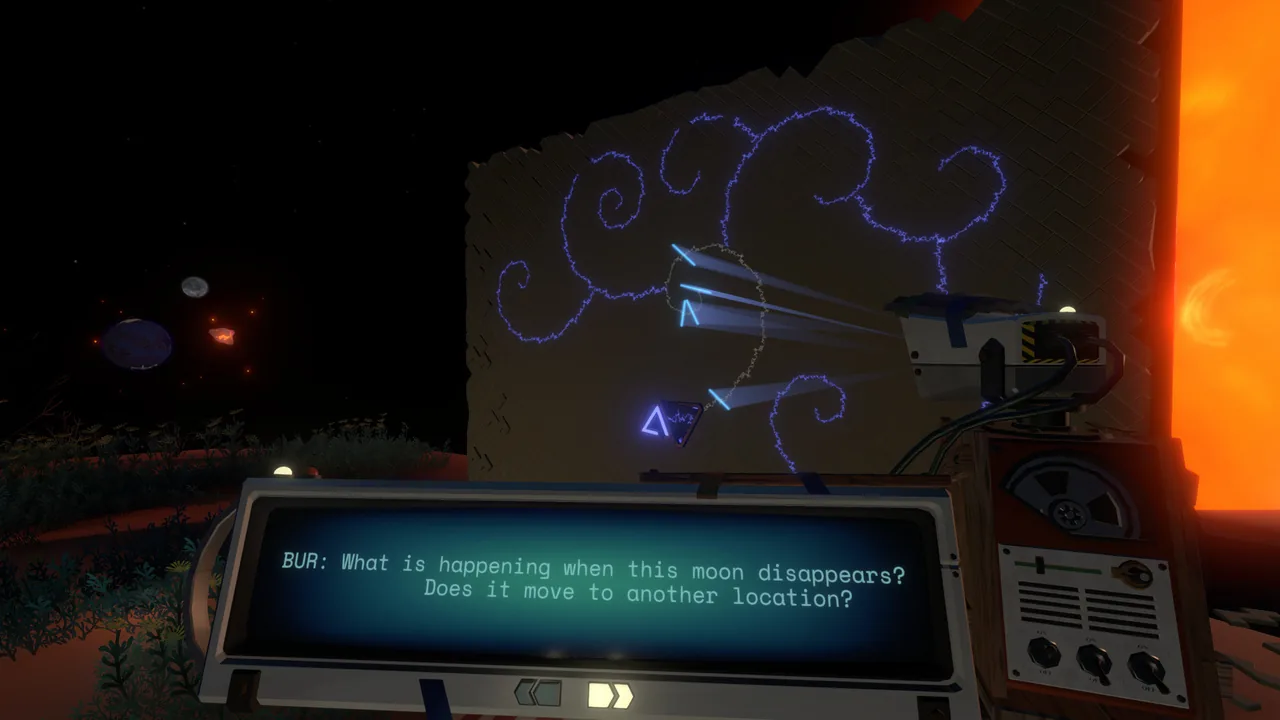
The premise is simple to state without spoiling anything: you're an astronaut in a tiny, tightly interconnected solar system, and every 22 minutes, the sun goes supernova and time loops back to the start. What you learn in one loop — a door's combination, a planet's collapsing terrain, a signal's source — carries forward in your own memory even though nothing in the world persists. Reviewers describe this less as a puzzle game and more as detective work at planetary scale: there are no quest markers, no hand-holding, just a ship's log that fills in as you actually investigate, and a solar system small enough that a patient player can, in principle, come to know all of it.
The reviews that try to describe why this works tend to circle the same idea from different angles. One reviewer, deliberately withholding specifics, calls it possibly "a generational game... a once in a lifetime kind of game." Another frames the whole review around the impossibility of the task: "you've seen the reviews, you've noticed the awards... but no one will say" what it's actually about, because saying so would undercut the exact thing that makes it work.
The complaint that isn't about the game
Here's what's worth knowing separately from all of that, because it's the single most-upvoted negative review in this game's entire history and it has nothing to do with exploration or time loops. Outer Wilds was crowdfunded on Fig, and backers say they were promised Mac and Linux versions in exchange for their support. When the game launched in 2019, it did so as a timed exclusive on the Epic Games Store, delaying the Steam release for backers and everyone else by over a year — a decision the top negative review calls a betrayal of the exact people who made the game possible. Checking the current Steam listing confirms this isn't old, resolved history: the game still lists Windows only, with no Mac or Linux support, years after that promise was made. Whether that changes anyone's decision to buy the game today, it's a documented fact worth knowing rather than assuming was settled long ago.
A design that some players find punishing rather than freeing
Separately from the platform issue, a real and recurring design criticism runs through the negative-review corpus: the combination of a hard time limit, an oxygen meter and a fuel gauge turns exploration, for some players, from contemplative into stressful. One reviewer describes feeling actively punished for not exploring fast enough, disoriented mid-investigation by the looming restart. Another, more measured, says plainly they understand why people call it a masterpiece and it simply wasn't for them — a shape of criticism this library has seen before on other beloved, hyped games, and worth taking as a genuine mismatch of taste rather than a flaw to be talked out of. One reviewer also flags a less common but serious concern: significant motion sickness within the first ten minutes, worth knowing if that affects you.
Reading the completion data
The achievement curve reflects a mystery built to be solved gradually rather than rushed. The most common milestones sit around 30-35% of the player base, and the rarest — tied to the game's deepest secrets — fall to under 2%. That's a steep curve for a game this acclaimed, and it likely reflects two things at once: a real subset of players who bounce off the structure described above, and a design that deliberately doesn't push everyone toward full completion the way a more achievement-driven game would.
9 out of 10. Outer Wilds earns its reputation as one of the most distinctive games of its era — a genuinely rare structure, discovery-driven storytelling that trusts players completely, and a sense of place that reviewers describe as staying with them long after finishing. It loses a point not to anything about the exploration itself, but to a real, still-unresolved platform promise made to the backers who funded it, and to a time-pressure structure that a meaningful minority of players find genuinely stressful rather than freeing. Go in blind, as everyone insists, but go in knowing both of those things first.
Pros and cons
Pros
- A genuinely unique structure — a small, fully knowable solar system and a time loop that turns every death into new information rather than a setback
- Investigation-driven discovery with no quest markers or hand-holding, widely praised as one of the purest "figure it out yourself" experiences in the medium
- A distinctive audio and visual identity, with reviewers specifically praising the score and the sense of place each planet has despite the tiny in-game scale
- Considered by a large share of its reviewers to be a genuinely rare, once-per-generation kind of game rather than merely a good one
- A paid expansion, Echoes of the Eye, adds a substantial new area without altering what made the base game work
Cons
- The single most-upvoted negative review in the game's history documents a real, still-unresolved grievance: Fig crowdfunding backers were promised Mac and Linux versions that have never shipped, alongside a contested Epic Games Store timed-exclusivity deal that delayed the Steam release over a year
- The time-loop structure, combined with an oxygen and fuel timer, is explicitly cited by a meaningful share of negative reviewers as disorienting or stressful rather than freeing
- Motion sickness is reported by at least one reviewer as a significant, unexpected issue within the first ten minutes
- Because so much of the appeal depends on discovery, the "go in blind" advice that made the game beloved also makes it hard to know in advance whether its specific structure will suit you
- Replayability is inherently limited once the central mystery is solved
Screenshots
-
Outer WildsImage: Annapurna Interactive via Steam -
Outer WildsImage: Annapurna Interactive via Steam -
Outer WildsImage: Annapurna Interactive via Steam -
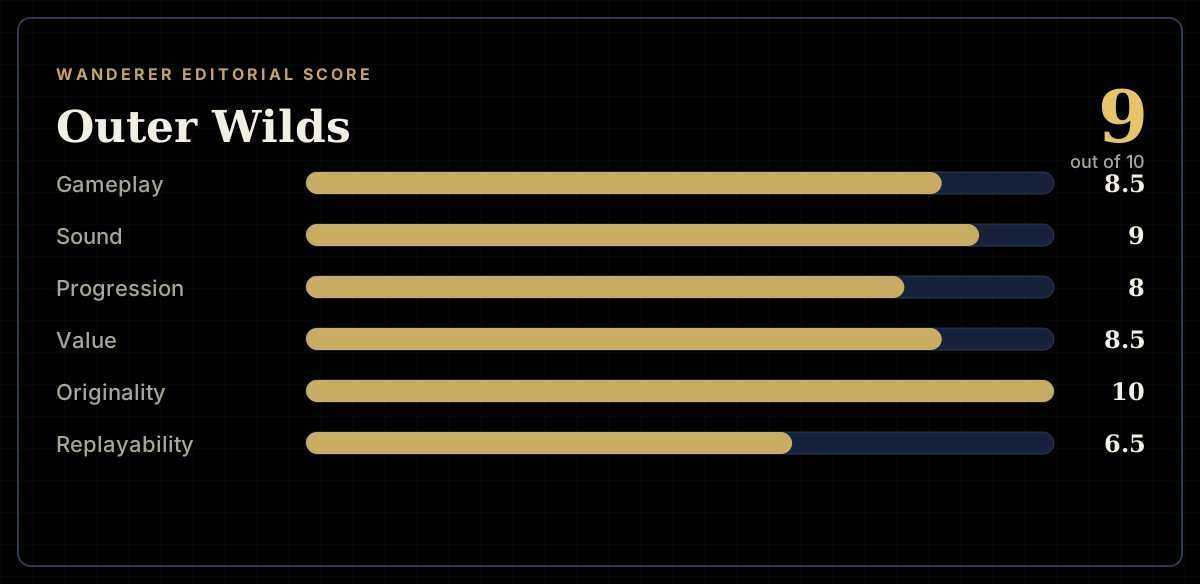
How the review scores each part of the gameWanderer Editorial -
The short versionWanderer Editorial