Game review
Return of the Obra Dinn
9 / 10
- Developer
- Lucas Pope
- Publisher
- 3909
- Released
- 18 October 2018
- Platforms
- Windows, macOS, Linux
- Genre
- Deduction Mystery
- Monetisation
- One-time purchase, NZ$28.99. No microtransactions.
- Players
- Single-player only
The short version
Return of the Obra Dinn strips deduction gameplay down to something almost nobody else has attempted: no dialogue trees, no hint system, no partial credit. You're handed a device that lets you witness the moment of each of sixty deaths aboard a ghost ship, and it's entirely on you to work out who everyone was, how they died, and who or what killed them, confirmed only in groups of three at a time. 96.7% positive across 34,853 reviews, with recent English sentiment sitting at a rare 100 of 100, reflects near-universal admiration for how completely the design commits to that idea.
The honest dissent, small but consistent since launch, comes from players who found the presentation — a striking one-bit visual style and a diegetic logbook interface — beautiful but occasionally more obtuse than the puzzle itself needed to be. It's a mild, "great idea, some friction in the execution" complaint rather than anything approaching controversy, and it hasn't changed shape across seven years of reviews.
Biggest strengths
- A genuinely unique core mechanic — freezing time at the moment of death and letting you walk the frozen scene for clues — that nothing else in the genre has matched
- A confirmation system requiring three correct answers locked in together, which prevents guessing and makes every solved fate feel earned
- A striking, fully committed one-bit visual style that gives every scene a distinct, memorable identity despite the limited palette
Biggest weaknesses
- A small but consistent share of reviewers since launch find the diegetic logbook interface and overall presentation more obtuse than necessary, adding friction to figuring out what to do next rather than to the mysteries themselves
- The story is deliberately told out of chronological order, and some reviewers find piecing together the throughline itself, separate from the individual death puzzles, more tedious than satisfying
- Very low replayability once the mystery is solved, since the entire appeal depends on not knowing the answers
Who it's for: Players who genuinely want to think — no hand-holding, no partial-credit hints, real consequences for guessing wrong. Best suited to anyone who enjoyed the deductive satisfaction of a well-clued mystery novel more than a conventional adventure game's puzzle logic.
Our recommendation: Buy it, and resist the urge to look anything up. Every review that recommends savoring the experience without a walkthrough is right — the entire appeal is the specific feeling of a fact clicking into place through your own observation, and a guide erases that before you've earned it. Expect roughly 8-12 hours for a first playthrough.
9 / 10
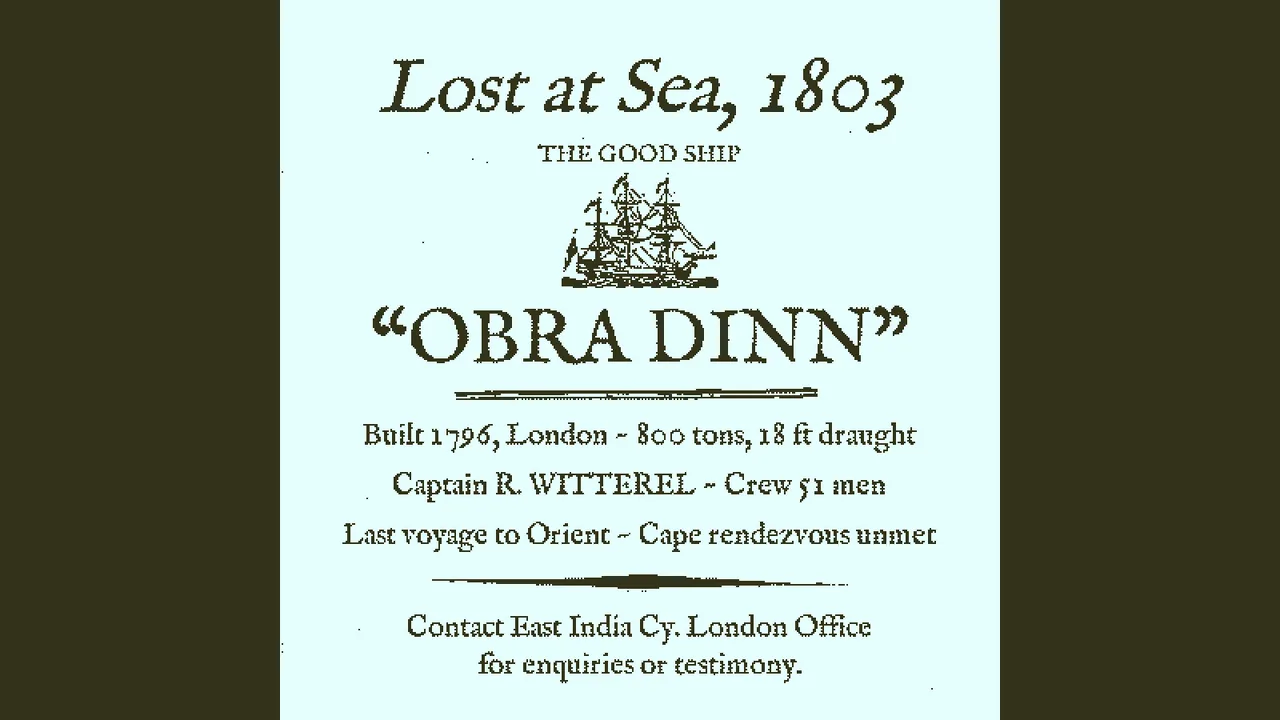
A ghost ship returns to port with sixty people missing or dead and one survivor unaccounted for. You're an insurance investigator with a pocket watch that lets you relive the exact moment of each death. That's the entire premise of Return of the Obra Dinn, and the game trusts it completely — no dialogue system to interrogate, no hint button, nothing standing between you and sixty individual puzzles you have to solve with observation alone.
Deduction with real teeth
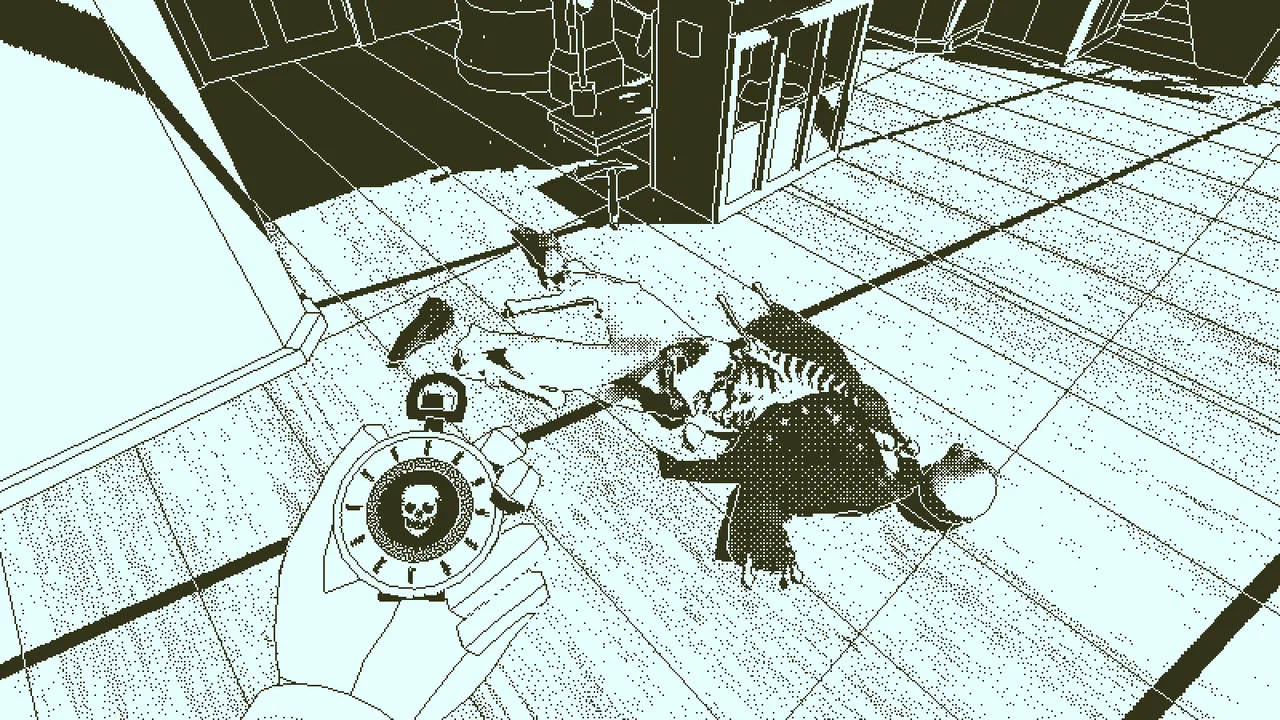
The mechanic at the center of the game is genuinely rare in the medium: your pocket watch freezes each death scene in place and lets you walk around it, examining posture, uniforms, dialogue fragments, and the wounds themselves for clues about who's who and what happened. Nothing is confirmed until you lock in three correct identifications at once — guess wrong, even by one, and none of the three registers, which eliminates the trial-and-error guessing that undermines most detective games. One of the most-upvoted reviews in the game's history, from a player over fifty who says they've "played a lot of games," calls it one of the best they've ever played specifically because "everything comes together" by design rather than accident. Another reviewer frames it as the purest expression of what makes this developer's work distinct: rather than modeling a challenge abstractly, "you had to actually" do the thing the game is about — cross-reference documents in a prior game, and here, genuinely observe and deduce.
The honest, minor dissent
The negative reviews in this corpus are unusually consistent in tone across seven years, and none of them argue the core idea is flawed. What recurs instead is friction with presentation: the diegetic logbook interface, styled as an in-world object rather than a conventional menu, draws repeat complaints for adding obtuseness on top of puzzles that are already demanding by design. One reviewer, upfront about being in the minority, writes that despite loving the previous game by the same developer, they found this one "a little too obtuse" to stick with. Another calls out pacing specifically, describing spending nearly twice as long on the game as its content justified due to navigation and interface friction rather than the puzzles themselves. This is a real, fair criticism — and notably, it hasn't shifted in either direction across the game's entire lifespan, suggesting it's a stable matter of individual fit rather than something later patches or player familiarity have resolved.
Reading the completion data
The achievement curve tells a clean story about a game built around one central mystery. Early "any correct identification" milestones sit above 50-60% of the player base — most buyers genuinely engage with the core system. The two ending-specific achievements split at 44.5% and 23.5%, reflecting the game's branching resolution, while a specific achievement tied to correctly identifying a particular killer falls to 7%, the kind of narrow, deduction-specific challenge this game's hardest puzzles are built around.
9 out of 10. Return of the Obra Dinn remains one of the most distinctive puzzle and mystery games ever made, and the fact that 100 of its 100 most recent English reviews are positive, seven years after release, speaks to how completely its reputation has held. It loses a fraction of a point to real, if modest, presentation friction that a genuine minority of players have found gets in the way of the puzzles rather than serving them — a fair complaint, and a consistent one, in an otherwise remarkably settled and glowing reception.
Pros and cons
Pros
- A genuinely unique core mechanic — freezing time at the moment of death and letting you walk the frozen scene for clues — that nothing else in the genre has matched
- A confirmation system requiring three correct answers locked in together, which prevents guessing and makes every solved fate feel earned
- A striking, fully committed one-bit visual style that gives every scene a distinct, memorable identity despite the limited palette
- Widely regarded as one of the best pure detective games ever made, with reviewers across every year calling it the best in its specific genre they've played
- Strong value for an 8-12 hour experience with a puzzle density most games don't approach
Cons
- A small but consistent share of reviewers since launch find the diegetic logbook interface and overall presentation more obtuse than necessary, adding friction to figuring out what to do next rather than to the mysteries themselves
- The story is deliberately told out of chronological order, and some reviewers find piecing together the throughline itself, separate from the individual death puzzles, more tedious than satisfying
- Very low replayability once the mystery is solved, since the entire appeal depends on not knowing the answers
- A firmly minority view exists that the game is stronger as an idea than as a sustained multi-hour experience, with pacing that drags for some players well before the ending
Screenshots
-
Return of the Obra DinnImage: 3909 via Steam -
Return of the Obra DinnImage: 3909 via Steam -
Return of the Obra DinnImage: 3909 via Steam -
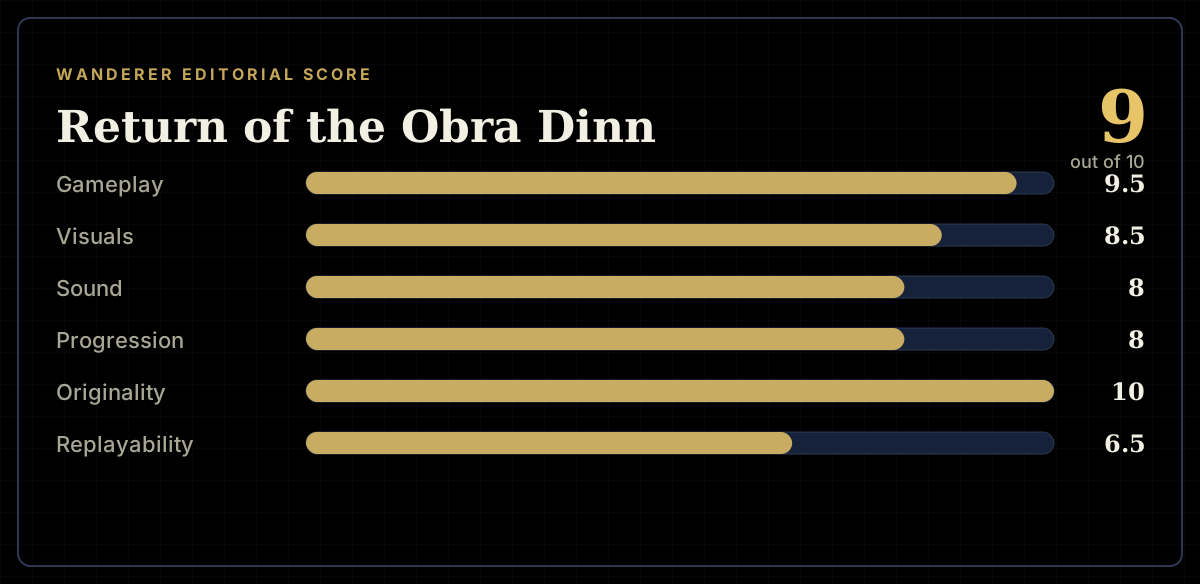
How the review scores each part of the gameWanderer Editorial -
The short versionWanderer Editorial