
Game review
The Case of the Golden Idol
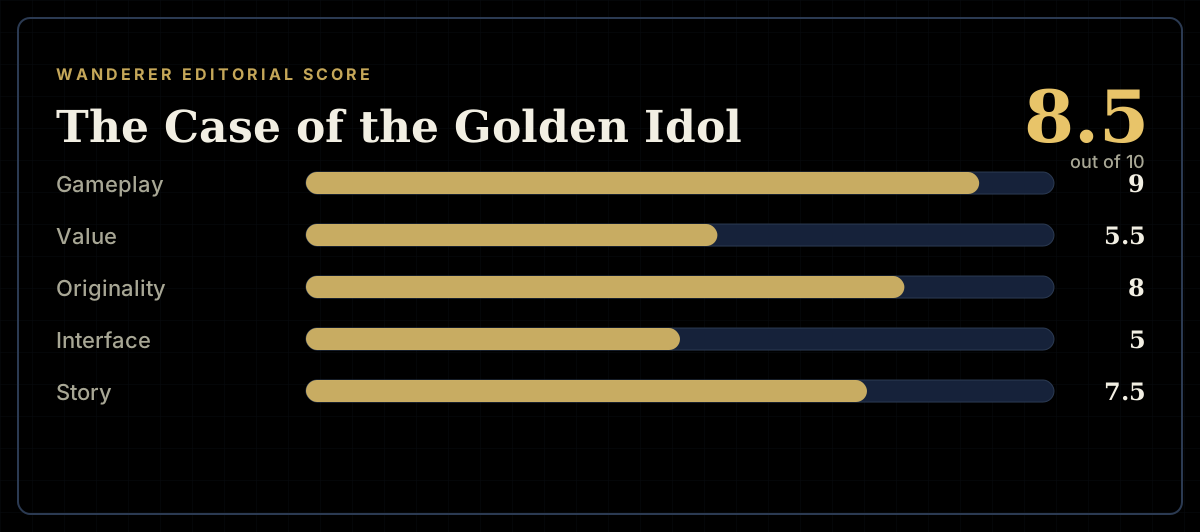
8.5 / 10
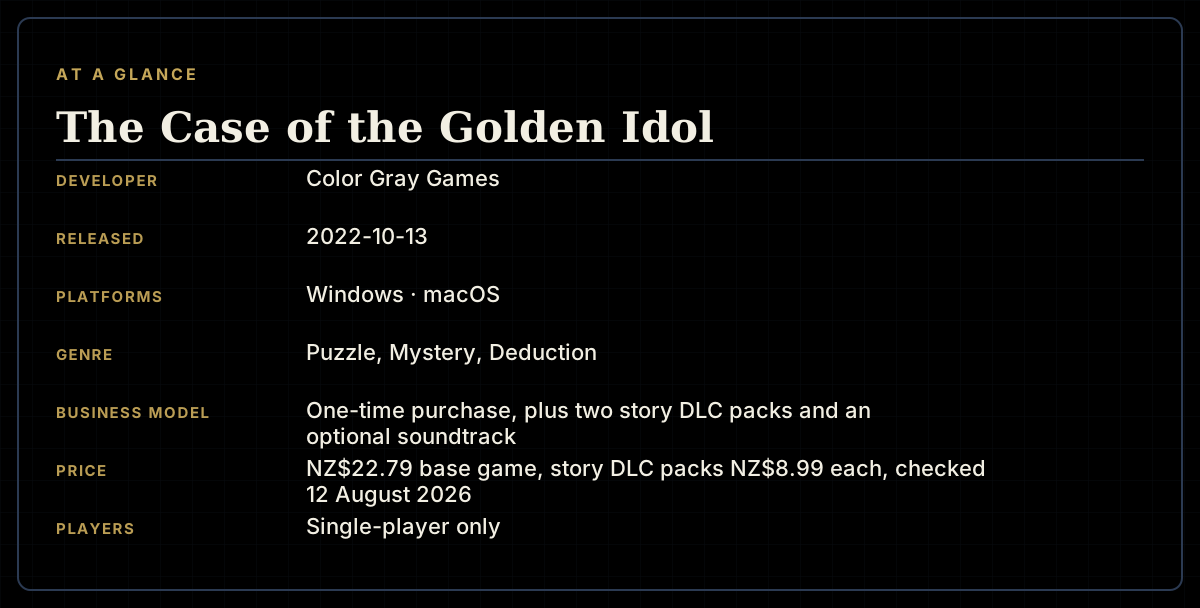
- Developer
- Color Gray Games
- Publisher
- Playstack
- Released
- 13 October 2022
- Platforms
- Windows, macOS
- Genre
- Puzzle, Mystery, Deduction
- Monetisation
- One-time purchase, plus two story DLC packs and an optional soundtrack
- Players
- Single-player only
The short version
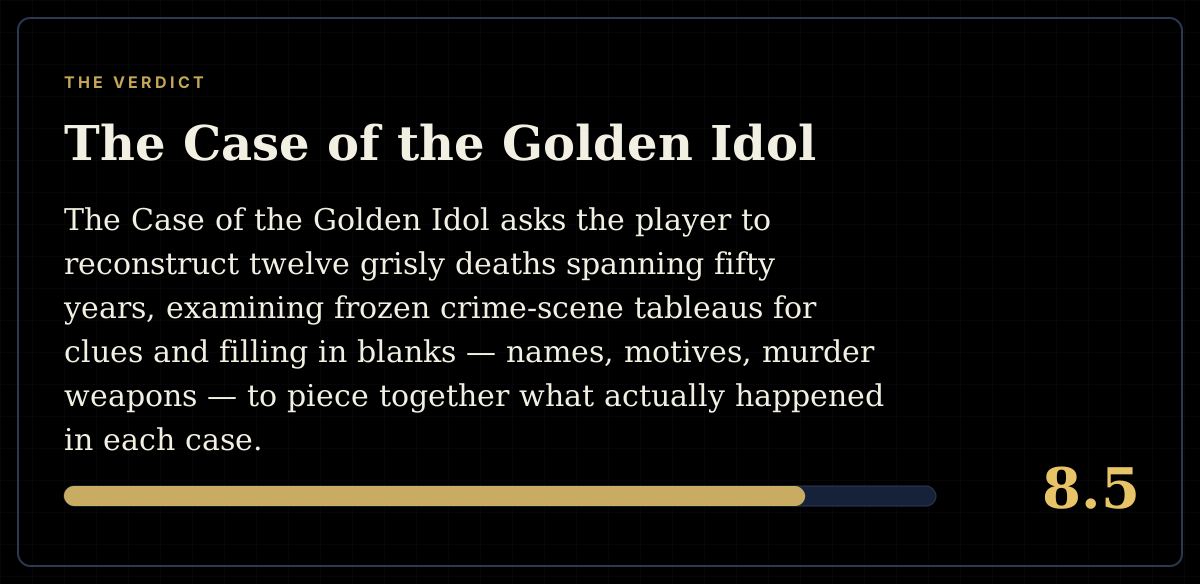
The Case of the Golden Idol asks the player to reconstruct twelve grisly deaths spanning fifty years, examining frozen crime-scene tableaus for clues and filling in blanks — names, motives, murder weapons — to piece together what actually happened in each case. Developed by Color Gray Games and published by Playstack, it released 13 October 2022 and sits at Overwhelmingly Positive, 98.3% across 7,263 English-language reviews — one of the highest scores this library has documented. The deduction mechanics draw ecstatic, remarkably consistent praise, and nearly every review invokes Return of the Obra Dinn as its clearest reference point, almost always favourably. What holds this review back from an even higher score is proportionate rather than structural: a short base-game runtime several reviewers weigh against the price, a 2024 interface overhaul a share of longtime fans actively dislike, and one detailed, specific concern about cultural representation in a later DLC pack worth reporting directly.
Biggest strengths
- The core deduction loop — examining a frozen scene, filling in blanks with names, objects and events until the picture clicks into place — draws overwhelming, specific praise as one of the purest, most satisfying puzzle mechanics available, with reviewers repeatedly describing genuine "aha!" moments rather than generic difficulty
- Twelve distinct cases across fifty years give real narrative variety within a tight structural formula, avoiding the repetition risk a single core mechanic often runs into
- Comparisons to Return of the Obra Dinn are near-universal and almost always favourable, positioning this as a worthy, more approachable entry point into the same genre rather than an inferior imitation
Biggest weaknesses
- Multiple reviewers report finishing the base campaign in around four to five hours, and several argue the price doesn't match that length as favourably as Return of the Obra Dinn's own pricing did for a comparable playtime
- A 2024 "Redux" interface update draws detailed, specific criticism from longtime fans as a downgrade — described as feeling mobile-sized and cartoonish compared to the original pixel-era presentation — with reviewers actively recommending new players seek out the original UI instead
- One detailed, specific review from a reviewer identifying Sri Lankan heritage describes the "Spider of Lanka" DLC's depiction of Sri Lankan history and culture as an offensive caricature; this review reports that account directly rather than treating it as a settled consensus, since it is not independently corroborated at scale in this sample
Who it's for: Fans of Return of the Obra Dinn and pure-deduction puzzle games who want the genre's purest "aha!" moment distilled into bite-sized chapters; a poor fit for anyone who wants a longer campaign for a full-price purchase or prefers guided, hint-heavy detective games.
Our recommendation: One of the most purely satisfying deduction games available, short enough to finish in a weekend and confident enough in its own logic to never hold your hand — buy the story DLC alongside it, since the base campaign alone runs shorter than its price might suggest.
8.5 / 10
Introduction
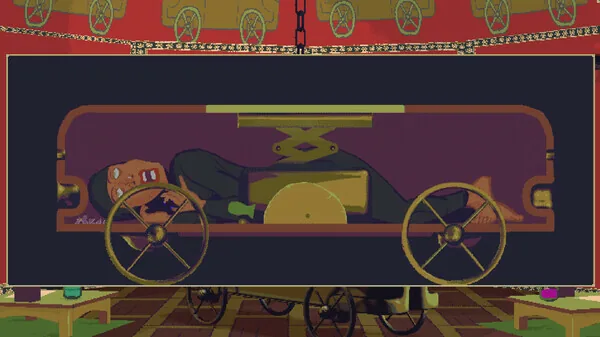
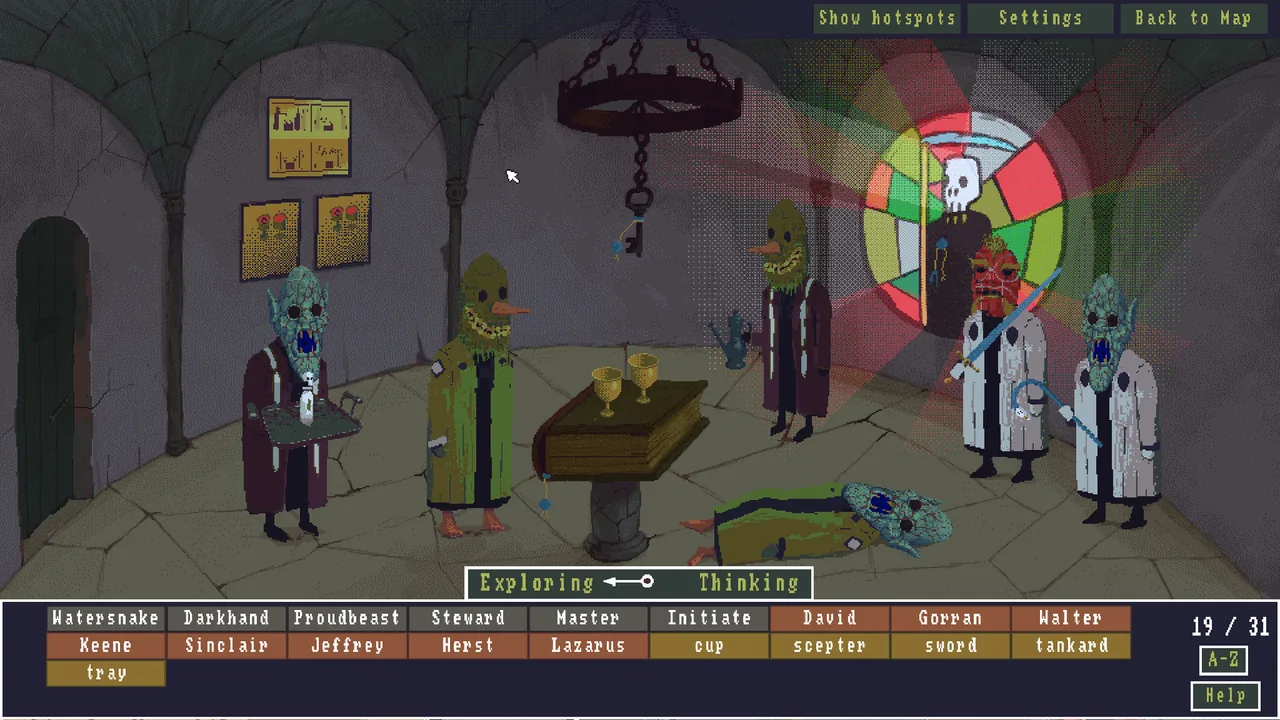
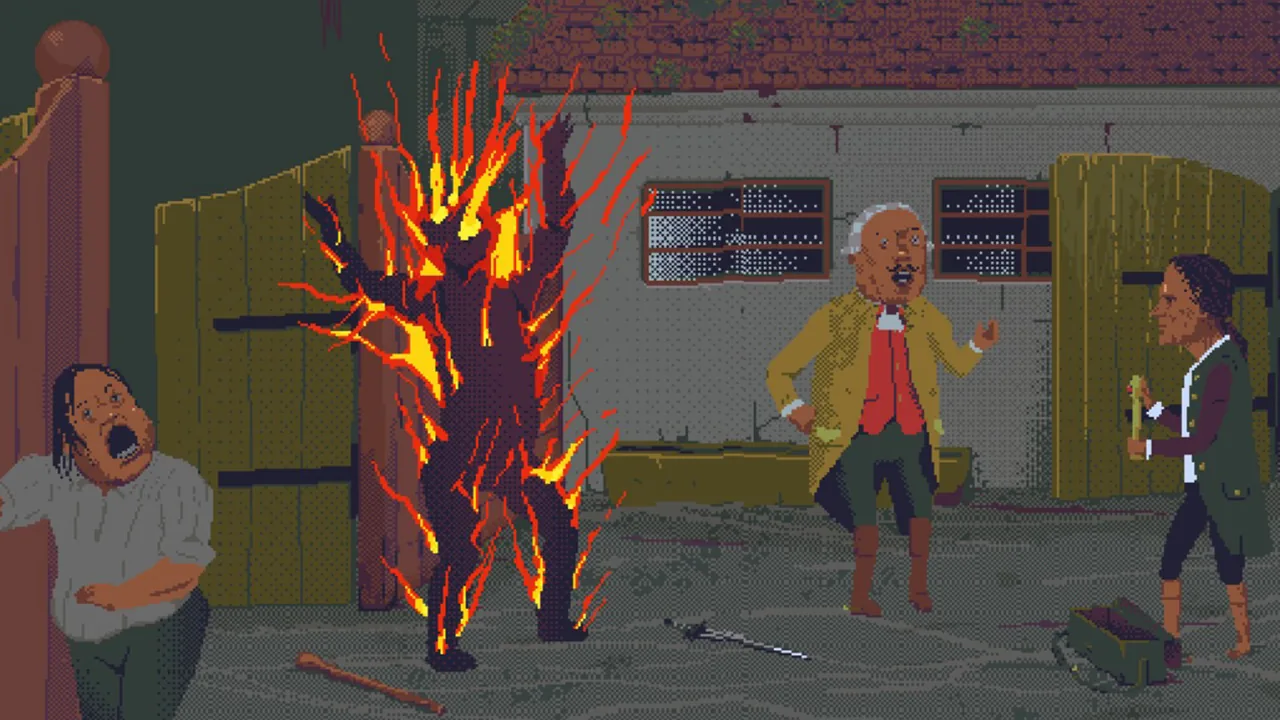
The Case of the Golden Idol drops the player into a frozen moment at each of twelve gruesome deaths, spread across fifty years and an aristocratic family's fortunes, with no dialogue and no guided investigation — just a static scene, a set of blanks to fill with names, objects, motives and murder weapons, and the freedom to reason it out however you can. Developed by Color Gray Games and published by Playstack, it released 13 October 2022 and sits at Overwhelmingly Positive, 98.3% across the 7,263 English-language reviews this review draws from — a genuinely rare score, and one of the most lopsided this library has recorded. Nearly every review in this sample, positive and negative alike, invokes the same reference point: Return of the Obra Dinn. That comparison, and how consistently it favours this game, is the clearest signal of what this corpus actually thinks it's looking at.
A deduction mechanic reviewers can't stop praising
Start with what drives the overwhelming majority of this game's reception. The core loop — study a frozen tableau, identify what happened through visual and contextual clues alone, fill in the blanks until the full picture locks into place — draws consistently ecstatic praise across the sample. One reviewer described the shared experience directly: "Every review on this page is going to tell you this is an excellent logic-deduction adventure game, and every review on this page is going to tell you that it's a tight 5 hours, and every review on this page is going to compare the game to Obra Dinn," before agreeing that despite the predictability of that pattern, it's earned. Reviewers repeatedly describe the specific feeling of the mechanic working — "you notice the first small detail, and then another one, and another, until it's 'AHA! I got it now!'" — language that recurs, in slightly different words, dozens of times across independent reviews. Twelve distinct cases across a genuinely eventful fifty-year family history give real narrative variety within that tight formula, which several reviewers credit with avoiding the repetition fatigue a single core mechanic often risks over a full campaign.
The comparison that keeps proving favourable
The Obra Dinn comparison deserves its own attention because of how consistently it resolves in this game's favour rather than against it. Reviewers who loved Obra Dinn describe Golden Idol as a worthy companion piece rather than a lesser imitation — "Yes, it's very similar to Obra Dinn, and that is very high praise," as one reviewer put it directly, going on to describe the format as "pointing and clicking" toward reconstructing a full picture rather than a traditional point-and-click adventure. Several reviewers specifically credit the chapter-based structure with making this a more approachable, more "snackable" experience than Obra Dinn's single sustained mystery, a genuine structural difference rather than a lesser version of the same idea. A smaller minority pushes back on the comparison from the other direction, arguing both games are somewhat overrated relative to the acclaim they receive, but this reading is rare enough in the sample to read as a genuine outlier rather than a meaningful counter-narrative.
What actually holds this game back
Set against that near-unanimous acclaim, the criticism in this corpus is notably proportionate rather than structural — reviewers aren't describing a broken or disappointing game, they're flagging specific, real limitations. Length against price is the most common: multiple reviewers report finishing the base campaign in around four to five hours, and several argue directly that the asking price compares unfavourably to Obra Dinn's own pricing for a similar runtime — one detailed review called charging more for a shorter, less polished experience "cheeky" relative to "its obvious main influence." It's worth noting this complaint specifically concerns the base campaign; the two story DLC packs released since launch extend the total experience meaningfully for players willing to buy them separately.
A second, more recent and more specific complaint concerns a 2024 interface overhaul, branded "Redux." Multiple detailed reviews describe the new UI as a genuine downgrade from the original — one 24-vote review called it "unconscionably bad," comparing it to something "sized for a mobile phone" and looking "cartoonish" on a desktop monitor, while crediting the accompanying font change as a rare improvement. Another reviewer, otherwise calling the game "one of the best point and click adventure / detective games of all time," singled out the Redux UI specifically as "TERRIBLE" and recommended new players actively seek out the original interface instead. That's a specific, actionable piece of buyer guidance worth passing on directly.
A specific concern worth reporting directly
One further point deserves careful, direct treatment rather than being folded into the broader discussion above. A detailed review, whose author identifies as being of Sri Lankan heritage, describes the "Spider of Lanka" story DLC — confirmed as a real, currently available NZ$8.99 expansion — as depicting Sri Lankan history and culture through what they characterise as an offensive, tribalist caricature, contrasting it unfavourably with how the base game handles invented, non-real-world settings. This review reports that account as exactly what it is: one detailed, specific, first-person perspective from a reviewer speaking to their own cultural background, not independently corroborated at scale within this sample. It's a serious point worth knowing before purchasing that specific DLC, and this review states it plainly rather than either amplifying it as settled consensus or omitting it because it's a minority view within the review count.
Where players actually finish
Steam's achievement data reinforces just how completely this game satisfies the audience that buys it: even the hardest base-game achievements sit in the high-20s to low-30s percent range — an unusually high completion rate for a puzzle game's toughest content, suggesting the large majority of buyers who start Golden Idol see it through to a genuine conclusion rather than abandoning it partway.
Final Verdict
The Case of the Golden Idol delivers one of the purest, most consistently satisfying deduction mechanics available on Steam, backed by a review corpus so lopsided in its favour that the honest work of this review has been finding the real, proportionate limitations underneath the acclaim rather than manufacturing balance that isn't there. A short base campaign relative to its price, a 2024 interface change a share of longtime fans actively dislike, and one serious, specific concern about a later DLC's cultural representation are all worth knowing before you buy — none of them come close to outweighing what this game does exceptionally well. If Return of the Obra Dinn is part of your taste in games, this is close to a must-play; if it isn't yet, this might be the more approachable place to start.
Pros and cons
Pros
- The core deduction loop — examining a frozen scene, filling in blanks with names, objects and events until the picture clicks into place — draws overwhelming, specific praise as one of the purest, most satisfying puzzle mechanics available, with reviewers repeatedly describing genuine "aha!" moments rather than generic difficulty
- Twelve distinct cases across fifty years give real narrative variety within a tight structural formula, avoiding the repetition risk a single core mechanic often runs into
- Comparisons to Return of the Obra Dinn are near-universal and almost always favourable, positioning this as a worthy, more approachable entry point into the same genre rather than an inferior imitation
- A chapter-based structure that several reviewers specifically praise as "snackable" — genuinely satisfying in short sessions rather than demanding long, uninterrupted playtime
Cons
- Multiple reviewers report finishing the base campaign in around four to five hours, and several argue the price doesn't match that length as favourably as Return of the Obra Dinn's own pricing did for a comparable playtime
- A 2024 "Redux" interface update draws detailed, specific criticism from longtime fans as a downgrade — described as feeling mobile-sized and cartoonish compared to the original pixel-era presentation — with reviewers actively recommending new players seek out the original UI instead
- One detailed, specific review from a reviewer identifying Sri Lankan heritage describes the "Spider of Lanka" DLC's depiction of Sri Lankan history and culture as an offensive caricature; this review reports that account directly rather than treating it as a settled consensus, since it is not independently corroborated at scale in this sample
- A smaller cluster of reviewers, mostly comparing directly to Obra Dinn, describe the puzzle logic as occasionally requiring a deductive leap that feels more like guessing than reasoning, undercutting the "pure logic" framing for a minority of players
Screenshots
-
The Case of the Golden IdolImage: Playstack via Steam -
The Case of the Golden IdolImage: Playstack via Steam -
The Case of the Golden IdolImage: Playstack via Steam -
How the review scores each part of the gameWanderer Editorial -
The essentials at a glanceWanderer Editorial -
The short versionWanderer Editorial