
Game review
The Rise of the Golden Idol
8.5 / 10
- Developer
- Color Gray Games
- Publisher
- Playstack
- Released
- 12 November 2024
- Platforms
- Windows, macOS, Linux, Nintendo Switch, PlayStation 4, PlayStation 5, Xbox One, Xbox Series X|S
- Genre
- Puzzle Mystery
- Monetisation
- One-time purchase, with paid story DLC episodes available separately.
- Players
- Single-player only
The short version
The Rise of the Golden Idol is a standalone sequel to 2022's The Case of the Golden Idol, one of the most acclaimed deduction games of recent years, moving its "reconstruct the crime from frozen scene evidence and a word bank" format from an ancient-world mystery into a 1970s conspiracy about corruption and cults. It sits at Very Positive across 3,752 Steam reviews (93% positive), with one long-time fan calling it, without much hesitation, "the Game of the Decade for narrative/puzzle games... up there with the greats, in the Disco Elysium/Outer Wilds bracket." Steam's own achievement data backs the acclaim from a different angle: the first several chapter achievements clear at 85-97% of the player base, a completion rate this library rarely sees outside the most accessible, well-paced games.
The English negative sample is vanishingly thin -- two reviews out of 274 negatives -- and even most of the critical notes live inside four- and five-star reviews rather than one-star ones: several longtime fans of the original say this sequel is very good but not quite as sharp, citing a UI that some find fiddlier than its predecessor's and a handful of later puzzles that lean on parsing sentence grammar rather than pure logical deduction.
Biggest strengths
- A distinctive, still-rare puzzle format -- reconstruct exactly what happened in a frozen crime scene using a word bank rather than dialogue trees or hint-driven deduction -- that reviewers repeatedly say has no real equivalent outside its own predecessor
- Consistently strong, dark writing that expands the series' world and lore while telling twenty distinct, self-contained cases across a 1970s setting
- Achievement data confirms a very high completion and satisfaction rate -- the vast majority of players who start the game see meaningful chapters through to their conclusion
Biggest weaknesses
- A vocal minority of longtime fans of the original find the sequel's UI more frustrating to use, even while praising the writing and puzzle design around it
- Some later puzzles reportedly lean more on parsing exact sentence grammar and phrasing than on pure logical deduction, a shift a portion of the audience finds less satisfying than the original's format
- As a direct sequel, it assumes real familiarity with the format and doesn't function as a gentle introduction the way the original did
Who it's for: Fans of narrative deduction and detective games who want to reconstruct a story from evidence rather than be told it -- ideal for anyone who liked Return of the Obra Dinn, Outer Wilds or the original Case of the Golden Idol. Not for players who want combat, exploration or real-time action of any kind.
Our recommendation: One of 2024's best pure puzzle games and an easy recommendation, though newcomers should play The Case of the Golden Idol first if they can -- this is a genuine sequel built for players who already know the format, not a fresh on-ramp.
8.5 / 10
A rare format, done again and done well
The Case of the Golden Idol, released in 2022, built its reputation on a genuinely uncommon puzzle format: rather than exploring a crime scene and following dialogue prompts toward a solution, you're shown a single frozen tableau -- bodies, objects, gestures caught mid-action -- and asked to fill in a word bank describing exactly who did what, to whom, with what, and why. There's no hint system that spells things out and no dialogue tree to lean on; you either see the logic connecting the clues or you don't, and the satisfaction comes entirely from that moment of recognition. The Rise of the Golden Idol, released 12 November 2024 as a standalone sequel from developer Color Gray Games and publisher Playstack, keeps that format almost entirely intact and moves the setting from an ancient civilisation's cursed relic to a 1970s conspiracy involving corruption, a fictional religious movement and the same shadowy Golden Idol pulling strings across decades.
The response has been enormous by the standards of a genre this niche: 3,752 Steam reviews, 93% positive, and reviewer language that reaches for the medium's most acclaimed touchstones without apparent hyperbole. "Without a doubt it's the Game of the Decade for narrative/puzzle games," reads one review from a player who deliberately avoided hints and guides on principle. "This is up there with the greats, in the Disco Elysium/Outer Wilds bracket." Another calls it, more measuredly, "one of, if not the best, detective games I have ever played" -- a claim made specifically "in isolation," before the same reviewer goes on to weigh it directly against its own predecessor.
What the achievement data actually proves
It's worth pausing on Steam's global achievement percentages here, because they offer something most reviews can't: an objective measure of how many players who start this game actually see it through. The first several chapter-completion achievements sit between 83% and 97% of the entire player base -- ASYLUM at 96.6%, BRIDGE at 95.3%, CHAPTER_1 at 91.3%, PRISON at 85.5%. For comparison, most games this library covers see completion rates fall off a cliff well before the midpoint of a campaign. Even the achievements tied to the paid DLC content -- HEIST, DLC_3, SHIP, DLC_4 -- still sit in the 23-27% range, remarkably high for content that requires an additional purchase on top of the base game. That is about as close as review evidence gets to a direct, checkable confirmation that a puzzle game's difficulty curve is genuinely well-tuned: players aren't bouncing off it early, and a meaningful share are following it all the way through paid expansions.
Where longtime fans draw a line
What makes the negative-review sample here unusually interesting is that it's barely negative at all in the conventional sense -- of the handful of critical points raised, most appear inside four- and five-star reviews from people who clearly loved the game, comparing it against an almost impossibly high bar set by its own predecessor. "In isolation this is one of, if not the best, detective games I have ever played," writes one reviewer, "but Rise of the Golden Idol is very hard not to compare to its incredible predecessor" -- going on to note the sequel's more familiar, closer-to-real-world 1970s setting as a deliberate creative choice that trades some of the original's exotic mystery for grounded conspiracy plotting. Another, more blunt: "I adore this game, but strongly prefer the original. This story feels deeply unnecessary, changes the lore arbitrarily, and ends confusingly." A third splits the difference precisely: "The UI is more frustrating than the original. However, the story is much more complex and the puzzles still make sense. Very good."
The UI complaint recurs often enough to be a real pattern rather than one person's preference -- several reviewers describe fiddlier interactions than the original's cleaner interface, even as an equal or greater number specifically praise the sequel's UI as an improvement, calling it "more polished" with "better UI and UX that gets less in the way of the art." That split likely comes down to what players are comparing against: those coming straight from the original notice the friction of anything different; those playing it as a first Golden Idol game report a smooth, well-designed experience. A related, more substantive critique from experienced players is that a portion of the later puzzles lean more on parsing precise sentence grammar and phrasing to unlock the right answer than on the pure evidentiary logic that defined the original -- a shift some reviewers find less satisfying, since it can feel like a vocabulary test rather than a detective's deduction in isolated moments, even while the broader case-solving structure remains intact.
Twenty cases, one throughline
Structurally, the game spans twenty individual cases across the 1970s, each a fully self-contained puzzle with its own tableau, cast and word bank, stitched together by an overarching story about the Golden Idol's continuing influence across generations. Reviewers consistently praise how the writing uses that structure -- each case functions as a satisfying standalone mystery while contributing to a larger, darker picture that rewards players who piece the connections together themselves rather than having them explained. Four paid story DLC episodes extend the format further, and buyers who picked up the bundle report consistent quality across the extra content rather than the drop-off in polish that so often defines post-launch DLC -- one detailed review specifically ranks the main story alongside its DLC episodes by preference rather than treating the add-ons as an afterthought, itself a sign of how seriously the extra content is being taken by its audience.
Verdict
The Rise of the Golden Idol does the hardest thing a beloved indie game's sequel can attempt: it keeps what made the original work -- a genuinely rare deduction format, sharp writing, and puzzles that reward attention rather than trial and error -- while finding a new setting distinctive enough to justify existing as its own game rather than more of the same. The achievement data confirms what the reviews already suggest: this is a puzzle game whose difficulty curve is genuinely well-calibrated, with the overwhelming majority of players seeing it through to completion rather than abandoning it partway. The criticism that exists is real but narrow -- some longtime fans find the UI fiddlier and a handful of late puzzles leaning on grammar rather than pure logic -- and none of it comes close to outweighing what remains one of 2024's strongest, most distinctive puzzle releases.
Pros and cons
Pros
- A distinctive, still-rare puzzle format -- reconstruct exactly what happened in a frozen crime scene using a word bank rather than dialogue trees or hint-driven deduction -- that reviewers repeatedly say has no real equivalent outside its own predecessor
- Consistently strong, dark writing that expands the series' world and lore while telling twenty distinct, self-contained cases across a 1970s setting
- Achievement data confirms a very high completion and satisfaction rate -- the vast majority of players who start the game see meaningful chapters through to their conclusion
- Four paid story DLC episodes (Curse of the Last Reaper, The Lemurian Phoenix, Age of Restraint, Sins of New Wells) that reviewers who bought the bundle rate as consistently worth the extra cost
Cons
- A vocal minority of longtime fans of the original find the sequel's UI more frustrating to use, even while praising the writing and puzzle design around it
- Some later puzzles reportedly lean more on parsing exact sentence grammar and phrasing than on pure logical deduction, a shift a portion of the audience finds less satisfying than the original's format
- As a direct sequel, it assumes real familiarity with the format and doesn't function as a gentle introduction the way the original did
- A small number of reviewers report load-time friction between cases, a minor but real technical rough edge on an otherwise polished release
Screenshots
-
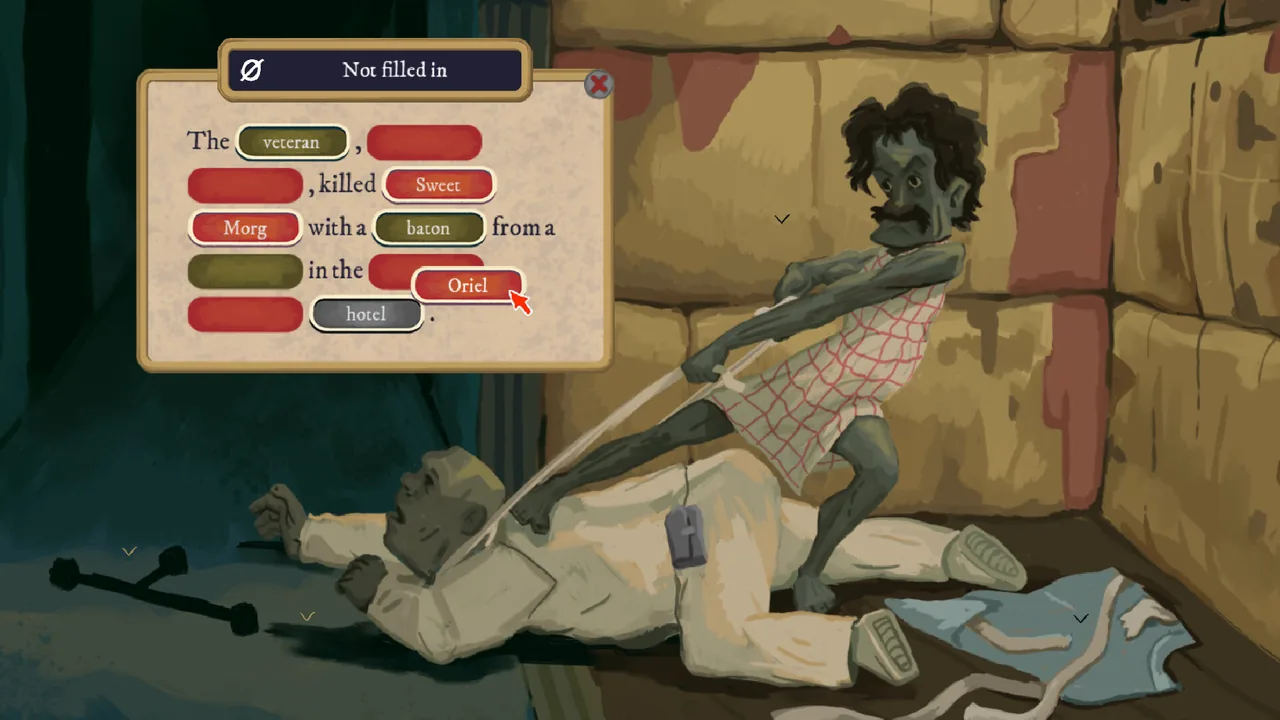
The core puzzle format -- filling in a sentence describing exactly what happened from clues in a frozen sceneImage: Playstack via Steam -

Dialogue and evidence-gathering between cases, set against the game's illustrated 1970s art styleImage: Playstack via Steam -

A prison case, tracking suspects and names across one of the game's twenty self-contained puzzlesImage: Playstack via Steam -
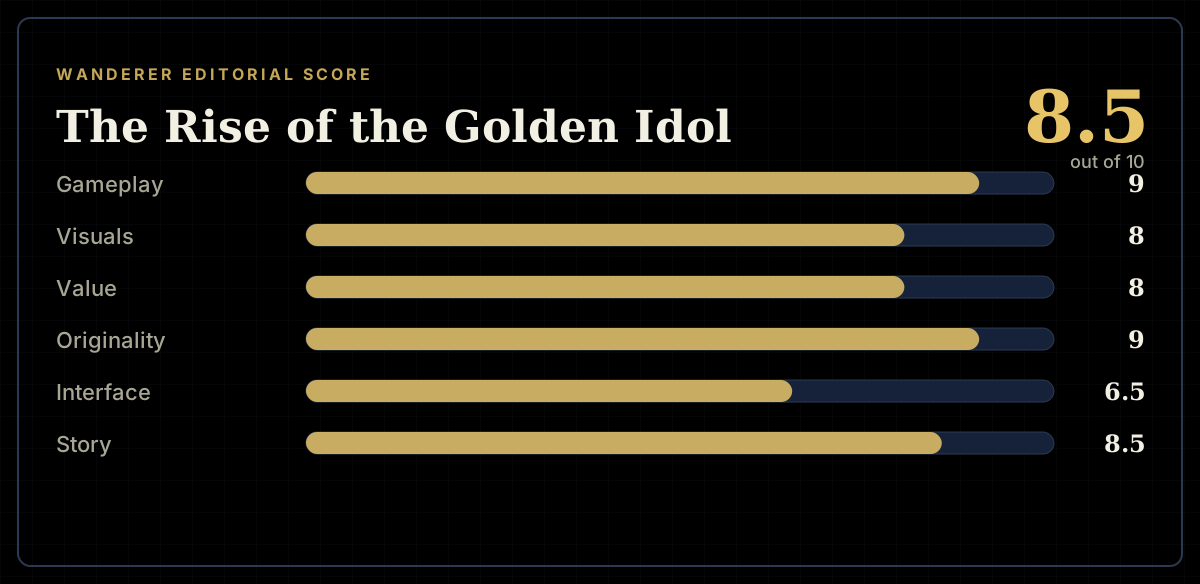
How the review scores each part of the gameWanderer Editorial -
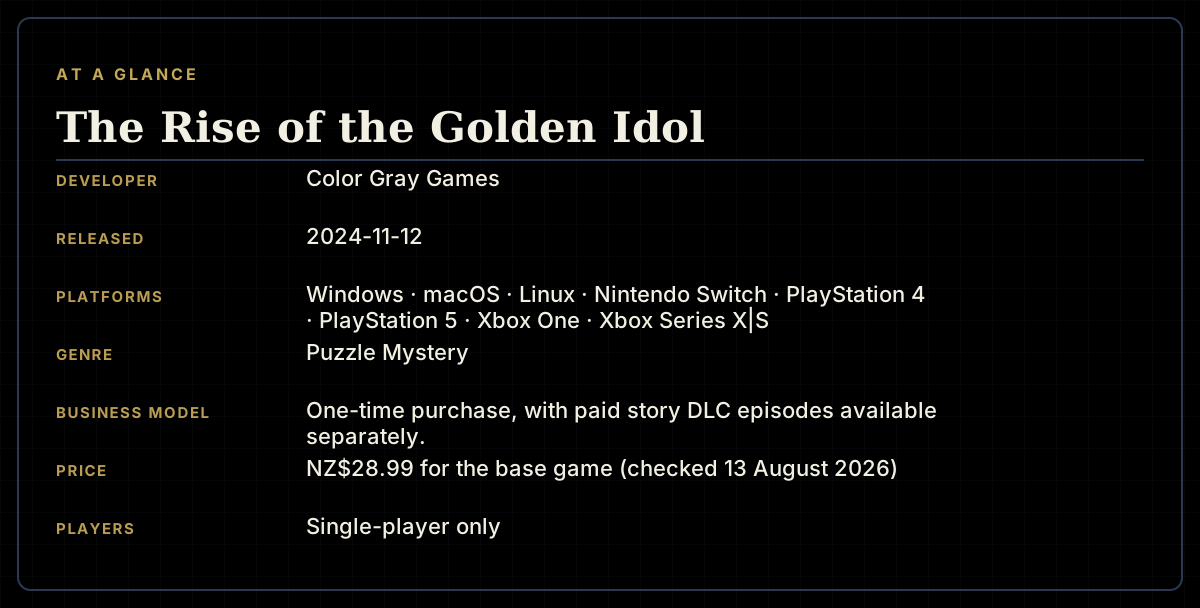
The game at a glanceWanderer Editorial -
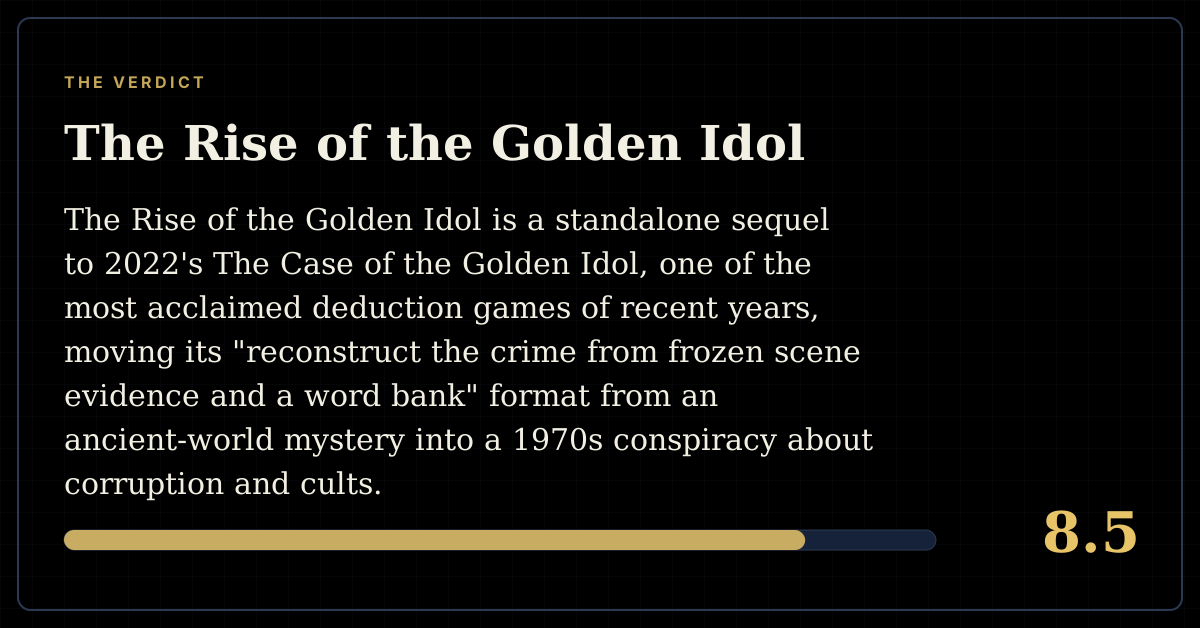
The short versionWanderer Editorial