Game review
Inventorix
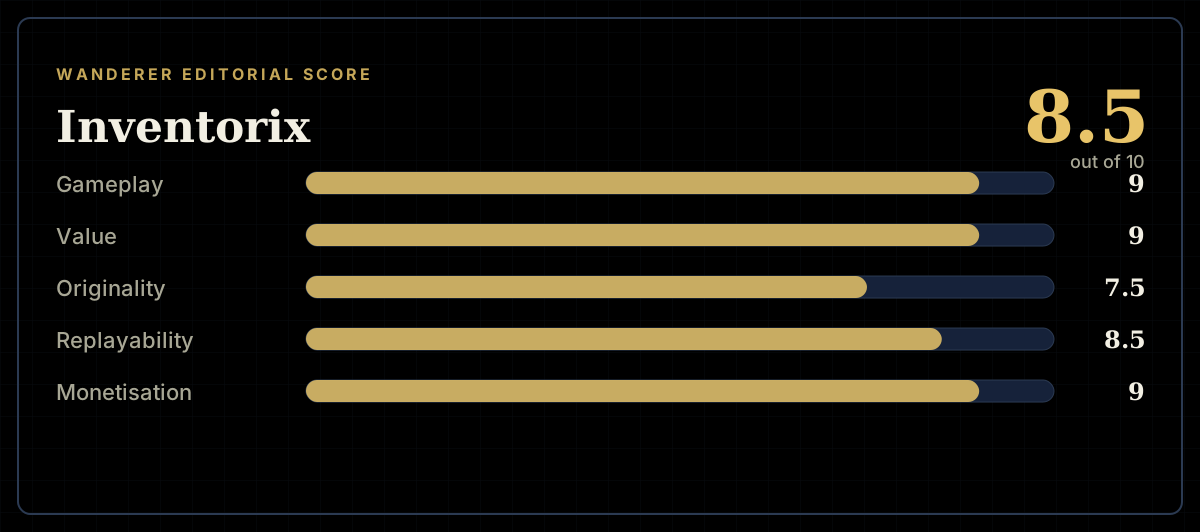
8.5 / 10
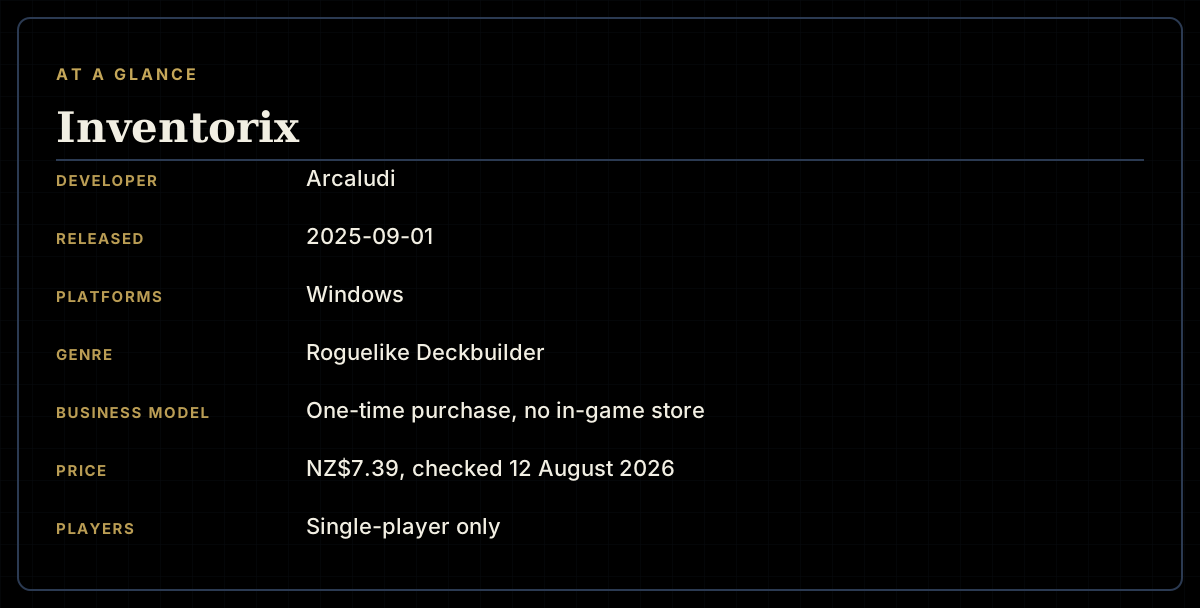
- Developer
- Arcaludi
- Publisher
- Arcaludi
- Released
- 1 September 2025
- Platforms
- Windows
- Genre
- Roguelike Deckbuilder
- Monetisation
- One-time purchase, no in-game store
- Players
- Single-player only
The short version
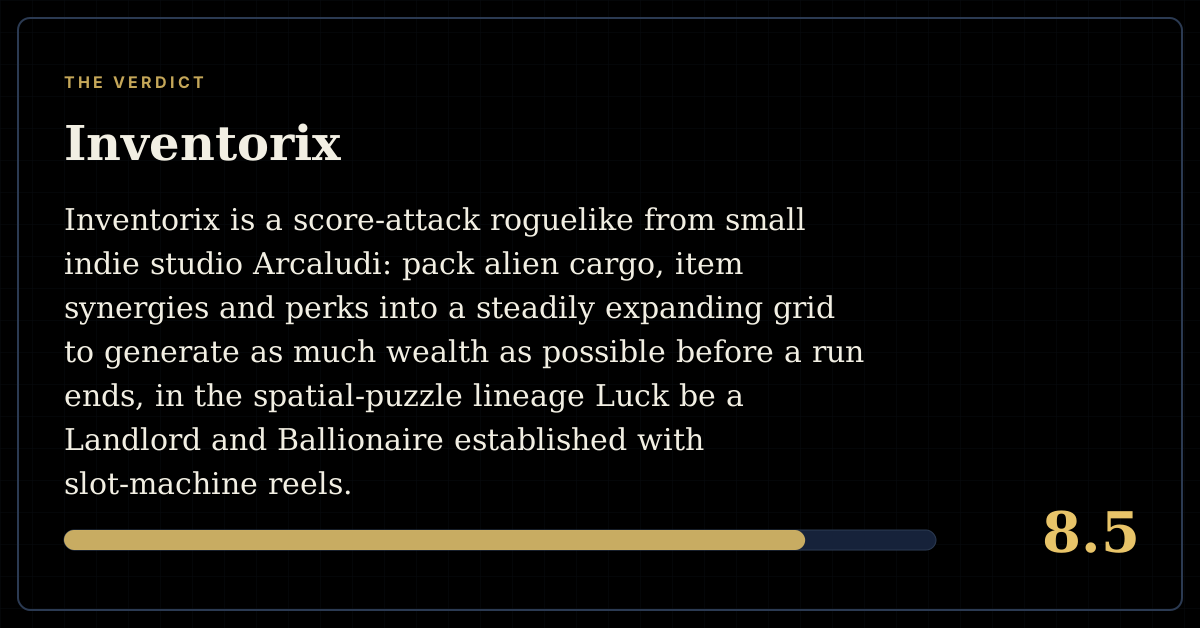
Inventorix is a score-attack roguelike from small indie studio Arcaludi: pack alien cargo, item synergies and perks into a steadily expanding grid to generate as much wealth as possible before a run ends, in the spatial-puzzle lineage Luck be a Landlord and Ballionaire established with slot-machine reels. Released 1 September 2025 for NZ$7.39, it has an unusually clean record for this outlet to report: every one of its 100 most-relevant English-language Steam reviews is positive, and its wider 135-review all-language corpus carries zero recorded negatives at all. This review reads a wide sample of that positive corpus rather than a negative one and finds detailed, specific praise rather than vague enthusiasm — reviewers repeatedly credit the game with the exact thing this outlet has learned to check for in randomised builders: real tools to steer toward a build a player wants, rather than simply piling more randomness onto the pile as content is added. A steady, cliff-free achievement completion curve across at least 19 tracked difficulty levels backs up the picture of a game that holds attention progressively rather than losing players at any single wall.
Biggest strengths
- Every one of the 100 most-relevant English-language reviews for this game is positive, an unusually clean record this review's own reading of the sample corroborates in substance rather than just headline percentage
- Reviewers repeatedly credit the game with real tools for shaping a run — ways to manipulate RNG toward a specific build, a generous, gradually escalating difficulty curve, and challenges that reward planning rather than pure luck — precisely the design feature this outlet has found separates roguelike builders that age well from ones that don't
- Nine unlockable starting "devices" plus escalating per-device difficulty levels give the game real structural replay value, backed by community tag votes (Replay Value, 95) and an achievement curve that declines steadily rather than falling off a cliff at any one point
Who it's for: Fans of Luck be a Landlord, Balatro, Backpack Battles or Slay the Spire looking for a cheap, tightly designed entry in the same "number go up, build a synergy engine" school, with a spatial-inventory twist most of its genre neighbours don't attempt.
Our recommendation: A cheap, focused, extremely well-received roguelike with a genuinely spotless Steam review record at time of writing. Worth trying on that record alone, and the mechanical detail in its own reviews backs the score up rather than just repeating it.
8.5 / 10
Introduction
Inventorix hands the player a device "crafted by space gnomes" and one job: extract maximum value from a growing pile of interstellar cargo before a mysterious debt catches up with them. Mechanically it belongs to a specific, recognisable lineage — the score-attack roguelike school Luck be a Landlord popularised, where each run is about assembling a synergy engine out of randomised pickups rather than fighting anything directly — but Arcaludi's twist replaces that game's slot-machine reels with a spatial inventory grid, turning item placement itself into a puzzle. Released 1 September 2025 for NZ$7.39, it carries an unusually clean record worth stating plainly up front: at the time of this review, all 100 of its most-relevant English-language Steam reviews are positive, and its wider 135-review all-language corpus has zero recorded negatives. That's rare enough that it's worth reading the positive sample carefully rather than taking the headline number at face value, and doing so finds specific, substantive praise rather than the generic enthusiasm a spotless record might otherwise suggest.
A spatial twist on a proven formula
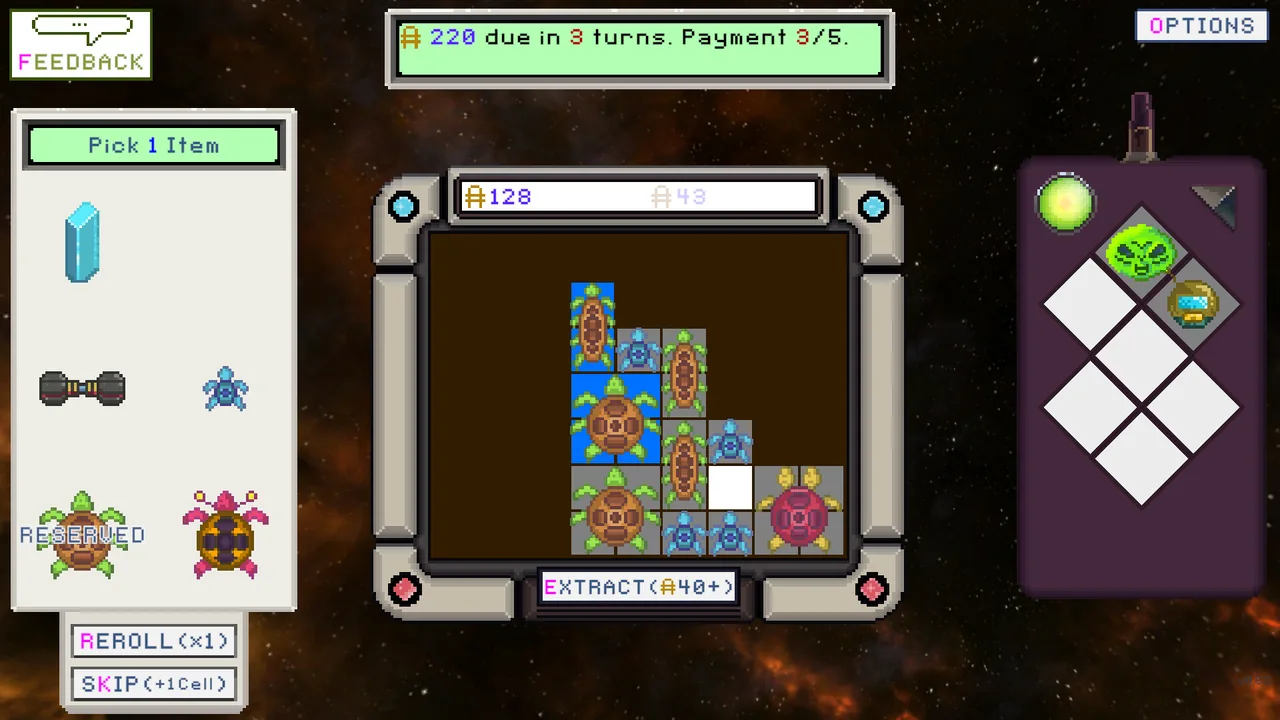
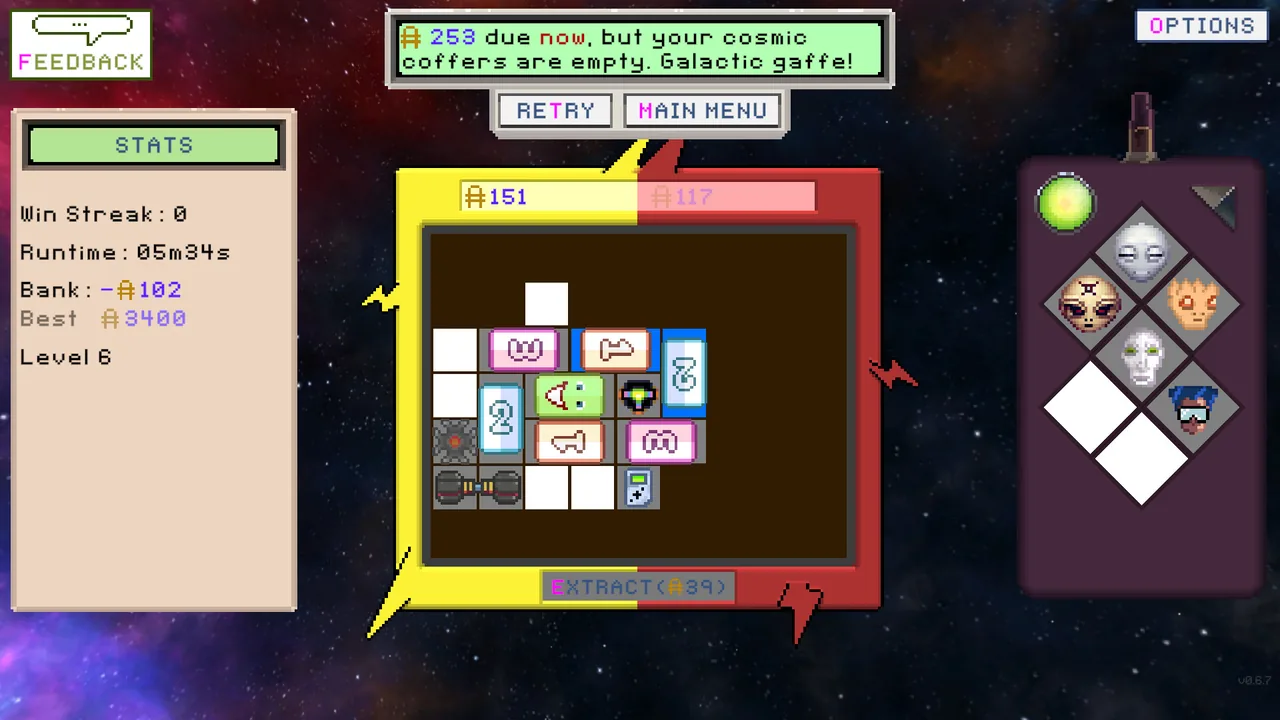
The core loop will be immediately familiar to anyone who's played Luck be a Landlord, Ballionaire or similar score-attack roguelikes: each round adds more items, perks and alien recruits to a growing collection, and the player's job is to arrange and combine them for maximum payout before the round's target comes due. What Inventorix changes is the container. Rather than spinning reels, items occupy physical space in an expanding grid, and shape, orientation and adjacency all matter — cramming an awkwardly shaped item next to the right neighbour is as much the puzzle as picking which items to keep in the first place. Reviewers reach for the same comparison independently and often: "This is, essentially, Luck be a Landlord with inventory management replacing the slot machine, and it turns out that works very well," reads one representative review. Another calls it a blend of "Backpack Battles [with] more clear builds and targets you're shooting for," crediting the grid format with making the game's synergies easier to read and plan around than some of its genre neighbours manage.
The design test this genre keeps failing — and Inventorix passing
This outlet has learned to ask a specific question of any randomised-builder roguelike: as the item pool grows, does the player get real tools to hunt for what they want, or does the game simply get more random? Games without answers to that question tend to age badly, drawing complaints in later reviews about combos coming together less reliably as content accumulates. Inventorix's own review sample answers the question directly and positively. One detailed review specifically credits the game with "ways to manipulate RNG to facilitate specific builds, challenges that require planning, luck and skill" — precisely the kind of selection tooling that keeps a randomised builder feeling richer rather than just noisier as its content grows. Another compares the difficulty ramp favourably against Slay the Spire, describing it as "a lot easier to progress up the difficulty levels" while still crediting "lots of viable builds that feel well designed." A third goes further, describing the game as one that "rewards you playing the game correctly, and isn't afraid to let you destroy the goals" once a player has learned its systems — the hallmark of a build game with genuine skill expression rather than one that's purely a numbers lottery.
Presentation, tone and structural replay value
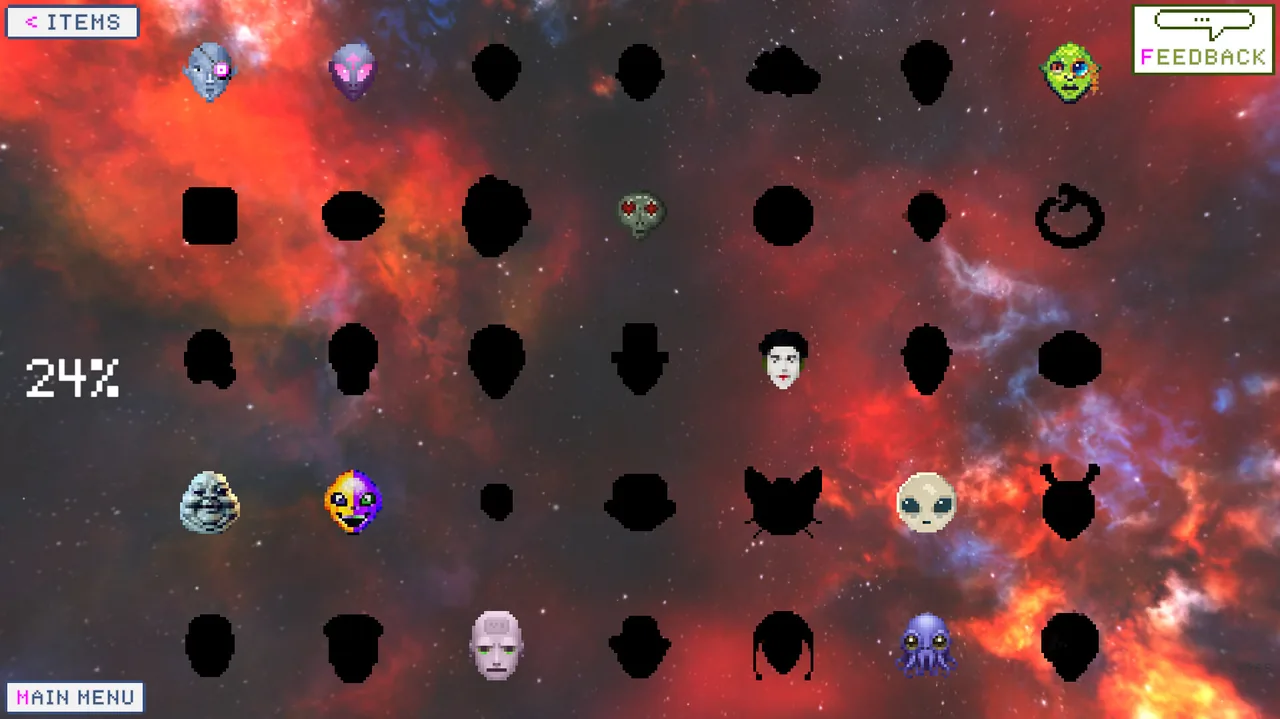
Beyond the core loop, reviewers consistently single out the same secondary strengths: pixel art described as charming rather than merely functional, a soundtrack multiple reviews call out by name, and a sense of humour that runs through the writing without undercutting the puzzle underneath. Structurally, the game offers nine unlockable starting "devices" — effectively distinct decks or starting conditions — each with its own escalating difficulty ladder, which the community's own vote-weighted tags reflect: Replay Value sits among the game's most-applied descriptors, alongside Inventory Management, Roguelike Deckbuilder and Capitalism, the last a nod to the game's wealth-accumulation satire rather than any predatory monetisation of its own. Steam's achievement data corroborates the replay-value picture with real numbers: across at least 19 tracked difficulty levels on its first device, completion runs from 88.9% at the earliest to 16.1% at the nineteenth, a smooth, steady decline rather than a sudden cliff at any single point. That shape suggests a game that keeps testing committed players progressively harder, rather than one with a single spike that filters out everyone who isn't already an expert.
A genuinely clean business model
It's worth stating plainly what Inventorix doesn't do, because it's increasingly rare in this genre: there is no in-game store, no premium currency, no cosmetic or convenience purchase of any kind behind the NZ$7.39 asking price. Several reviewers explicitly credit the price as "incredibly fair" for the amount of content and replay value on offer, and the developer's own patch history backs up the idea that the asking price bought ongoing support rather than a static release — roughly twenty named updates ran from launch through February 2026, with a further visual refresh and marketing push in March 2026 and a Steam sale as recently as July 2026, all consistent with a small studio still actively invested in the game nearly a year after release.
What this review can and can't tell a reader
It would be dishonest to present a 100%-positive record as proof of a flawless game rather than what it actually is: a strong, consistent signal from a genuinely small sample, on a genre-niche indie release that hasn't yet been tested by the scale of scrutiny a bigger release attracts. This review found no documented complaint pattern to weigh against the praise, which is unusual enough to note rather than something to simply repeat as a headline. What the positive sample does offer, read in detail rather than skimmed for its percentage, is specific and mechanically literate praise from players who understand the genre Inventorix is working in and can explain precisely what it does well relative to its most obvious rivals — which is a considerably stronger form of evidence than an unbroken thumbs-up streak on its own.
Final Verdict
Inventorix earns its clean record on the strength of a genuinely well-considered idea: taking the Luck be a Landlord school of score-attack roguelike and giving its randomness a spatial, puzzle-like container that rewards planning as much as luck. Its own reviewers, read closely rather than glanced at, describe a game that solves the specific design problem — real player agency over a growing item pool — that trips up so many of its genre neighbours as their content lists grow. At NZ$7.39, with no monetisation beyond the purchase price and a developer still visibly supporting it a year on, it's an easy recommendation for fans of the genre, and worth a look even for readers who haven't tried Luck be a Landlord or Balatro before.
Pros and cons
Pros
- Every one of the 100 most-relevant English-language reviews for this game is positive, an unusually clean record this review's own reading of the sample corroborates in substance rather than just headline percentage
- Reviewers repeatedly credit the game with real tools for shaping a run — ways to manipulate RNG toward a specific build, a generous, gradually escalating difficulty curve, and challenges that reward planning rather than pure luck — precisely the design feature this outlet has found separates roguelike builders that age well from ones that don't
- Nine unlockable starting "devices" plus escalating per-device difficulty levels give the game real structural replay value, backed by community tag votes (Replay Value, 95) and an achievement curve that declines steadily rather than falling off a cliff at any one point
- A clean, one-time NZ$7.39 purchase with no in-game store, premium currency or monetisation of any kind, on a game whose sustained patch history — roughly 20 updates from launch through February 2026 — shows real ongoing developer investment
Screenshots
-
InventorixImage: Arcaludi via Steam -
InventorixImage: Arcaludi via Steam -
InventorixImage: Arcaludi via Steam -
How the review scores each part of the gameWanderer Editorial -
The essentials at a glanceWanderer Editorial -
The short versionWanderer Editorial