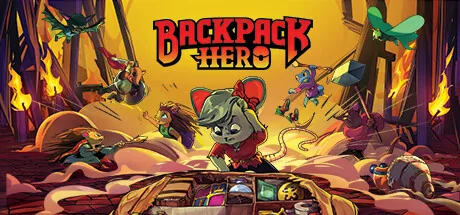
Game review
Backpack Hero
7.5 / 10
- Developer
- Jaspel
- Publisher
- Pretty Soon, IndieArk
- Released
- 14 November 2023
- Platforms
- Windows, macOS, Linux, Nintendo Switch, PlayStation 4, PlayStation 5, Xbox One, Xbox Series X|S
- Genre
- Roguelike Deckbuilder
- Monetisation
- One-time purchase; the only DLC is an optional soundtrack with no gameplay effect; no official mobile release exists, and several similarly named mobile apps are unrelated clones
- Players
- Single-player only, no co-op or PvP
The short version
Backpack Hero's central idea is one of the more genuinely original things a roguelike deckbuilder has tried in years: instead of a hand of cards or a stat sheet, your build is a literal grid of items packed into a bag, where shape, orientation and what's touching what changes what an item actually does. That idea works. Sliding a two-handed sword against a row of gem sockets or wedging a cursed trinket where its downside only clips one other slot is a puzzle no card game asks you to solve.
What doesn't fully hold up is everything built around that idea. The story campaign moves too slowly for its own interesting items to matter, the run-to-run variety thins out once the item pool has been seen a few times, and the game's own achievement data shows a punishing wall between "understands the trick" and "can actually win a run." Development has also gone quiet since the console ports landed, and current player feedback describes a game left in an unfinished, sometimes buggy state rather than one still being sanded down.
Biggest strengths
- Item shape and adjacency turn the inventory grid into the actual combat puzzle, not a menu bolted onto one
- Five distinct starting bags (Satchel, Tote, CR8, Pochette, Purse) each demand a different packing strategy rather than reskinning the same stats
- Haversack Hill's town-building meta-progression gives failed runs something concrete to show for themselves
Biggest weaknesses
- Steam's own achievement data shows only 14% of players have ever won a single quick run, and beating the hardest difficulty or the final boss sits under 6% — a steep wall past the tutorial hours
- The story campaign hands out its most interesting items too late for them to reshape a run, and several 2026 reviews from players with hundreds of hours call it worse than quickplay for exactly that reason
- Strong item synergies cluster around a handful of tags, so builds start to feel familiar once the pool has been seen a few times
Who it's for: Deckbuilder fans who want a genuinely different central mechanic rather than another card-shaped variant, and anyone who's ever wished an RPG's inventory screen were the interesting part of the game instead of the chore between fights.
Our recommendation: Worth buying at full price for the core idea alone, but go in expecting a shorter, rougher-edged experience than the concept promises, and don't expect further patches to smooth out what's currently broken.
7.5 / 10
Every RPG has an inventory screen, and almost none of them are fun. It's the pause-menu chore between the parts of the game you actually wanted to play — a grid of icons you drag around to free up a slot, sorted by weight or rarity, never asked to do anything more interesting than hold numbers. Backpack Hero's whole pitch is refusing that premise. Here the inventory screen isn't adjacent to combat — it is combat. What you pack, where you pack it and what's sitting next to it decides whether a fight is a formality or a disaster, and that's a genuinely different answer to a problem every game in this genre, Wanderer included, has to solve one way or another.
Packing a bag as the entire combat system
The setup is simple to describe and considerably harder to master. Your bag is a grid of slots, and every item you find has a physical shape — a sword might be a straight line of three squares, a shield a solid two-by-two block, a ring a single square that does nothing on its own but transforms whatever's touching it. Turns play out automatically once you've packed your bag: items trigger left to right, top to bottom, and what they do depends heavily on their neighbours. A damage-over-time trinket wedged next to three separate weapons applies its effect three times over. A cursed item with a real downside can be tucked into a corner where its penalty only grazes a single other slot instead of your whole build. None of this is communicated through a stat sheet — it's read directly off the grid, the way a Tetris player reads a board rather than a scoreboard.
That's the trick, and it's a good one. It turns equipping gear from a comparison exercise — is this sword's damage number bigger than my current sword's damage number — into a spatial one, where a worse item in a better position can outperform a better item crammed in badly. Few roguelike deckbuilders ask you to think this way, and it's the single clearest reason Backpack Hero earned its Kickstarter money and its subsequent following: nobody else was solving quite this puzzle.
Five bags, five different games
Character variety does real structural work rather than reskinning the same numbers, and it's built around bag shape rather than class abilities. Steam's own achievement list names the bags a player can actually finish a run with — Satchel, Tote, CR8, Pochette and Purse among them — and each one imposes a genuinely different packing problem. A long, narrow bag rewards a completely different item shape strategy than a wide, blocky one, and switching bags between runs is closer to starting a new strategy game than picking a new skin. That variety is doing a lot of the franchise's replayability, and reasonably so, because on a fixed item pool, one bag alone doesn't stretch nearly as far.
Between runs, Haversack Hill gives failed attempts something to show for themselves: a town-building layer where currency earned mid-run funds permanent buildings and unlocks rather than vanishing the moment a run ends badly. It's a familiar meta-progression shape for the genre, but it's implemented honestly — a death still costs you the run, but it doesn't erase the session.
Where the difficulty curve actually breaks
The interesting question for a game built entirely around one clever idea is whether that idea sustains an entire run-based structure, or whether it wears thin once a player has understood the trick. Backpack Hero's own achievement data gives an unusually honest answer, and it isn't flattering. Only 14% of players have ever won a single quickplay run — the game's shorter, more digestible mode — and finishing on the hardest available difficulty or beating the final boss sits under 6%. Compare that to an early achievement for picking up a specific starting item, which sits above 60%, and the shape of the drop-off is clear: most players get through the tutorial hours comfortably and then hit a wall the game never quite prepares them to climb.
That tracks with a pattern in current player feedback. Several reviews from players with hundreds of logged hours describe the mid-game as a genuine skill and knowledge test that the opening hours undersell, where interesting items and synergies arrive too slowly to matter for the run you're currently on. A difficulty curve that respects mastery should feel like it's rewarding what you've learned by the point you've learned it. Here, the reward often arrives a run or two after the lesson, which reads less like mastery being honoured and more like the campaign gating its best ideas behind a slog it never fully justifies.
Quickplay versus the story campaign — and a myth worth checking
It's tempting to assume the loudest current complaint about Backpack Hero is nostalgia for the free browser original — that longtime fans resent paying close to thirty dollars for a game they once played for nothing on itch.io. Read the full run of critical reviews, a hundred of them spanning 2022 to last month, and that story falls apart. Exactly one compares the two versions, and it says the Steam release improved on the itch.io build. Price nostalgia is not what anybody is actually angry about.
Two things are. The first is bugs: fifty-two of those hundred reviews mention a bug, a glitch or a crash, which for a game of this size is not a rough edge but the defining complaint. The second is narrower and more damning about the design: the story campaign, not the price tag, is where people bounce off. It is worth noting who is saying this — the median critical reviewer has nearly thirty-six hours in the game, and only five of the hundred played less than two. These are not people who bought it by mistake. One recently posted review from a player with over 200 hours logged put it plainly — the story mode is worse than quickplay, because its slower pacing means the interesting, build-defining items show up too late to change how a run actually plays out. Quickplay strips that padding away and gets to the actual puzzle faster, which is presumably why players keep returning to it even after souring on the mode the game leads with.
The version people actually wish still existed
The real complaint isn't free-versus-paid — it's Early-Access-versus-1.0. Backpack Hero spent over a year in Early Access from August 2022, iterating in public after the original browser prototype and Kickstarter, and more than one long-time player describes the November 2023 full release as a downgrade from where the Early Access build had gotten to, not an improvement on it. That's a sharper and more specific criticism than simple price nostalgia, and it's borne out by the game's own post-launch trajectory: console ports landed in mid-2024, and updates have visibly slowed since. The developer's own announcement feed makes that concrete — the last substantive post is a "December Check-In" from December 2024, and everything after it is storefront promotion. A review posted this year reads, in full, "no more updates," from a player who's logged well over 300 hours. That's not a drive-by complaint from someone who bounced off the tutorial — it's a dedicated player watching a game they've invested real time in go quiet.
Worth being precise about while we're here: there is no official mobile version of Backpack Hero. Several apps on iOS and Android use near-identical names and market screenshots that look suspiciously familiar, and at least one has previously been caught lifting assets directly from Jaspel's game before swapping them out under takedown pressure. None of them are the real thing, and none of them should be mistaken for an official port, free-to-play or otherwise.
Presentation and stability
The pixel art is charming rather than showy, leaning into legibility — every item, enemy and status effect needs to be readable at a glance inside a busy grid, and the art delivers that without ever trying to be a technical showcase. Where the presentation actually costs the game points is stability rather than style. Recurring reports describe bugs that can make specific items unusable, occasional forced resets to clear a broken state, and a noticeably rougher time on Steam Deck than the "full controller support" line on the store page implies. None of that is catastrophic on its own, but it compounds the sense that this is a game whose developer has moved on before the seams were fully closed.
Value and where the money goes
On the pure economics, there's very little to criticise. Backpack Hero is a one-time purchase with a single soundtrack DLC that changes nothing about play, no currency shop, no battle pass, and no purchasable shortcut anywhere near the checkout screen. At NZ$28.99 it sits at the higher end of what an indie roguelike deckbuilder typically asks, and that price is easier to justify for the core mechanic than for the amount of content actually built around it — a shorter campaign than some genre neighbours, and a quiet update cadence that means what you're buying today is close to what you'll still have in a year.
Verdict
Backpack Hero's idea is the kind other designers will keep borrowing for years: an inventory grid where shape and placement are the whole language of build strategy, not a chore standing between fights. That idea is executed well enough, moment to moment, to be worth the asking price on its own. But the campaign built around it hasn't kept pace with the concept — a story mode that buries its best ideas too deep, an achievement curve that shows most players never actually finish a run, and a development cycle that's gone quiet since the console ports shipped. Players similarly drawn to Megaloot's take on inventory-as-combat, or to the tighter run structure of Slay the Spire and Die in the Dungeon, will recognise a genuinely distinct idea here — just one that could have used another year of the polish it stopped receiving.
Pricing, review figures and platform release dates checked 2 August 2026.
Pros and cons
Pros
- Item shape and adjacency turn the inventory grid into the actual combat puzzle, not a menu bolted onto one
- Five distinct starting bags (Satchel, Tote, CR8, Pochette, Purse) each demand a different packing strategy rather than reskinning the same stats
- Haversack Hill's town-building meta-progression gives failed runs something concrete to show for themselves
- A one-time purchase with a single cosmetic soundtrack DLC and no currency shop, timers or purchasable advantage anywhere
- Quickplay mode delivers the core loop in a tight, focused session without the story campaign's padding
Cons
- Steam's own achievement data shows only 14% of players have ever won a single quick run, and beating the hardest difficulty or the final boss sits under 6% — a steep wall past the tutorial hours
- The story campaign hands out its most interesting items too late for them to reshape a run, and several 2026 reviews from players with hundreds of hours call it worse than quickplay for exactly that reason
- Strong item synergies cluster around a handful of tags, so builds start to feel familiar once the pool has been seen a few times
- Development has visibly slowed since the 2024 console ports, and recent player reports describe lingering bugs, occasional forced resets, and a game that reads as abandoned mid-fix
- No official mobile port exists; several apps using near-identical names on iOS and Android are unrelated clones, not Jaspel's game
Screenshots
-
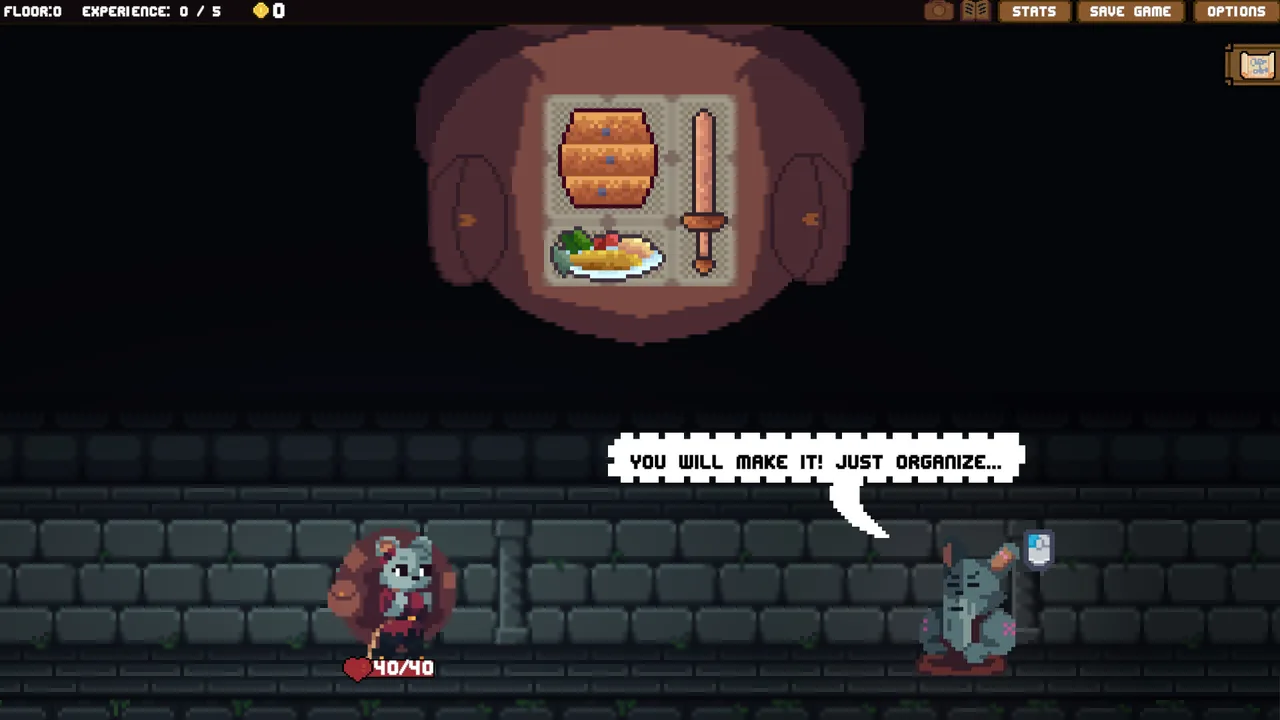
Backpack HeroImage: Pretty Soon via Steam -
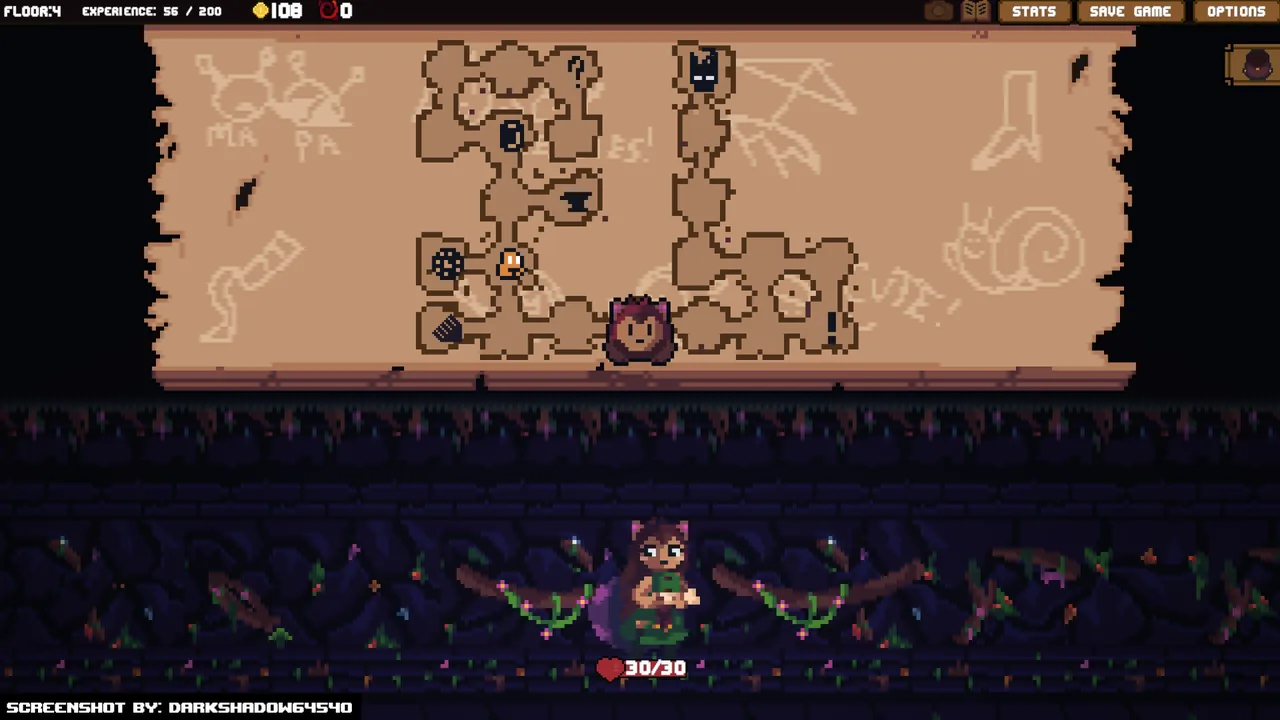
Backpack HeroImage: Pretty Soon via Steam -
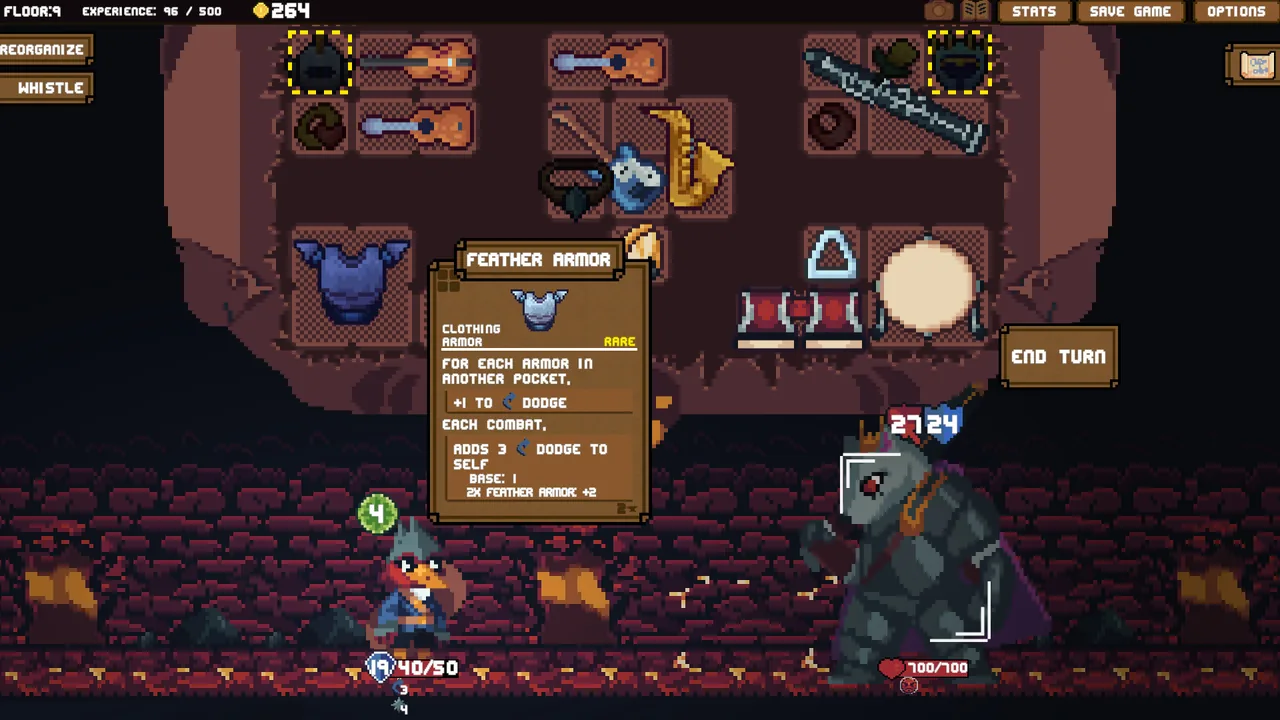
Backpack HeroImage: Pretty Soon via Steam -
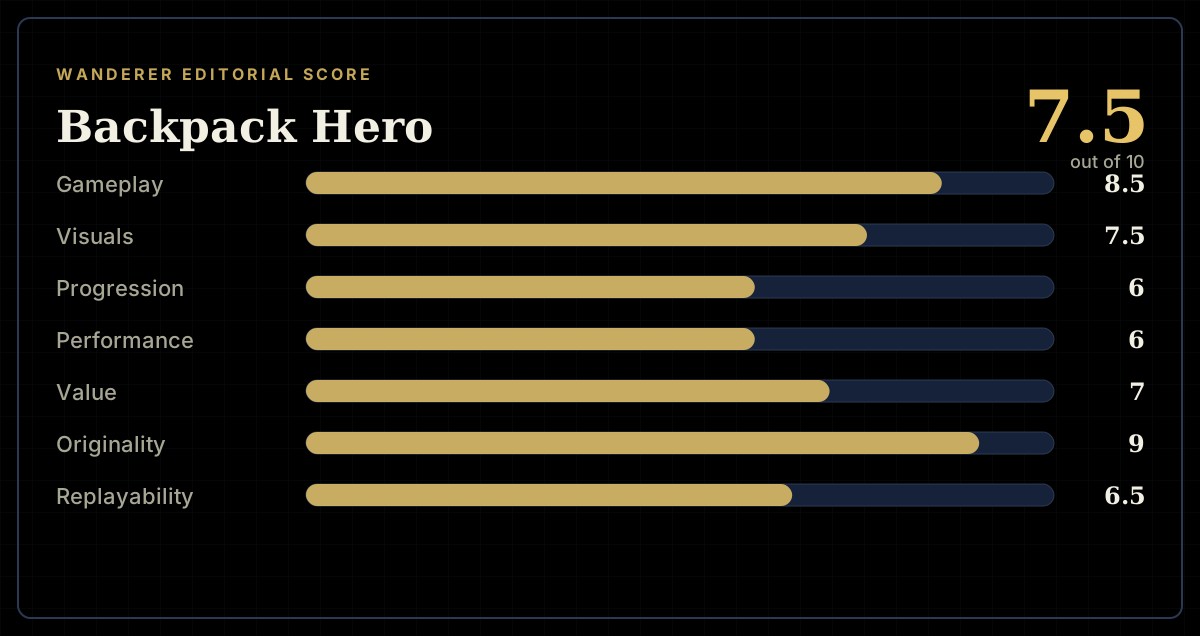
How the review scores each part of the gameWanderer Editorial -
The short versionWanderer Editorial