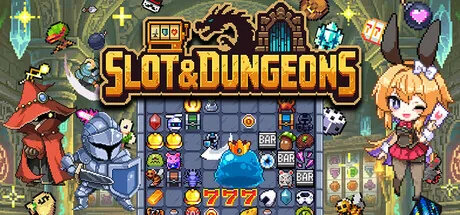
Game review
Slot & Dungeons
7 / 10
- Developer
- MUC GAMES
- Publisher
- MUC GAMES
- Released
- 27 July 2026
- Platforms
- Windows
- Genre
- Roguelike deckbuilder
- Monetisation
- One-time purchase, no in-app purchases, no ads, no loot boxes, no subscription
- Players
- Single-player only
The short version
Slot & Dungeons takes the slot-machine roguelike template that Luck Be a Landlord popularised and does something genuinely different with it: instead of watching reels spin in an abstract box, you walk the symbols they produce out onto a real dungeon floor and fight them. That fusion of a physical dungeon crawl with a reel-driven economy of enemies, items and spells is the game's best idea, and it mostly works. What holds it back from the top tier is a build system that can feel narrower than its item count promises, a swingy difficulty curve that punishes a bad opening spin more than skill can compensate for, and a handful of stability problems that arrived with the very 1.0 update meant to sand them off.
Biggest strengths
- Turning slot symbols into physical enemies, items and spells placed on a walkable dungeon floor is a genuinely fresh spin on a crowded slot-roguelike niche
- Four playable characters with distinct symbol pools — Warrior, Mage, Gambler and the newly added Sinner — give runs meaningfully different shapes rather than just reskinned stats
- A steep content pool for the price: over 150 items, 130 spells, 240 relics and 200 enemies according to the developer's own count, backed by 82 Steam achievements
Biggest weaknesses
- Player feedback consistently flags that clearing higher difficulty tiers all but requires strong relics from the first floor or two, which pushes toward re-rolling early floors rather than adapting to a bad draw
- Some reviewers describe the pool of generic items as too large relative to how many of them actually suit a given character's build, diluting the strategic weight of any single draw
- A post-1.0 bug has locked out movement and skill inputs in Endless Mode for at least one player, on two different characters, with no known trigger or workaround yet
Who it's for: Roguelike deckbuilder fans who already like Luck Be a Landlord, Balatro or Dungeons & Degenerate Gamblers and want the reel-based randomiser attached to an actual explorable dungeon instead of a static screen.
Our recommendation: Worth the asking price for genre fans who can tolerate real variance between runs and the occasional rough patch typical of a game barely out of Early Access. Players who want tight, readable build-crafting with less randomness should try the free demo first.
7 / 10
The slot-machine roguelike has quietly become its own little genre over the last few years — Luck Be a Landlord proved a reel of stacking symbols could carry an entire strategy game, Balatro took the idea mainstream with poker instead of fruit, and a handful of followers have been looking for their own angle on the format ever since. Slot & Dungeons finds one by refusing to keep the slot machine abstract. Pull the lever here and the symbols that come up don't just sit in a grid generating coins — they get placed on the floor tiles of an actual dungeon, as monsters you have to walk up to and fight, items you have to physically collect, or spells that trigger where you're standing. It's a slot machine wearing a dungeon crawler's boots, and that combination is a genuinely distinctive idea in a niche that was starting to feel settled.
The reel builds the room, not just the score
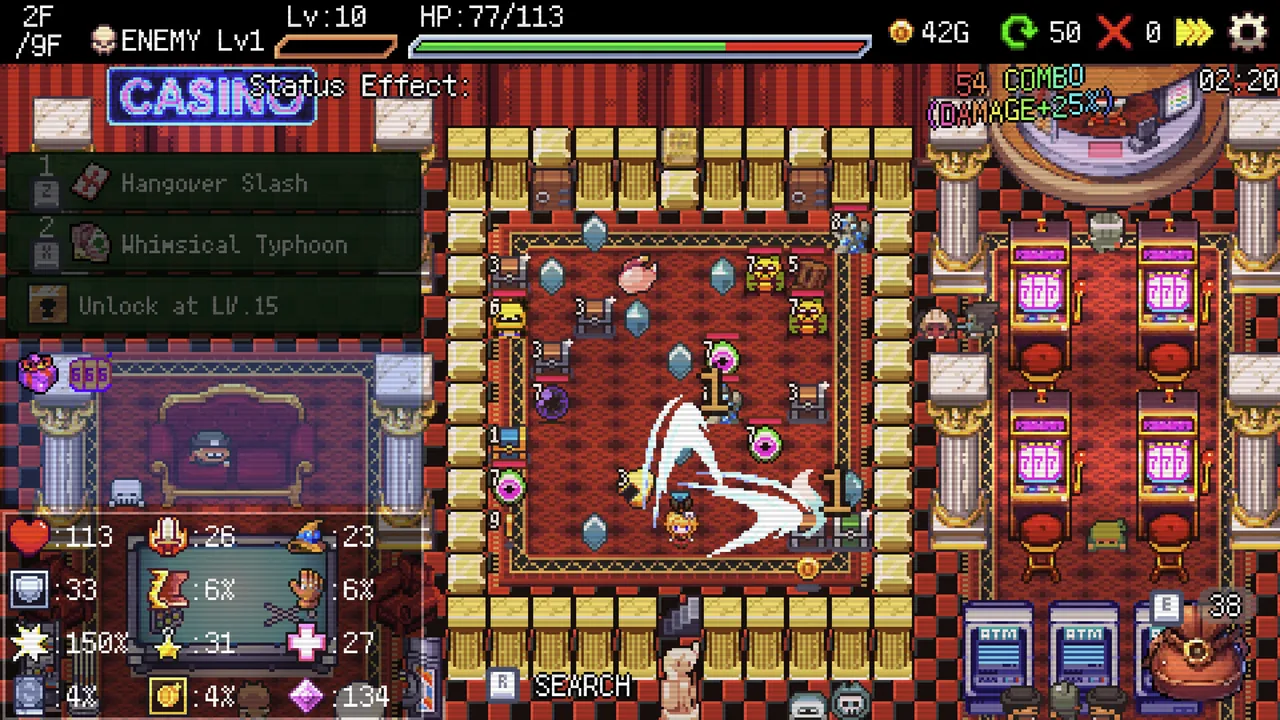
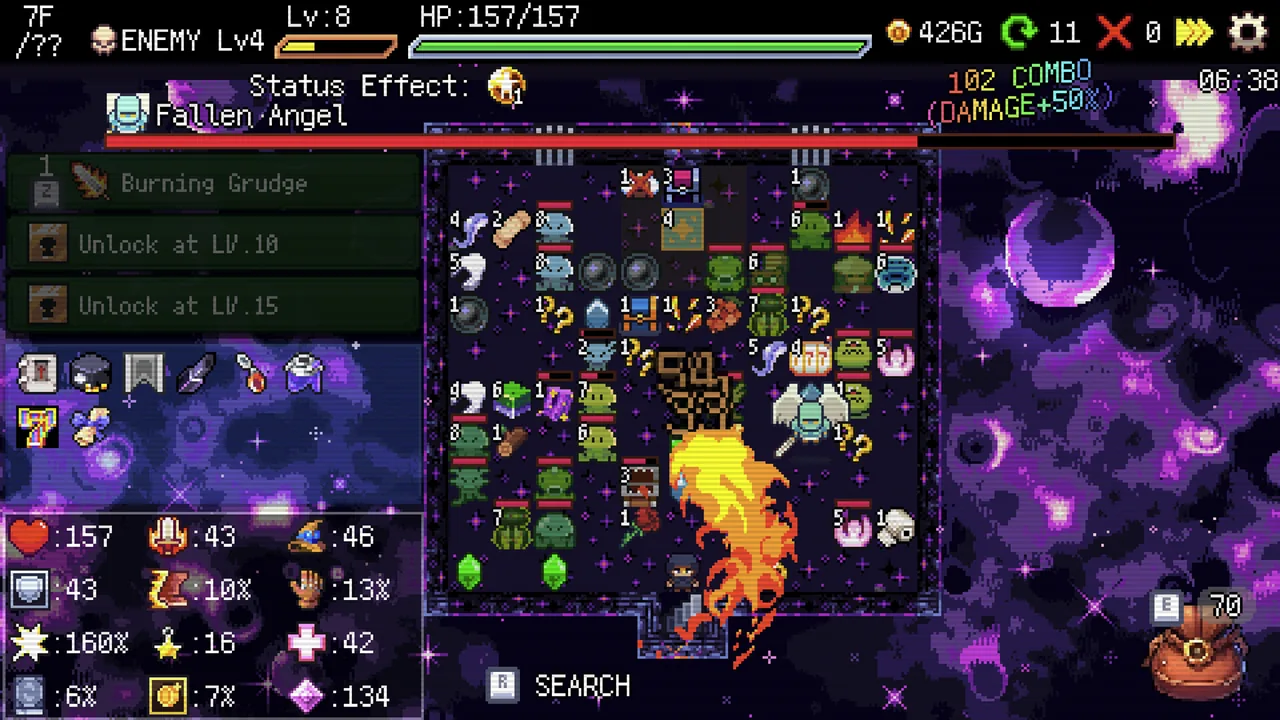
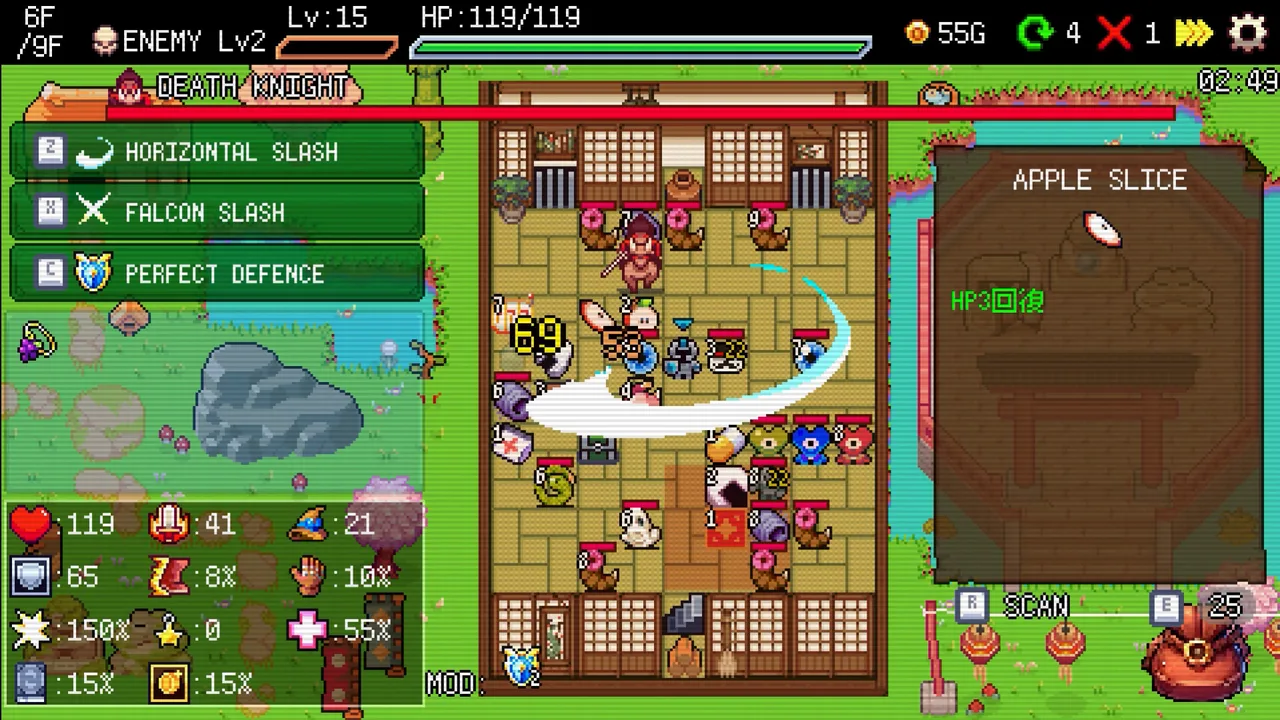
Every floor in Slot & Dungeons starts by drawing a hand of symbols from your current slot pool, and those symbols become the floor itself: enemies appear on tiles as literal draws from the reel, items and relics sit waiting to be picked up, and spell symbols trigger effects the moment they land. Stepping onto a new floor, or triggering certain effects mid-run, refreshes that draw, so the dungeon is never fixed in the way a hand-authored roguelike layout would be — it's generated live by the same randomiser that would normally just be paying out coins.
That structural choice is what separates the game from its closest relatives. Luck Be a Landlord and Balatro both ask you to sit in front of the machine and optimise the machine; Slot & Dungeons asks you to walk the results of that machine around a room and survive them. Combat is straightforward tile-based positioning rather than a deep tactics system, but it doesn't need to be deep — its job is to give the symbol economy somewhere physical to land, and it does that cleanly. Watching a bad draw materialise as three enemies converging on your position, rather than three unlucky numbers scrolling past on a screen, gives the RNG a stake it doesn't usually get in this genre.
Four characters, one shared set of problems
The roster at 1.0 stands at four: Warrior and Mage were joined during Early Access by Gambler, and the full release adds The Sinner, built around leaning into status effects rather than avoiding them. Each draws from its own symbol pool and plays with a different rhythm — the Warrior's durability makes early mistakes forgiving in a way the more fragile Mage doesn't allow, which is exactly the kind of asymmetry a game built on unpredictable draws needs to stay interesting run to run.
Where the design gets more contested is in how much any single run actually asks you to decide. A recurring thread in player feedback, especially from the game's sizeable Japanese-language audience, is that build variety narrows once difficulty climbs: clearing the higher difficulty tiers tends to require strong relics locked in during the first floor or two, which nudges players toward re-rolling those opening floors for a good draw rather than adapting mid-run to whatever they're given. That's a real tension for a game whose whole pitch is turning randomness into strategy — when the strategy that actually works is "get a good roll early, then execute," the mid-run decision-making the genre is supposed to be about gets thinner than the item count suggests. Reviewers have also pointed out that the shared item pool includes a lot of symbols that don't meaningfully suit every character's build, which means the effective pool feels smaller than 150-plus items implies once you're playing a specific class.
Endless Mode and the long game
The headline addition at 1.0 is Endless Mode, which lets a cleared run keep going instead of ending at a fixed final floor, alongside a run-history viewer and permanent upgrade presets that carry meta-progression between attempts. On paper that's exactly the kind of long-tail structure a slot-roguelike needs — the developer's own count of 150-plus items, 130-plus spells, 240-plus relics and 200-plus enemies is a genuinely large pool to keep drawing from, and one player logged a playtime figure in the hundreds of hours, which says something real about how well the loop holds up for the audience it clicks with.
The mode's growing pains are just as visible, though. Multiple players describe Endless runs stretching into multi-hour sessions once a build starts snowballing, which sits oddly next to a genre where most competitors are built around tight fifteen-to-thirty-minute runs you can restart on a whim. More seriously, at least one post-1.0 report describes Endless Mode locking out keyboard and gamepad movement entirely on two separate characters, with no identified trigger — the kind of stability problem you'd expect a game to shed on the way out of Early Access rather than pick up going in.
Is the slot machine actually gambling?
It's worth addressing directly, because the framing invites the question: Slot & Dungeons isn't a gambling game in any meaningful sense. There's no real-money wagering, no premium currency to convert into spins, no loot boxes and no way to spend beyond the flat purchase price. Steam lists no content descriptors for gambling themes, and the store page's own monetisation footprint is about as clean as this genre gets — you buy the game once and every symbol, spell and relic in it is earned by playing. The slot reel here is functionally the same randomiser that drives loot tables and procedural generation in any other roguelike; dressing it as a spinning wheel with cherries and bells is an aesthetic choice inherited from Luck Be a Landlord's lineage, not a sign the game wants your wallet open. The fairer design critique isn't gambling ethics — it's the more ordinary roguelike complaint that heavy variance and a narrow effective build pool can make a bad opening draw feel like it decided the run before you got to make a real choice.
Value
At NZ$9.97 during its launch discount — NZ$14.25 once that expires — Slot & Dungeons undercuts most of its direct competitors while offering a comparable or larger content pool, four distinct characters and a meta-progression layer that Luck Be a Landlord in particular never really built out. For a single flat payment with nothing else to buy, that's a solid deal on paper, and the lack of any secondary monetisation means the price you see is the whole transaction.
Final verdict
Slot & Dungeons earns its place in a crowded niche by actually doing something with the slot machine beyond staring at it — turning reel symbols into a dungeon you walk through and fight is a smart, distinctive idea, and the character roster and sheer content volume back it up at a fair price. It doesn't climb higher than a 7.0 because the difficulty curve currently rewards re-rolling a good opening draw more than it rewards adapting to a bad one, the effective build variety is thinner than the item count suggests, and a game barely a week into its 1.0 label is still shipping reports of an Endless Mode bug that stops players from moving at all. Genre fans who already love this design space should find plenty to like here; anyone looking for a first slot-roguelike with fewer variance headaches is better served trying the free demo before committing.
Players who'd rather have that same tension between randomness and strategy stretched across a persistent world that keeps progressing while they're logged off might also want to look at Wanderer.
Pros and cons
Pros
- Turning slot symbols into physical enemies, items and spells placed on a walkable dungeon floor is a genuinely fresh spin on a crowded slot-roguelike niche
- Four playable characters with distinct symbol pools — Warrior, Mage, Gambler and the newly added Sinner — give runs meaningfully different shapes rather than just reskinned stats
- A steep content pool for the price: over 150 items, 130 spells, 240 relics and 200 enemies according to the developer's own count, backed by 82 Steam achievements
- One-time purchase with no in-app purchases, ads or loot boxes despite the casino dressing — the reels are a randomiser, not a wagering system
- Endless Mode, a run-history viewer and permanent upgrade presets added at 1.0 give completed runs somewhere to go instead of just resetting to a fresh seed
Cons
- Player feedback consistently flags that clearing higher difficulty tiers all but requires strong relics from the first floor or two, which pushes toward re-rolling early floors rather than adapting to a bad draw
- Some reviewers describe the pool of generic items as too large relative to how many of them actually suit a given character's build, diluting the strategic weight of any single draw
- A post-1.0 bug has locked out movement and skill inputs in Endless Mode for at least one player, on two different characters, with no known trigger or workaround yet
- Tutorial and menu translations read as unpolished in spots, adding friction right when new players are still learning what the slot symbols mean
- Endless Mode runs can stretch into hours once a build snowballs, which sits awkwardly next to a genre most players expect to deliver in tighter, more replayable bursts
Screenshots
-
Slot & DungeonsImage: MUC GAMES via Steam -
Slot & DungeonsImage: MUC GAMES via Steam -
Slot & DungeonsImage: MUC GAMES via Steam -
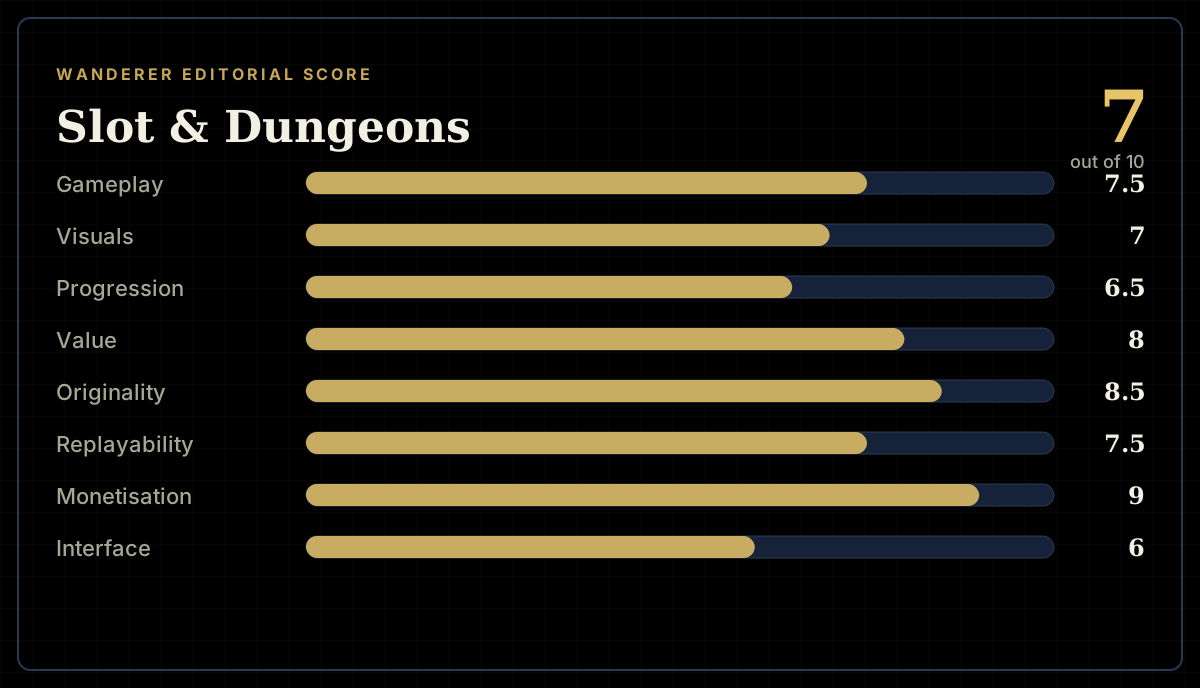
How the review scores each part of the gameWanderer Editorial -
The short versionWanderer Editorial