Game review
Pixel Dungeon
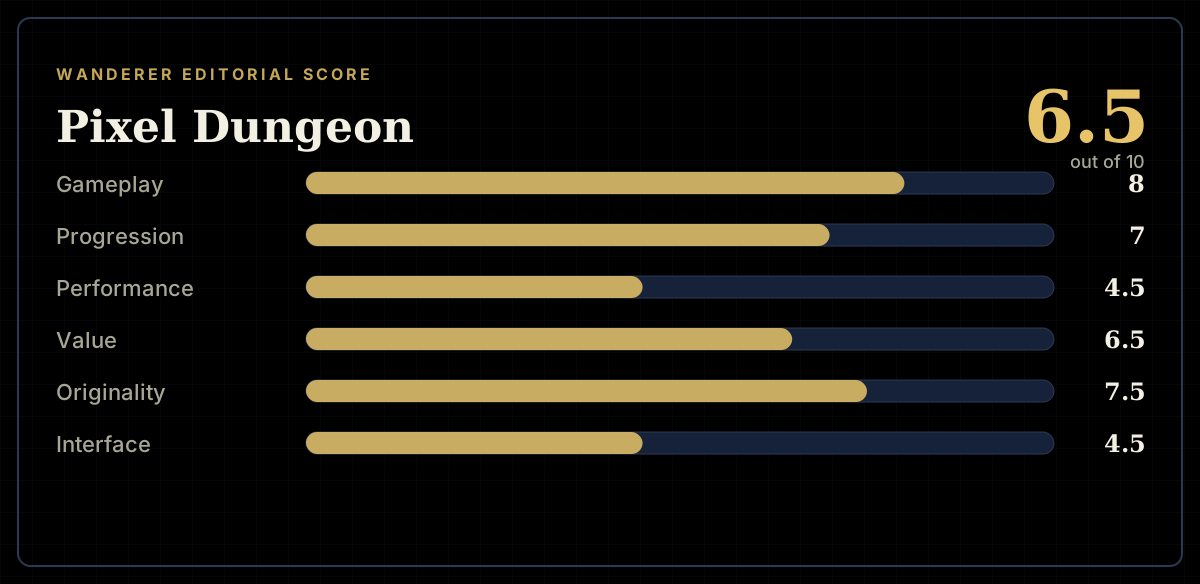
6.5 / 10
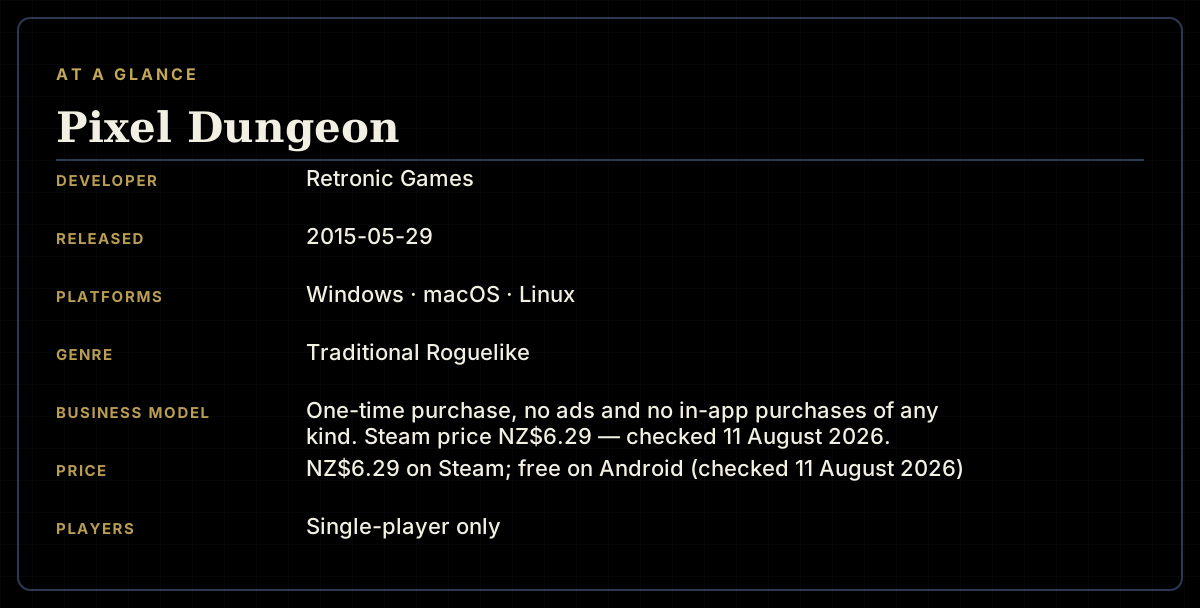
- Developer
- Retronic Games
- Publisher
- Retronic Games
- Released
- 29 May 2015
- Platforms
- Windows, macOS, Linux
- Genre
- Traditional Roguelike
- Monetisation
- One-time purchase, no ads and no in-app purchases of any kind. Steam price NZ$6.29 — checked 11 August 2026.
- Players
- Single-player only
The short version
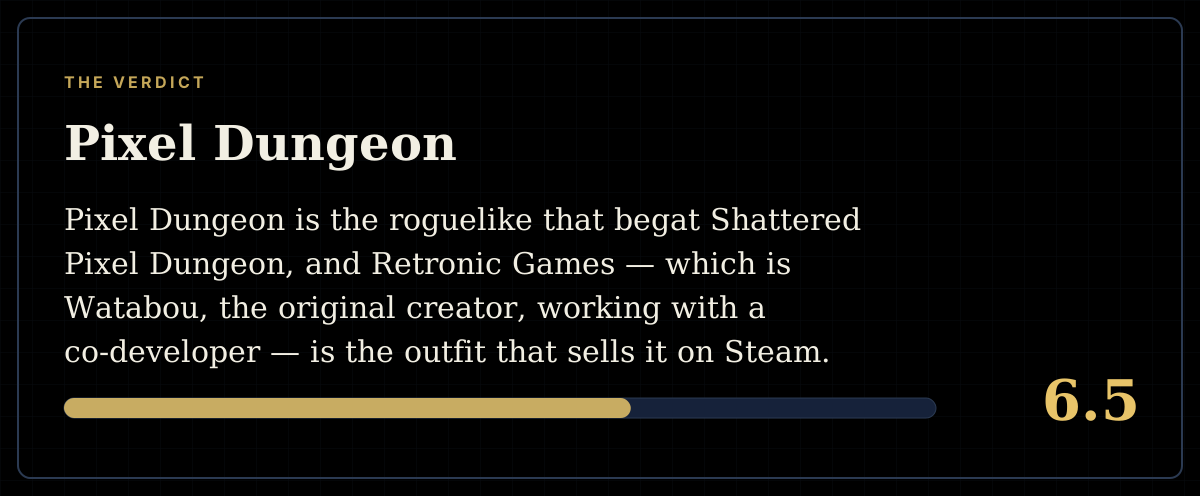
Pixel Dungeon is the roguelike that begat Shattered Pixel Dungeon, and Retronic Games — which is Watabou, the original creator, working with a co-developer — is the outfit that sells it on Steam. Underneath the packaging is still a tight, honest permadeath dungeon crawl: four classes, no busywork, death that's almost always your own fault. But the Steam build is a 2015 mobile port that was never substantially revisited, and its most-repeated complaint — a mouse cursor that vanishes mid-run on Windows — has been sitting in reviews for the better part of a decade with no fix.
If you already know you want the fork, this review changes nothing. If you're choosing between the two, that choice is close to made for you: Shattered kept building for twelve years; this one stopped soon after Steam launch and its own creator will tell you that was deliberate.
Biggest strengths
- A clean, legible permadeath loop — four classes, no padding, death that's almost always traceable to a choice you made
- Unidentified items, curses and enemy patterns reward attention rather than punishing blind luck, the same design honesty its more famous fork inherited
- One-time purchase with no ads, no in-app purchases and no ongoing account, on a genre where that's increasingly rare on mobile
Biggest weaknesses
- A mouse cursor that disappears mid-session on Windows is the single most-repeated complaint in the Steam reviews, and player reports of it go back years with no fix shipped
- "Partial Controller Support" is generous — reviewers who tried a standard Xbox pad report it not binding correctly at all
- The Steam build is substantially the 2015 mobile port; several long-time players note it hasn't kept pace with balance and bug fixes the way the fork has
Who it's for: Roguelike historians who want the real starting point rather than the fork, and players who specifically want the smaller, simpler four-class game rather than Shattered's six-hero, talent-tree version of it.
Our recommendation: Play it free on Android first — it's the same game, with the cursor bug being a Windows-only issue. Buy the Steam copy only to support Watabou directly or to get it on a desktop with achievements attached, and go in knowing the port has rough edges the store page doesn't mention.
6.5 / 10
Before there was a fork, there was this. Pixel Dungeon shipped free on Android in 2012, built by a Russian developer working under the name Watabou, and it became one of the most-cloned roguelikes of its generation — Shattered Pixel Dungeon, which this library reviewed a week ago, is the most successful of dozens of forks it spawned. This is not that review. This is the original, sold on Steam since 2015 by Retronic Games — which is, notably, Watabou himself working with a co-developer, not some unrelated studio flipping an old asset.
That distinction matters, because the story this review has to tell isn't "an abandoned game got forked and improved." It's closer to "the creator built something he considered finished, said so, and has largely left the Steam version exactly where it landed eleven years ago."
The game underneath is still good
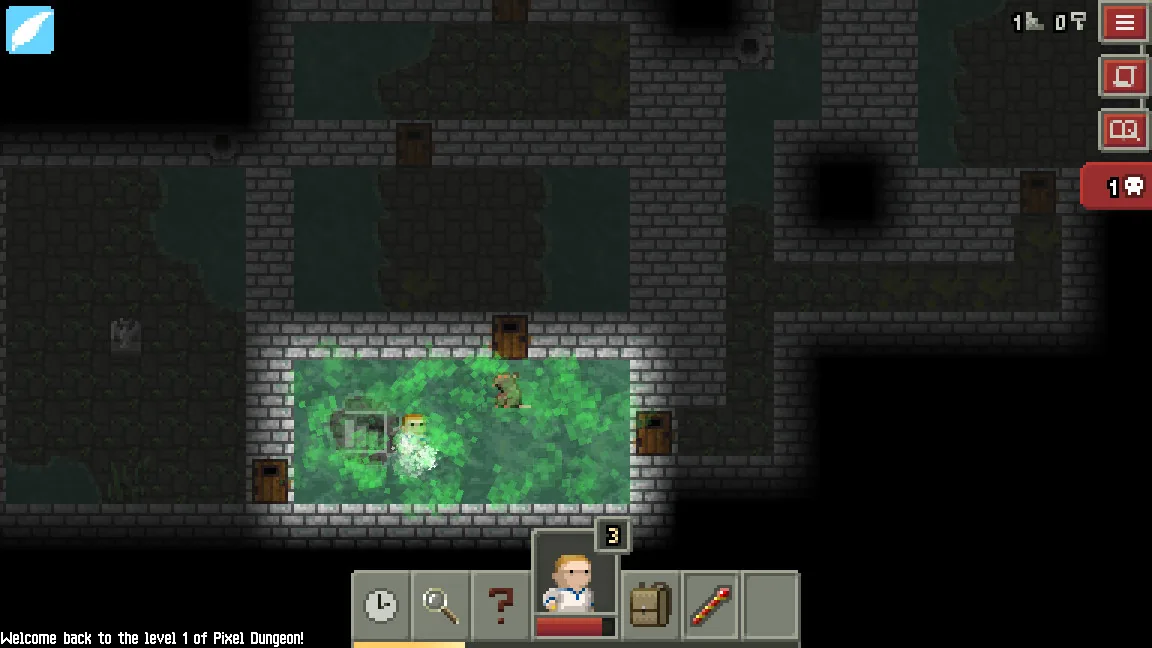
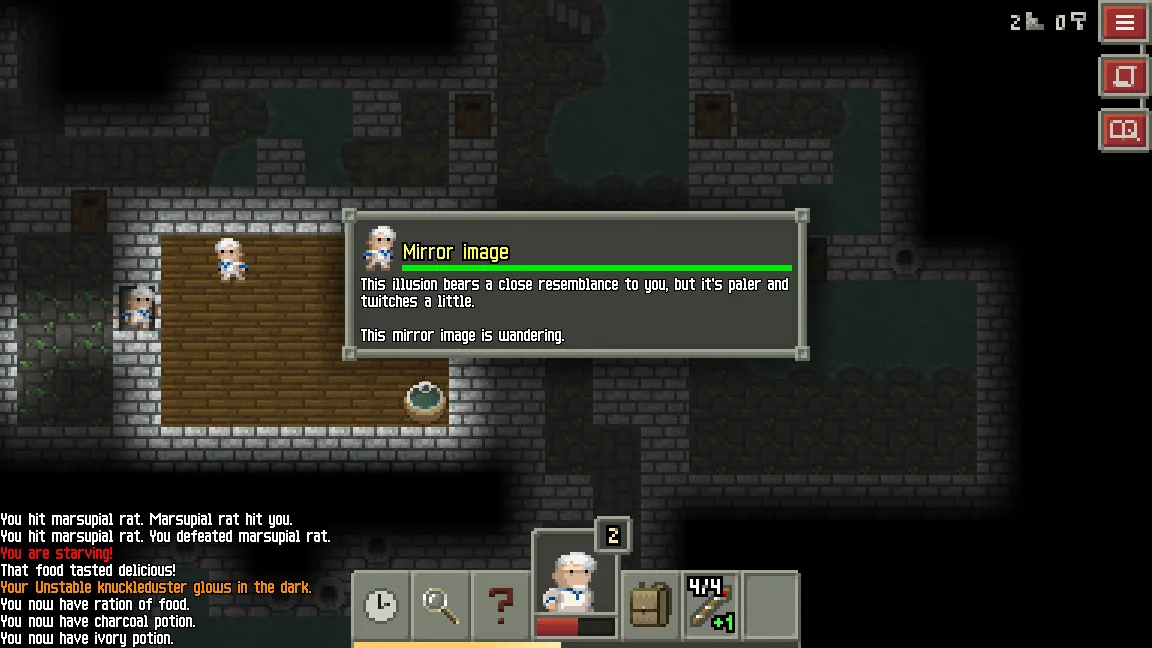
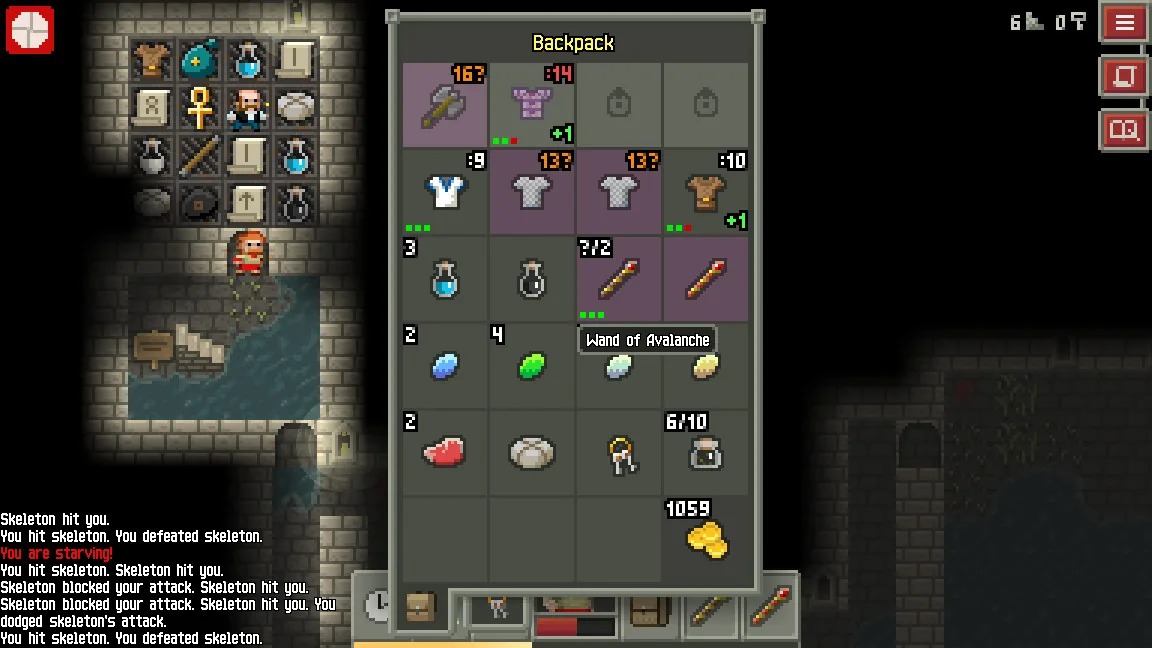
Strip away the packaging question and Pixel Dungeon is a legitimately well-made roguelike. Four classes — Warrior, Mage, Rogue, Huntress — each start with different gear and a different early game, but the dungeon itself doesn't care who you are: unidentified potions and scrolls can be tested or gambled on, cursed items announce themselves once you learn the tells, and enemies behave consistently enough that a death is almost always something you can trace back to a decision. That's the design principle Shattered Pixel Dungeon inherited wholesale and spent twelve years elaborating on, and it's worth saying plainly: the principle was already right here, in the smaller, four-class original.
There's no filler. No stamina system pretending to be a resource, no crafting loop bolted on to pad playtime, no currency you have to grind before the game gets interesting. You start at the top of the dungeon and go down, and the whole thing is legible almost immediately. Reviewers who came to it from bloated modern roguelites tend to describe it as a relief for exactly this reason.
The achievement data backs up how the difficulty actually lands. Across everyone who owns it on Steam, 77% have made their first kill and 38% have reached one of the early depth milestones, but that curve drops hard from there — only 9.2% have beaten the game's final boss, and just 5.5% have won a run at all. Winning with every class sits at 1.3%. That's a noticeably steeper falloff than Shattered Pixel Dungeon's, where 20.6% of owners have finished at least one run — not necessarily because the underlying difficulty differs, but because this build gives you less help getting there, which is really the whole story of this review.
A decade-old bug the store page doesn't mention
Read enough Steam reviews for this game and one complaint recurs more than any other: the mouse cursor disappears mid-session on Windows, usually a few floors in, and stays gone until you restart. Reports of it stretch back to shortly after the 2015 launch and continue into recent years — one review from 2023 describes exactly the same symptom as one from 2017, word for word different but the bug identical. In a game you navigate almost entirely by clicking tiles and inventory slots, losing the cursor isn't a cosmetic annoyance; several reviewers describe it as making runs functionally unplayable once it hits.
Controller support tells a similar story. Steam's own category tags list "Partial Controller Support," which turns out to be an accurate but generous description — players who've tried binding a standard Xbox pad report the bindings simply not registering, not a limited or awkward mapping but no mapping at all. A smaller number of reviews describe the game failing to launch outright on newer Windows installs, or the display locking into an unusable zoom level with no way back into the settings menu to fix it.
None of this is a hidden pattern you'd need to dig for. It's the visible shape of the negative review column, sitting in plain view on the store page these bugs describe.
Why the fork exists, in one sentence
Wikipedia and the developer's own account agree on the timeline: Watabou brought the game to iOS in mid-2015, not long after this Steam release, and by his own account considered it complete shortly afterward. That's a legitimate stance for a creator to take — plenty of good games are finished rather than endlessly serviced — but it means the Steam build has spent most of the last decade exactly where it was left, cursor bug and all, while the fork that shares its bones added six heroes, subclasses, crafting and an annual public roadmap in the same span.
One detail worth having straight, because it's easy to get backwards: Watabou isn't a bystander to that fork's success. He receives a share of Shattered Pixel Dungeon's revenue as the original creator, which makes the two projects less a rivalry than a family arrangement — one branch maintained, one left as a period piece, both ultimately crediting the same person.
Where the price actually sits
NZ$6.29 for a game that's free on Android is the number every review has to reckon with, and the honest framing is the one several Steam reviewers land on themselves: you're not paying for content the free version lacks, you're paying for Steam Achievements, Trading Cards, a desktop build, and — mostly — a direct way to put money toward the person who made the thing you already love on your phone. Framed as a tip with a store page attached, it's a reasonable ask. Framed as "the definitive PC version of Pixel Dungeon," the cursor bug alone makes that a hard claim to back.
6.5 out of 10. Rated 6.5 out of 10.
The roguelike itself earns most of that score — sharp, honest, difficult in ways that teach rather than punish, and clearly the ancestor of something that went on to be excellent. It loses ground almost entirely on the port: a Windows cursor bug that's been reported for the better part of a decade, controller support that doesn't function as advertised, and a build that hasn't meaningfully moved since 2015 while its own fork kept shipping. If you want this exact game, Android is the version to actually play. If you want the game this one grew into, you already know where to look — we reviewed it last week, and gave it two points more.
Pros and cons
Pros
- A clean, legible permadeath loop — four classes, no padding, death that's almost always traceable to a choice you made
- Unidentified items, curses and enemy patterns reward attention rather than punishing blind luck, the same design honesty its more famous fork inherited
- One-time purchase with no ads, no in-app purchases and no ongoing account, on a genre where that's increasingly rare on mobile
- Steam Achievements and Trading Cards give the desktop version a completion hook the free Android build doesn't have
- Free on Android with no missing content, so there's a zero-risk way to find out if the genre is for you at all
Cons
- A mouse cursor that disappears mid-session on Windows is the single most-repeated complaint in the Steam reviews, and player reports of it go back years with no fix shipped
- "Partial Controller Support" is generous — reviewers who tried a standard Xbox pad report it not binding correctly at all
- The Steam build is substantially the 2015 mobile port; several long-time players note it hasn't kept pace with balance and bug fixes the way the fork has
- Only four classes and no subclasses, talent trees or crafting — the systems Shattered Pixel Dungeon added later are the systems players now expect from this design
- A handful of reviews report the game failing to launch or crashing on newer Windows setups
Screenshots
-
Pixel DungeonImage: Retronic Games via Steam -
Pixel DungeonImage: Retronic Games via Steam -
Pixel DungeonImage: Retronic Games via Steam -
The essentials at a glanceWanderer Editorial -
How the review scores each part of the gameWanderer Editorial -
The short versionWanderer Editorial