Game review
Shattered Pixel Dungeon
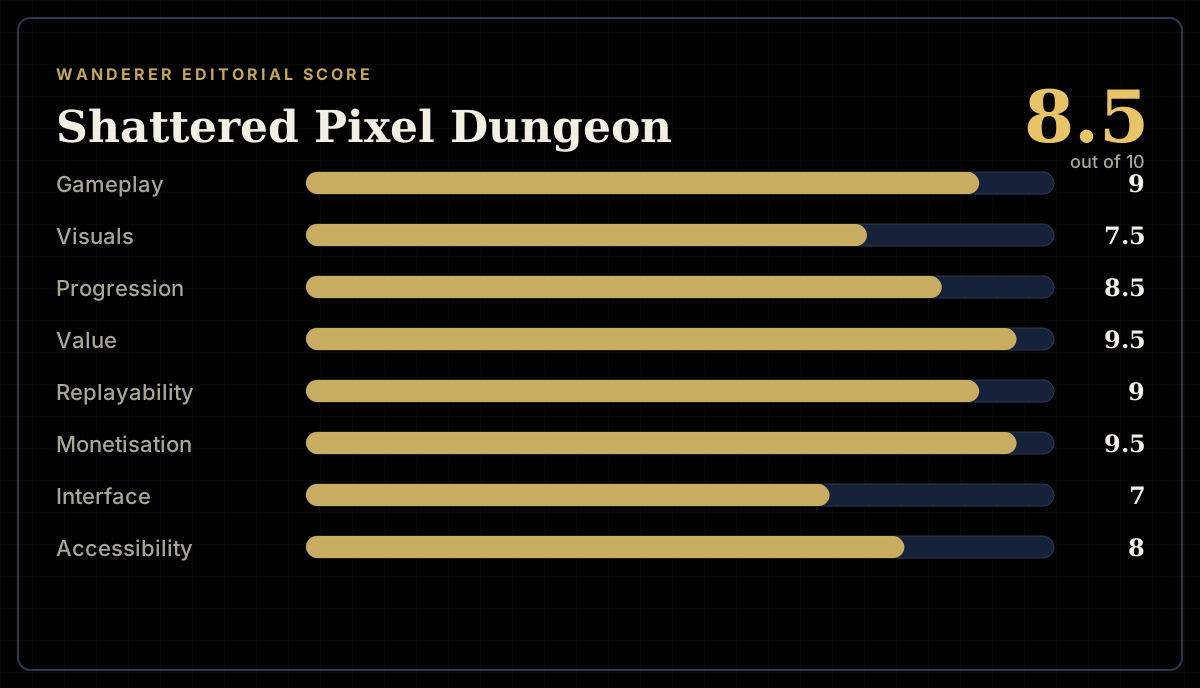
8.5 / 10
- Developer
- Shattered Pixel
- Publisher
- Shattered Pixel
- Released
- 23 March 2022
- Platforms
- Windows, macOS, Linux, Android, iOS
- Genre
- Traditional Roguelike
- Monetisation
- None. No ads, no in-app purchases, no premium currency, no accounts. The Android build is free and the full source is public under GPL-3.0; the desktop and iOS releases are paid, and the developer takes optional support through Patreon. Steam price NZ$14.75 — checked 4 August 2026.
- Players
- Single-player only
The short version
Watabou's Pixel Dungeon was a good mobile roguelike that stopped being updated. Evan Debenham forked it, and twelve years later his version has six heroes, subclasses, talent trees, a crafting system, stacking challenge modifiers and an annual public roadmap he grades himself against. The result is one of the most complete traditional roguelikes on any platform, and the least commercially aggressive game you will ever install on a phone. It's conservative by design — hunger clocks, permadeath, no mercy for careless exploring — and the controller support on desktop is genuinely poor. Neither stops it being essential.
Biggest strengths
- Twelve years of continuous development by one developer, with a public roadmap posted every January and an honest accounting of how much of the last one actually shipped
- Six heroes with subclasses and talent trees turn what began as a simple mobile roguelike into a game with genuine build identity
- The difficulty is legible rather than cruel — one in five players has finished it, which for a permadeath roguelike is a remarkable completion rate
Biggest weaknesses
- Controller and Steam Deck support amounts to driving a mouse cursor with the analogue stick, and players have been saying so consistently since 2023
- Deliberately traditional in ways modern players resent — the hunger clock punishes thorough exploration, and missing a secret room can quietly cost you the run
- Individual enemies are wildly swingy in how much they can wreck a run, with the Evil Eye the perennial example
Who it's for: Anyone who wants a real roguelike on a phone, players who bounced off the genre's keyboard-command dinosaurs, and anybody sick of mobile RPGs that treat them as a revenue event. Not for players who want modern quality-of-life concessions or a power fantasy.
Our recommendation: Install the free Android build first — it is the complete game, not a demo, and if you don't get on with the hunger clock you've lost nothing. Buy it on Steam if you want to play at a desk, want the achievements, or simply want to pay a solo developer who has shipped updates every year since 2014. If you're playing on Steam Deck or a controller, be aware the input scheme is the weakest part of the package.
8.5 / 10
Most fan remakes are worse than the thing they copy, and almost all of them stop. Shattered Pixel Dungeon started in 2014 as one person's fork of Watabou's Pixel Dungeon, and twelve years later it has six playable heroes, subclass trees, a crafting system, an alchemy pot, stacked challenge modifiers and a content-complete 4.0 update sitting in beta. The original hasn't been touched in years. The fork became the canonical version.
That's the first thing worth saying about it. The second is that it's free on Android, the source is on GitHub under GPL-3.0, and there are no ads, no in-app purchases, no premium currency and no account to make. In a genre that mobile storefronts have spent a decade turning into a slot machine, this is the game that just gives you the dungeon.
Why one in five players finished it
Here's the statistic that reframes this game. Across everyone who owns it on Steam, 20.6% have beaten the dungeon. For a permadeath roguelike, that is an extraordinary number — most games in this tradition are proud of single digits.
The rest of the curve explains how it gets there. The first boss falls for 58% of players, the second for 45%, the third for 33%, the fourth for 27%, and then the win. Every step sheds people gradually. There's no floor where the game suddenly stops being fair, which is exactly what separates a roguelike that teaches from one that merely punishes.
What produces that is a design where information is available if you look for it. Unidentified items can be tested, cursed gear announces itself once you understand the tells, enemy behaviours are consistent, and death is nearly always traceable to a decision. Compare it to the games this genre descends from, where losing to a mechanic nobody documented is a rite of passage. Shattered is difficult, but it isn't obscure.
The endgame is where it stops being generous, and correctly so. Beating it with every class sits at 3.5%. The deepest challenge tiers are under 2%. A pacifist ascent — reaching the surface without killing — has been managed by 0.7% of players. Ninety-eight achievements is an absurd number for a game this small, and the tail of them is genuinely brutal.
Six heroes, and the part that grew
The original Pixel Dungeon had four classes that mostly changed your starting gear. Shattered's have talent trees, subclasses chosen mid-run, and armour abilities that alter how you fight.
The Cleric arrived in February 2025 as the sixth. The Warrior was reworked four months later. Thrown weapons were overhauled into a 'set' system that August. That's the rhythm the whole project runs on: pick a system that has gone stale, rebuild it, ship it, move to the next one. Unlock rates show players actually following along — 80% have unlocked the Mage, 69% the Rogue, 63% the Huntress, 51% the Duelist.
Crafting is the other thing that separates it from its ancestors. The alchemy system turns the junk you accumulate into something worth carrying, which quietly solves the inventory problem that plagues traditional roguelikes, where half your bag is items you're saving for a situation that never comes.
The conservative streak
It is not a modernised roguelike, and some players hit that wall hard.
There is a hunger clock, and it punishes thorough exploration — the most common structural complaint in the negative reviews, phrased with real irritation by people who wanted to search every room and found the game charging them for it. Missing a secret room can leave you behind the power curve with no way to catch up. Some enemies are dramatically swingier than their floor suggests, and if you spend any time in this game's community you will eventually hear about the Evil Eye.
Whether that's a flaw or the genre working as intended depends entirely on what you came for. The hunger clock exists to stop you grinding a floor forever; the secret rooms exist to reward attention. Those are coherent decisions, not oversights. But "coherent" and "fun for you specifically" are different claims, and a player arriving from a modern roguelite where every run makes you permanently stronger is going to find this one austere.
The controller problem
The one unambiguous fault, and it's been reported consistently since 2023: controller support is a cursor.
Steam lists full controller support. What that means is that your analogue stick drives a mouse pointer around a phone interface. On a Steam Deck — a device this game should be perfect for, given it's small, turn-based, and runs on anything — it's the reason several players bounced off entirely. Turn-based games are the easiest genre in the world to make work on a d-pad, which makes the gap more conspicuous rather than less.
The desktop interface generally still shows its origins. It's been widened and improved and it works, but a few long-time mobile players argue the phone version is simply better, and having read their reasoning, they aren't wrong about the ergonomics.
A development record worth studying
Every January since 2019, the developer has published a post laying out the plan for the year. Every January after that, he's opened by scoring the previous one. The 2026 post reckons 2025 delivered about 67% of what was promised — four of six items — and says so plainly before getting to the new plan.
I can't think of many studios that do this. Roadmaps normally appear when a game is in trouble and quietly vanish when they're missed.
The v4.0 update currently in beta is the same story in miniature: it was meant to be one new quest, grew into a dwarven city quest with a purpose-built stealth AI, four new weapon enchantments, two new curses, a challenge overhaul and thirty-plus bug fixes, and the beta slipped from July to August — announced, with reasons, before the deadline passed rather than after.
Twelve years of that is why the review score has stayed at 95% across four years on Steam, and why the negative reviews are spread evenly across 2022, 2023, 2024, 2025 and 2026 rather than clustered at a launch nobody remembers. This is a game people are still arriving at, still finishing, and occasionally still bouncing off — all at the same steady rate.
So why pay for it?
Several reviewers ask this directly, and it's a fair question with an honest answer: you don't have to. The Android build is the whole game, free, no strings, and you can compile it yourself if you'd rather. Nothing is held back. There's no "supporter edition" content, no cosmetic store, no energy timer waiting to be unlocked.
What buying it on Steam gets you is achievements, cloud saves, a desktop build and a bigger screen — and, mostly, the ability to hand about ten dollars to someone who has shipped free updates to a game for twelve years. That's not a value proposition so much as a tip jar with a store page attached, and the reviews are full of people saying exactly that.
8.5 out of 10. Rated 8.5 out of 10.
It loses points for the controller scheme and for an interface that has been adapted rather than rebuilt, and it's fair to say the presentation is workmanlike next to the genre's prettier modern entries. Everything else here is close to exemplary — the difficulty curve, the class depth, the absence of a single manipulative mechanic, and a development record that most commercial studios should be embarrassed by.
If you play on a phone and have ever been annoyed by a mobile RPG that wanted your credit card before it wanted your attention, install this tonight. And if you like the idea of a game whose progress belongs to you rather than to a billing cycle — that's the same principle Wanderer is built on, minus the permadeath.
Pros and cons
Pros
- Twelve years of continuous development by one developer, with a public roadmap posted every January and an honest accounting of how much of the last one actually shipped
- Six heroes with subclasses and talent trees turn what began as a simple mobile roguelike into a game with genuine build identity
- The difficulty is legible rather than cruel — one in five players has finished it, which for a permadeath roguelike is a remarkable completion rate
- Zero monetisation in any form, free on Android, and the entire source is public under GPL-3.0
- Deep endgame for the people who want it, with challenge modifiers, all-class victories and 98 achievements running down to fractions of a percent
- Tiny, fast and native on Linux, and Steam's own accessibility flags list adjustable text size, a mouse-only option and no timed input requirements
Cons
- Controller and Steam Deck support amounts to driving a mouse cursor with the analogue stick, and players have been saying so consistently since 2023
- Deliberately traditional in ways modern players resent — the hunger clock punishes thorough exploration, and missing a secret room can quietly cost you the run
- Individual enemies are wildly swingy in how much they can wreck a run, with the Evil Eye the perennial example
- The desktop version's interface still shows its phone origins, and some long-time mobile players consider the PC build a sideways move
- Presentation is functional pixel art rather than beautiful, despite steady art passes over the years
Screenshots
-
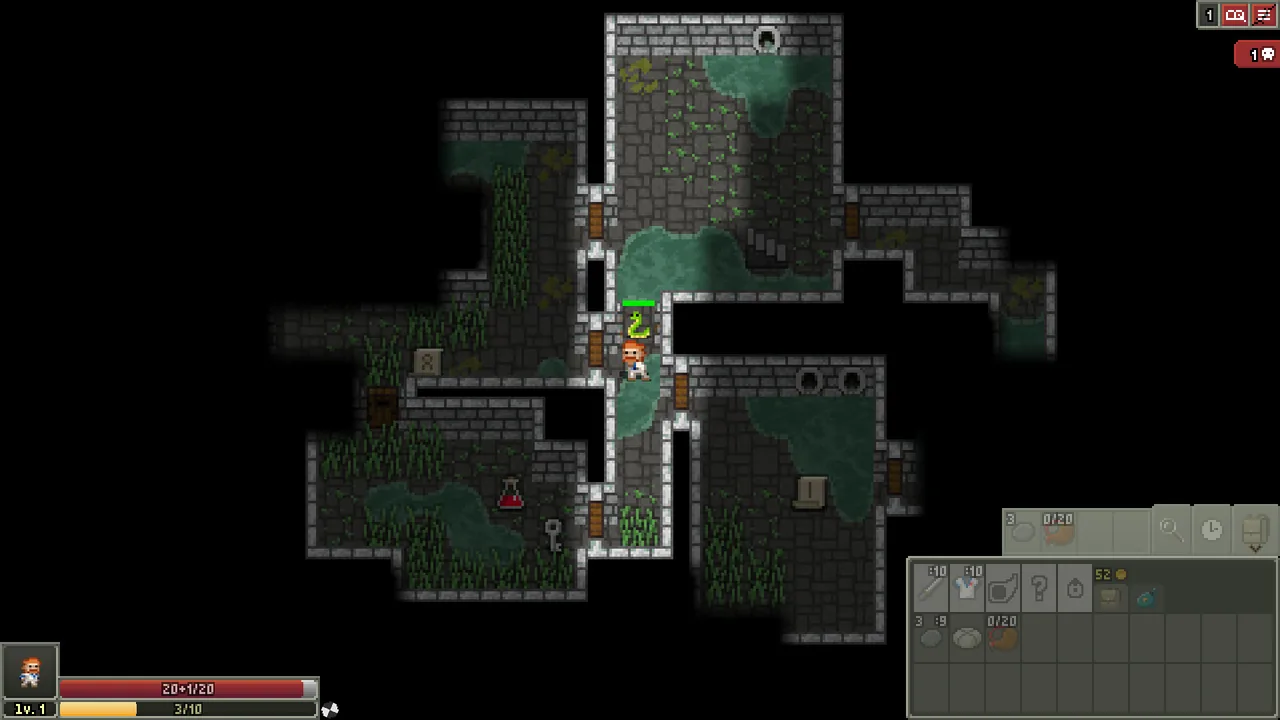
Shattered Pixel DungeonImage: Shattered Pixel via Steam -
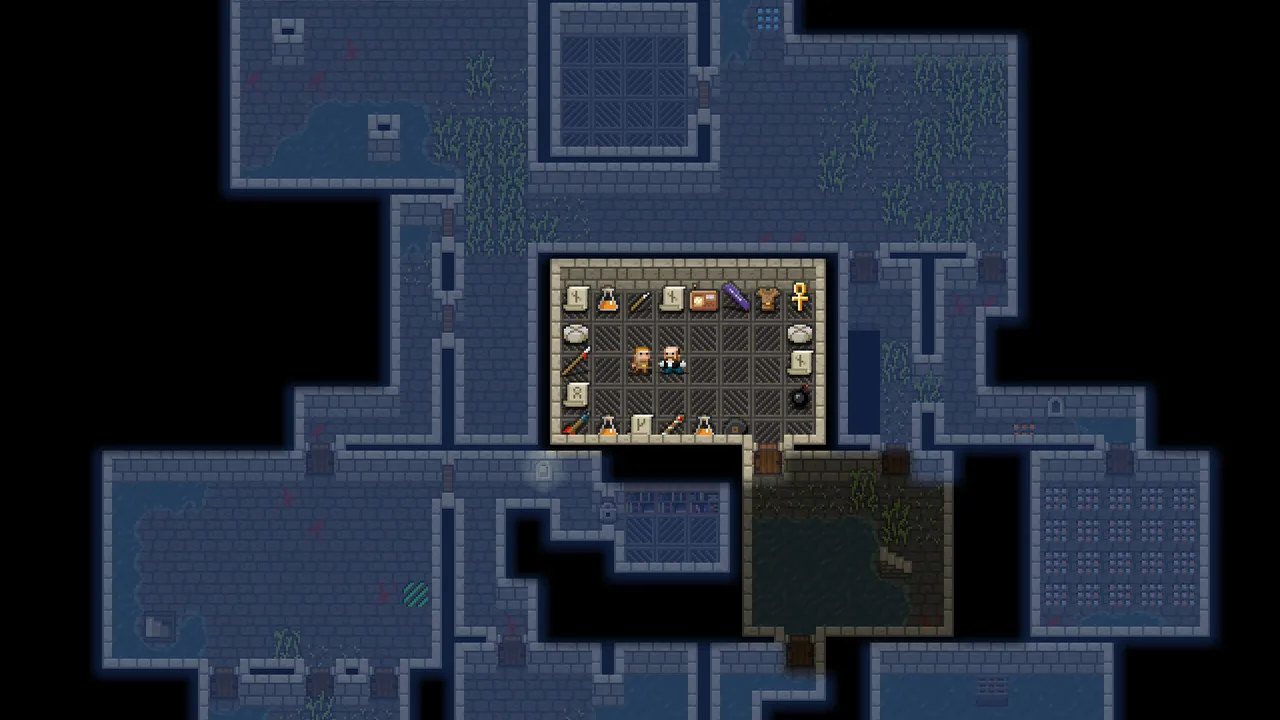
Shattered Pixel DungeonImage: Shattered Pixel via Steam -
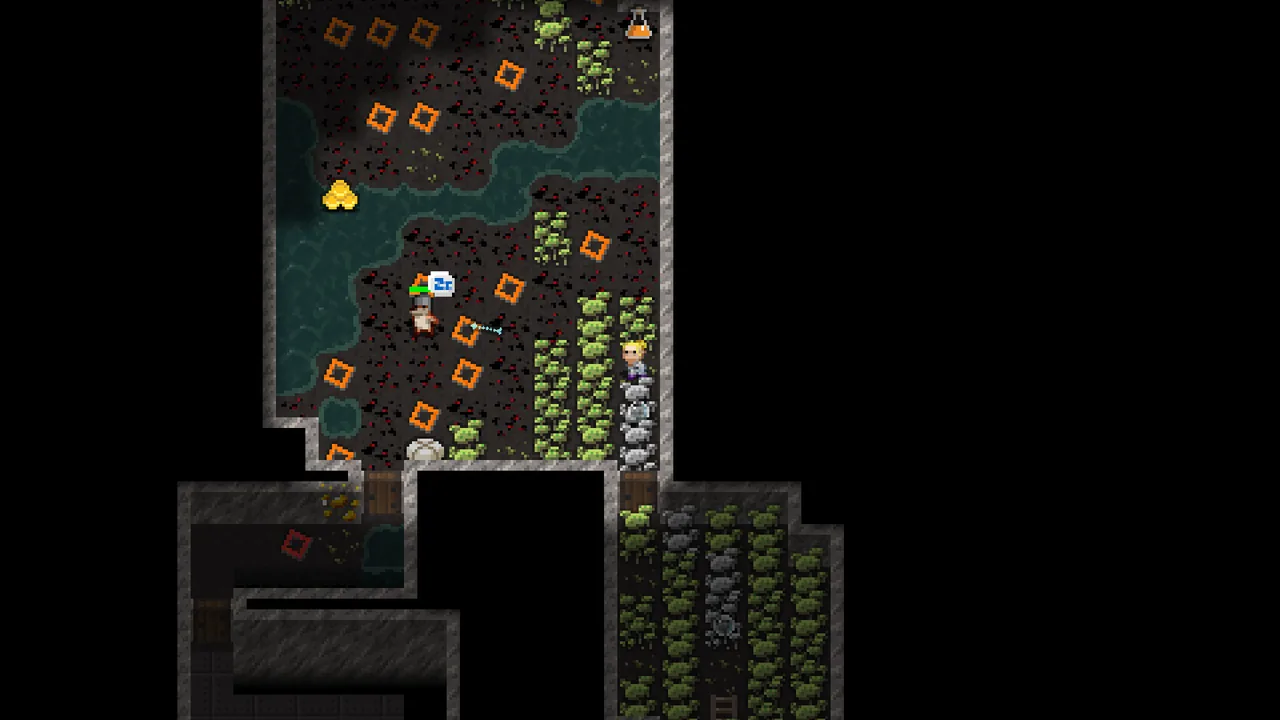
Shattered Pixel DungeonImage: Shattered Pixel via Steam -
How the review scores each part of the gameWanderer Editorial -
The short versionWanderer Editorial