
Game review
UnderMine
6 / 10
- Developer
- Thorium
- Publisher
- Thorium
- Released
- 6 August 2020
- Platforms
- Windows, macOS
- Genre
- Roguelike Dungeon Crawler
- Monetisation
- Paid, one-time purchase. No in-app purchases.
- Players
- Single-player only.
The short version
UnderMine sends a hapless peasant into a Zelda-inspired dungeon to investigate a mining disaster, and its Very Positive rating across more than 4,300 reviews reflects genuine appreciation for its charming pixel art and polished presentation. What holds this review back is an extremely consistent complaint, repeated across years of reviews, that individual runs feel too similar to one another because the items and relics collected rarely change how combat actually plays, compounded by a meta-progression system several reviewers describe as grindy padding rather than meaningful depth. This review found the developer has since moved primary development attention to a sequel, currently in Early Access since July 2025.
Biggest strengths
- Charming, well-executed pixel art and a distinctive Zelda-inspired dungeon-crawling structure that reviewers consistently credit as visually appealing and approachable.
- Solid, responsive core combat mechanics that hold up well across an initial run or two before the repetition complaints set in.
- A relatively gentle, less punishing pace than many genre peers, appealing to players who want a more relaxed roguelike experience.
Biggest weaknesses
- An extremely consistent complaint describes runs as feeling largely interchangeable, with collected items and relics rarely meaningfully altering how combat or movement actually plays.
- A grindy meta-progression system built around gradual permanent upgrades is repeatedly described as padding intended to stretch playtime rather than adding genuine strategic depth.
- Several reviewers describe specific difficulty mechanics — environmental hazards, gold-loot goblins, boss health pools — as feeling artificially unfair rather than skill-testing.
Who it's for: Roguelike fans who prioritise presentation and a relaxed, exploratory pace over build variety and run-to-run distinctiveness; players who've enjoyed genre leaders like Binding of Isaac or Enter the Gungeon specifically for build diversity should temper expectations.
Our recommendation: A pleasant, well-made roguelike worth trying on sale; go in aware that runs feel more similar to each other than most genre-leading peers, and that grinding is part of the intended structure.
6 / 10
A charming, well-presented roguelike foundation
UnderMine's premise is approachable and immediately legible: a lowly peasant is sent into the mines to investigate a series of earthquakes, working through procedurally arranged dungeon floors armed with a melee weapon, a ranged item and collected relics. Reviewers consistently credit the presentation as a genuine strength. "Great graphics, but a fundamentally flawed game," reads a 2021 review — a framing repeated in some form across much of this review base, where the visual and structural craft draws real, if often qualified, praise even from reviewers who ultimately can't recommend the full package. The Zelda-inspired dungeon structure and relatively gentle difficulty curve, at least early on, give the game a distinct identity within a crowded genre, and several reviewers specifically credit its calmer pace as a refreshing change from more punishing roguelike peers.
An extremely consistent complaint about run-to-run sameness
What dominates the critical portion of this review base is a specific, repeated complaint about item impact. "I don't feel like each run is different, or that player skill is particularly rewarded? I can just run and spam jumps and ranged attacks in most rooms and not really suffer for it. The relics don't really suggest differ[ent playstyles]," reads a 2020 review. A 2021 review makes the same point with a direct genre comparison: "Two Enter the Gungeon runs can feel vastly different by the second floor. [UnderMine's runs don't offer that same distinctiveness]." A 2023 review states the complaint most plainly: "Once you've seen a floor, you've seen virtua[lly everything the game has to offer mechanically]." Checking a broad sample of negative reviews spanning the game's full release history, this exact complaint — not that the core combat is poorly built, but that the roguelike genre's central promise of meaningfully varied runs isn't delivered — recurs with striking consistency, suggesting a genuine, stable characteristic of the item and relic design rather than an early impression that improves with more playtime.
A grindy meta-progression system reviewers call padding
A closely related complaint concerns the game's permanent upgrade structure. "The grind feels real and the runs don't feel worth it... there is no progression even after playing a full dungeon after an hour," reads a 2021 review. A 2022 review frames the broader pattern directly: "Suffers from the same cheapo, artificially induced difficulty and meta-progression mechanics a lot of other roguelites have been using these days. It's clearly there to stretch playtime and force you to rely on meta upgrades" rather than genuine in-run mastery. This is a legitimate design-philosophy criticism distinct from the item-variety complaint above: even players willing to accept run-to-run similarity describe the pace of meaningful permanent progress as slow enough to feel like an artificial time investment rather than a satisfying long-term arc.
A related complaint concerns how the transition out of Early Access was received specifically. "I thought it was way better in early access. But after the final release the grind is just too bothersome. No more min maxing what made this game so good, just grind, grind, grind," reads a 2021 review, describing a design shift between the Early Access build and the full 1.0 release that this reviewer felt worsened rather than improved the experience. This is a useful, specific data point: rather than the grind complaint being present from the beginning and simply persisting, at least some players who followed the game through Early Access describe the balance actively shifting toward more grind at the specific point of full release, suggesting a deliberate design decision by the developer rather than an unaddressed launch-era rough edge.
Specific difficulty design choices reviewers call unfair
A further, more granular complaint concerns individual hazards and encounters. "Flashes of greatness that are dimmed by a stubborn and unfriendly design. It's as though the designers thought over all the ways it could be made worse," reads a 2021 review, citing a specific mining mechanic as an example. A 2021 review raises a similarly specific complaint about late-game bosses: "The bosses have so much health that fights can last upwards of 10 minutes. That wouldn't be horrible [if it weren't also repetitive]." These are concrete, specific design criticisms rather than vague difficulty complaints, and they compound the broader pattern reviewers describe: individual moments of frustration that feel less like intentional challenge and more like friction added for its own sake.
Weighing UnderMine against its genre peers fairly
It's worth noting that several reviewers frame their disappointment specifically in relative terms rather than treating UnderMine as an outright bad game. "There are many other roguelikes that are far better than UnderMine (Binding of Isaac, Synthetik, Nuclear Throne, Risk of Rain 2, Dead Cells...)," reads a 2021 review — a comparison repeated in some form across a meaningful share of this review base. That's a genuinely useful framing for a prospective buyer: UnderMine isn't broken or poorly made, but it operates in an unusually competitive genre where several other titles are widely regarded as executing the same core ideas — build variety, escalating challenge, meaningful permanent progression — more successfully.
Final verdict
UnderMine delivers a charming, well-presented roguelike experience that holds up reasonably well across its opening hours, and this review has no reservations recommending it to players specifically seeking a gentler, more relaxed entry into the genre. What keeps the score moderate is an extremely consistent, multi-year complaint about run-to-run sameness and a grindy meta-progression structure several reviewers describe as padding, compounded by specific difficulty choices that read as unfair rather than challenging. This is a reasonable pick on sale for genre newcomers; players already invested in Binding of Isaac, Enter the Gungeon or Dead Cells are likely to find UnderMine's central roguelike loop comparatively thin.
Pros and cons
Pros
- Charming, well-executed pixel art and a distinctive Zelda-inspired dungeon-crawling structure that reviewers consistently credit as visually appealing and approachable.
- Solid, responsive core combat mechanics that hold up well across an initial run or two before the repetition complaints set in.
- A relatively gentle, less punishing pace than many genre peers, appealing to players who want a more relaxed roguelike experience.
- Continued franchise investment, with a sequel in active Early Access development as recently as 2026, showing sustained developer commitment to the underlying design.
Cons
- An extremely consistent complaint describes runs as feeling largely interchangeable, with collected items and relics rarely meaningfully altering how combat or movement actually plays.
- A grindy meta-progression system built around gradual permanent upgrades is repeatedly described as padding intended to stretch playtime rather than adding genuine strategic depth.
- Several reviewers describe specific difficulty mechanics — environmental hazards, gold-loot goblins, boss health pools — as feeling artificially unfair rather than skill-testing.
- The game draws consistent, unfavourable comparisons to genre leaders like Binding of Isaac, Enter the Gungeon and Dead Cells, with reviewers frequently recommending those alternatives directly.
Screenshots
-

UnderMineImage: Thorium via Steam -

UnderMineImage: Thorium via Steam -

UnderMineImage: Thorium via Steam -
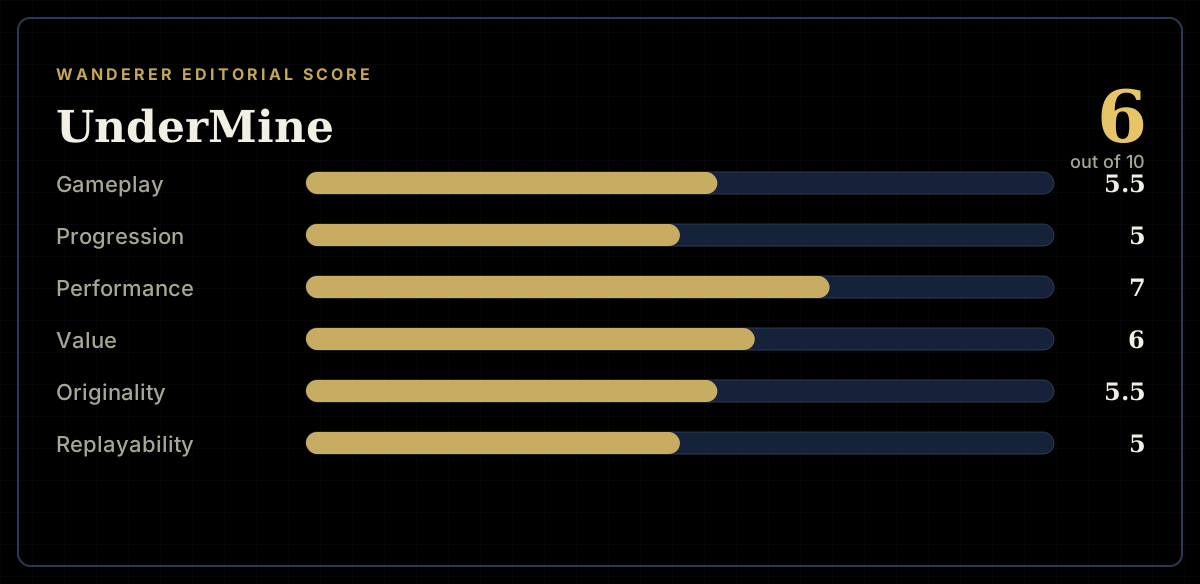
How the review scores each part of the gameWanderer Editorial -
The short versionWanderer Editorial