Game review
The Binding of Isaac: Rebirth
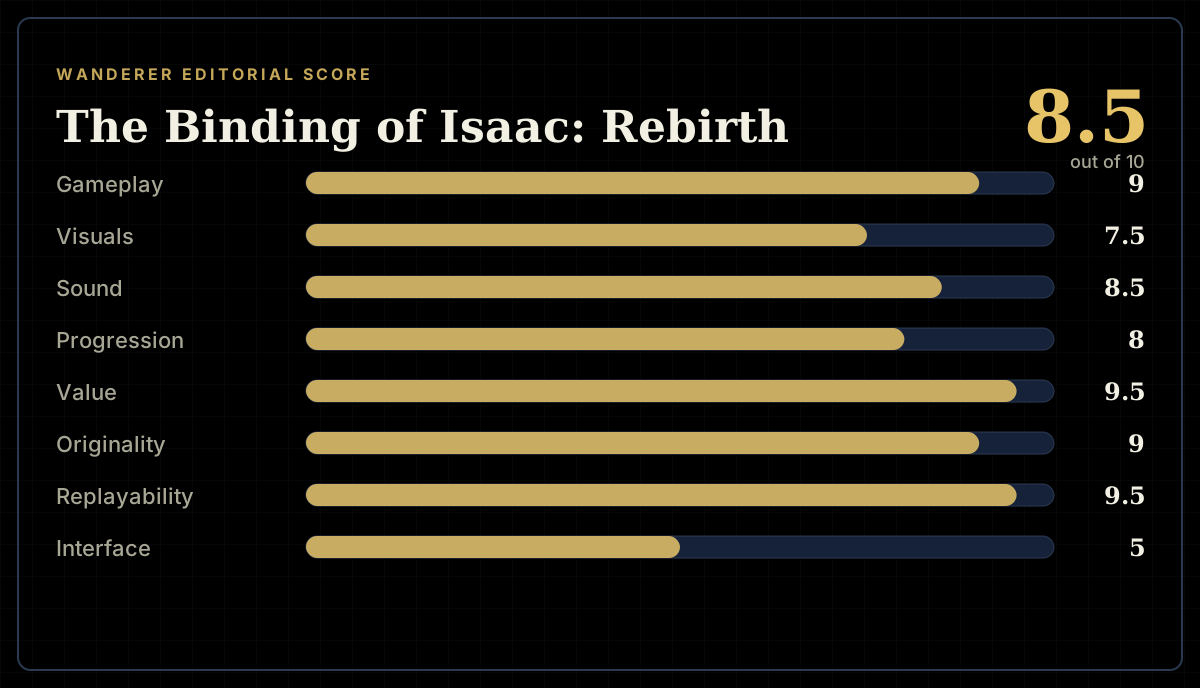
8.5 / 10
- Developer
- Nicalis, Inc.
- Publisher
- Nicalis, Inc.
- Released
- 4 November 2014
- Platforms
- Windows, macOS, Linux
- Genre
- Roguelike
- Monetisation
- One-time purchase at NZ$17.99 with five DLC expansions. No microtransactions. Free mod support with an extensive community scene. Checked 4 August 2026.
- Players
- Local shared-screen co-op
The short version
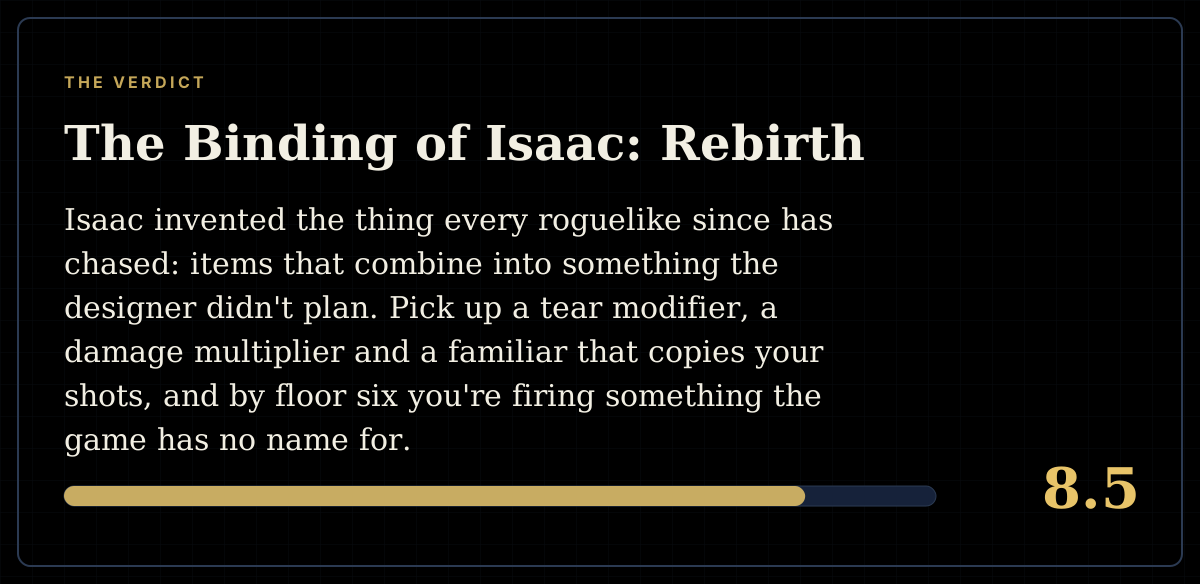
Isaac invented the thing every roguelike since has chased: items that combine into something the designer didn't plan. Pick up a tear modifier, a damage multiplier and a familiar that copies your shots, and by floor six you're firing something the game has no name for. Twelve years of expansions have made it enormous — hundreds of items, dozens of characters, alternate paths, hundreds of hours — and its 97% across 439,000 reviews is earned. The complaints that remain are specific and interesting: the item pool has grown large enough that the synergies it's famous for land less often, and the game still tells you almost nothing about what anything does.
Biggest strengths
- The item synergy system remains the genre's benchmark — combinations produce results that feel genuinely emergent rather than authored
- Extraordinary volume of content across five expansions, with alternate floors, endings, characters and unlock chains running to hundreds of hours
- A tight, responsive twin-stick core that has aged remarkably well
Biggest weaknesses
- The item pool has grown so large that long-term players report synergies coming together far less reliably than they used to
- The game deliberately withholds information about what items do, and the most-installed mod exists purely to supply it
- The most recent major expansion is genuinely divisive, with decade-long players saying it changed the game away from what they loved
Who it's for: Anyone who wants the deepest item-synergy roguelike there is and is willing to learn a large vocabulary. Not for players who need to know what a pickup does before taking it, and not for anyone put off by deliberately grotesque presentation.
Our recommendation: Buy the base game and play it plain for twenty hours before adding expansions — the DLC roughly triples the item pool and the later ones substantially rework the game, which is wonderful once you have footing and overwhelming before. Install the item-description mod on day one; the single most popular mod for this game exists to tell you what items do, and there's no virtue in refusing it.
8.5 / 10
Four hundred and thirty-nine thousand reviews. Ninety-seven per cent positive. There is not much argument left to have about whether The Binding of Isaac is good.
So this review is about the argument its own veterans are having instead, which turns out to be one of the most interesting design questions in the genre it created.
What it invented
Isaac's contribution was items that talk to each other.
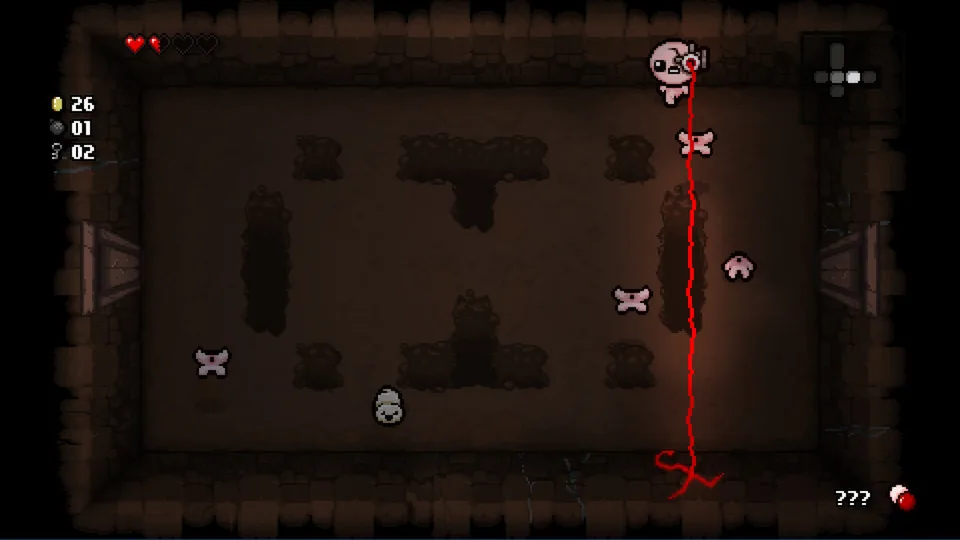
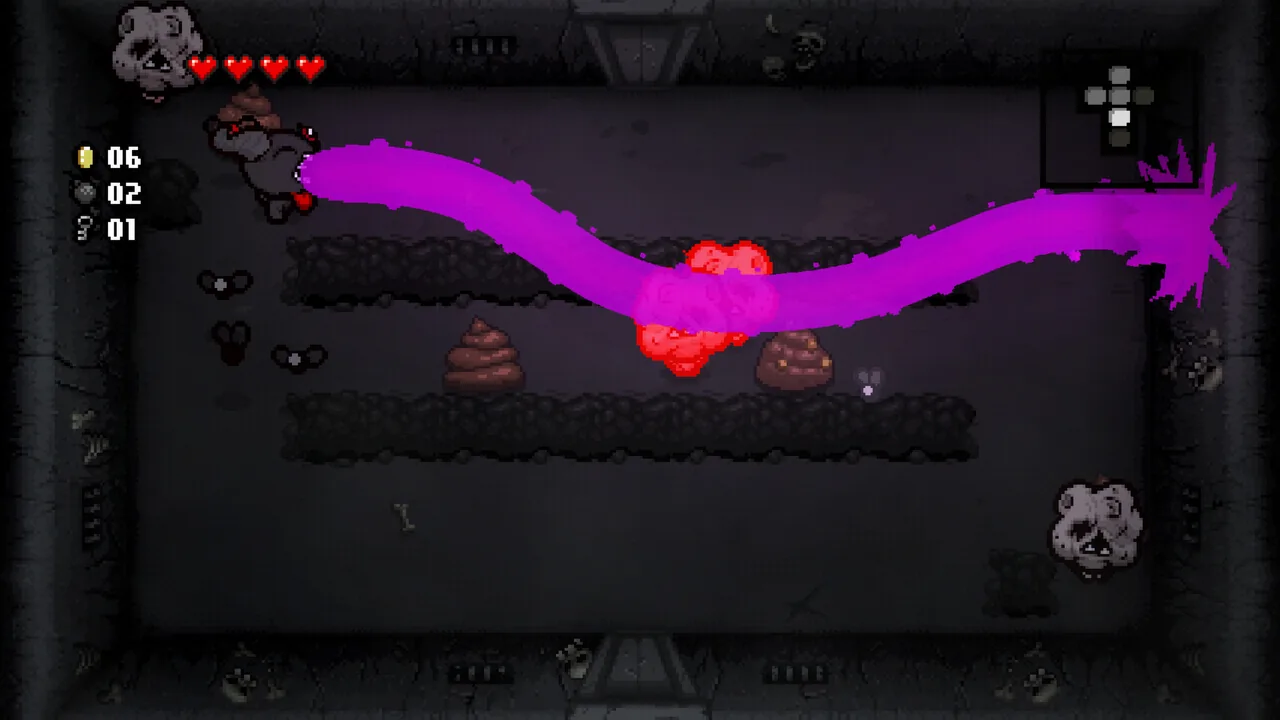
You descend through procedurally arranged floors shooting tears at increasingly unpleasant things, and each floor offers pickups: a modifier that makes your tears homing, a multiplier, a familiar that mirrors your shots, a trinket that changes how a stat scales. Individually they're small. Together they compound, and by the sixth floor you are frequently firing something the game has no vocabulary for — a wall of homing lasers, or exploding flies, or a single enormous tear that clears a room.
Nobody had done that at this scale in 2011, and everything since has borrowed it. The pleasure of a run isn't executing a plan, it's discovering what the pile of things you picked up has turned you into.
Around that sits an absurd volume of content: five expansions, hundreds of items, dozens of playable characters with different rules, alternate floor paths, multiple endings and an unlock chain that runs for hundreds of hours. The median recent reviewer has 37 hours; the corpus is full of people past a thousand. At NZ$17.99, the value question doesn't need asking.
The argument: too many items?
Here's the review that stopped me, from a player with 1,337 hours: talk to me five hundred items ago and the game was great — runs where a new synergy might dramatically change how things played. At this point, they write, there are simply too many items for an RNG game.
That is precisely the pool-dilution problem, and finding it here is significant, because Isaac is the game that made item synergy the genre's central pleasure. As the pool grows, the odds of drawing two specific items that transform each other fall. You get more variety per run and less combination. The game becomes broader and flatter at the same time.
I've now seen the identical complaint on two much smaller games this week — Dungeon Clawler's players and Luck be a Landlord's both report combos landing less reliably after content updates. The pattern is consistent: adding items to a randomised builder without adding tools to hunt for items makes it more random rather than richer.
Isaac has partial answers — shops, devil deals, item rerolls, planetariums — and they're why it handles the problem better than its imitators. But a thousand-hour player noticing the dilution is worth listening to, because they're the only people who can see it.
The information problem
The second complaint is sharper and easier to fix, and a 2026 reviewer states it perfectly: the most popular mod for this game exists to tell you what the items do.
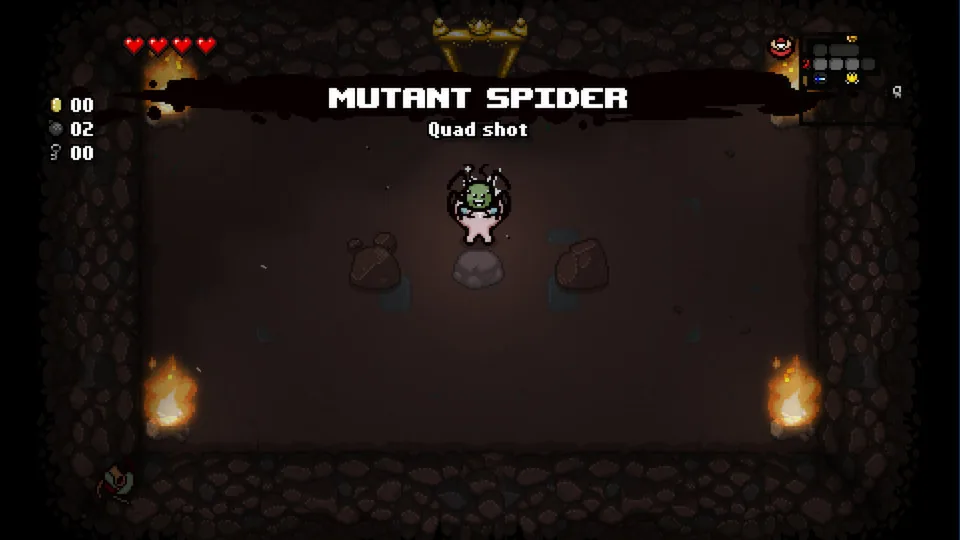
Isaac withholds information deliberately. Pick up an item and you get a name, a picture and a cryptic one-liner. Working out what anything actually does is meant to be part of the game — and for the first thirty hours it genuinely is, because discovery is fun.
After that it's an obstacle. There are hundreds of items; nobody memorises them; and the practical result is that experienced players run an external wiki or a mod that displays descriptions in-game. When the community's most-installed modification is a fix for your interface, the interface is the problem.
To the developers' credit, a long-time reviewer with 2,822 hours notes that a later update added official in-game item descriptions. That's the right call, and it arrived about a decade late.
The rest of the objections
The expansions are divisive. A player of ten years with roughly 2,000 hours says the most recent major DLC changed the game away from what they'd loved. Negative reviews spike sharply in 2021 and again in 2026, which lines up with major reworks rather than with anything static about the game.
It's hostile. The most-upvoted recent negative, from someone who found it genuinely fun, is a long list of design decisions they consider punishing rather than difficult. Several players arriving from Hades or Slay the Spire report never reaching the "one more run" moment at all.
And the genre has caught up. A reviewer with 315 hours makes the fairest version of this: Isaac was their roguelike of choice for years, and having since played games that are both as polished and more carefully designed, it no longer holds the same place. That's not a criticism of Isaac so much as the cost of being first.
One practical note: expansion support on Linux has drawn specific complaints, with the base game supported and DLC reportedly not. Check before buying if that's your platform.
8.5 out of 10. Rated 8.5 out of 10.
Isaac remains essential. It built the vocabulary the entire roguelike genre now speaks, it contains more game than almost anything at its price, and 97% of nearly half a million people are not mistaken. If you've never played it, start with the base game, add the item-description mod, and discover why every synergy-driven roguelite since owes it money.
It sits at 8.5 rather than higher because two of its problems are structural: an item pool that has outgrown the odds of combining, and a design philosophy on information that its own community routes around with a mod. Neither stops it being one of the most important games of its decade.
Pros and cons
Pros
- The item synergy system remains the genre's benchmark — combinations produce results that feel genuinely emergent rather than authored
- Extraordinary volume of content across five expansions, with alternate floors, endings, characters and unlock chains running to hundreds of hours
- A tight, responsive twin-stick core that has aged remarkably well
- Excellent, memorable soundtrack and a grotesque visual identity nothing else has copied
- Exceptional value — the base game is under eighteen dollars and complete on its own
- Deep mod support, with the community filling most of the gaps the game leaves
Cons
- The item pool has grown so large that long-term players report synergies coming together far less reliably than they used to
- The game deliberately withholds information about what items do, and the most-installed mod exists purely to supply it
- The most recent major expansion is genuinely divisive, with decade-long players saying it changed the game away from what they loved
- Difficulty is unforgiving in ways several reviewers describe as hostile rather than demanding
- Presentation is intentionally repellent — bodily, bleak and grim — which is a real barrier for some players
- Linux support for expansions has drawn specific complaints, with the base game supported and DLC reportedly not
Screenshots
-
The Binding of Isaac: RebirthImage: Nicalis, Inc. via Steam -
The Binding of Isaac: RebirthImage: Nicalis, Inc. via Steam -
The Binding of Isaac: RebirthImage: Nicalis, Inc. via Steam -
How the review scores each part of the gameWanderer Editorial -
The short versionWanderer Editorial