Game review
Luck be a Landlord
7.5 / 10
- Developer
- TrampolineTales
- Publisher
- TrampolineTales
- Released
- 6 January 2023
- Platforms
- Windows, macOS, Linux
- Genre
- Roguelike Deckbuilder
- Monetisation
- One-time purchase at NZ$14.99 with one DLC. The store page states explicitly that the game contains no real-world currency gambling and no microtransactions. Steam Workshop support is free. Checked 4 August 2026.
- Players
- Single-player only
The short version
You have a five-by-four slot machine and a landlord who wants rent on an escalating schedule. Each spin pays out based on the symbols you've collected, and the whole game is finding symbols that multiply each other — a cat that pays more next to a milk bottle, a bank that grows every time it lands. When a build comes together and the payout climbs past what you needed, it's genuinely thrilling. The problem is that only a couple of builds reliably clear the late floors, so runs converge, and unlike its more famous descendant this game gives you very little power to steer toward the combination you want.
Biggest strengths
- A genuinely original core — turning a slot machine into a synergy engine is a much better idea than it sounds
- The moment a multiplier chain comes together and clears rent by a mile is as good as the genre gets
- Enormous achievement list (186) with challenges that give completionists hundreds of hours
Biggest weaknesses
- Build convergence is the dominant complaint — a small number of strategies clear the late floors, so runs start to resemble each other
- Very little agency over what you're offered, so you cannot steer toward a synergy you can see
- Adding symbols over time diluted the pool, and players report combos coming together less reliably than they used to
Who it's for: Players who like watching numbers multiply and don't mind the machine deciding a lot of it. Good in short sessions. Not for players who want to construct a build deliberately, and not for anyone expecting a long campaign.
Our recommendation: Buy it — fifteen dollars for a loop this satisfying is fair, and the demo will tell you within twenty minutes whether the spin hooks you. Treat it as a thirty-minute-at-a-time game rather than something you'll grind, because the late floors reward the same two strategies and the fun is in the climb rather than the mastery. If you've already played Balatro and want more of that specific feeling, know that this is the rougher, earlier, more random version of the idea.
7.5 / 10
"This walked so Balatro and Cloverpit could run."
That's a recent review, and it's the most useful sentence anyone has written about this game. Luck be a Landlord came first, players widely credit it as the inspiration for the genre's biggest hit, and comparing the two explains both its appeal and its ceiling.
The machine
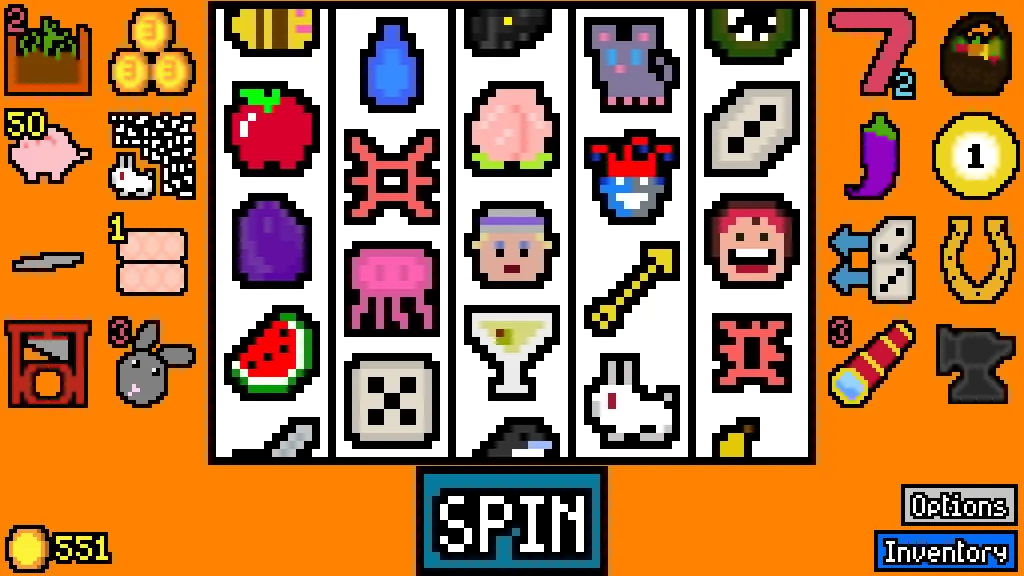
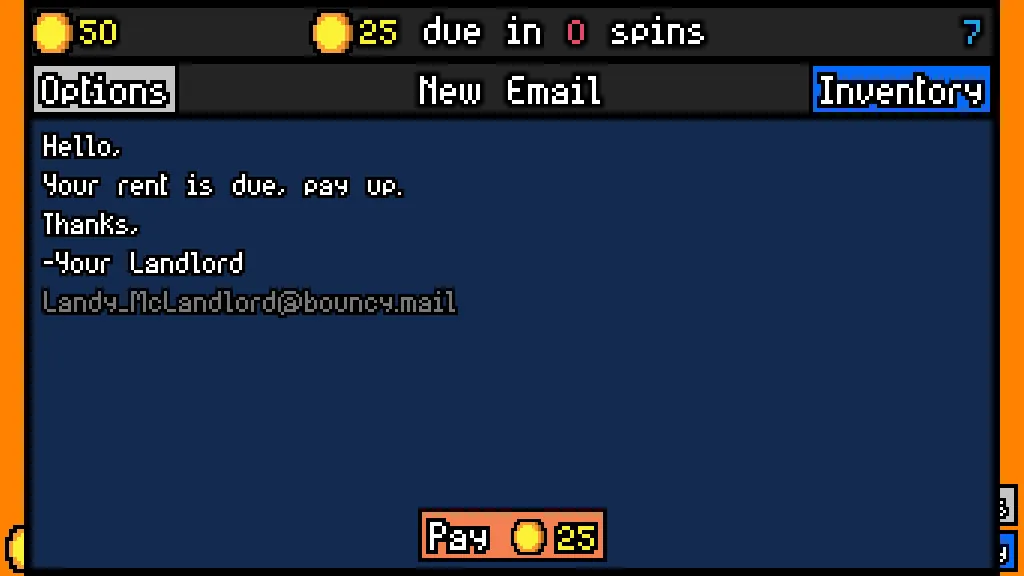
You have a slot machine — five columns, four rows — and a landlord who wants rent on an escalating schedule. Every few spins the bill comes due and it goes up.
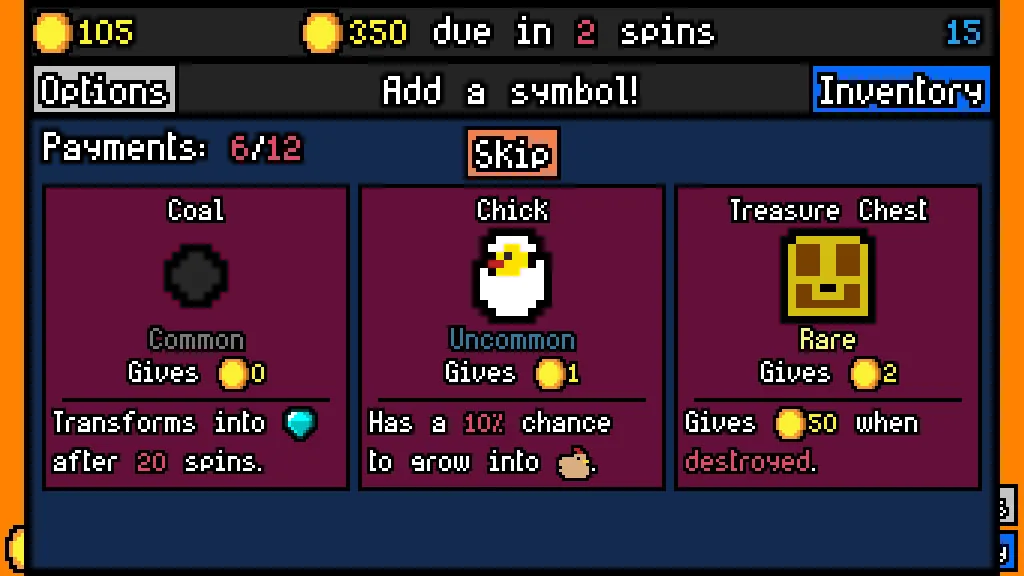
Between spins you pick a new symbol from a small selection. Symbols pay out on their own, but the game is in what they do to each other: a cat that earns more when it lands next to milk, a lumberjack that destroys adjacent trees for a payout, a bank that grows permanently every time it appears. Build a chain of those and a single spin can pay ten times what the rent demands.
That escalation is genuinely thrilling. Watching a machine you assembled from junk suddenly print four figures is exactly the pleasure that the whole numbers-go-up genre exists to deliver, and this game found a clean, immediately legible way to produce it. The presentation is simple pixel art with good sound, the run length is right — half an hour or so — and there's an anti-landlord joke running through it that gives the escalating rent some bite.
There's also a stated ethical position worth noting, because it's unusual: the store page says plainly that the game contains no real-world currency gambling and no microtransactions. For a game built on a slot machine, saying so out loud is the right call.
Where it stops short of its descendant
Now the criticism, which is remarkably consistent and worth taking seriously.
Runs converge. A reviewer with 21 hours puts it precisely: there are perhaps two builds that reliably win the late floors, and they're strong enough that turning down their symbols means losing. So you end up assembling the same machine repeatedly, or failing.
You can't steer. This is the sharper version, from a reviewer with six hours who articulates the design principle better than most: in a good build-based roguelike, synergies can be coerced — get a few speed items and a speed build becomes the plan. Here you can commit to a direction, be handed most of what you need, and simply never be offered the one piece that makes it work. The offers come at you; you don't fish for them.
That's precisely what Balatro fixed. Rerolls, shop economy, vouchers, consumables that transform cards — a whole layer of tools for hunting the combination you've spotted. The joy in both games is the same; the difference is whether you're a participant in finding it.
And the pool got diluted. A 2024 reviewer describes symbols being added over time to the point where combos come together less reliably than they used to. That's the identical pattern I found in Dungeon Clawler — adding content to a randomised builder without adding selection tools makes it more random, not richer. It seems to be one of the genre's recurring traps.
Why the slot machine was the right choice
It's worth defending the central conceit, because "roguelike slot machine" sounds like a joke and isn't.
A slot machine gives you something most deckbuilders have to work for: spatial adjacency. Symbols land in a grid, so a symbol can care about what's next to it, above it, or in the same column. That turns each spin into a small board state rather than a list of triggers, and it's why the synergies here read instantly — you see the cat land beside the milk.
It also solves pacing for free. A spin takes two seconds and resolves visibly, so the feedback loop is tighter than a card game's turn. Twenty spins pass in a couple of minutes, which is why the game works so well in short sessions and why "one more rent payment" is such an effective hook.
And the rent schedule does the same job the debt clock does in Recettear — it converts an open-ended number-go-up toy into a series of deadlines you either clear or don't. Without it you'd have an idle game; with it you have a roguelike.
The irony is that the same grid is what limits the agency. Because payouts depend on where symbols happen to land, even a well-built machine performs differently spin to spin, and no amount of planning fixes a bad arrangement. The mechanic that makes the synergies legible is the one that keeps them out of your control.
How much game is here
Less than the achievement count suggests. There are 186 achievements and a completionist in the recent reviews has 512 hours, but the structural end arrives at the maximum floor, and several players report hitting it and feeling the game close.
The Early Access history shows in the numbers too: 36 of the 100 most-upvoted negative reviews are from 2021, mostly variations on "not enough content for the price." That's largely been addressed — recent sentiment is 90% — but the underlying shape hasn't changed, and reviewers still recommend trying the demo, which one argues contains most of what's worth playing.
Median recent playtime is 15 hours. That's an honest figure for what this is: a very good half-hour-at-a-time game rather than a hundred-hour obsession.
7.5 out of 10. Rated 7.5 out of 10.
Luck be a Landlord deserves more credit than it gets. It found the idea — a slot machine as a synergy engine — and the moment your machine starts multiplying itself is as satisfying here as anywhere. At fifteen dollars, with real accessibility options, mod support and no monetisation whatsoever, it's an easy recommendation for short sessions.
It sits at 7.5 rather than higher because the thing that separates a good synergy game from a great one is agency, and this one hands you the machine rather than letting you build it. Play it, enjoy the climb, and if you find yourself wishing you could go looking for that one missing symbol — that wish is what its descendant was built on.
Pros and cons
Pros
- A genuinely original core — turning a slot machine into a synergy engine is a much better idea than it sounds
- The moment a multiplier chain comes together and clears rent by a mile is as good as the genre gets
- Enormous achievement list (186) with challenges that give completionists hundreds of hours
- Strong accessibility provision, including adjustable text size, colour alternatives and contrast controls
- Steam Workshop support, and mods extend the symbol pool considerably
- Explicitly free of gambling mechanics and microtransactions, which the store page states outright
Cons
- Build convergence is the dominant complaint — a small number of strategies clear the late floors, so runs start to resemble each other
- Very little agency over what you're offered, so you cannot steer toward a synergy you can see
- Adding symbols over time diluted the pool, and players report combos coming together less reliably than they used to
- Content thins out quickly; several reviewers say the demo contains most of what matters
- Reaching the maximum floor is the effective end, and it arrives sooner than the achievement list implies
- Early Access-era complaints about thin content persisted long enough to shape the review history
Screenshots
-
Luck be a LandlordImage: TrampolineTales via Steam -
Luck be a LandlordImage: TrampolineTales via Steam -
Luck be a LandlordImage: TrampolineTales via Steam -
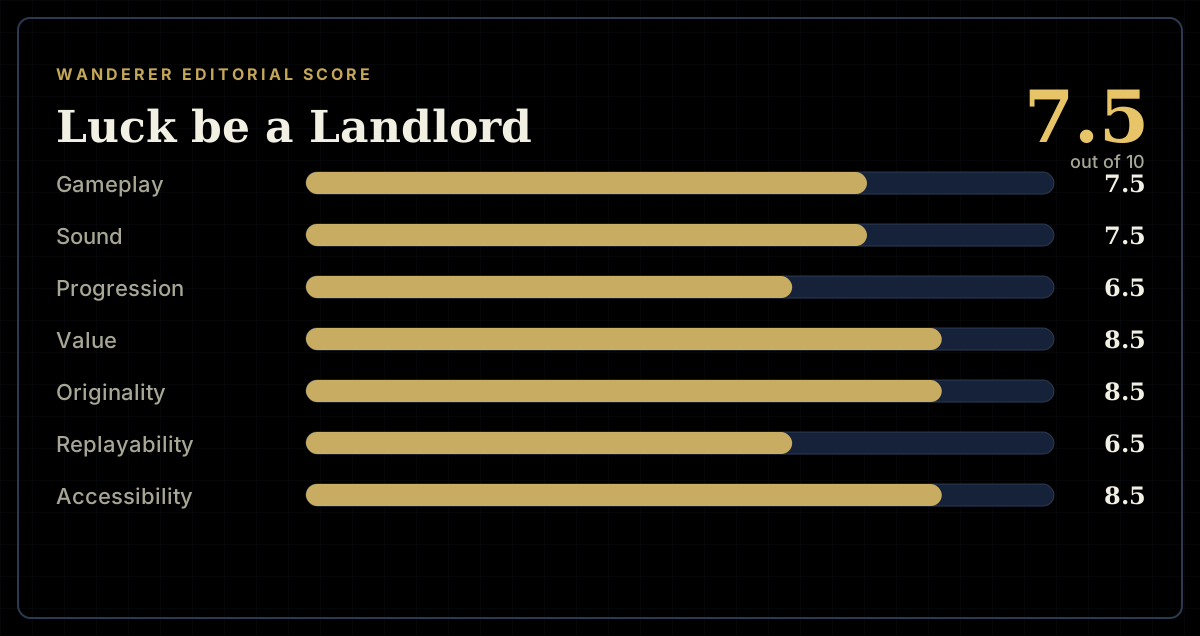
How the review scores each part of the gameWanderer Editorial -
The short versionWanderer Editorial