
Game review
Recettear: An Item Shop's Tale
8 / 10
- Developer
- EasyGameStation
- Publisher
- Carpe Fulgur LLC
- Released
- 15 October 2010
- Platforms
- Windows
- Genre
- Shop Sim / RPG
- Monetisation
- One-time purchase at NZ$23.99. No DLC, no microtransactions. Checked 4 August 2026.
- Players
- Single-player only
The short version
A girl inherits her father's debt, a fairy converts her house into an item shop, and a loan schedule starts running. What follows is the original and still one of the sharpest economy games ever made: buy stock cheap, mark it up, read what each customer will tolerate, and hire adventurers to raid dungeons when the market runs dry. The debt clock is what makes it work — every day has a cost and every week has a deadline. The dungeon half is thin, the dialogue is three times longer than it needs to be, and it repeats itself. It's also still funnier and tighter than most of what it inspired.
Biggest strengths
- The haggling system is genuinely tense — reading how far you can push each customer type is a real skill rather than a slider
- The debt schedule gives every single day a purpose, which almost no descendant of this game kept
- Enormous charm, with a script that generated catchphrases the community still quotes sixteen years later
Biggest weaknesses
- The dungeon-crawling half is rudimentary and hasn't aged well
- Dialogue is extremely verbose and the tutorial explains simple concepts at length
- The core haggling loop is repetitive by design, and some players find it a chore within hours
Who it's for: Players who like economies, margins and pressure, and who can tolerate 2010-era pacing and a lot of text. Not for anyone wanting a relaxing shop game — this one has a deadline — and not for players who need combat to be good.
Our recommendation: Buy it on sale and give it three in-game weeks before judging; the loop doesn't reveal itself until the first real debt payment lands. Skip the dungeons where you can by hiring adventurers and buying from merchants — the game is happy to be played as a pure trading game and it's better that way. Expect to fail the debt at least once; the reset is gentler than it looks.
8 / 10
"Capitalism, ho!"
Sixteen years after release, that line is still the top-voted recent review of Recettear, posted by someone with sixteen hours in a game from 2010. That tells you two things: this game left a mark, and people are still finding it.
The idea everyone borrowed
The premise is a joke that turns out to be a design. Recette's father vanished leaving a debt; a fairy called Tear arrives to collect on behalf of the lender and — rather than repossessing the house — converts its front room into an item shop. Recette now has a loan schedule and a business.
What follows became a genre. You buy stock from merchants, mark it up, and sell it to townspeople who each have their own tolerance for being overcharged. You hire adventurers and go into dungeons to bring back inventory you can't buy. You watch market prices move and hoard accordingly. Moonlighter is this. Potion Craft's shop half is this. A dozen cosy trading games are this with the edges sanded off.
The haggling is the part that still works best. A customer names a price, you counter, and the negotiation is a genuine read — how much markup will this customer type accept today, given what they came in for and how badly they want it. Push too far and they walk; too little and you've given away your margin. It's a small system with real texture, and getting good at it feels like getting good at a job.
What the descendants dropped
Here's the thing I'd point out to anyone who's played the modern shop games and finds Recettear abrasive: the debt clock is the design.
Every day costs you time. Every week the loan payment comes due, and it escalates. That single pressure turns every decision into a trade-off — dungeon run or restock, hold this item for a better price or take the sale now, close early or catch the evening customers. It's what makes the trading mean anything.
Almost every game that borrowed the shop loop dropped the deadline. They're calmer for it, and they're also, in a specific way, emptier: without a clock, buying low and selling high is arithmetic rather than a decision. The tension is the point.
Recettear's own players describe it in exactly those terms. One notes that for a game with such an easygoing atmosphere, it gets ridiculously harsh when it wants to — the payment thresholds arrive "like a brick wall", and failure rolls the calendar back to day two and resets your funds. Harsh, yes. But that reviewer also concedes recovery doesn't take long, and the unlocks you've earned carry over. It's a New Game+ wearing a failure state's clothes.
The economy has more moving parts than it looks
For a 2010 game with a cartoon fairy on the box, the market underneath is unusually well built.
Prices move. Items have a base value that drifts with market conditions, so stock bought cheap last week may be worth holding or dumping today. Watching that drift and buying ahead of it is the closest thing the game has to an investment mechanic.
Customers are archetypes with tolerances. A wealthy noble, a haggling housewife and an adventurer who urgently needs a weapon do not accept the same markup, and the same item sells at different prices to different people. Learning who tolerates what is the actual skill.
Demand shifts. Seasonal events and story beats change what the town wants, so a stockroom full of the wrong thing is a real loss rather than a delay.
And your suppliers compete with you. Merchants restock on their own schedules, so the guild markets are both where you buy and a signal about what everyone else can get.
Layer the adventurers on top — you hire them, dive with them, and what they find becomes inventory you couldn't otherwise stock — and the loop closes properly. Dungeon output feeds the shop, shop profit funds better gear, better gear opens deeper dungeons.
None of this is deep by 2026 standards. All of it was novel in 2010, and the reason the game still holds up is that these systems talk to each other rather than sitting in separate menus. Plenty of its descendants have prettier shops and thinner economies.
Where it shows its age
Three things, and they're consistent across fourteen years of reviews.
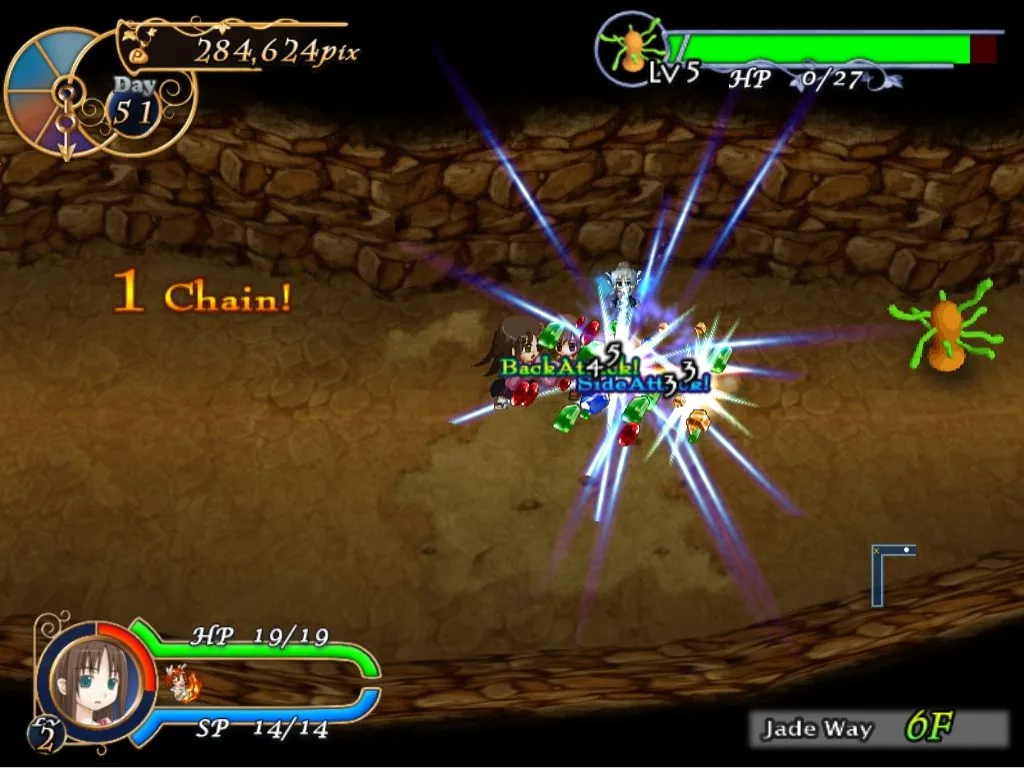
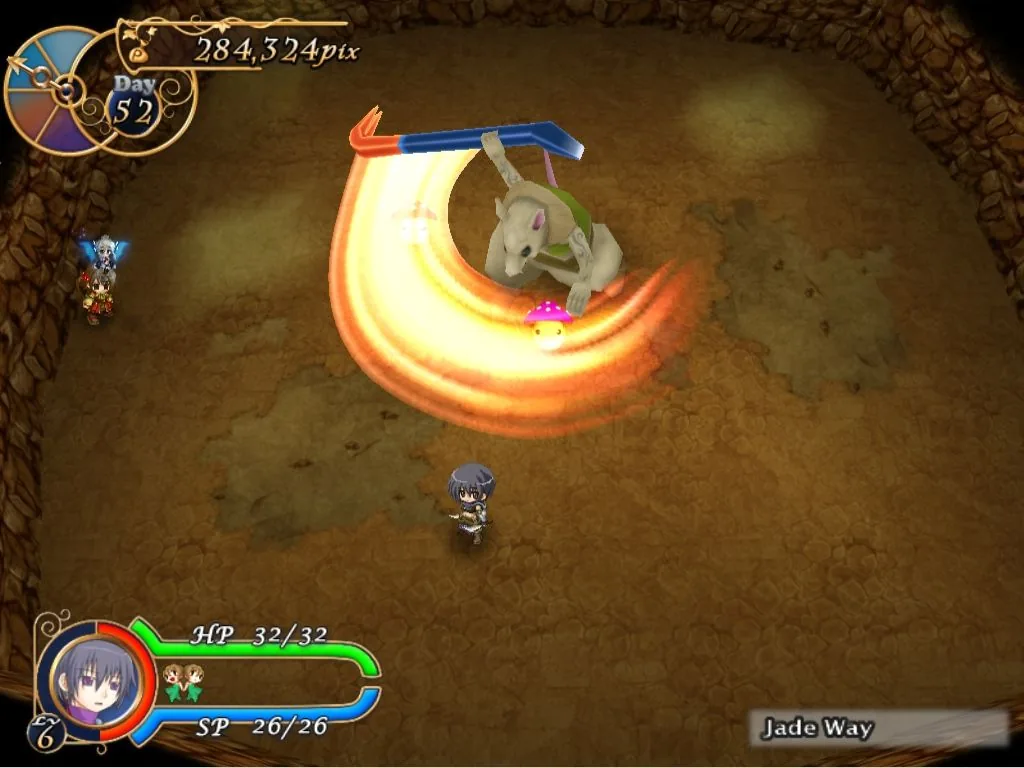
The dungeons are weak. They're a simple action-RPG that exists to supply the shop, and reviewers who came expecting a real RPG half say so plainly. It's the least interesting part of the game and the part that has aged worst.
The dialogue is enormous. The script is charming in aggregate and exhausting in detail — walls of text conveying very little, a tutorial that explains "you have limited time each day" at paragraph length, and running gags that outstay their welcome. One reviewer's example is a character asking what a door is. That's the register.
It repeats. The haggling minigame is the same interaction hundreds of times, and while the context around it changes, the click-rhythm doesn't. Multiple reviewers describe it becoming a chore within a few hours, which is the fairest criticism the game receives.
Town navigation is also slow in a way modern games would fix in a patch, and the soundtrack loops more than you'd like.
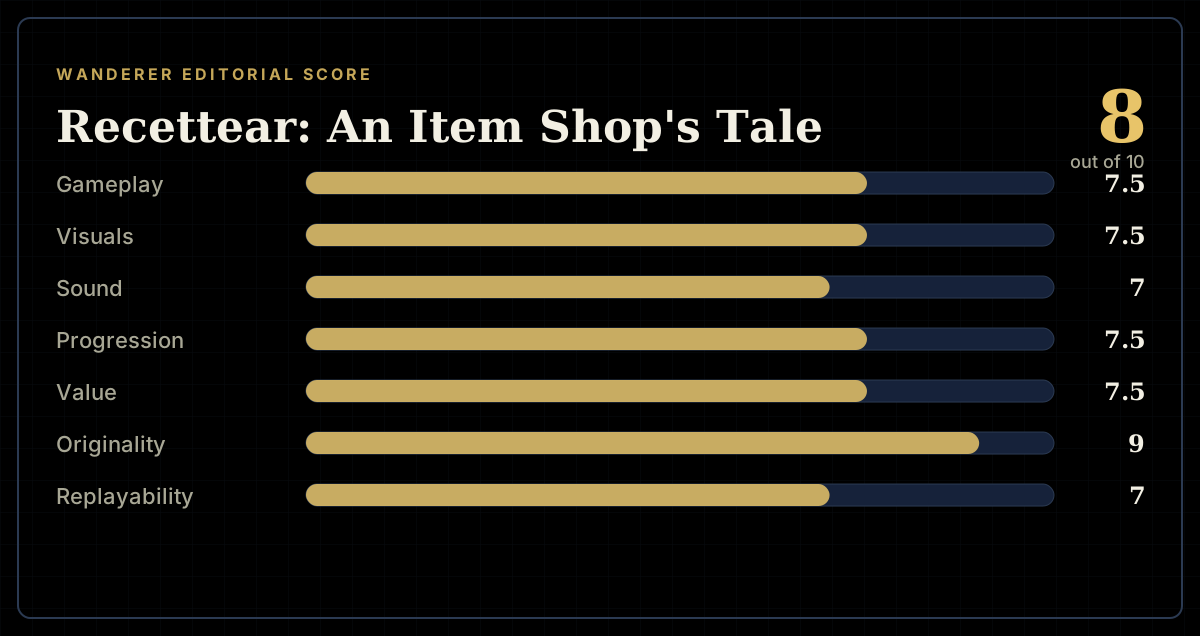
8.0 out of 10. Rated 8.0 out of 10.
Recettear is a small, sharp, genuinely important game that has held 96% positive for sixteen years and is still converting new players at 91%. The economy is excellent, the pressure is what makes it excellent, and the charm is real — it's the rare game whose catchphrases outlived its console generation.
Two points come off for the thin dungeon half and the pacing of everything around the shop counter. None come off for repetition, because repetition with rising stakes is what a business sim is — and if you've bounced off the modern, gentler versions of this idea wondering why they felt weightless, this is the one that has the weight.
Pros and cons
Pros
- The haggling system is genuinely tense — reading how far you can push each customer type is a real skill rather than a slider
- The debt schedule gives every single day a purpose, which almost no descendant of this game kept
- Enormous charm, with a script that generated catchphrases the community still quotes sixteen years later
- Stock management has real depth: market movements, customer archetypes, seasonal demand and adventurer loot all feed each other
- Complete as sold, with no DLC and no monetisation of any kind
- Sixteen years on it still holds 96% positive, with 91 of the last 100 English reviews positive
Cons
- The dungeon-crawling half is rudimentary and hasn't aged well
- Dialogue is extremely verbose and the tutorial explains simple concepts at length
- The core haggling loop is repetitive by design, and some players find it a chore within hours
- Failing a debt payment rolls the clock back and resets your funds, which lands hard the first time
- Town navigation is slow, adding friction to an already routine-heavy day
- Music is limited and loops often
Screenshots
-
Recettear: An Item Shop's TaleImage: Carpe Fulgur LLC via Steam -
Recettear: An Item Shop's TaleImage: Carpe Fulgur LLC via Steam -
Recettear: An Item Shop's TaleImage: Carpe Fulgur LLC via Steam -
How the review scores each part of the gameWanderer Editorial -
The short versionWanderer Editorial