Game review
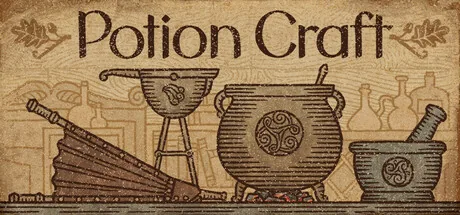
Potion Craft: Alchemist Simulator
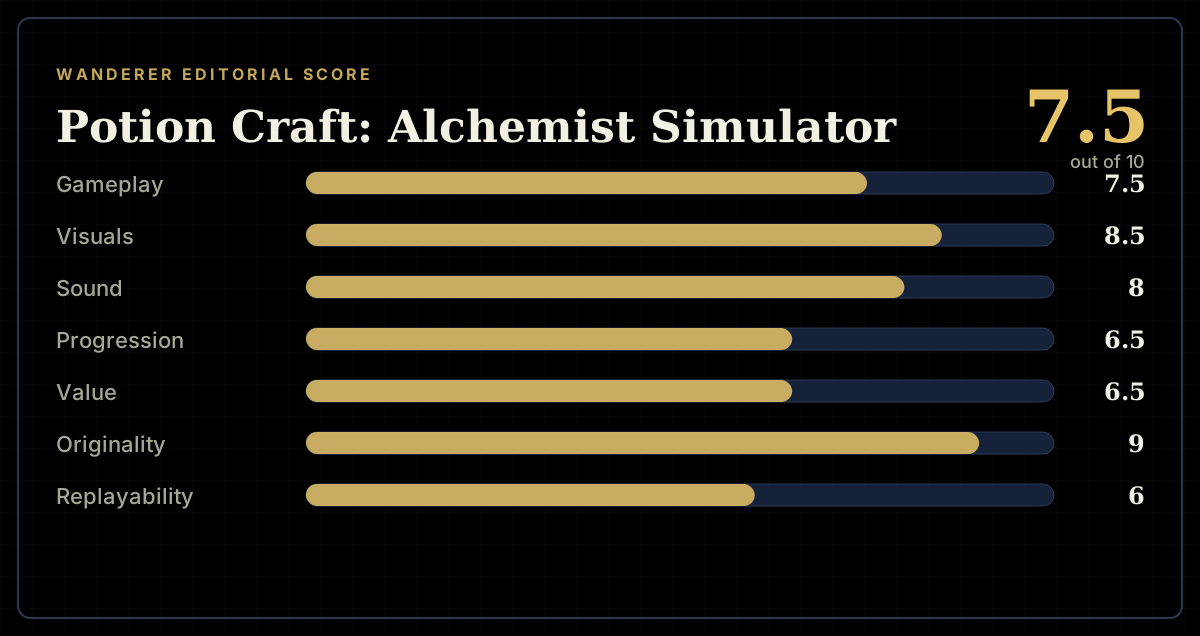
7.5 / 10
- Developer
- niceplay games
- Publisher
- tinyBuild
- Released
- 13 December 2022
- Platforms
- Windows
- Genre
- Crafting / Shop Sim
- Monetisation
- One-time purchase at NZ$28.99. No DLC and no microtransactions. Checked 4 August 2026.
- Players
- Single-player only
The short version
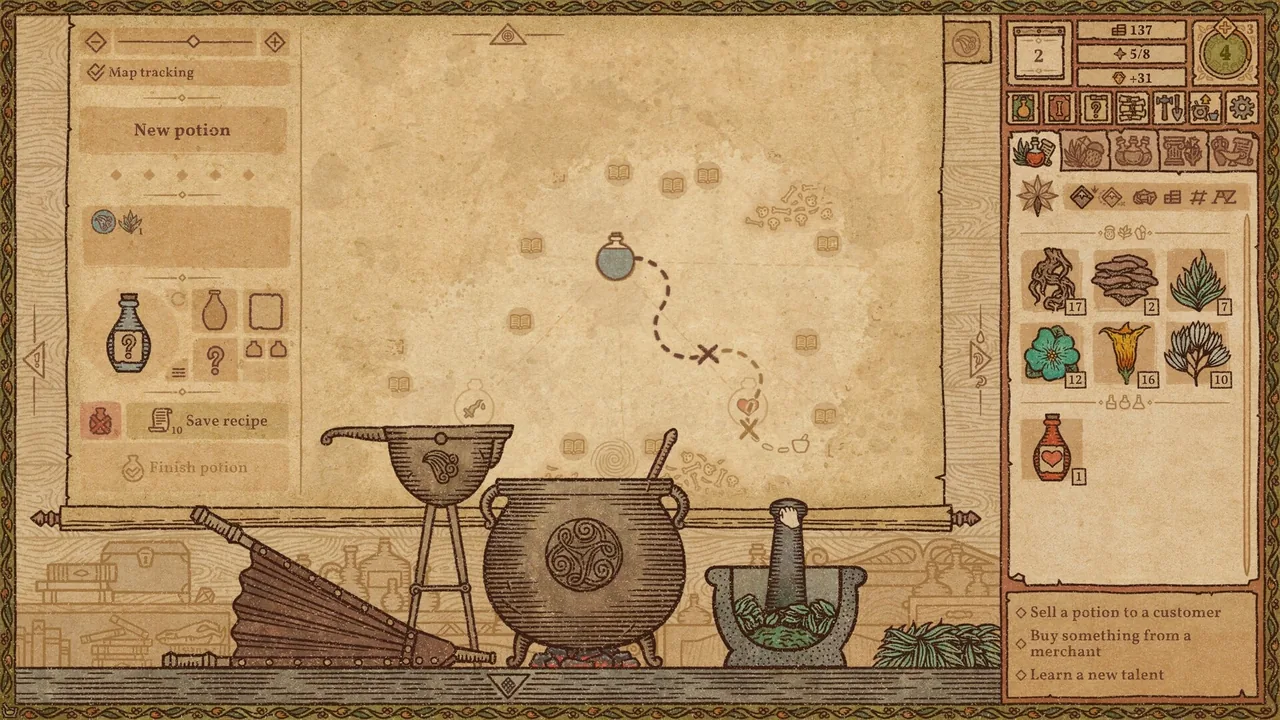
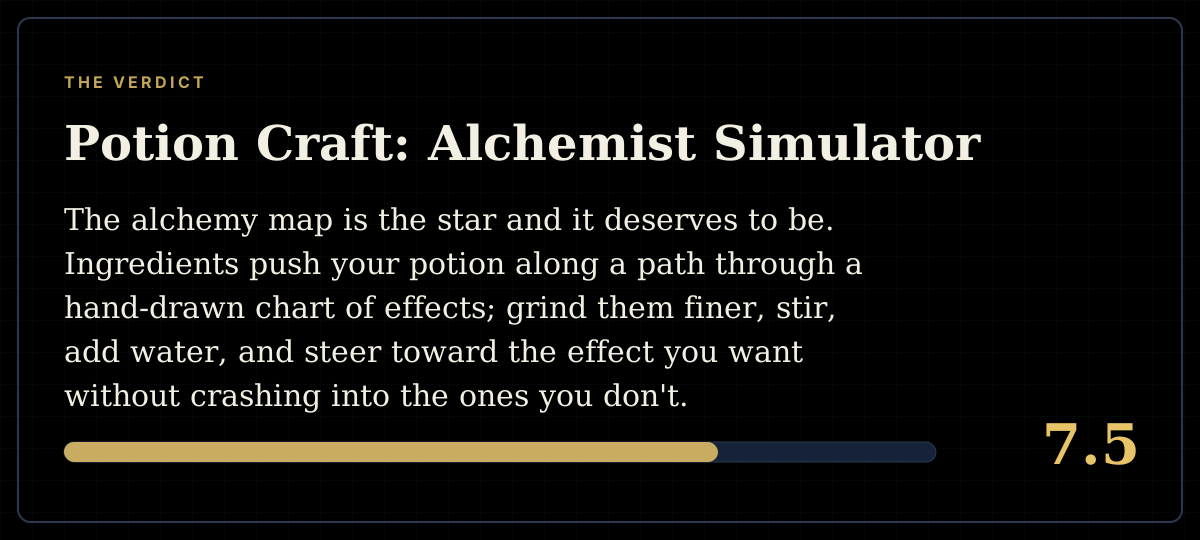
The alchemy map is the star and it deserves to be. Ingredients push your potion along a path through a hand-drawn chart of effects; grind them finer, stir, add water, and steer toward the effect you want without crashing into the ones you don't. It genuinely feels like practising a craft rather than selecting from a menu, and nothing else has done anything like it. What sits around that is a pleasant, short, largely undemanding shop game that its earliest buyers expected to grow and which mostly didn't. New arrivals love it — 97 of the last 100 English reviews are positive. Long-time owners wrote the angry ones.
Biggest strengths
- The alchemy map is a genuinely original crafting mechanic — physical, legible and satisfying in a way recipe lists never are
- Discovery feels earned: charting an unknown region of the map and finding a new effect is a real moment
- Beautiful hand-drawn art in an illustrated-manuscript style, with clean, readable interface work
Biggest weaknesses
- Development effectively stopped after 1.0, and long-term owners describe promised growth that never arrived
- The shop half is thin — customers, haggling and reputation never develop into a real economy
- Repetition sets in well before the alchemy map is exhausted, a complaint even positive reviewers raise
Who it's for: Players who want a genuinely novel crafting mechanic in a calm, no-fail-state package, and who are happy with twenty-five thoughtful hours. Not for players expecting a deep management sim, and not for anyone who bought into Early Access hoping for a bigger game.
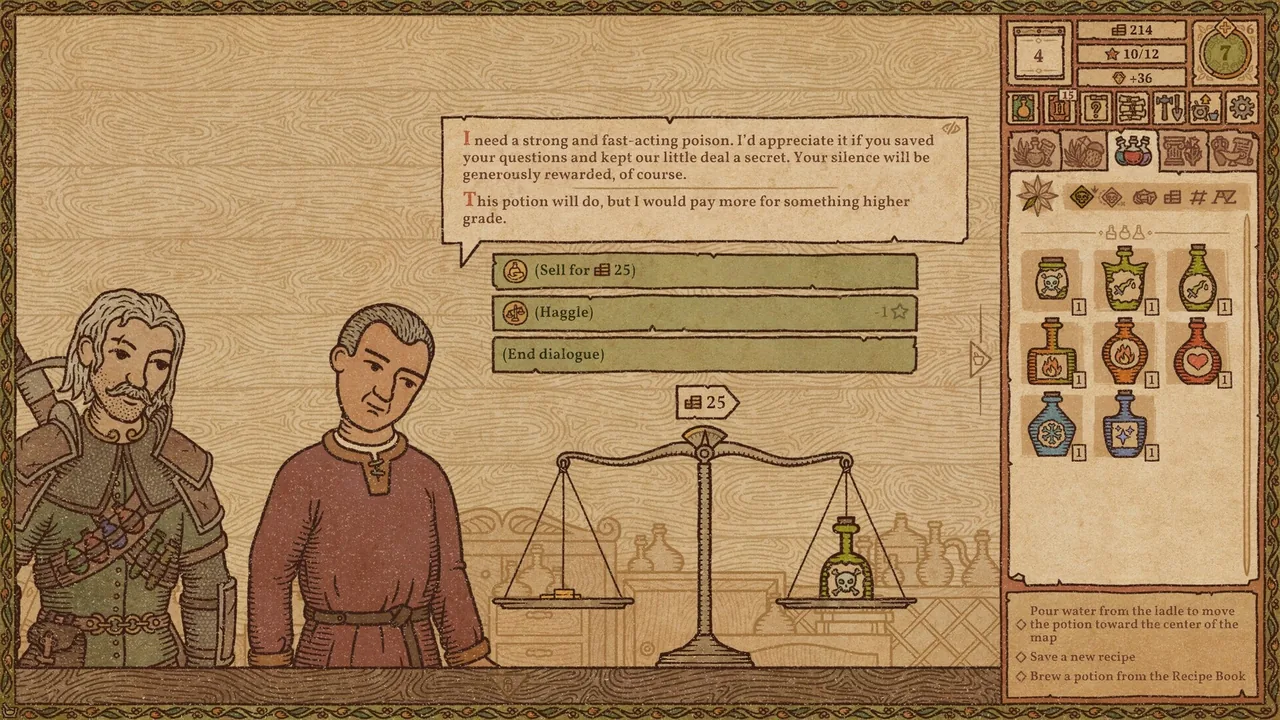
Our recommendation: Buy it on sale. The core mechanic is worth experiencing and the game is completely functional and pleasant — but at full price you're paying a premium for a concept rather than for content, and it runs out sooner than its ideas do. If timed inputs are a problem for you, note that haggling is a reflex minigame; some players find it the worst part of an otherwise relaxed game.
7.5 / 10
Potion Craft has a 93% lifetime score, 97% among its most recent reviewers, and its most-upvoted negative reviews are furious. That combination is worth explaining, because it's the whole story of this game.
The map
Brewing a potion here is not selecting a recipe. It's navigation.
Your potion is a point on a large hand-drawn chart of alchemical effects. Adding an ingredient pushes that point along a fixed path — each ingredient has its own shape of travel. Grinding the ingredient finer lets you move further along it. Stirring advances you; adding water pulls you back toward the origin. Between you and the effect you want lie regions you don't want to touch, and drawn obstacles you have to route around.
So making a healing potion becomes a physical problem: which ingredients, in what order, ground how finely, to arrive precisely on the effect and stop. Get greedy and you overshoot into something harmful. Chart a route through unexplored territory and you discover an effect nobody told you about.
It is genuinely one of the best crafting mechanics anyone has designed, and the reason is that it converts a menu into a skill. A reviewer put it exactly right early on: it made them feel like a medieval alchemist, where experimenting is fun, failure frustrating and success rewarding both mechanically and emotionally.
The presentation supports it beautifully — the whole game looks like an illuminated manuscript, the interface is clean, and the writing is funnier than it needs to be, with a steady supply of cameos players enjoy catching.
Why the angry reviews exist
Now the other half. Sort the negatives by helpfulness and they say the same thing in different registers.
The bluntest, from a player with 50 hours: the game isn't finished, the developers have said as much themselves, and they released 1.0 anyway. The most elegant, from 2023, compares the game to its own subject matter — a wonderful base, and then someone poured water into it. More water. Enough to flood the lab.
The specific charge is that the shop half never grew to match the alchemy half. Customers remain simple, the haggling stays a reflex minigame, reputation never becomes a real system, the garden grows too little and merchants offer too narrow a range. One reviewer with 29 hours, who bought in during Early Access, lists what arrived across two years — a new potion base, a quality-of-life update, some cosmetics — and notes that none of it changed the game in any meaningful way.
That's a fair description of what happened. This is a game whose central idea could clearly support much more, and which stopped.
What the twenty-five hours are made of
It's worth knowing the shape of the campaign, because "cozy alchemy game" undersells the structure.
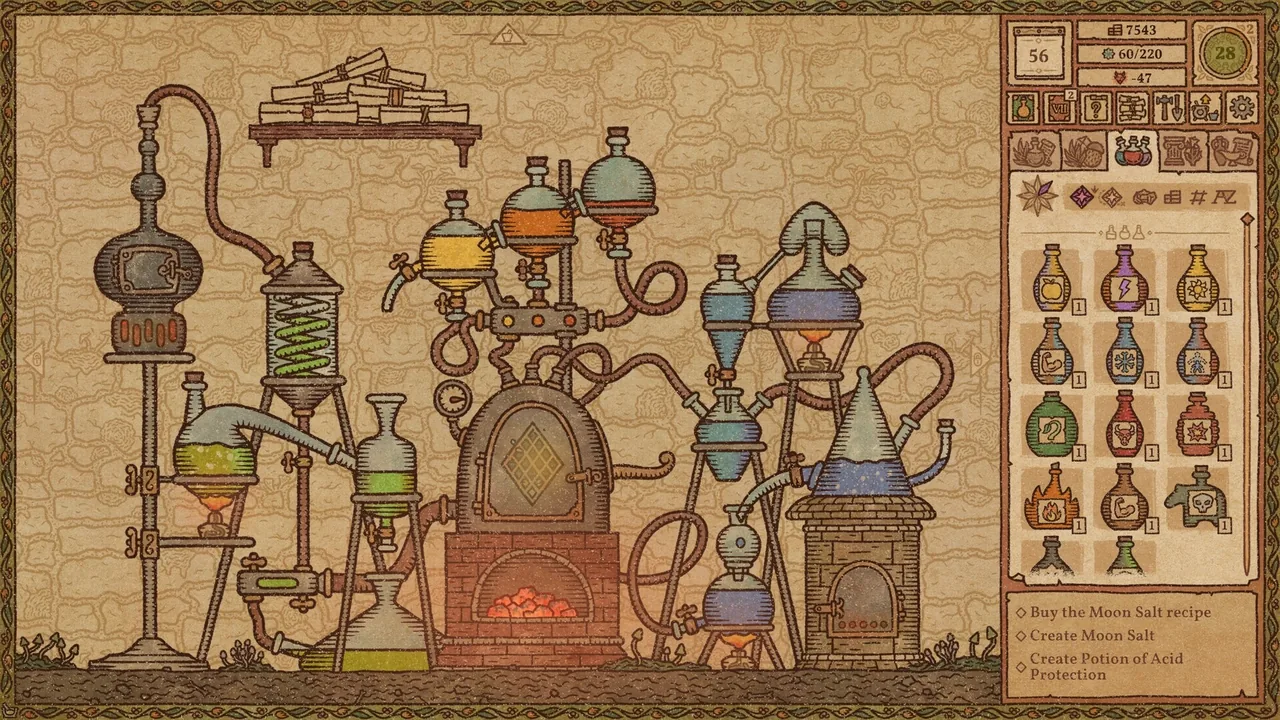
Progress is gated by reach. Early on your potions can barely travel from the centre of the map, so only the nearest effects are available and your shop sells the obvious things. Everything you do is aimed at extending that range: better grinding, stronger stirring, ingredients with longer or differently-shaped paths, and the alchemy machine upgrades that let you cross terrain you previously had to route around.
Then the map opens. Effects you'd seen from a distance become reachable, and — the genuinely good part — combining several effects in one potion becomes possible, which is where the puzzle gets interesting. A late-game order isn't "make a health potion", it's "reach three specific points without touching a fourth, using ingredients you can actually afford."
Layered over that is a light reputation system: fill orders well and better customers arrive, which unlocks the rarer requests and ingredients. It's the thinnest part of the design and the one the critics are right about, but it does give the middle hours somewhere to go.
Chapter completion tells you it works as a campaign: 74% of owners finish the first chapter, 58% the second, 44% the third, 34% the fourth. That's a steady, gentle decline rather than a cliff — people leave when they've had enough rather than when they hit a wall, which is exactly what you want from a game with no fail state.
The reconciliation
Here's the part that makes the numbers make sense: those are complaints about unmet expectations, not about the product.
Almost every angry review is from someone who bought in during 2021–22 and waited. Almost every recent review is from someone who bought a finished game in 2025 or 2026, played it for twenty-five hours, and had a lovely time. Both are describing reality accurately. They're just describing different relationships with it.
Which means the useful question for you isn't "was this game abandoned" — it was, effectively — but "is what exists worth the money." And there the recent reviews are close to unanimous: yes, at the right price, with realistic expectations. The completion data agrees, with a smooth chapter-by-chapter decline from 74% through 58% and 44% to 34%, which is the shape of a game people play through willingly rather than abandon in frustration.
Even the happy reviews include the caveat, though. "Pretty short and gets repetitive after a while." "Cozy, relaxing, though it does start to get a little repetitive." Nobody is claiming depth.
One specific warning: haggling is a timing-based minigame, and at least one reviewer makes the fair point that a reflex test sits oddly inside a game that otherwise has no clock and no fail state. If timed inputs are a barrier for you, know it's in there.
7.5 out of 10. Rated 7.5 out of 10.
Potion Craft deserves to be played, because the alchemy map is the kind of idea that ought to be copied and so far hasn't been. For twenty-five hours it's calm, clever, handsome and genuinely novel, and if you liked the shop-and-craft rhythm of Moonlighter or the unhurried pace of Leafy Corner, it will suit you.
It stops short of the top because the game around the mechanic never caught up with it, and because NZ$28.99 is a price that implies more than you get. Buy it discounted, treat it as a very good twenty-five-hour game rather than a management sim, and you'll join the 97% rather than the people who waited.
Pros and cons
Pros
- The alchemy map is a genuinely original crafting mechanic — physical, legible and satisfying in a way recipe lists never are
- Discovery feels earned: charting an unknown region of the map and finding a new effect is a real moment
- Beautiful hand-drawn art in an illustrated-manuscript style, with clean, readable interface work
- No fail state and no time pressure, so experimentation costs only ingredients
- Funny writing and a steady stream of character cameos that players enjoy spotting
- Recent buyers are overwhelmingly happy, with 97 of the last 100 English reviews positive
Cons
- Development effectively stopped after 1.0, and long-term owners describe promised growth that never arrived
- The shop half is thin — customers, haggling and reputation never develop into a real economy
- Repetition sets in well before the alchemy map is exhausted, a complaint even positive reviewers raise
- The haggling minigame is reflex-based, which sits oddly in a game otherwise free of time pressure
- Ingredient supply is limited early, with a small garden and restricted merchants
- At NZ$28.99 it's priced like a bigger game than it is
Screenshots
-
Potion Craft: Alchemist SimulatorImage: tinyBuild via Steam -
Potion Craft: Alchemist SimulatorImage: tinyBuild via Steam -
Potion Craft: Alchemist SimulatorImage: tinyBuild via Steam -
How the review scores each part of the gameWanderer Editorial -
The short versionWanderer Editorial