Game review
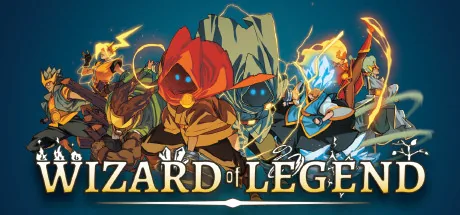
Wizard of Legend
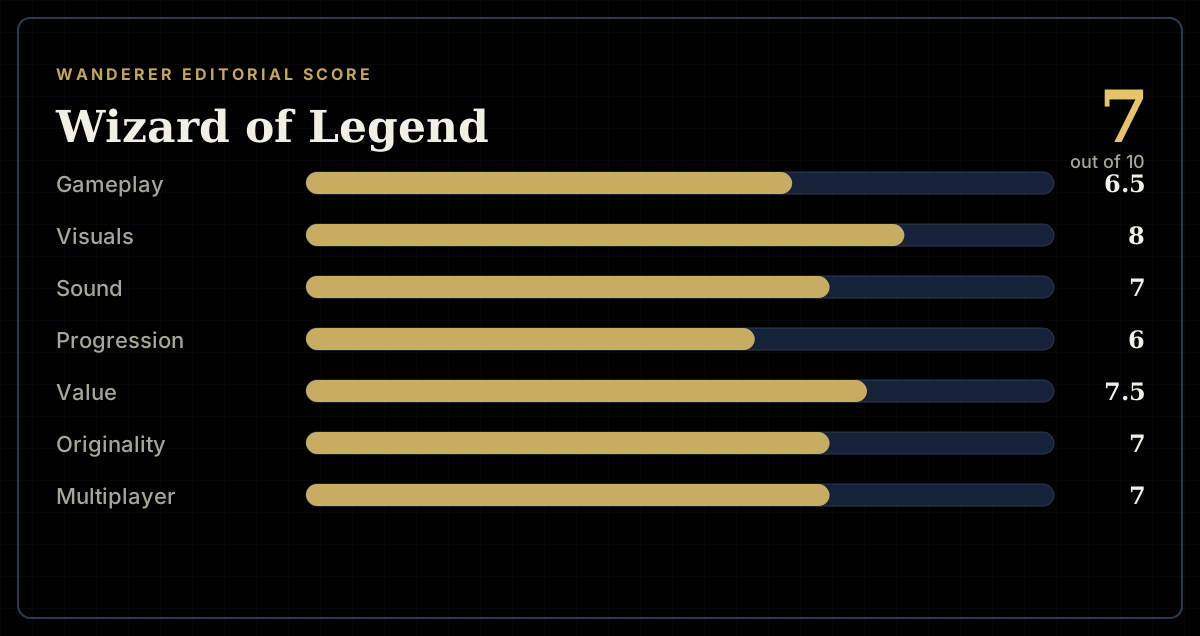
7 / 10
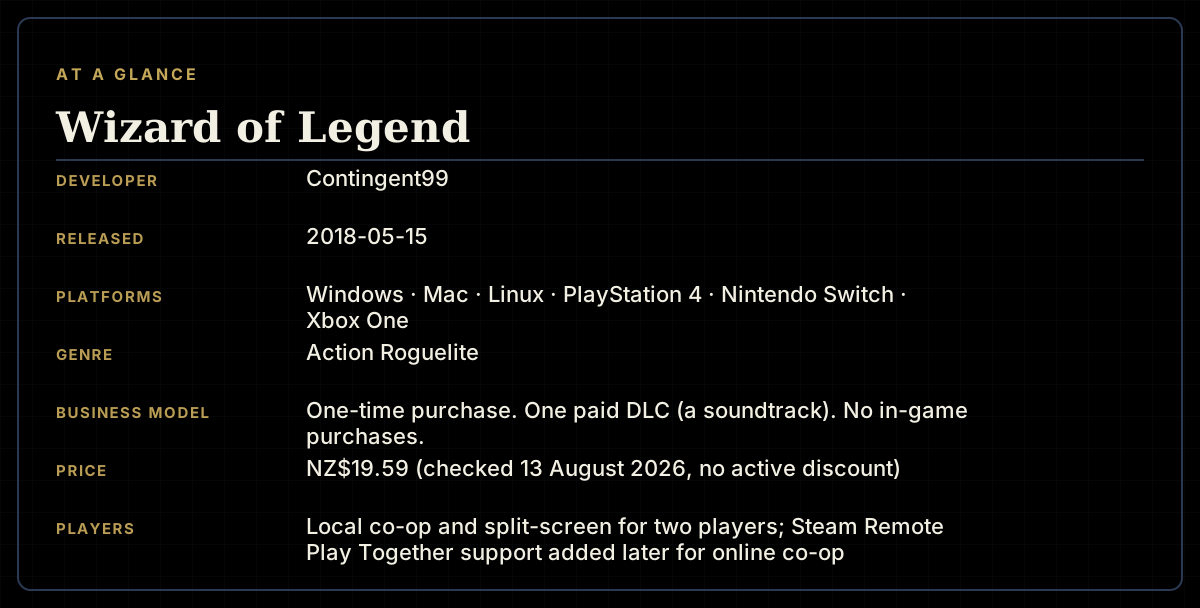
- Developer
- Contingent99
- Publisher
- Humble Bundle
- Released
- 15 May 2018
- Platforms
- Windows, Mac, Linux, PlayStation 4, Nintendo Switch, Xbox One
- Genre
- Action Roguelite
- Monetisation
- One-time purchase. One paid DLC (a soundtrack). No in-game purchases.
- Players
- Local co-op and split-screen for two players; Steam Remote Play Together support added later for online co-op
The short version
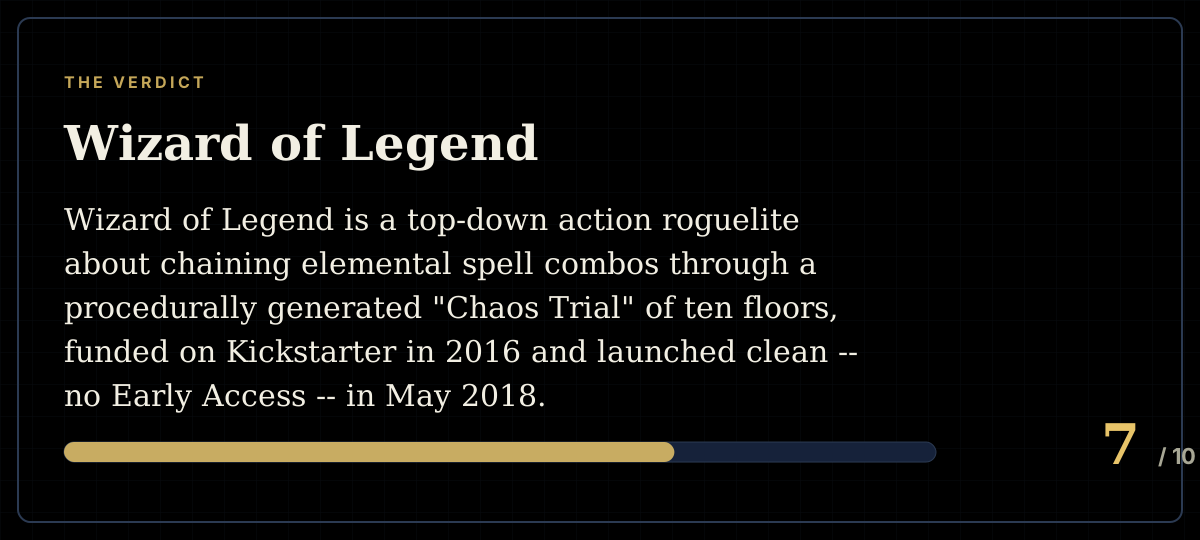
Wizard of Legend is a top-down action roguelite about chaining elemental spell combos through a procedurally generated "Chaos Trial" of ten floors, funded on Kickstarter in 2016 and launched clean -- no Early Access -- in May 2018. It's held up well by the numbers: Very Positive on Steam at 90.5% of 21,035 reviews, 79/100 on Metacritic, and 500,000 copies sold within two months of launch.
What's more interesting eight years on is how stable the criticism has been. Reading a large, recent sample of negative English-language reviews turns up essentially the same complaint the game launched with: dashing grants no invincibility frames, so getting hit once against a group or a boss routinely chains into a stunlock that can strip a quarter of your health before you regain control. It's the single most repeated specific criticism in the whole sample, ahead of difficulty, ahead of thin permanent progression, ahead of generic worldbuilding -- a design choice, not a bug, that the game never walked back across six years of updates and ports.
Biggest strengths
- A genuinely large, well-animated toolkit of elemental spells and relics across six schools, letting players build very different combat styles between runs
- Consistently praised local co-op and split-screen play, which multiple reviewers call the best way to experience the game
- Colourful, distinctive pixel art and fluid animation that reviewers single out even when they're critical of everything else
Biggest weaknesses
- No invincibility frames on the dash is the most repeated specific complaint in the current review sample, leading to frequent stunlock chains that many reviewers describe as the game's core design flaw rather than a difficulty feature
- Permanent progression between runs is thin -- several reviewers note the in-run shop can't be refreshed and there's little sense of building toward a stronger starting point over time
- Worldbuilding and story are widely described as an afterthought, more aesthetic dressing than substance, which shows up even in otherwise positive reviews
Who it's for: Fans of fast, combo-driven roguelites who want a genuinely large spell-and-relic toolkit and don't mind a demanding, sometimes unforgiving difficulty curve. Less good for players who bounced off Hades' or Dead Cells' dodge-invincibility feel and want the same safety net here -- Wizard of Legend deliberately doesn't offer it.
Our recommendation: Worth its NZ$19.59 asking price for the combat variety and especially for local co-op, which reviewers consistently call the game's best mode. Go in aware that dashing through danger is not a safe move here the way it is in most of its genre neighbours, and that the permanent progression between runs is thinner than the spell list suggests.
7 / 10
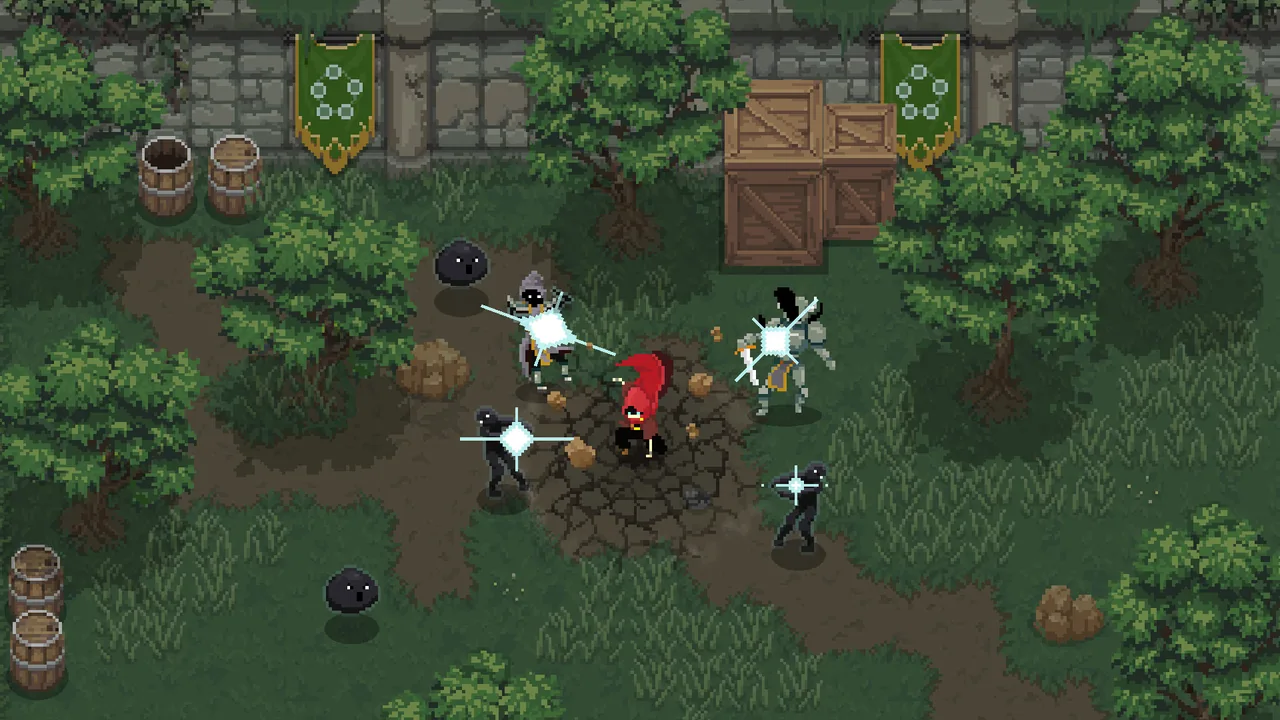
Wizard of Legend started as a 2016 Kickstarter from American indie studio Contingent99, comfortably funded at $72,681 against a $50,000 goal, and launched clean two years later — no Early Access stretch, just a direct 1.0 across PC and consoles on 15 May 2018. That clean launch paid off fast: 300,000 copies sold in sixteen days, half a million within two months. Eight years, a mobile port and a full sequel later, it still sits at Very Positive on Steam, 90.5% of over 21,000 reviews. The pitch has aged well: pick a build from six elemental schools, fight through a ten-floor procedural gauntlet called the Chaos Trial, and chain spells into combos across an isometric arena that looks like a beautifully animated pixel-art fighting game crossed with a roguelite.
Six schools, one deliberately hard fight
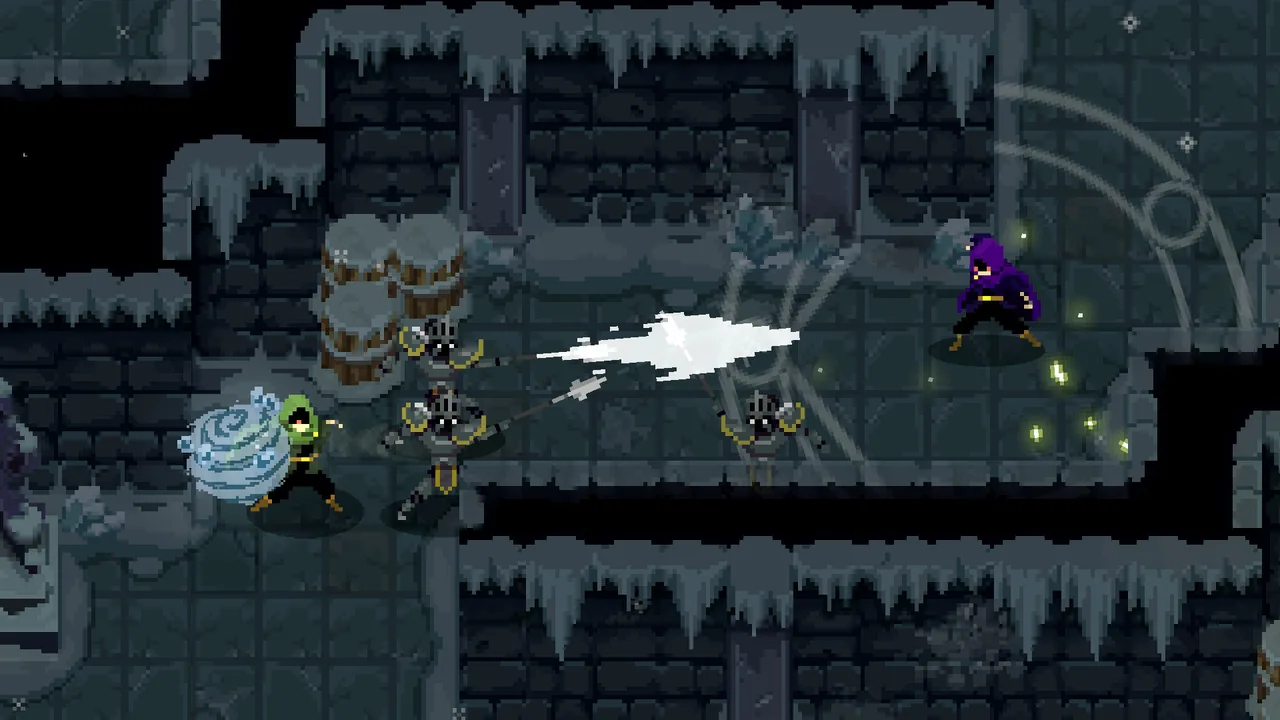
The combat toolkit is the game's clearest strength and the one thing almost every review, positive or negative, agrees on. Fire, air, earth, lightning, water and the game's own "Chaos" school between them offer dozens of spells that reviewers consistently describe as varied and well-animated, and the relic system layers passive modifiers on top that let two players build meaningfully different loadouts from the same run. It's genuinely a lot of toolkit for a 2018 indie roguelite, and it's part of why the game still sells: reviewers in the current sample regularly compare their builds favourably against genre peers even when they're unhappy with other parts of the experience.
The complaint that never went away
Set against that toolkit is a single design decision that dominates the negative review sample more than any other, by a wide margin: dashing through danger grants no invincibility frames. In most of Wizard of Legend's genre neighbours — Hades, Dead Cells, most twin-stick roguelites since — the dash is your escape valve, a brief window where you can't be hit. Here it isn't, and reviewers describe the practical result in near-identical terms across years of feedback: get clipped once by a group of enemies or a boss's fast attack chain, and you're locked into a stunlock that can burn a quarter of your health bar before you get control back. "Stunlock city," reads one recent review, flatly. Others frame it more analytically — a lack of "iframes" that turns what should be a tense positioning game into one where a single mistake compounds unfairly. This isn't a scattered complaint that shows up occasionally; it's the single most repeated specific criticism across the entire recent negative sample, ahead of difficulty in general and ahead of thin progression. It's also, notably, not something later patches changed — the same complaint appears in reviews from 2018 and from last month in essentially the same words, which tells you it was a deliberate design choice Contingent99 never revisited rather than an early rough edge.
Progression that doesn't build much between runs
The second recurring thread is about what carries over between attempts. Several reviewers describe the permanent progression as thinner than expected for the genre — you unlock more spells and relics into the pool over time, but the in-run shop can't be refreshed, and there isn't much sense of a starting point that meaningfully strengthens run over run the way a lot of modern roguelites (again, Hades is the constant comparison point) are built around. One reviewer put it bluntly: the game "pretends to have progression, but in reality just wastes your time" on repeat attempts that don't compound. That's a stronger claim than the average review supports, but the underlying observation — that Wizard of Legend's progression loop is closer to a 2018-era roguelite than a modern one — shows up often enough to take seriously if meta-progression is what you're chasing.
Style over story, and that's mostly fine
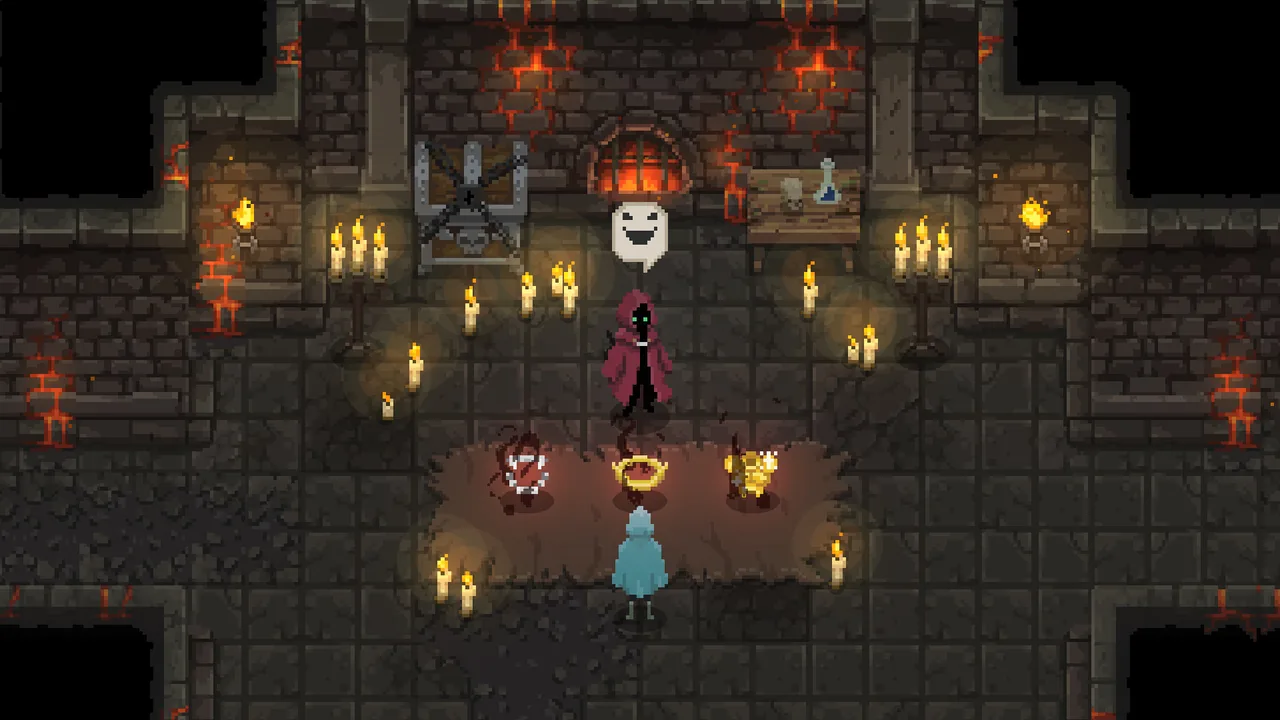
Worldbuilding and narrative get comparatively little attention in reviews, and what attention they get is mild rather than harsh: the setting is treated as pleasant backdrop for the combat rather than something with much weight of its own, and a handful of reviewers explicitly call the game "generic" once you look past the elemental theming. This doesn't seem to bother most players much — Wizard of Legend was never really selling itself on story — but it's worth flagging for anyone expecting the game to build the kind of lore-rich world its Chaos Trial museum-tutorial framing initially promises.
Where it shines: two players, one screen
The most consistently, unreservedly praised part of the whole package is local co-op. Split-screen two-player runs come up again and again in the positive sample as the best way to play, with reviewers describing hours spent laughing through runs with a partner in a way the solo experience doesn't quite match. Remote Play Together support, added later, extends that to online co-op without needing both players to own separate physical setups nearby — a good example of a small platform feature meaningfully extending an older game's life without Contingent99 needing to touch the core game at all.
Eight years on, a sequel that made the case for the original
Wizard of Legend's standing today is helped, oddly, by comparison to its own sequel. Wizard of Legend 2, developed not by Contingent99 but by Dead Mage, launched in 2025 to a noticeably more mixed reception — reviewers described its progression and characters as "extremely lacking," its co-op as bolted on rather than designed for, and its overall feel as losing the "passion" and "reflexive pace" of the original. One recent Steam review of the first game puts it succinctly: "10/10, we don't talk about the sequel." Whatever else is true about Wizard of Legend's rougher edges, that contrast has done real work retroactively burnishing the original's reputation as the tighter, more purposeful game — a fan-funded 2018 debut that a bigger, better-resourced sequel seven years later still hasn't clearly topped.
7 out of 10. Wizard of Legend's spell-combo toolkit and its local co-op are exactly as good as its Very Positive Steam rating suggests, and its price and content-per-dollar hold up well eight years on. But go in with clear eyes about the one design decision its own review history keeps circling back to: there's no safety net on the dash, stunlocks are a real and frequently reported problem rather than a skill-issue myth, and the permanent progression between runs won't carry you through the difficulty the way genre-mates released since have trained players to expect.
Pros and cons
Pros
- A genuinely large, well-animated toolkit of elemental spells and relics across six schools, letting players build very different combat styles between runs
- Consistently praised local co-op and split-screen play, which multiple reviewers call the best way to experience the game
- Colourful, distinctive pixel art and fluid animation that reviewers single out even when they're critical of everything else
- Reasonably priced and frequently discounted, with a large amount of replayable content for an indie roguelite
Cons
- No invincibility frames on the dash is the most repeated specific complaint in the current review sample, leading to frequent stunlock chains that many reviewers describe as the game's core design flaw rather than a difficulty feature
- Permanent progression between runs is thin -- several reviewers note the in-run shop can't be refreshed and there's little sense of building toward a stronger starting point over time
- Worldbuilding and story are widely described as an afterthought, more aesthetic dressing than substance, which shows up even in otherwise positive reviews
- A steep, sometimes unfair-feeling difficulty curve that a meaningful share of the negative sample says isn't matched by clear enough tools to overcome it, including a lack of colourblind-accessible enemy telegraphs called out specifically by at least one reviewer
Screenshots
-
Wizard of LegendImage: Contingent99 via Steam -
Wizard of LegendImage: Contingent99 via Steam -
Wizard of LegendImage: Contingent99 via Steam -
How the review scores each part of the gameWanderer Editorial -
The essentialsWanderer Editorial -
The short versionWanderer Editorial