Game review
The Slormancer
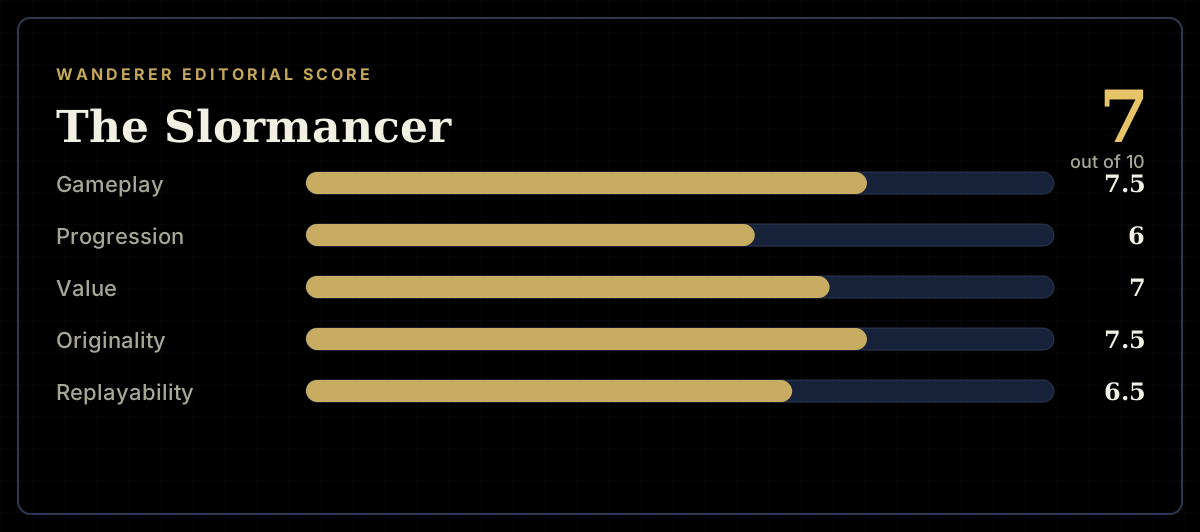
7 / 10
- Developer
- Slormite Studios
- Publisher
- Slormite Studios, Abiding Bridge
- Released
- 13 May 2025
- Platforms
- Windows
- Genre
- Action RPG
- Monetisation
- One-off premium purchase, with an optional soundtrack and supporter pack; no in-app purchases and no premium currency
- Players
- None. Single-player only, though multiple reviewers specifically request it be added
The short version
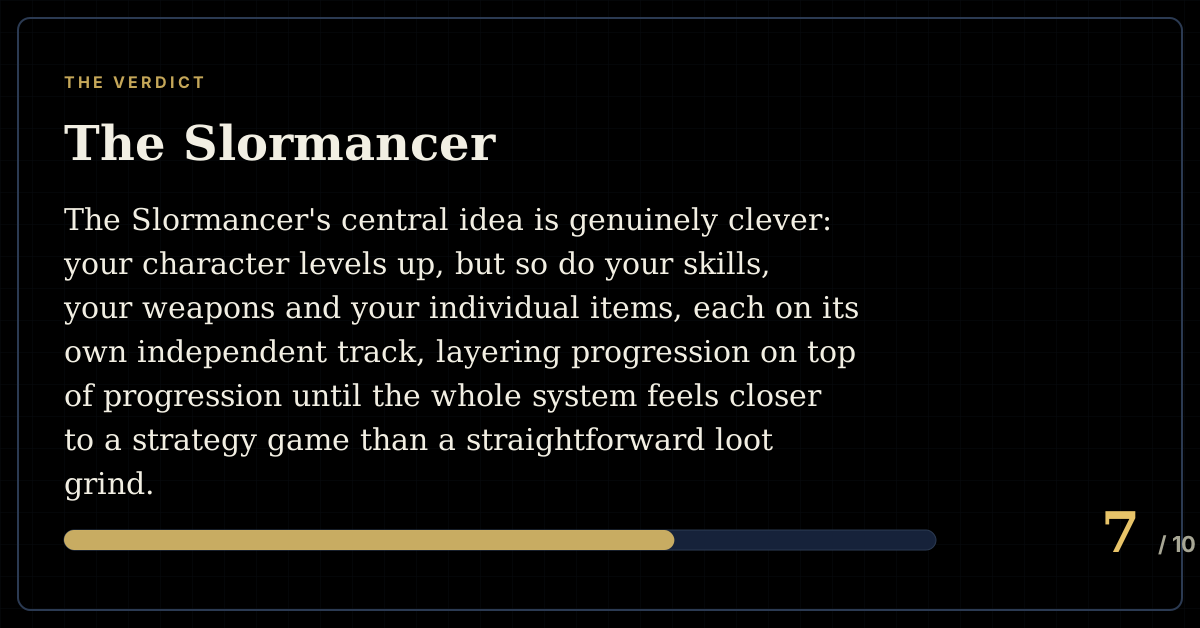
The Slormancer's central idea is genuinely clever: your character levels up, but so do your skills, your weapons and your individual items, each on its own independent track, layering progression on top of progression until the whole system feels closer to a strategy game than a straightforward loot grind. One reviewer, only half joking, calls it "the Disgaea of the ARPG genre." For roughly its first ten to fifteen hours, that ambition pays off, and multiple ARPG veterans with decades in Diablo, Path of Exile and Last Epoch rank it among the best indie entries the genre has produced. Then, with remarkable consistency across the review sample, the game forces a mandatory grind — described independently and repeatedly as coming "out of nowhere" — before players are allowed to reach the final chapter, and a large share of an otherwise enthusiastic audience says that single design choice is what keeps them from recommending it without reservation.
Biggest strengths
- A genuinely distinctive layered progression system — character, skills, weapons and items all levelling independently — gives the loot loop real strategic depth beyond bigger numbers
- Multiple experienced ARPG veterans, including players with a decade or more in Diablo and Path of Exile, rank the first stretch of the game among the genre's best recent indie entries
- Pixel art and presentation draw consistent praise as carefully crafted rather than a generic retro aesthetic
Biggest weaknesses
- A near-universal complaint describes a mandatory, extensive grind requirement placed immediately before the final chapter and final boss, with reviewers repeatedly calling it an unexplained, unfun wall rather than an earned challenge
- Build variety is disputed: at least one detailed reviewer researched publicly shared endgame builds and found the vast majority converging on a small handful of options, contradicting marketing claims of wide build diversity
- Several reviewers describe combat itself as becoming repetitive over a long playthrough, with the moment-to-moment loop offering less variety than the deep progression systems initially suggest
Who it's for: Action RPG and loot-hunter fans who want genuinely deep, layered systems and can tolerate — or skip past — a specific, well-documented grind wall late in the campaign.
Our recommendation: Worth playing for the systems alone, but go in knowing about the pre-final-boss grind requirement so it reads as an expected obstacle rather than a broken promise; some reviewers specifically suggest waiting for a patch that addresses it before committing full price.
7 / 10
Action RPGs live or die on how their levelling systems feel, and The Slormancer's pitch is unusually ambitious for the genre: everything levels. Your character levels. Your skills level, independently, evolving into new forms as they climb. Your weapons level. Your individual items level. One reviewer, clearly delighted by how far the idea goes, sums it up as "the Disgaea of the ARPG genre" — a reference to a strategy series famous for stacking numbers on numbers until the whole system becomes its own kind of puzzle. For a genre where "more loot, bigger numbers" is usually the entire pitch, that's a genuinely distinctive foundation to build on.
Systems deep enough to impress genre veterans
The praise from experienced players carries real weight here, because it's coming from people with a lot to compare it against. One reviewer explicitly identifies as an ARPG veteran with over a decade in Path of Exile, plus real time in Last Epoch, Torchlight and Diablo, and still finds enough in The Slormancer's opening stretch to engage seriously with its systems. Another calls it the best indie ARPG they've played "since Chronicon," a specific and high compliment within the genre. The layered levelling design is the reason why: because skills, weapons and items each grow on their own track, players are constantly making meaningful decisions about what to invest in rather than simply accumulating a single power number, and the pixel art presentation gets consistent credit for feeling carefully crafted rather than a generic aesthetic choice.
The wall almost everyone hits
What makes this review necessary rather than a straightforward recommendation is how consistently a single specific complaint recurs across the negative review sample, phrased differently by dozens of independent players but describing exactly the same thing. Right before the game's final chapter and final boss, players are required to complete a substantial, unexplained grind — described by one reviewer as arriving "out of nowhere," by another as "a series of 'trials'" that gate progress, and by a third with the simple, exasperated headline "WHY THE GRIND?!" One detailed review breaks down the shape of the complaint precisely: the first ten hours are great, and then the game "turns into an engineered grindfest that just disrespects the player's time." Another, with over 100 hours logged, writes a lengthy pro-and-con breakdown and lands on the same core issue — repetitive grinding required after the campaign, specifically to gear up for the mid-game and final boss, undermining a system that had been engaging up to that point.
This isn't a scattered handful of impatient players. The specificity and consistency of the complaint — the same location in the game, the same "out of nowhere" framing, the same sense of an artificial time-extension rather than an earned challenge — is what elevates it from a normal difficulty complaint to a real structural design issue worth flagging clearly to a prospective buyer.
A second, related question about build variety
A quieter but related criticism concerns how much genuine choice the deep systems actually translate into. One especially thorough reviewer, sceptical of marketing claims about "HUGE LOOT SYSTEMs" and wide build diversity, did the legwork of checking publicly shared endgame builds on YouTube and found the overwhelming majority converging on a small handful of options rather than the broad space the layered levelling design implies. That's a meaningful counterpoint to the game's central selling point: a system built around independent progression tracks for skills, weapons and items should, in theory, produce enormous build diversity, and at least one detailed investigation suggests the practical result is narrower than the pitch.
Combat itself draws milder but real criticism too — several reviewers who otherwise praise the progression systems describe the actual moment-to-moment fighting as becoming repetitive over a long playthrough, with map design and pacing weakening somewhat in the later game relative to the stronger opening campaign.
A studio still building
None of the above reads as a studio that's abandoned the game. Slormite Studios has kept publishing monthly "Slormite Chronicles" development updates well over a year past the 1.0 release, through mid-2026 and continuing — the kind of sustained, visible cadence that suggests the grind-wall complaint, if it hasn't already been addressed, remains a live target for future balance work rather than a permanent fixture the developer has ignored.
Where this leaves a buyer
At NZ$28.99, The Slormancer is a genuinely strong action RPG for roughly its first stretch, with a progression system ambitious enough to win over players who've spent years in the genre's biggest names. The specific, well-documented grind requirement before the final chapter is worth treating as a known cost rather than a surprise — players willing to push through it, or to wait for a patch that eases it, are likely to find a lot to like underneath. Anyone specifically allergic to an artificial difficulty or time wall late in a campaign should read the negative review sample closely before buying, because this isn't a matter of a few frustrated players — it's close to the single most consistent complaint in the game's entire history.
Pros and cons
Pros
- A genuinely distinctive layered progression system — character, skills, weapons and items all levelling independently — gives the loot loop real strategic depth beyond bigger numbers
- Multiple experienced ARPG veterans, including players with a decade or more in Diablo and Path of Exile, rank the first stretch of the game among the genre's best recent indie entries
- Pixel art and presentation draw consistent praise as carefully crafted rather than a generic retro aesthetic
- Ongoing monthly development updates well over a year after full release show a studio still actively invested in the game rather than one that shipped 1.0 and stopped
- Genuinely large amount of content and systems, described by multiple reviewers as offering "countless hours" for players willing to engage with all of it
Cons
- A near-universal complaint describes a mandatory, extensive grind requirement placed immediately before the final chapter and final boss, with reviewers repeatedly calling it an unexplained, unfun wall rather than an earned challenge
- Build variety is disputed: at least one detailed reviewer researched publicly shared endgame builds and found the vast majority converging on a small handful of options, contradicting marketing claims of wide build diversity
- Several reviewers describe combat itself as becoming repetitive over a long playthrough, with the moment-to-moment loop offering less variety than the deep progression systems initially suggest
- Some players report late-game map design and pacing as weaker than the earlier campaign, contributing to the sense that the game's best ideas front-load rather than build toward a strong conclusion
- Requested but still absent multiplayer is a recurring wish among an otherwise satisfied audience, several of whom specifically say they'd play far more of it with a friend
Screenshots
-
The SlormancerImage: Slormite Studios via Steam -
The SlormancerImage: Slormite Studios via Steam -
The SlormancerImage: Slormite Studios via Steam -
How the review scores each part of the gameWanderer Editorial -
The short versionWanderer Editorial