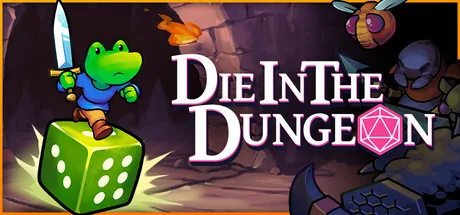
Game review
Die in the Dungeon
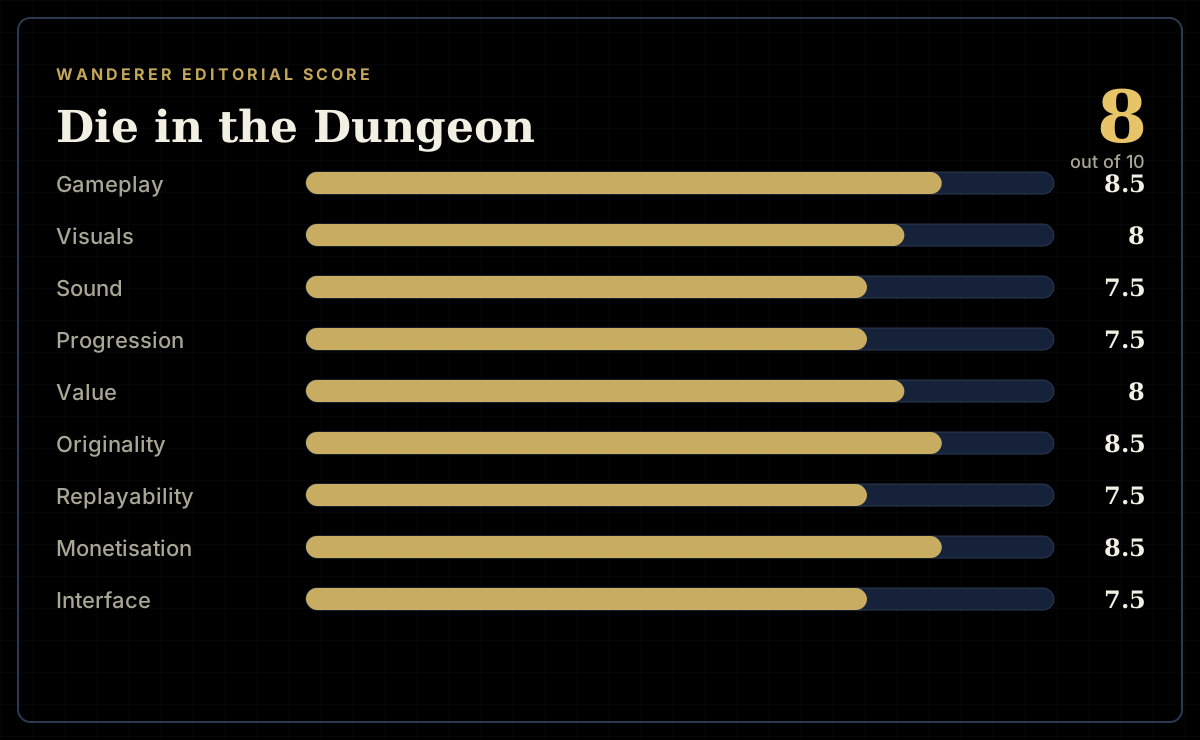
8 / 10
- Developer
- ATICO
- Publisher
- HypeTrain Digital, Sidekick Publishing
- Released
- 1 May 2026
- Platforms
- Windows, macOS
- Genre
- Roguelike Deckbuilder
- Monetisation
- One-time purchase, plus an optional cosmetic-only Supporter Pack DLC (soundtrack, hero skins, a pet) with no gameplay effect
- Players
- Single-player only, no co-op or PvP
The short version
Die in the Dungeon takes the deckbuilding roguelike's most familiar shape and rebuilds its central decision around physical dice instead of a drawn hand, and the change turns out to matter more than it sounds. Placement on a small board, die faces you can reshape between runs, and modifier zones that reward exactly where you drop a die give it tactical texture a straight Slay the Spire clone wouldn't have.
It doesn't fully escape that comparison, and a three-world campaign with occasionally lopsided post-fight rewards means the ceiling sits just under the genre's best. What's here is confident, handsomely drawn, and one of relatively few games in this space actually solving a different puzzle rather than reskinning the same one.
Biggest strengths
- Dice placement on the diamond board creates spatial decisions a shuffled card hand never asks you to make
- Four playable frogs, each with a different starting board and dice set, make a fresh character feel like a genuinely different game plan rather than a reskinned run
- A failed run still banks character experience toward the next attempt, so a wipe doesn't erase the session's progress
Biggest weaknesses
- Dice offered after a fight frequently aren't real upgrades over what's already scored onto the board, echoing a complaint several players raised during Early Access
- Encounter difficulty can swing from comfortable to brutal depending on which dice land in hand on a given turn, a sharper version of the luck problem every deckbuilder has to manage
- No Linux build, narrowing the platform list relative to some of its genre neighbours
Who it's for: Slay the Spire veterans looking for a genuinely different puzzle rather than another card-shaped variation, and anyone who likes systems where positioning matters as much as raw power.
Our recommendation: Buy it at full price if you're already sold on dice-based strategy games; everyone else should watch for one of Steam's periodic discounts, given how directly it invites the Slay the Spire comparison it can't quite outrun.
8 / 10
Every deckbuilding roguelike since 2018 has had to answer for its resemblance to Slay the Spire, and most of them answer by rearranging the furniture — a different setting, a different resource economy, the same card in your hand doing the same job with a new name on it. Die in the Dungeon answers differently. It throws the hand away entirely and hands you a set of dice instead, and the switch from drawing to rolling changes more about how a turn actually plays out than a genre this crowded usually manages.
Rolling instead of drawing
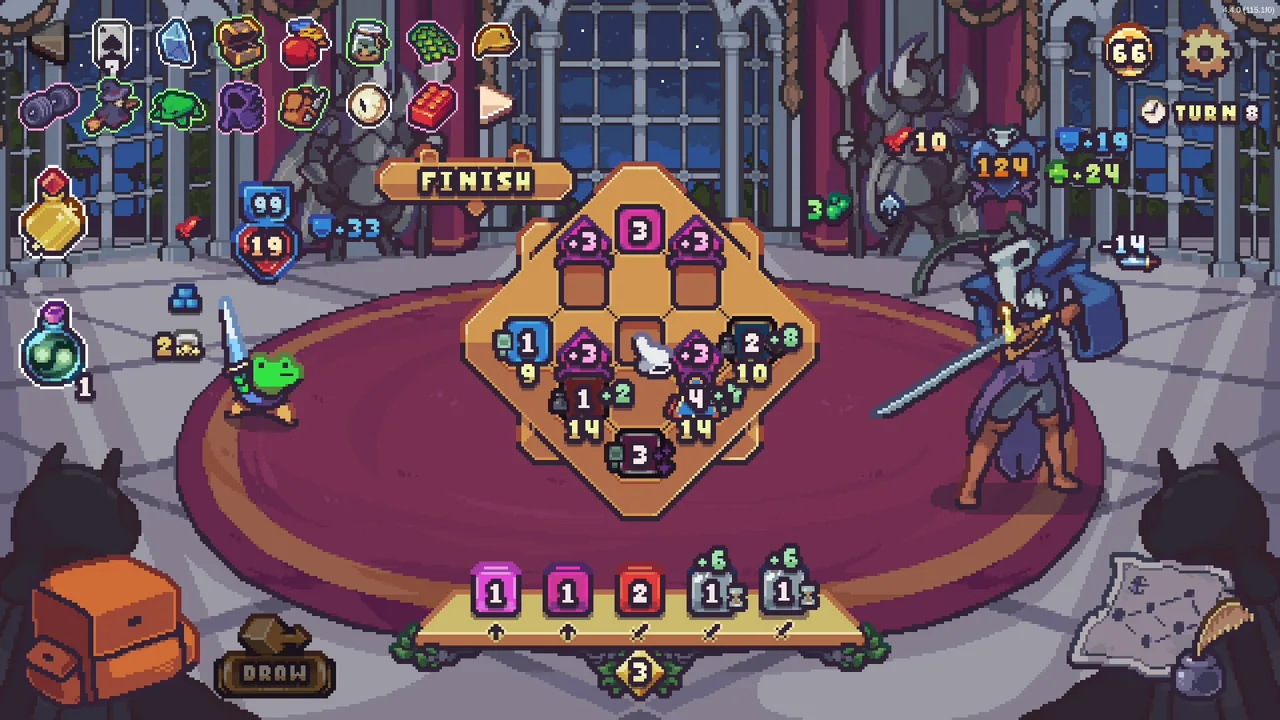
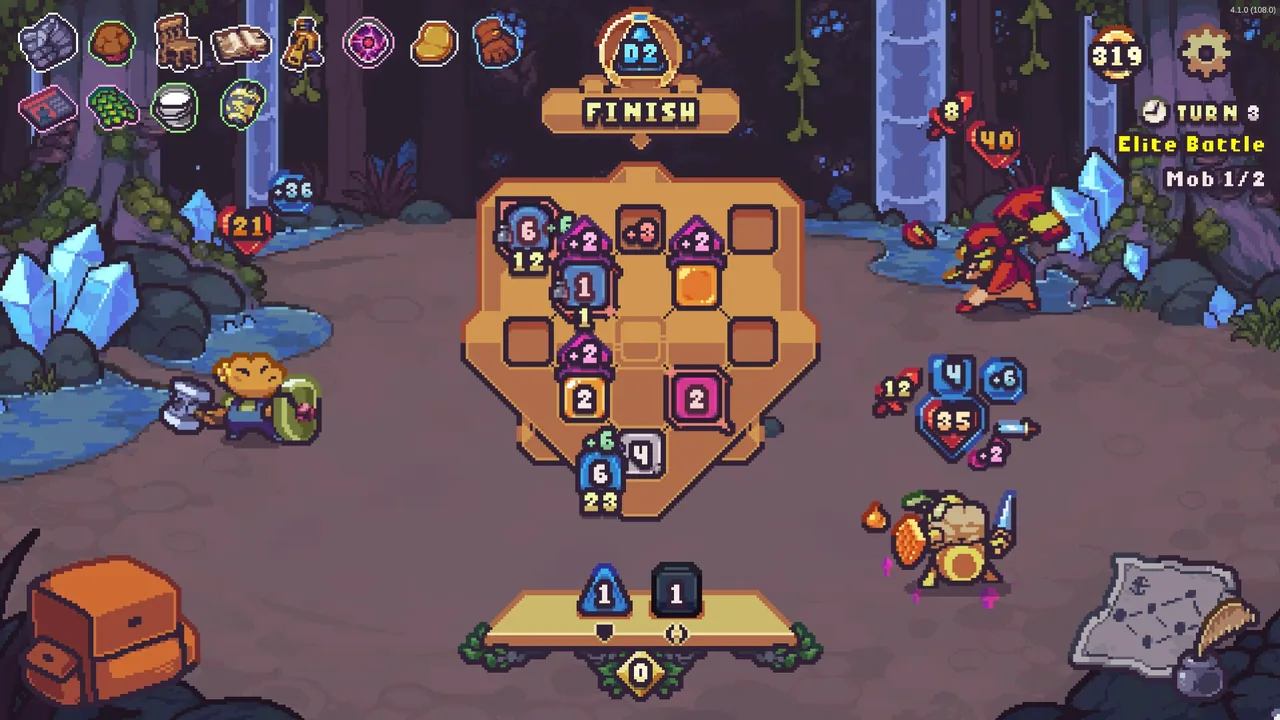
The premise is simple to state and less simple to master. Instead of a deck you shuffle and draw from, you carry a pool of dice — red for damage, blue for defence, green for healing, purple as a multiplier — and each turn you roll and slot them onto a small diamond-shaped board. What a die does depends on its face and its colour, but where you put it matters just as much. Multiplier and boost dice create zones that amplify whatever lands next to them, so a turn's real puzzle isn't just "which dice do I have" but "which square makes this roll worth the most." That's a genuinely different cognitive task from managing a card hand, where sequencing and mana costs do most of the tactical work. Here, geometry does it.
The system keeps unfolding well past the basics. Orange dice hit an area instead of a single target, salmon dice apply buffs that persist across several turns, and individual dice can carry properties like "Heavy," which locks a die's placement once committed, forcing you to plan around a piece you can no longer move. It's the kind of modifier-stacking design that owes an obvious debt to Balatro's influence on the genre — dice that break after one use, dice that reroll for free, dice you can reshape face by face between runs — and it's applied with enough restraint that the board never turns into unreadable noise, even once several zones and buffs are active at once.
Four frogs, four different puzzles
Character choice does real structural work here rather than just reskinning stats. Each of the four playable frog warriors starts with its own board layout and its own opening dice set, and the difference is large enough that switching characters between runs feels closer to starting a new strategy than replaying the same one with a different coat of paint. The 1.0 release added Nera, a character built around parrying — timing a defensive die against an incoming attack rather than simply absorbing or avoiding it — which is a meaningfully different combat rhythm from the more straightforward attack-and-block characters that came out of Early Access.
That variety is doing a lot of the game's replayability, and reasonably so, because the campaign itself is compact. Three worlds lead to a final confrontation, which is a shorter shape than some of this genre's biggest names offer, and a player who's cleared a run with all four characters has seen most of what a single difficulty tier has to show. The game's answer to that is a stack of harder difficulty rungs — up to a demanding D8 tier that keeps forcing deck evolution rather than letting a single winning build coast — plus an enemy codex and per-character experience that keep unlocking between attempts. It's a reasonable answer, but it is a different kind of longevity than raw content volume, and players coming from genre giants with dozens of relics and acts should adjust their expectations accordingly.
When a run goes wrong anyway
One of the smarter choices carried over from Early Access is how little a failed run actually costs. Dying doesn't just reset the clock — character experience earned during that attempt carries forward, feeding unlocks and progression that make the next run start from a slightly stronger position even after a total loss. That's a meaningful difference from roguelikes where a death wipes the slate completely, and it keeps the game's harder difficulty tiers from feeling like pure punishment for experimenting.
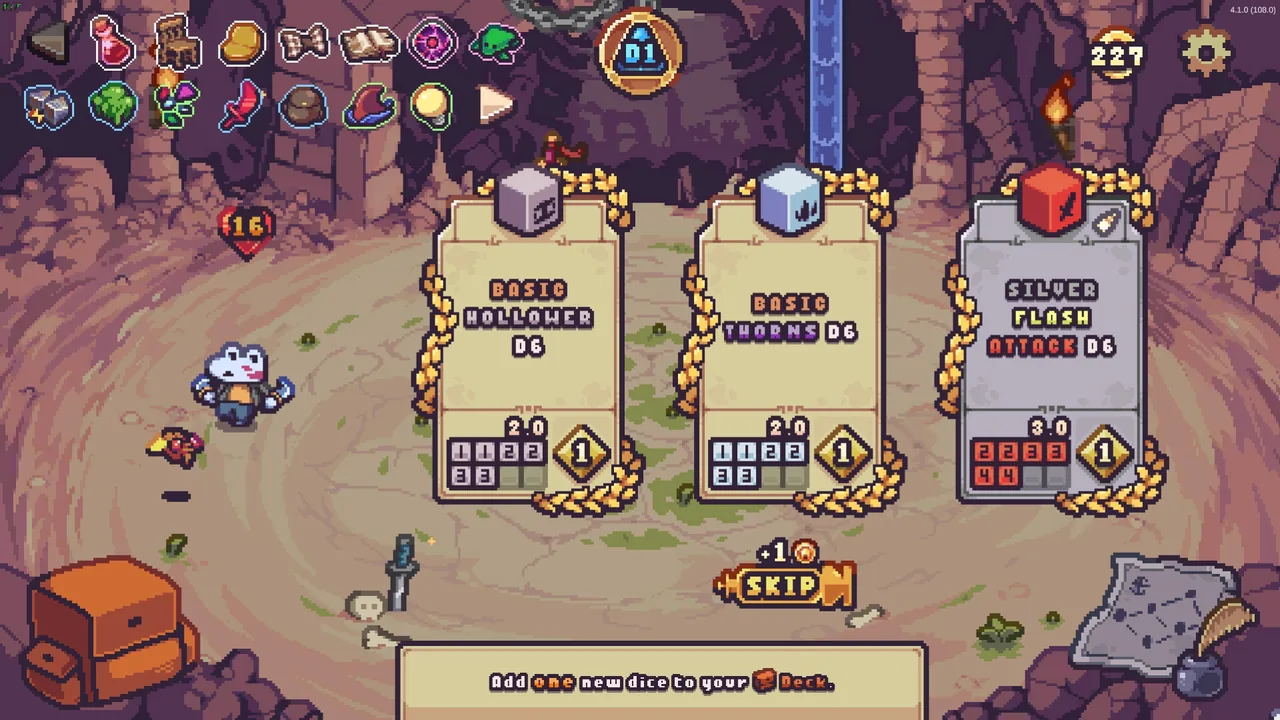
Where the loop shows real seams is in what the game offers you after a fight. New dice appear as rewards between encounters the way new cards do in its inspiration, but a chunk of those offers don't actually improve on what's already slotted into your board — a pattern players flagged repeatedly during Early Access, and one that hasn't fully disappeared in the finished release. When a reward screen regularly presents choices that aren't real choices, the deckbuilding half of "dicebuilding roguelike" loses some of its bite. It's a tuning problem rather than a structural one, and it's the kind of thing a patch could meaningfully improve, but it's present in the build players are paying for today.
The other rough edge is one this genre never fully solves: luck. Because dice are rolled rather than drawn from a shrinking deck, the variance between a good roll and a bad one is sharper turn to turn than card-based systems usually allow for, and a handful of encounters can swing from comfortable to nearly lethal depending on what actually comes up. Good relic and dice-face choices blunt this over a full run, but early attempts with an unfamiliar character can feel like they're fighting the dice as much as the enemy.
Presentation
The pixel art carries real craft, and it's worth noting given the game's literal game-jam origins — this started life as a 2021 Brackeys Game Jam entry before growing into a 2023 prologue and then a full Early Access release. Creature and hero designs are detailed and animated with care rather than functional placeholder work, and the soundtrack does its job of building tension around a genre that lives or dies on whether a fight feels dangerous. None of it is trying to be a technical showcase, and it doesn't need to be — legibility on a small combat board matters more here than raw fidelity, and the art delivers that.
Monetisation and value
There's very little to flag here, which is worth saying plainly in a genre where live-service habits creep in more often than players expect. Die in the Dungeon is a one-time purchase with a single piece of DLC — a Supporter Pack containing the soundtrack, cosmetic skins for every hero and a pet — and none of it touches gameplay. No currency shop, no timers, no purchasable advantage anywhere in the store listing. At roughly NZ$22 for the base game, it sits in line with what comparable indie deckbuilders ask, and the absence of any monetisation pressure beyond that optional cosmetic pack is exactly what a genre built on replayable runs should look like.
Verdict
Die in the Dungeon earns its comparisons to Slay the Spire honestly — it wears the lineage openly — but it isn't just borrowing the shape and hoping nobody notices. Trading a card hand for rollable, placeable, reshapeable dice changes what a turn actually asks of you, and four structurally distinct characters give that change room to keep feeling fresh across several runs. A campaign that wraps in three worlds and a reward loop that doesn't always offer a genuine upgrade are the two things keeping it from the genre's very top shelf, alongside the sharper luck swings that come from rolling instead of drawing.
At 8.0, this is a very good deckbuilding roguelike that found its own mechanical identity inside a crowded field, not a great one that's redefined it. Players who've worn a groove into Slay the Spire's card list will find something here that scratches the same itch from a genuinely different angle. Players hoping for a campaign as sprawling as the genre's biggest names should temper expectations, and go in knowing the replayability is built on character and difficulty variety rather than sheer volume of content.
Anyone who likes systems where a decision's value depends on exactly where you place it, not just what it is, should give this one a look — and players who enjoy that kind of positional strategy layered onto ongoing progression may also find something to like in Wanderer, where advancement keeps ticking along even when a session ends.
Pricing and monetisation checked 31 July 2026.
Pros and cons
Pros
- Dice placement on the diamond board creates spatial decisions a shuffled card hand never asks you to make
- Four playable frogs, each with a different starting board and dice set, make a fresh character feel like a genuinely different game plan rather than a reskinned run
- A failed run still banks character experience toward the next attempt, so a wipe doesn't erase the session's progress
- The Supporter Pack DLC is cosmetic only — soundtrack, skins and a pet — with no gameplay-affecting purchase sitting anywhere near the base game
- Detailed, clearly animated pixel art and a tension-appropriate soundtrack outclass the game's literal game-jam origins
Cons
- Dice offered after a fight frequently aren't real upgrades over what's already scored onto the board, echoing a complaint several players raised during Early Access
- Encounter difficulty can swing from comfortable to brutal depending on which dice land in hand on a given turn, a sharper version of the luck problem every deckbuilder has to manage
- No Linux build, narrowing the platform list relative to some of its genre neighbours
- Three worlds to a final boss keeps a single run relatively compact; most of the game's longevity comes from replaying characters and difficulty tiers rather than from sheer explorable content
Screenshots
-
Die in the DungeonImage: HypeTrain Digital via Steam -
Die in the DungeonImage: HypeTrain Digital via Steam -
Die in the DungeonImage: HypeTrain Digital via Steam -
How the review scores each part of the gameWanderer Editorial -
The short versionWanderer Editorial