
Game review
FTL: Faster Than Light
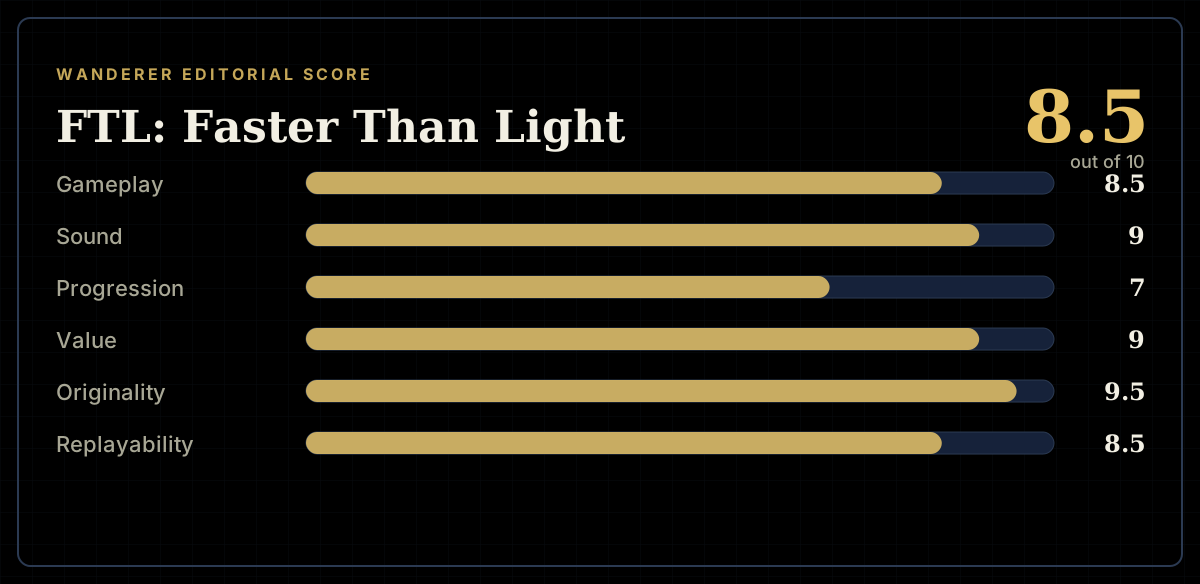
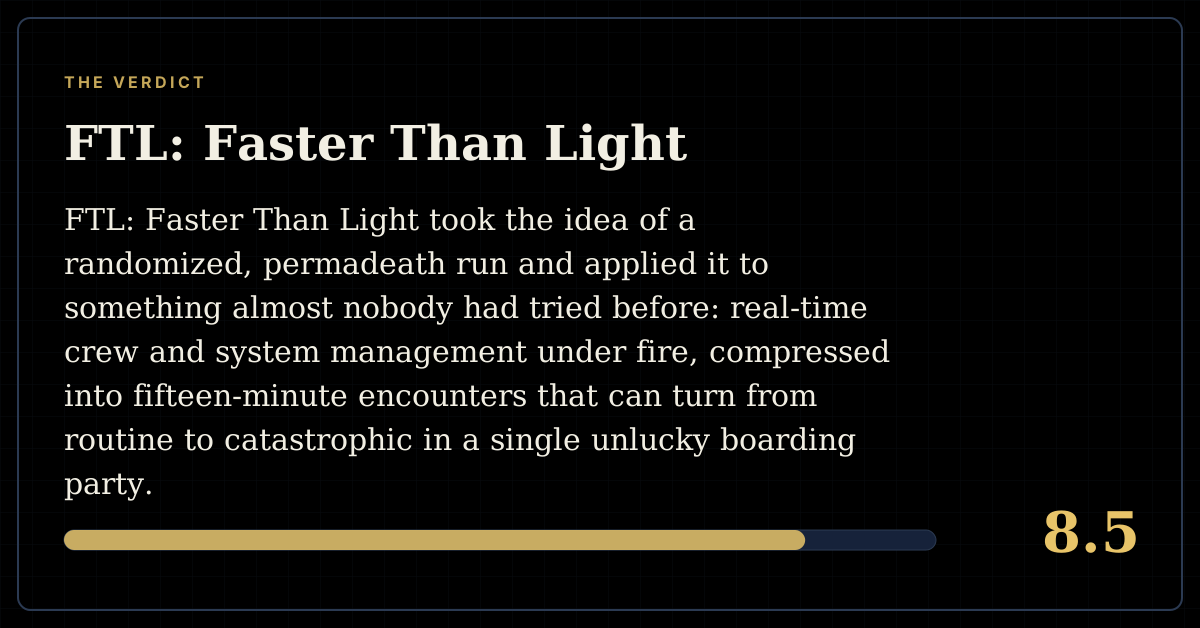
8.5 / 10
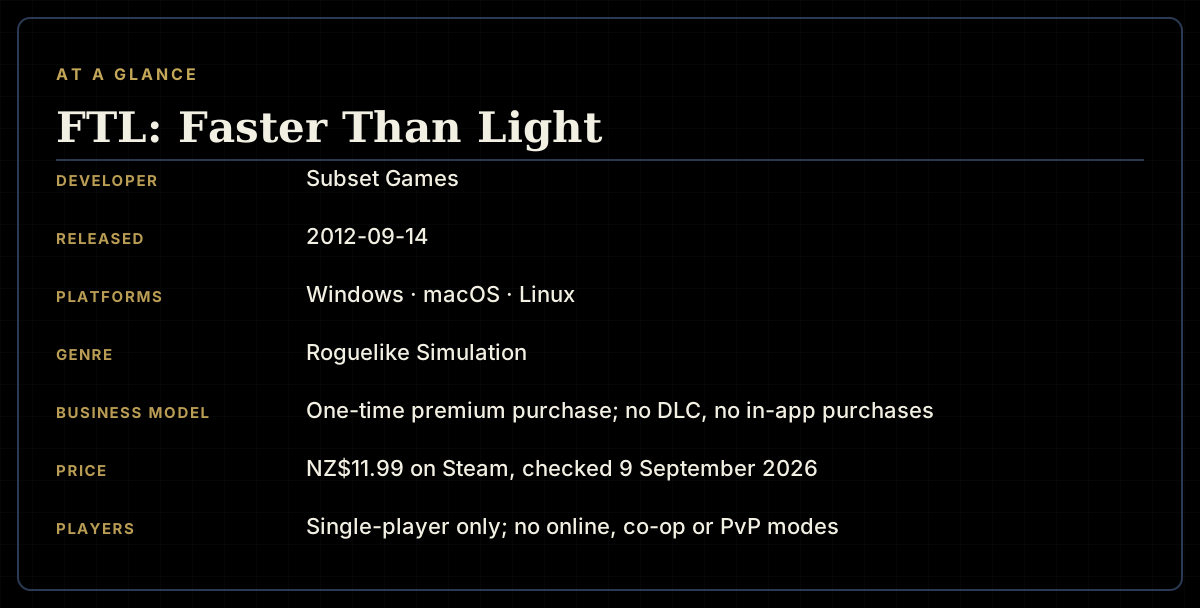
- Developer
- Subset Games
- Publisher
- Subset Games
- Released
- 14 September 2012
- Platforms
- Windows, macOS, Linux
- Genre
- Roguelike Simulation
- Monetisation
- One-time premium purchase; no DLC, no in-app purchases
- Players
- Single-player only; no online, co-op or PvP modes
The short version
FTL: Faster Than Light took the idea of a randomized, permadeath run and applied it to something almost nobody had tried before: real-time crew and system management under fire, compressed into fifteen-minute encounters that can turn from routine to catastrophic in a single unlucky boarding party. Thirteen years and one enormous free content expansion later, it remains a genre founder that most of its imitators still haven't matched, backed by a soundtrack widely regarded as one of the best in the medium.
A real, recurring critical thread pushes back on exactly the thing most reviewers love: several detailed negative reviews argue that FTL's randomness too often overrides skill entirely, citing runs lost to unwinnable shop luck or unavoidable early hits rather than a learnable mistake. The developers never significantly changed that core RNG design across a decade of small patches, meaning this remains a real, load-bearing trade-off rather than a bug — one worth understanding before buying, not after twenty straight losses.
Biggest strengths
- A genre-founding real-time crew and systems-management loop that most later "spaceship roguelikes" still haven't fully replicated, built around fast, tense fifteen-minute runs
- Ben Prunty's soundtrack is cited constantly and specifically across reviews as one of the best in the genre, shifting between exploration calm and combat urgency
- The free 2014 Advanced Edition update added a full new alien race, new ships, weapons, events, and additional music and writing (including contributions from Chris Avellone) years after release, at no extra cost to existing owners
Biggest weaknesses
- A specific, recurring, detailed criticism from a real minority of reviewers: randomness can decide a run's outcome more than player skill, with shops sometimes failing to offer weapons strong enough for late encounters and early hits landing before a player has any real chance to react
- Achievement data backs up the game's reputation for punishing difficulty even at the low end — barely a quarter of tracked players have won a run on Easy, and full ship unlocks sit under ten percent
- One detailed reviewer alleges the developers made changes specifically to break third-party save editors years after launch, restricting how a paid, single-player game can be played; this review could not independently verify the claim through the game's own public update history
Who it's for: Roguelike and management-sim fans who want a tense, systems-driven challenge they can finish in a single sitting per run, and who are willing to accept genuine, sometimes brutal randomness as part of the design rather than something to be overcome through skill alone. Less suited to players who want steady, learnable progress toward mastery run over run.
Our recommendation: An essential, cheap purchase for strategy and roguelike fans, and one of the clearest cases in the genre of a small team using a free, years-later expansion to make an already-great game meaningfully bigger rather than moving straight on to a sequel.
8.5 / 10
Long before "roguelike" became a genre modifier slapped onto half of Steam's new-release page, FTL: Faster Than Light did something genuinely new with the idea: it put a randomized, permadeath run inside a real-time systems-management sim, and asked players to keep a crew of three to eight alive while juggling shields, weapons, oxygen and engines under active fire. Thirteen years and one major free expansion later, it still sits at Very Positive across more than 62,000 reviews, and it remains a reference point the genre it spawned still gets measured against.
Fifteen minutes of tension, over and over
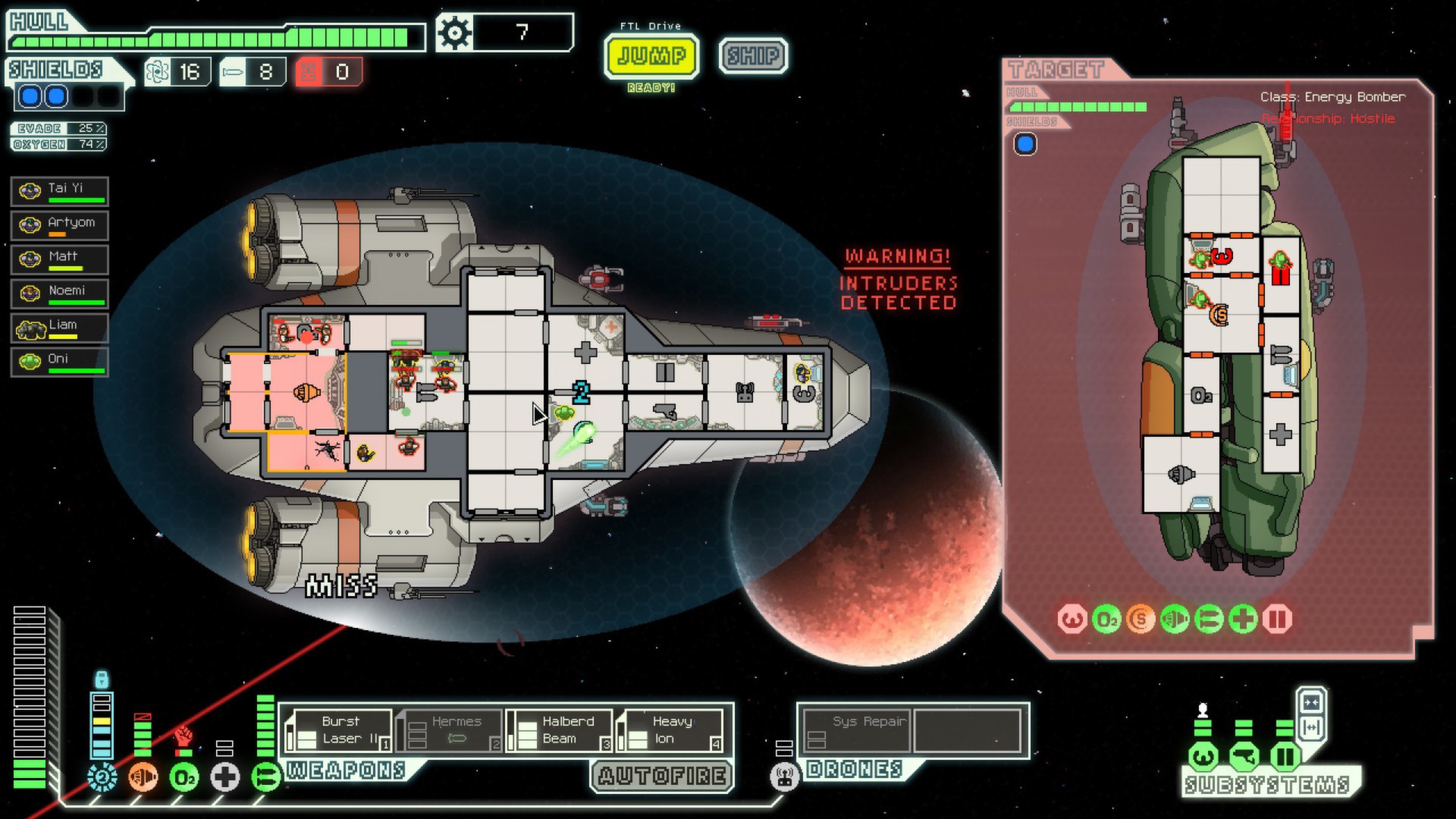
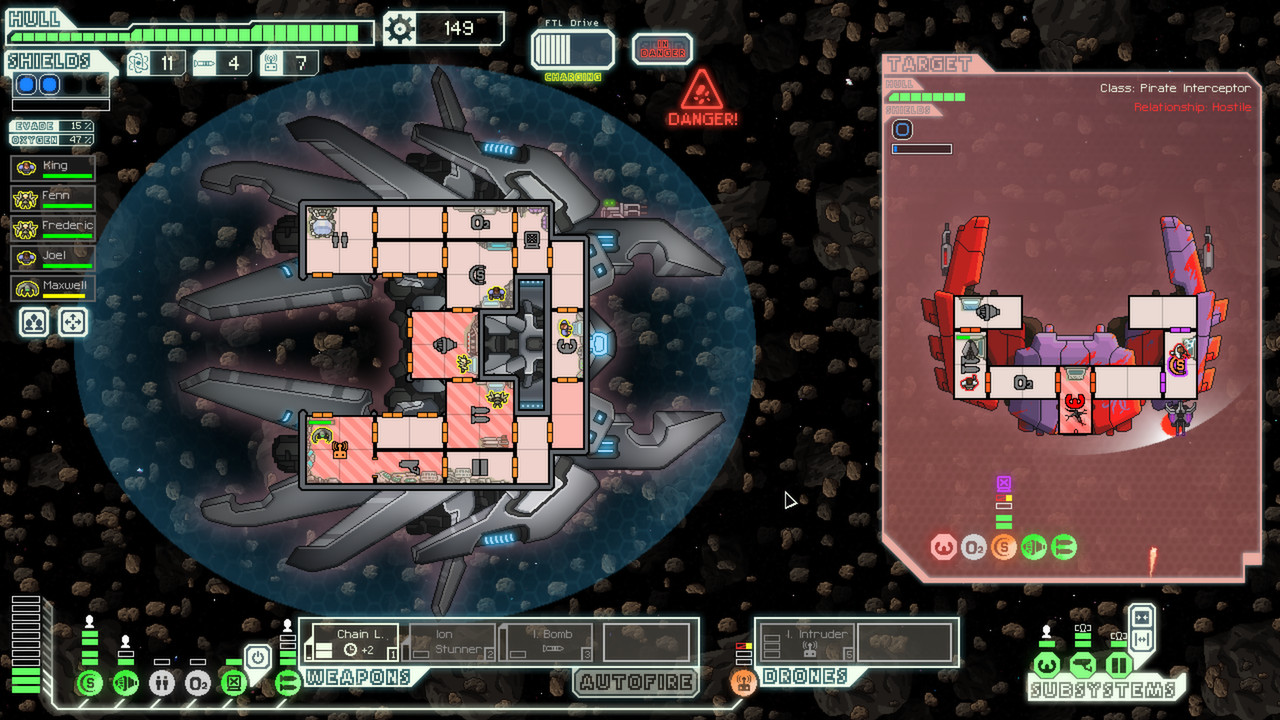
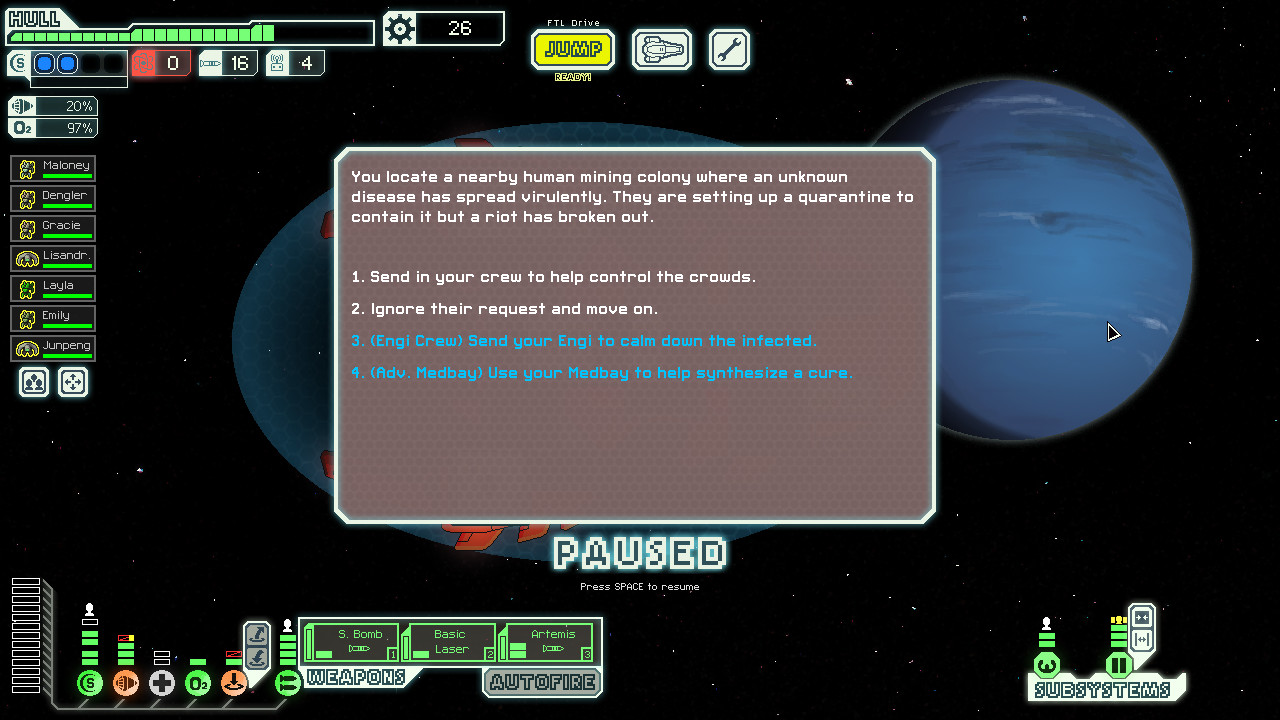
The core loop is simple to describe and hard to master: jump between procedurally generated sectors, choose which fights and events to engage with, and manage a small ship's systems in real time (with a pause button to issue orders) as encounters escalate. A run typically lasts around two hours if it goes well, and can end in under fifteen minutes if it doesn't. Reviewers consistently describe the specific rhythm of a bad encounter spiraling — a hull breach here, a boarding party there, a fire spreading to the medbay — in vivid, almost storytelling terms, because the systems genuinely do produce that kind of emergent narrative. One widely-quoted review compares the whole experience to "you're in Firefly, except you get cancelled after 3 hours instead of 16 episodes" — a good shorthand for both the tone and the game's willingness to end a story abruptly.
Ben Prunty's soundtrack comes up constantly and specifically across the review sample, not as a generic "nice music" aside but as a genuinely load-bearing part of why the tension lands — reviewers describe the shift from a calm exploration theme into urgent combat music as one of the things that makes individual encounters feel consequential rather than mechanical. For a game this systems-driven, that's a meaningful piece of design credit, and it's rare to see a soundtrack cited this consistently across a review sample this large.
The RNG argument, taken seriously
FTL's Overwhelmingly Positive-adjacent score obscures a real, detailed, minority critical position worth engaging with directly rather than waving away. Several of the game's most-voted negative reviews make essentially the same specific argument: that FTL's randomness too often decides a run's outcome independent of player skill, rather than punishing a mistake a player could learn from. One reviewer with 60 hours logged puts it plainly: "Sometimes the game shops won't spawn weapons/upgrades strong enough to defeat the final boss. Other times the enemy ships evade all your attacks and you can't dodge a single shot." Another, more discursive review draws a sharper distinction: good randomness is randomness a player can learn to work around, and FTL's, in this reviewer's account, too often removes agency rather than testing it — "the experience of actually playing the game has been utterly and completely unsatisfying, in spite of all the potential it holds."
This isn't a fringe complaint about difficulty in general — several of these reviews explicitly say they don't mind a hard game, and single out the specific shape of the problem (unwinnable resource states, front-loaded bad luck with no room to recover) rather than just losing repeatedly. It's a real, structural critique that the game's own thirteen-year patch history never substantially addressed, which means it remains an accurate description of the game as it exists today, not an outdated complaint from an early, since-fixed build. Buyers who bounce hard off runs feeling arbitrarily unwinnable are describing a real and unresolved property of the design, not a personal skill gap.
Steam's own achievement data, though only tracking players since achievements were added in January 2020, backs up just how hard the game plays even setting the RNG debate aside: barely a quarter of tracked players have won a single run on Easy difficulty, reaching the game's final sector sits under 40%, and unlocking every ship variant sits at roughly one in fifteen players. Whatever the balance of skill versus luck in any individual run, the aggregate numbers confirm this is a genuinely difficult game by design, not one where the marketing oversells the challenge.
A free, substantial expansion years after launch
Where FTL's post-launch story stands out from most games this old is the 2014 Advanced Edition update — a free content expansion added roughly a year and a half after release that introduced an entirely new playable alien race (the Lanius), new ships, weapons, drones and events, plus additional music and new writing, including contributions from Chris Avellone (Fallout: New Vegas, Planescape: Torment). Every existing owner received it at no additional cost, on the same day the game launched on iPad with the new content included. It's a genuinely rare shape of post-launch support: not a paid expansion, not a sequel cash-in, but a substantial free addition to an already-complete game, and it's the single biggest reason FTL's current form is meaningfully larger than what launched in 2012.
One serious, unverified accusation
Among the negative reviews is a specific and more serious complaint worth reporting carefully: one detailed reviewer alleges the developers made deliberate changes, years after launch, specifically to break third-party save editors — describing it as restricting how buyers of a paid, single-player game are allowed to play it, and calling the broader community response to that kind of request dismissive. This review could not independently confirm the claim; FTL's own public partner-events history on Steam is sparse (six posts across thirteen years, mostly translation and content announcements) and contains no patch note matching this description one way or the other. It's reported here as exactly what it is — one detailed, plausible-sounding but unconfirmed reviewer accusation — rather than either dismissed or treated as established fact.
Where it lands
FTL earned its reputation the hard way: a tightly scoped, cheap, complete single-player game that did something genuinely new with permadeath and real-time systems management, backed by one of the more beloved video game soundtracks around, and supported years later with a free, substantial content expansion instead of being abandoned for a straight sequel. The RNG critique from its more detailed negative reviews is real, specific, and never resolved by the developers — worth taking seriously rather than dismissing as sore-loser complaints, and worth knowing about before a first purchase rather than after a dozen frustrating runs. But it doesn't undo what the vast majority of this game's reviewers, spanning well over a decade, keep independently arriving at: this is one of the genre's true originals, and still one of its best.
Pros and cons
Pros
- A genre-founding real-time crew and systems-management loop that most later "spaceship roguelikes" still haven't fully replicated, built around fast, tense fifteen-minute runs
- Ben Prunty's soundtrack is cited constantly and specifically across reviews as one of the best in the genre, shifting between exploration calm and combat urgency
- The free 2014 Advanced Edition update added a full new alien race, new ships, weapons, events, and additional music and writing (including contributions from Chris Avellone) years after release, at no extra cost to existing owners
- Extremely cheap for the amount of replayable content on offer, with a huge unlock tree of ships and crew variants driving long-term replay value
- A tightly scoped, complete single-player package with no DLC paywalls, microtransactions, or unfinished systems to wait years for
Cons
- A specific, recurring, detailed criticism from a real minority of reviewers: randomness can decide a run's outcome more than player skill, with shops sometimes failing to offer weapons strong enough for late encounters and early hits landing before a player has any real chance to react
- Achievement data backs up the game's reputation for punishing difficulty even at the low end — barely a quarter of tracked players have won a run on Easy, and full ship unlocks sit under ten percent
- One detailed reviewer alleges the developers made changes specifically to break third-party save editors years after launch, restricting how a paid, single-player game can be played; this review could not independently verify the claim through the game's own public update history
- The core moment-to-moment loop repeats the same encounter structure run after run, and some reviewers with very high hour counts report the format itself eventually wearing thin
- Steam Achievements were only added to the game in January 2020, meaning achievement-completion data reflects post-2020 players only, not the full thirteen-year audience
Screenshots
-
FTL: Faster Than LightImage: Subset Games via Steam -
FTL: Faster Than LightImage: Subset Games via Steam -
FTL: Faster Than LightImage: Subset Games via Steam -
How the review scores each part of the gameWanderer Editorial -
The specsWanderer Editorial -
The short versionWanderer Editorial