Game review
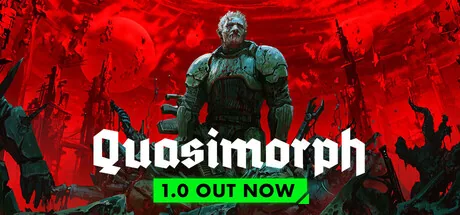
Quasimorph
8 / 10
- Developer
- Magnum Scriptum
- Publisher
- HypeTrain Digital
- Released
- 31 July 2026
- Platforms
- Windows
- Genre
- Turn-based tactical roguelike / extraction RPG
- Monetisation
- One-time purchase with no in-game purchases, ads or subscriptions. An optional cosmetic Supporter Pack DLC exists purely to fund the studio and grants no gameplay advantage.
- Players
- Single-player only
The short version
Quasimorph asks you to run a private military company that prints new mercenaries the way other games print ammunition, then makes you care about every one of them anyway. Its turn-based extraction missions are tense, its injury and augmentation systems are unusually granular, and its cosmic-horror-meets-cyberpunk atmosphere is the strongest reason to stick with it. The 1.0 release closes out five storylines and nine endings on top of that foundation, but the game's reputation for brutal, RNG-driven difficulty is earned, and its information design still asks more of new players than it should.
Biggest strengths
- The injury system tracks damage separately across human, cybernetic and Quasimorphic body parts, so losing a specific augmented limb or organ changes what your operative can still do rather than just draining a shared health bar
- Five storylines and nine distinct endings give the 1.0 campaign real structural variety, with two entire faction storylines added specifically for the full release
- Pixel art, ambient sound design and an unusually strong soundtrack sell the setting's cyberpunk-meets-cosmic-horror tone from the first mission onward
Biggest weaknesses
- Status effects and stuns can chain together badly enough to kill a well-equipped operative in a sequence the player has no real way to play around, and a meaningful slice of the negative reviews since 1.0 focus specifically on this
- Mission, faction and equipment information is spread across a large number of separate screens with little onboarding, leaving new players to piece the systems together themselves
- Late-game progression leans on gear checks that are difficult to clear without already owning the gear those checks exist to unlock, a curve some longtime players describe as a wall rather than a ramp
Who it's for: Fans of punishing turn-based tactics and extraction loops — XCOM, Zero Sievert, Escape from Tarkov, Jupiter Hell — who want permadeath stakes without needing a live opponent to lose to.
Our recommendation: A strong buy for players who already know they like unforgiving roguelikes and want a genuinely distinctive setting wrapped around the genre. Players who want their difficulty curve gentle or their systems explained up front should try before committing, even with the adjustable difficulty options.
8 / 10
Most extraction games make you fear losing your loot. Quasimorph makes you fear losing the person carrying it, and then reminds you that the person was never really a person to begin with — just the latest clone your PMC printed after the last one came home in pieces, or didn't come home at all. That's the trick underneath everything this game does. It's a turn-based tactics roguelike wearing an extraction shooter's economy, and it commits to both halves of that description with a seriousness that's rare even in a genre built on commitment to brutal ideas.
Quasimorph spent close to three years in Steam Early Access before its 1.0 release on 31 July 2026, and the version shipping now is a considerably larger game than the one that launched in October 2023. Five storylines — tied to factions including Civil Resistance, Tezctlan, Xiomara, AnCom and RealWare — now run through to nine distinct endings, each with its own epilogue. What hasn't changed across that development arc is the core proposition: you run a mercenary company contracted by corporations to clear planetary bases, derelict ships and secret labs that something much worse than a rival PMC has gotten into first, and every mission is built to punish overconfidence.
Printing clones, losing everything
The structural hook is simple to state and unpleasant to live through. You deploy an operative on a contract, fight your way to its objective through turn-based combat, and try to extract with whatever you managed to loot. Succeed, and everything comes home with you — weapons, gear, crafting materials, reputation with the faction that hired you. Die, and all of it is gone, operative included, though your PMC can always print a replacement and try again. That framing does a lot of quiet work: it justifies permadeath narratively instead of just imposing it as a genre convention, and it means the game never has to pretend your mercenary was anything more than disposable industrial equipment with a face.
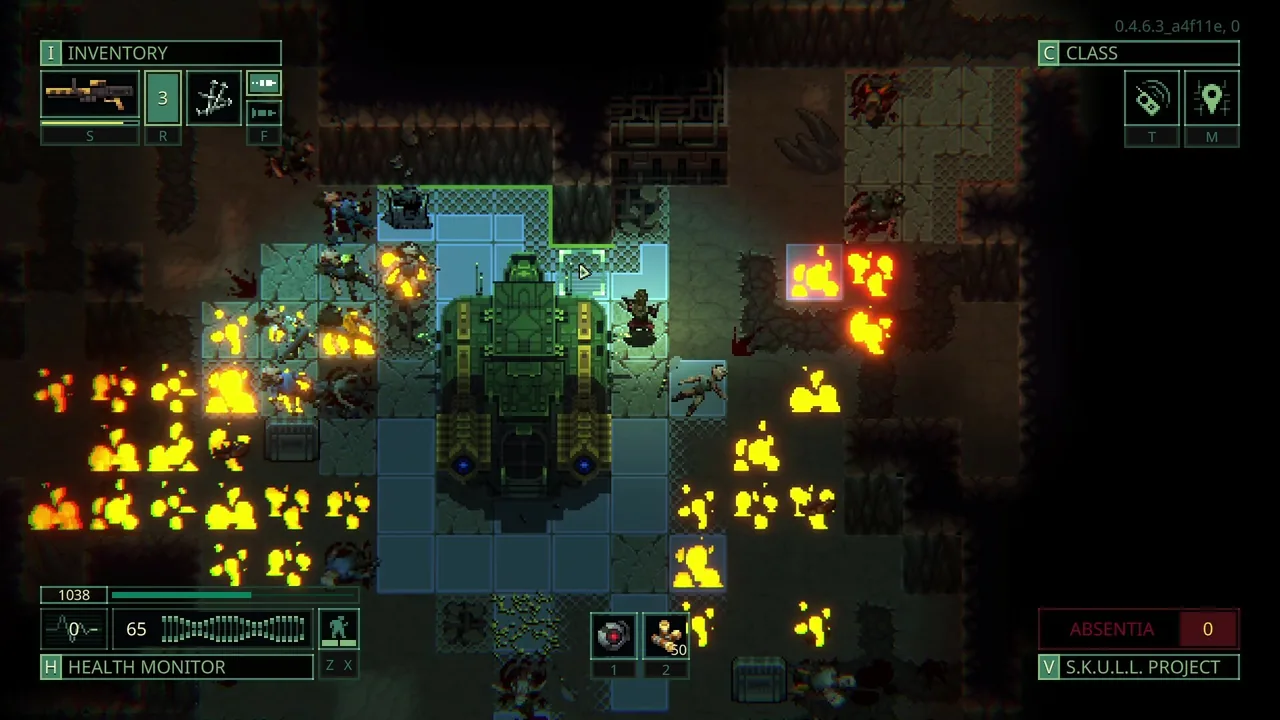
It also means the extraction tension that usually depends on other players — the fear that someone's about to round a corner and end your run — has to be generated entirely by AI, level design and bad luck instead. Quasimorph mostly manages it. Fog of war, ambush placement and the sheer density of hostile faction territory keep most missions feeling like they could turn on you at any moment, and turn-based pacing gives you enough time to actually read a situation rather than just react to it. Whether that tension resolves fairly is the single most contested question in the game's own player base, and it's worth taking seriously rather than waving away.
Bodies, not health bars
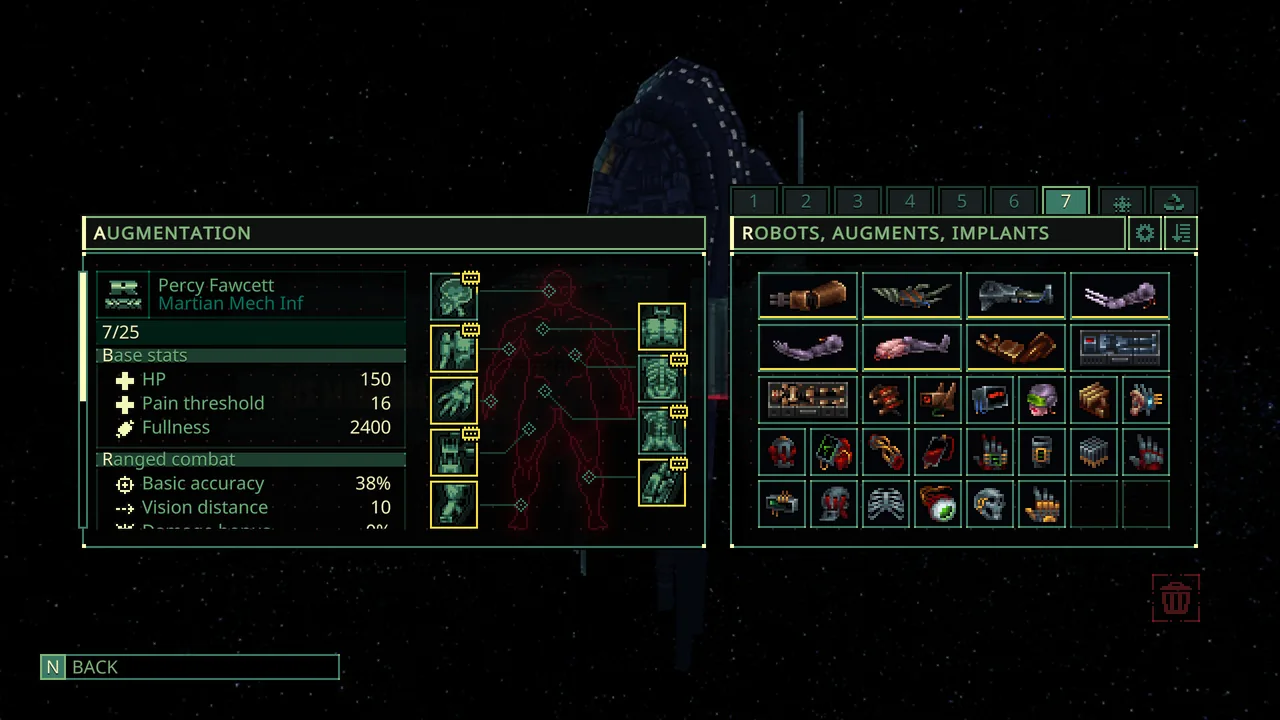
The system that best justifies Quasimorph's reputation for depth is its injury model. Damage doesn't just subtract from a pool — it lands on specific body parts, and those parts behave differently depending on whether they're still organic, already augmented with cybernetics, or altered by the Quasimorphic corruption the setting's cosmic horror trades in. A shattered leg slows you down. A ruined cybernetic arm might strip a weapon bonus you were relying on. Bleeding, chem addiction, radiation and a long list of other status conditions stack on top of that and often require specific items or treatments to clear rather than simply fading with time. It's an unusually granular way to model a body falling apart in combat, and it's a big part of why players who bounce off easier tactics games describe Quasimorph as the genre's hardcore endpoint.
That granularity is inseparable from the augmentation and Pact systems layered over it. By 1.0 the Pact system spans 142 options, letting a build lean into cybernetic replacement, chemical enhancement or the game's stranger Quasimorphic mutations, each with real tradeoffs rather than a strictly-better upgrade path. Building a specialist — a melee cyborg who shrugs off gunfire, a chem-fuelled glass cannon, a stealth operative who avoids fights entirely — is a genuinely different experience from build to build, which is more than most roguelikes with this much procedural variance can claim.
Where the difficulty tips into cruelty
The counterweight to all that depth is a difficulty curve with a real credibility problem among a segment of its own audience. The most common complaint in Quasimorph's negative reviews isn't that the game is hard — most of its players signed up for hard — it's that specific deaths feel unwinnable rather than earned: an operative opening a door into a room that alpha-strikes them before a single action is available, or a chain of stacked status effects that locks a fully prepared mercenary out of acting until they're dead. Reviewers with well over a hundred hours invested, clearly not first-time bouncers, describe the same pattern: long stretches of feeling in control followed by a single unavoidable sequence that erases a run's accumulated gear in one turn. That's a harder complaint to dismiss than ordinary difficulty grumbling, because it's coming from players who otherwise rate the game highly and understand its systems well.
To the developer's credit, difficulty is adjustable rather than fixed, and some players are explicit that dialling it down solved the problem for them entirely. That's a legitimate answer for players willing to use it, but it does mean the "brutal by design" reputation the game has earned is really two different things bundled together — deliberate, well-tuned punishment on one hand, and RNG interactions the balance pass hadn't fully caught by launch on the other. The developers were still issuing balance hotfixes in the days immediately following 1.0, and it's worth checking recent patch notes before assuming any specific complaint above still applies at the moment you buy in.
An interface that assumes you'll figure it out
Quasimorph's second real weakness has nothing to do with tuning and everything to do with how much it explains itself. Mission difficulty is communicated through a combination of factors — objective type, threat indicators, faction strength, floor count — without a clear single readout tying them together, and the wider game follows the same pattern: important information about gear, factions, crafting and status effects is scattered across a large number of separate screens that don't cross-reference each other well. Experienced roguelike and tactics players tend to push through this because they're used to hunting for information the hard way. Newer players are more likely to walk away in the first few hours, and the game's own difficulty doesn't leave much room for figuring systems out through trial and error the way a gentler game would allow.
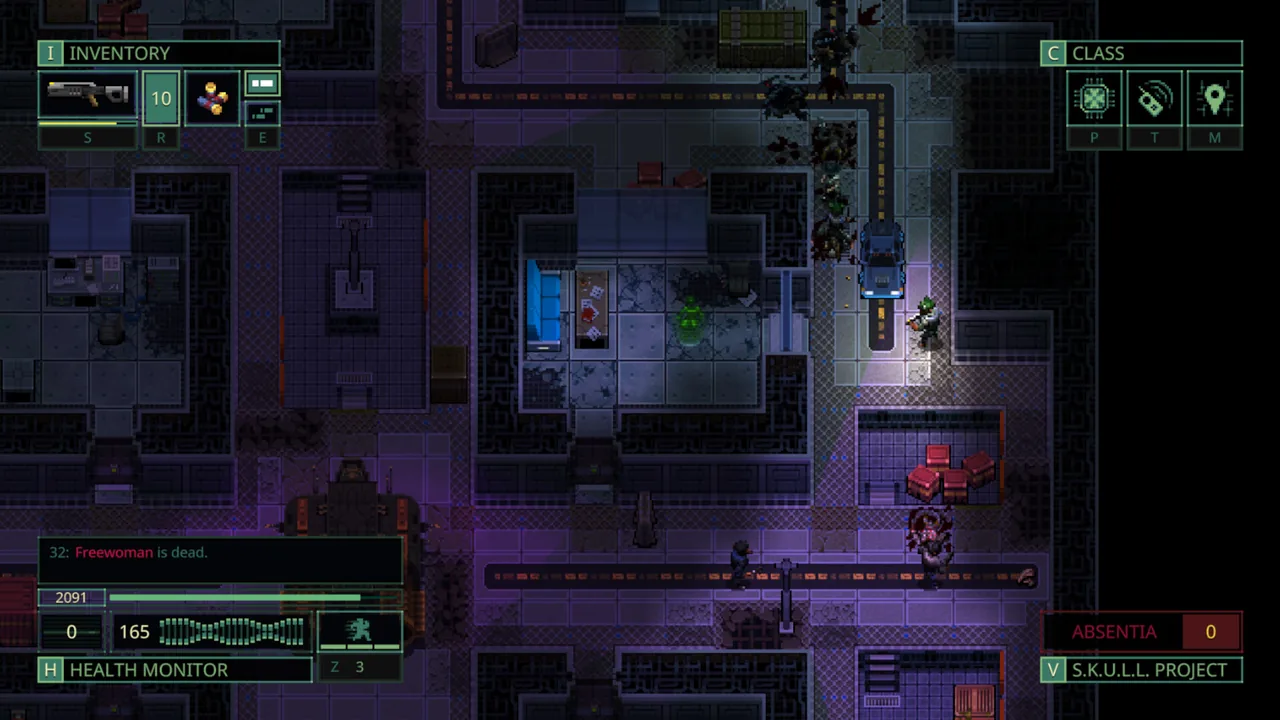
None of this is presentation weakness — Quasimorph's pixel art is confident and legible even in cramped combat spaces, and its sound design is one of the most consistently praised elements across its entire review history, with the soundtrack singled out often enough that it's clearly doing real work selling the atmosphere. The friction is purely informational: a genuinely deep game that hasn't fully solved how to teach itself.
What 1.0 actually changes
For players who followed Early Access, 1.0 isn't just a marketing milestone. Two full storylines were added specifically for the full release, bringing the total to five with nine endings between them, alongside 29 new firearms, deployable cover, expanded environmental interaction and a map editor for players who want to build their own content. The injury system's human/cybernetic/ Quasimorphic split appears to have been broadened as part of the same pass. It's a substantial close to a long development cycle rather than a token version bump, and longtime players who tracked the project since before its 0.6 update describe a studio that stayed responsive to feedback across that whole stretch, even when individual balance changes proved unpopular in the moment.
Value and what you're actually paying for
At NZ$38.49 full price — currently discounted to NZ$25.78 as a launch promotion — Quasimorph is a one-time purchase with nothing resembling a loot box, energy timer or premium currency attached. The only additional purchase is a Supporter Pack DLC explicitly framed as a way to send the studio extra money, not a gameplay unlock, which is about as honest as monetisation gets in a genre where extraction mechanics elsewhere are routinely built around convincing you to spend real money to avoid losing virtual gear. Given reported playtimes commonly running past 80 hours and not infrequently past 300, the price holds up comfortably against anything else in the tactics-roguelike space.
Verdict
Quasimorph earns its "Very Positive" standing honestly. Its extraction structure gives permadeath real narrative weight instead of treating it as a genre tax, its injury and Pact systems are more granular than almost anything else in the tactics-roguelike space, and its cosmic-horror cyberpunk setting is distinctive enough to justify the trip on atmosphere alone. What keeps it out of the very top tier is a difficulty curve that a meaningful share of its own dedicated players describe as crossing from punishing into arbitrary, and an interface that makes newcomers do more work than the genre needs to demand of them.
If you already know you like XCOM, Zero Sievert, Tarkov's stakes without its multiplayer, or Jupiter Hell's commitment to letting bad decisions kill you outright, Quasimorph's 1.0 release is exactly the kind of finish line that justifies the wait. If you're newer to the genre, go in expecting a game that would rather you struggle through its systems than explain them, and consider starting on a gentler difficulty setting before deciding the RNG is out to get you specifically.
Players who like the idea of permanent stakes and real consequences for failure, but would rather those stakes sit inside a persistent world they can keep returning to instead of a fresh clone every run, might also want to look at Wanderer.
Pros and cons
Pros
- The injury system tracks damage separately across human, cybernetic and Quasimorphic body parts, so losing a specific augmented limb or organ changes what your operative can still do rather than just draining a shared health bar
- Five storylines and nine distinct endings give the 1.0 campaign real structural variety, with two entire faction storylines added specifically for the full release
- Pixel art, ambient sound design and an unusually strong soundtrack sell the setting's cyberpunk-meets-cosmic-horror tone from the first mission onward
- The extraction loop gives every run genuine stakes — successful missions compound into better gear and a stronger roster, failed ones cost everything the operative carried in
- A deep Pact and augmentation system, expanded to 142 options at 1.0, rewards specialising a build rather than pushing every mercenary toward the same loadout
Cons
- Status effects and stuns can chain together badly enough to kill a well-equipped operative in a sequence the player has no real way to play around, and a meaningful slice of the negative reviews since 1.0 focus specifically on this
- Mission, faction and equipment information is spread across a large number of separate screens with little onboarding, leaving new players to piece the systems together themselves
- Late-game progression leans on gear checks that are difficult to clear without already owning the gear those checks exist to unlock, a curve some longtime players describe as a wall rather than a ramp
- The opening hours demand a lot of patience before the systems click, and the game is upfront that it is not trying to be approachable
- Balance was still being adjusted by hotfix in the days immediately after 1.0 launched, and a portion of the Early Access community feels specific playstyles came out of the transition weaker than before
Screenshots
-
QuasimorphImage: HypeTrain Digital via Steam -
QuasimorphImage: HypeTrain Digital via Steam -
QuasimorphImage: HypeTrain Digital via Steam -
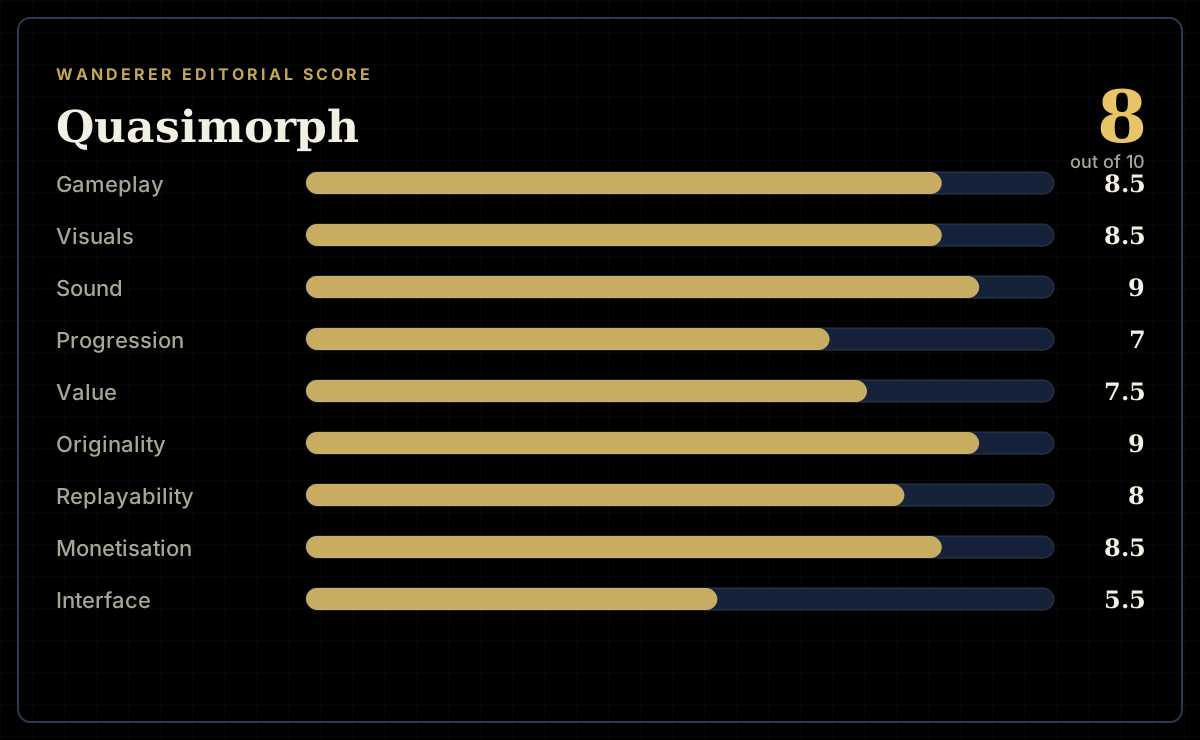
How the review scores each part of the gameWanderer Editorial -
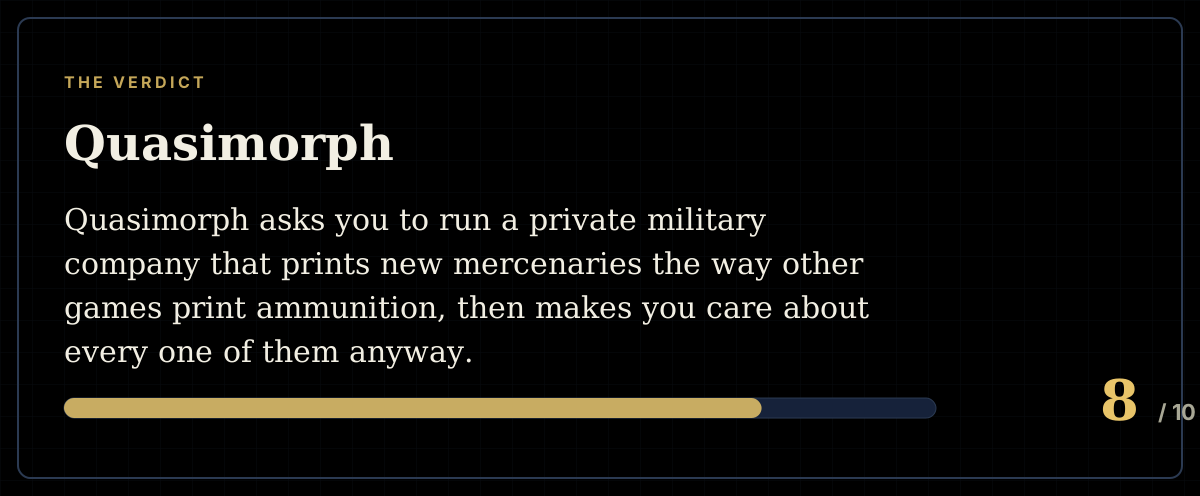
The short versionWanderer Editorial