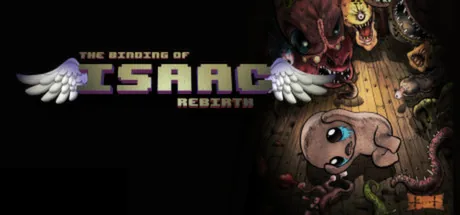
The Binding of Isaac: Rebirth
The roguelike that taught the genre what item synergy could be, at 97% across 439,000 reviews. Twelve years and hundreds of items later, its most experienced players are asking whether it now has too many.
8.5 / 10
Browse by genre
140 Roguelike games reviewed and scored, best first.
140 reviews
The roguelike that taught the genre what item synergy could be, at 97% across 439,000 reviews. Twelve years and hundreds of items later, its most experienced players are asking whether it now has too many.
8.5 / 10
A minimalist text-based incremental that spends its first act pretending to be nothing at all, then quietly reveals it was building a survival story out of firewood, huts and silence the whole time.
8 / 10
Flyway Games turns a thirty-second countdown into a health bar, a currency and a weapon at once — a review of how far the time-freeze mechanic carries a roguelite built entirely around never letting the clock feel like punishment, and where cluttered onboarding and a softening difficulty curve hold it back.
8 / 10
A brick-breaker, base-builder and roguelite mashed together into something genuinely novel — and, by a large and coherent share of its own fans, something that runs out of ideas within its first ten hours and never quite finds a reason to justify the dozens more it invites.
8 / 10
A genre-defying puzzle roguelike-lite set in a mysterious manor whose floor plan you draft anew each in-game day, celebrated with a 92 Metascore and widely called one of the most creative puzzle games in years — beloved specifically by players willing to take pages of physical notes, and marked by a real, still-unresolved design tension between its puzzle-solving brain and its randomised, roguelike-lite execution.
8 / 10
A gothic, minion-summoning take on the Vampire Survivors-style bullet-heaven, built and continuously expanded by a solo developer whose dedication reviewers single out almost as often as the game itself — with one consistent, legitimate complaint about visual clarity in busy fights.
8 / 10
Blobfish's one-person arena shooter hands a potato six weapon slots and lets stat stacking do the rest — a review of how far chips-in-the-shop decision-making carries a twenty-wave run, and where the plain presentation and a few solved builds hold it back.
8 / 10
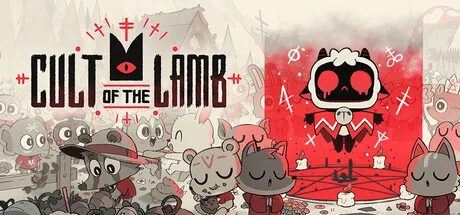
A roguelite dungeon crawler and a cult-management sim share one save file, and the question that actually matters almost four years on is whether they're still lending each other strength or just taking turns.
8 / 10
A spearfishing roguelite and a sushi restaurant manager share one save file, and the join is the best thing about it — what you catch by day is what you sell by night. The game just won't stop adding new systems on top of that, long after the core two have proven they didn't need the help.
8 / 10
Funday Games bolts a real mining loop onto the Vampire Survivors formula, so every dive asks a second question underneath "which upgrade do I pick": is that vein of nitra worth the ten seconds it takes to dig out while the swarm closes in?
8 / 10
A dice-based deckbuilding roguelike that swaps Slay the Spire's card hand for a diamond grid of rollable dice, and mostly proves the swap was worth making — though a shorter campaign and some uneven early rewards keep it from the genre's very top tier.
8 / 10
Chasing Carrots dressed a Vampire Survivors loop in Diablo's dark isometric skin and then buried it under one of the deepest meta-progression trees the survivor-like genre has — a review of what that unlock grind buys you, and what happens to the screen once it pays off.
8 / 10
A one-day-old arena shooter played almost entirely in the dark, where a pulsing heartbeat is your only light source — reviewed on a genuinely complete sample of its first sixteen reviews, every single one of them positive.
8 / 10
One person made a NZ$14.75 survivors-like that sold a million copies in a fortnight and sits at 94% across 104,643 reviews — and whose most invested players have been asking for the same balance pass since October 2025.
8 / 10
A cat-breeding turn-based tactics roguelite from Binding of Isaac creator Edmund McMillen, nearly a decade in the making — deep, absurd and genuinely inventive enough to draw comparisons to Darkest Dungeon and Sid Meier in the same breath, with real, persistent complaints about breeding tedium and interface friction that a major mid-2026 patch only partly resolved.
8 / 10
A bigger, more mechanically ambitious sequel to one of the deckbuilding roguelike genre's most respected entries, landing at 95% positive on Steam even as a genuinely coherent chorus of the original's most devoted fans argue this expansion came at the cost of what made Monster Train click in the first place.
8 / 10
A solo developer's first-person melee roguelike spent two and a half years in Early Access before its 1.0 finally gave the combat a story worth finishing and a boss worth building toward.
8 / 10
A hex-grid roguelike that swaps a conventional deck for a board you draft and build tile by tile, from the maker of the well-regarded mobile hit Cards of Terra — hitting 1.0 to a small but completely unanimous chorus of praise after what several reviewers admit was months of criminally low visibility.
8 / 10
An ARPG's worth of build synergy packed into an Asteroids cabinet, at thirteen dollars and 96% positive. The one thing standing between it and everybody is the control scheme — and that's a deliberate choice the game is literally named after.
8 / 10
A turn-based extraction roguelike where every mercenary is a disposable clone, every mission can end in a single unlucky turn, and the cosmic horror waiting beneath the corporate PMC contracts is exactly as unforgiving as the combat.
8 / 10
A turn-based wizard roguelike so uncompromising that its most-earned achievement sits at 24.5% — and whose only real critics are the people who loved the last one.
8 / 10
A third-person roguelite where every pickup multiplies the last one while a fixed difficulty clock keeps climbing underneath you — number-go-up design wearing a shooter's clothes. Reviewed against the game's full history, including the DLC launch Gearbox itself admitted put the PC version "in a really bad place," and the year it took to fix.
8 / 10
An incremental mining game that turns "swing the pickaxe" into a real progression system — eight hand-designed layers, a 150-node permanent skill tree, and a four-hour runtime that ends before the loop wears out its welcome.
8 / 10
The sequel that fixed nearly everything wrong with the original — and got criticised for it. Its sharpest reviewers say the classes are now too balanced and every run plays the same. Both things are true, and that's the interesting part.
8 / 10