
Game review
Cloudscrapers Review
8 / 10
- Developer
- Nementic Games
- Publisher
- Curve Games
- Released
- 14 September 2026
- Platforms
- ["Windows"]
- Genre
- Strategy
A Tower, the Clouds, and Not Much Else
Cloudscrapers strips the modern city builder down to a single, obsessive question: how high can you go before you run out of resources? Rather than juggling zoning, traffic, and a dozen interlocking economies, Nementic Games (the studio behind the similarly pared-back Islanders) hands you a small stock of building blocks and a simple goal: stack them into the tallest, most efficient tower you can before your materials or your luck run out. Each attempt is a short, self-contained puzzle run rather than an open-ended sandbox, and the whole game is built around the tension between building fast and building carefully.
The core loop plays out over a single vertical climb per attempt. You place floors, manage a handful of resource types, and react to hazards like lightning strikes and spreading spores that can wipe out sections of your tower if left unprotected. A shield ability can save a section from disaster, but it can't protect everything, which forces real trade-offs about what to prioritize as the tower gets taller and the hazards more frequent. It's a roguelite structure underneath the cozy exterior: failed runs still pay out currency and knowledge that carry forward, so even a tower that topples early isn't wasted time.
A Persistent Progression Loop That Rewards Every Attempt, Even the Failures
What elevates Cloudscrapers above a one-note toy is its unlock structure. Currency earned from each run, successful or not, buys new tools, building options, and passive upgrades that open up more efficient strategies on future attempts. Reviewers consistently describe the resulting loop as "just one more run" territory: a failed tower isn't a dead end, it's a data point, feeding directly into the next attempt's toolkit. Ancient relics discovered high in the clouds add a layer of light narrative mystery to what's otherwise a pure optimization puzzle, giving players a reason to keep pushing upward beyond simply chasing a taller number.
The game leans heavily into short-session design. Runs are quick, there's no punishing time pressure within a single attempt, and the structure comfortably accommodates the "second screen while watching something" style of play that several reviewers specifically praised. That approachability is reinforced by real accessibility work: after players reported motion sickness during the free pre-release demo, the developers added an option to minimize background movement before the full launch, a fix that reviewers who'd struggled with the demo called out by name as making the finished game playable for them. Full controller support, DualSense and DualShock compatibility, and official Steam Deck Verified status round out a release clearly built with comfort and portability in mind.
Minimalist by Design, Not by Accident
Cloudscrapers arrived after a lengthy, transparent pre-release run: a public playtest phase, a free demo that let thousands of wishlisters try the core loop firsthand, and a steady drip of community-facing updates covering language support and Steam Deck compatibility well before launch. That demo period clearly paid off, both in building a dedicated audience many of whom purchased on day one specifically because they'd already fallen for the concept, and in shaping small but meaningful changes like the motion sickness option. The one recurring gripe tied to that history is that in-demo currency didn't carry over into the full release, a decision some players found briefly frustrating before discovering the finished game offers considerably more skill and upgrade variety to make up for it.
The presentation matches the restrained design philosophy. A hand-drawn, pastel art style renders clouds, weather, and the growing structure itself with a gentle, storybook quality, and the soundtrack draws some of the most consistent praise in the game's review section, with multiple players calling it genuinely soothing rather than just pleasant background noise. Comparisons to Townscaper and Dorfromantik come up often, though reviewers are quick to note that Cloudscrapers distinguishes itself from those touchstones by giving players clearer goals and a real sense of purpose behind every placement, rather than pure freeform building.
A Narrow Concept That Knows Exactly What It Wants to Be
The most common reservation, even among enthusiastic reviewers, is whether such a tightly scoped concept can sustain itself over dozens of hours. Cloudscrapers doesn't attempt to compete with sprawling city builders on sheer systemic depth, and players coming in expecting branching tech trees or complex economic simulation will likely find the toolset comparatively thin. A handful of reviews also flag small quality-of-life gaps, like the absence of a click-and-drag placement option (requiring individual clicks for each block) and no V-sync setting, as minor friction points that don't undermine the experience but are noticeable during longer sessions. One review specifically asked for adjustable difficulty, noting the base challenge currently sits in a fairly narrow band that may not satisfy players chasing either a gentler ramp or a harder ceiling.
None of these complaints seem to have dampened the reception much. The overwhelming majority of the game's small but growing review base is enthusiastic, frequently citing the price as a major factor: at $5.99 during launch discount off a $7.99 list price, reviewers repeatedly describe it as an easy, low-risk purchase that delivers well beyond its cost, particularly for players who already sank hours into the free demo and came away wanting more.
Verdict
Cloudscrapers succeeds by refusing to be more than it needs to be. It takes a single compelling idea, building the tallest tower possible from a shrinking pool of resources, and builds a satisfying, replayable loop around it without diluting the concept with unnecessary systems. Its hand-drawn presentation, genuinely soothing soundtrack, and thoughtful accessibility additions (like the post-demo motion sickness fix) show a small team that listened closely to its community during a long and transparent lead-up to launch. It won't satisfy players craving the depth of a full-scale city builder, and a few interface rough edges are worth knowing about going in, but as a cozy, bite-sized strategy puzzle with real progression behind it, Cloudscrapers is very easy to recommend at its asking price.
Pros:
- Simple, addictive core loop of resource management and vertical tower-building
- Persistent progression means even failed runs feed meaningfully into the next attempt
- Soothing hand-drawn art style and widely praised soundtrack
- Official Steam Deck Verified support and genuine post-demo accessibility fixes
- Very fair price for the amount of polish and replayability on offer
Cons:
- Deliberately narrow scope may feel thin next to full-scale city builders over many hours
- No click-and-drag block placement, requiring individual clicks that add up over long sessions
- No V-sync option
- Difficulty currently sits in a fairly narrow band with no adjustable settings
- In-demo currency did not carry over to the full release, frustrating some early adopters
Screenshots
-

Planning the next section of a rising towerImage: Nementic Games -
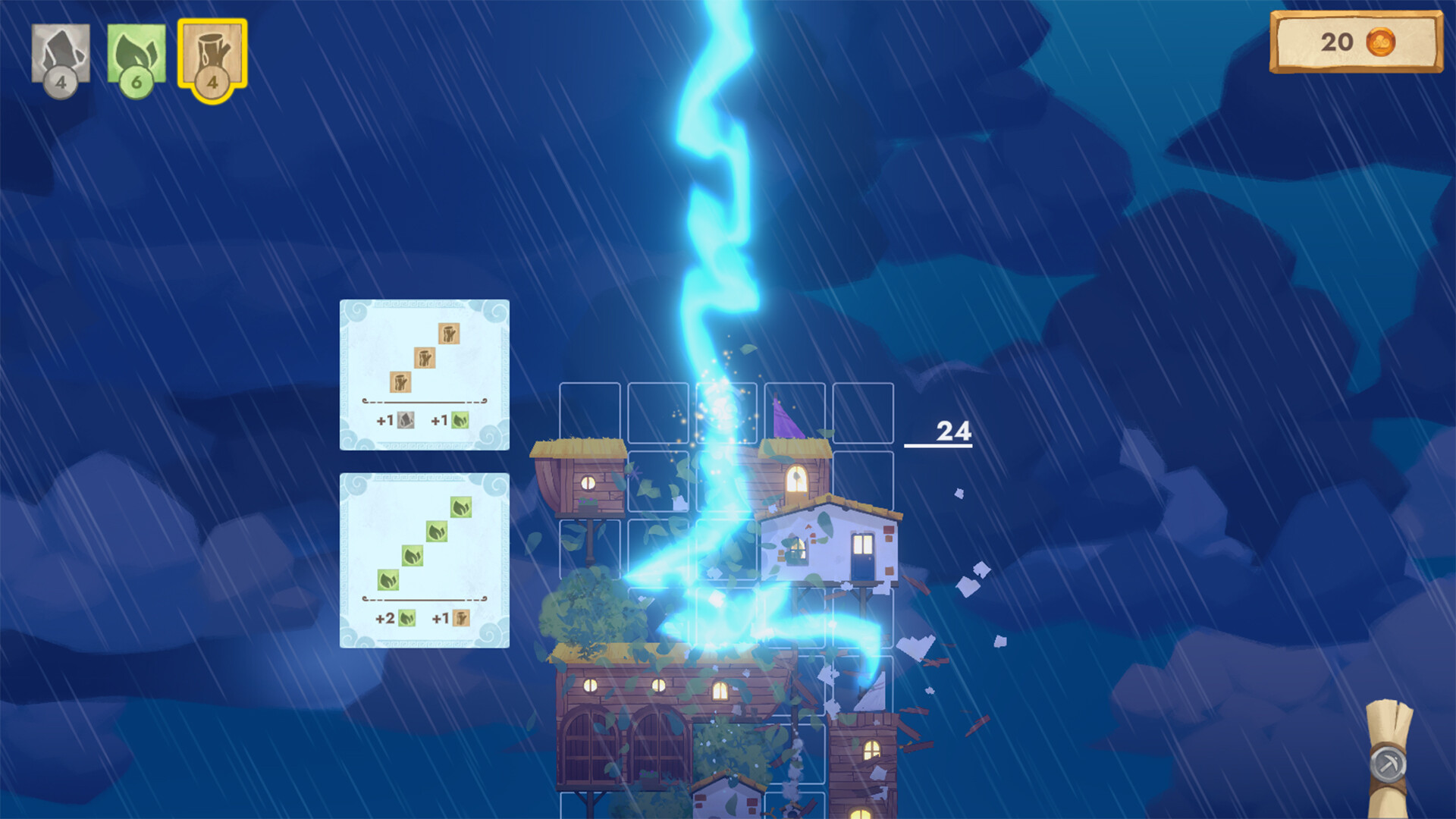
A lightning strike threatens an unprotected section of the towerImage: Nementic Games -

Spores spreading across the tower late in a long runImage: Nementic Games -
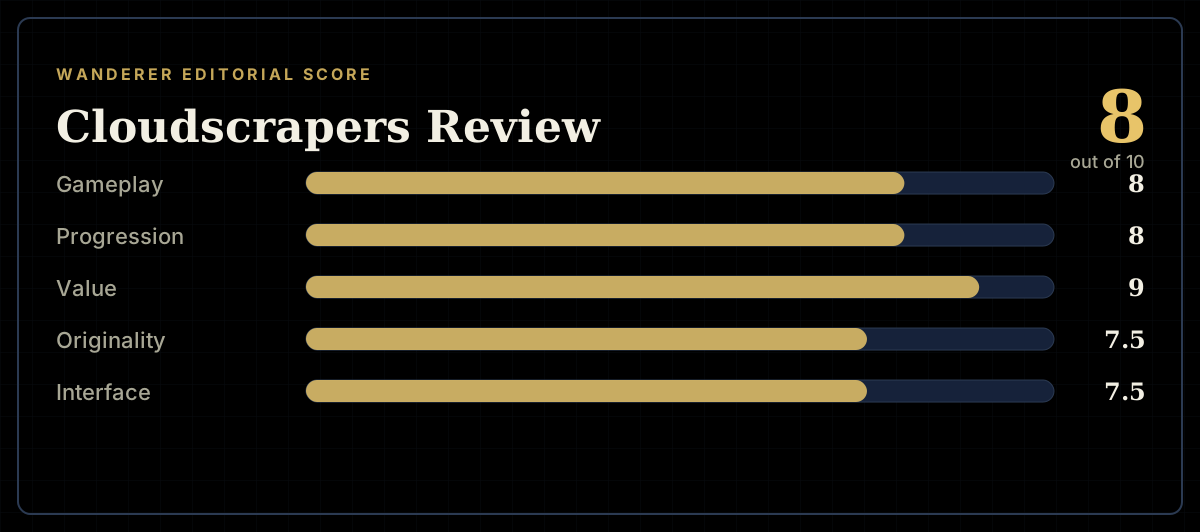
How the review scores each part of the gameWanderer Editorial -
The short versionWanderer Editorial