Game review
Backpack Raiders
8 / 10
- Developer
- WollemGames
- Publisher
- WollemGames
- Released
- 3 June 2026
- Platforms
- Windows
- Genre
- Action, Casual, Indie
- Monetisation
- paid
- Players
- false
The short version
Biggest strengths
- A genuinely satisfying fusion of bullet-heaven survivor combat with tight, Tetris-like backpack inventory management
- Deep synergy systems between items, bags, and meta-progression that reviewers said kept builds feeling fresh well past the first few runs
- A dash mechanic with invulnerability frames that reviewers said makes combat feel unusually dynamic and technical for the genre
Biggest weaknesses
- No controller support, which multiple reviewers called a baffling, significant omission for the genre
- One detailed, thoughtful negative review argued the game is a derivative mashup of Brotato and Backpack Battles that adds little of its own and slows combat pacing for inventory tedium
- A limited base-weapon pool (9 at launch per one reviewer) that some found thinner than hoped, though others reported plenty of build variety still to discover
Who it's for: Fans of Brotato-style survivors games and Backpack Hero/Backpack Battles-style inventory puzzles who want the two genres combined into one addictive loop
Our recommendation: recommended
8 / 10
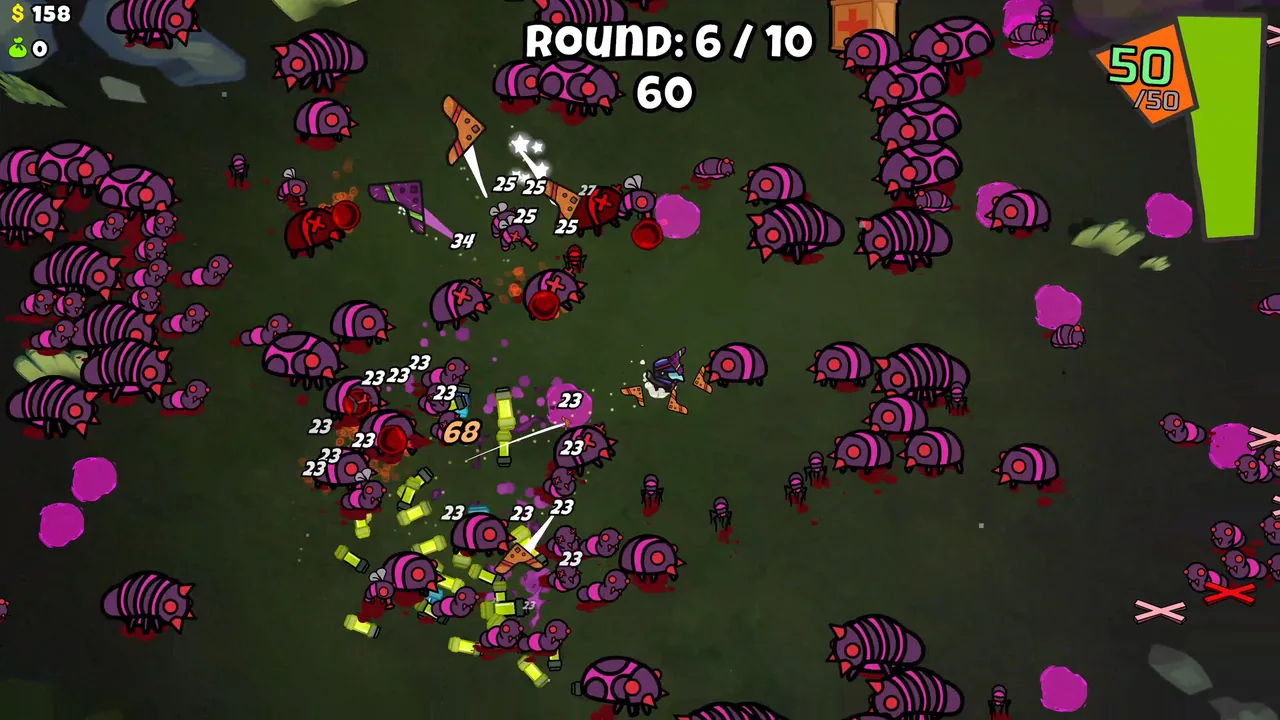
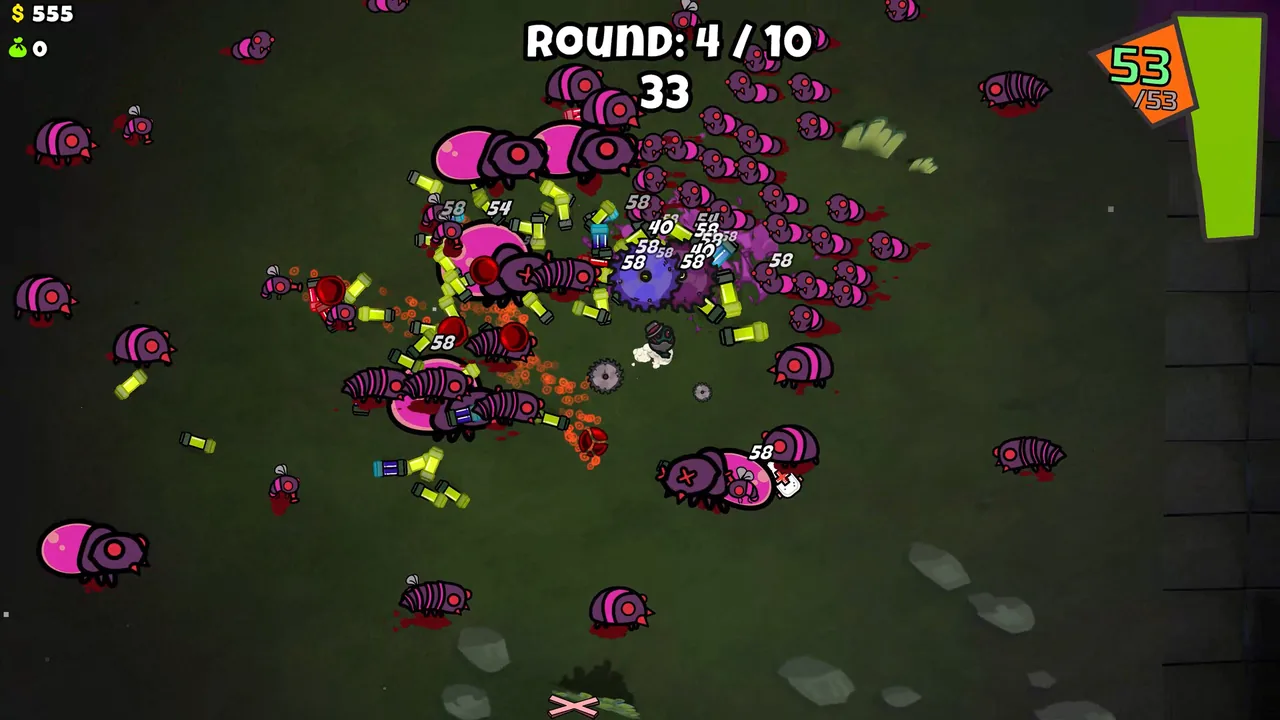
Backpack Raiders released on Steam on June 3, 2026, from developer WollemGames, a bullet-heaven survivors-like that layers a Brotato-style horde-combat loop on top of a Backpack Hero/Backpack Battles-style inventory puzzle, where how gear is physically arranged in a limited backpack space matters just as much as what gear is chosen. Its 34-review English pool lands at Positive (33 up, 1 down, 97%), a strong reception with just enough dissent to give the pool real texture rather than a wall of uniform praise.
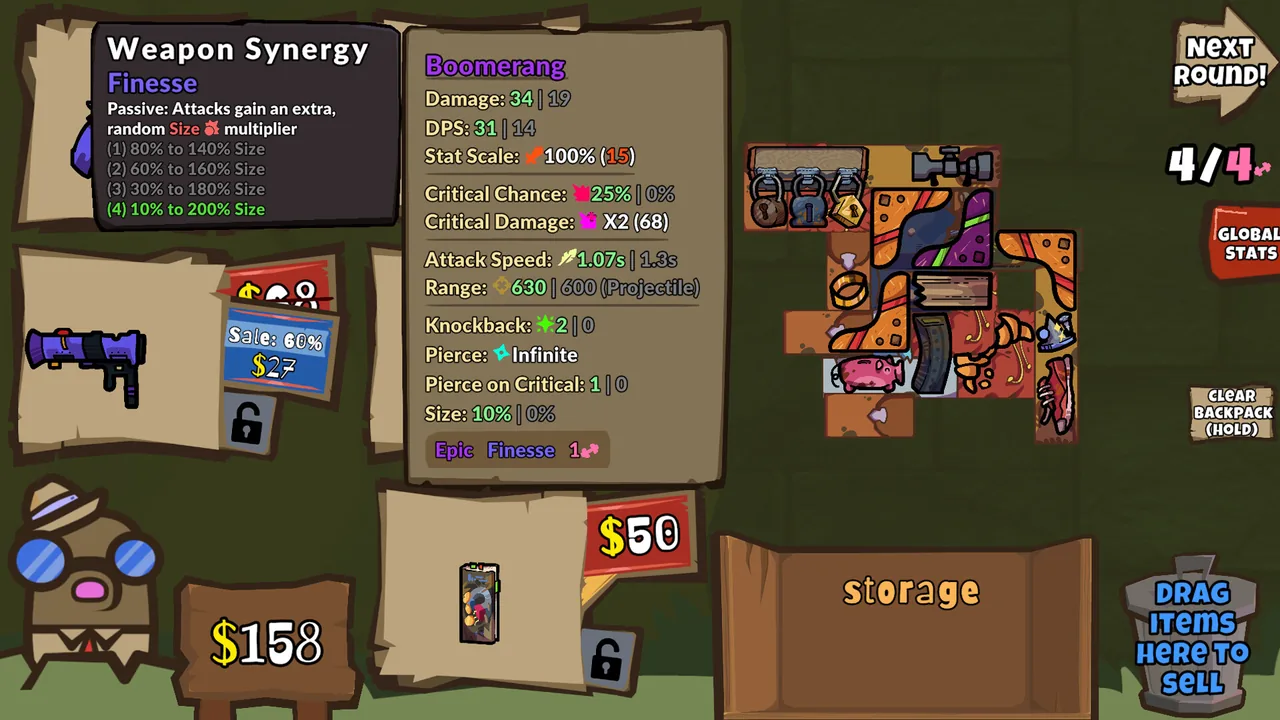
The core hybrid concept draws the pool's most consistent enthusiasm. One reviewer described it plainly: "Backpack Raiders combines the best elements of Backpack Hero and Brotato and I'm here for it," while another called it "an interesting twist on the roguelike horde survival genre," explaining that "the limitations of bag space and having to work out the ideal arrangement to get synergies makes the process more engaging." A more detailed reviewer, who had also playtested the game pre-release, broke the appeal down further: "inventory management feels really good, with easy to move pieces and clear visual markers for when items are effecting/buffing each other," adding that "the bullet heaven combat itself feels really good" with both manual and auto-aim options, and that character-specific bags "add diverse perks" without ever restricting which items a build could use.
Several reviewers specifically praised how deep the synergy systems run once players move past the basics. One wrote that they found themselves "spending just as much time rerolling and optimizing my load out as I do navigating the swarms of bugs," calling "the combat...an awesome payoff to a well built bag." Another described the appeal of "neighbor effects and bag buffs" that make it "super satisfying to spend the extra five minutes between rounds to hyper-optimize your setup," noting that "every rare item you get in the shop becomes a puzzle of how to re-arrange your bag to max out bonuses and DPS." A third reviewer highlighted the base-building meta-progression layer, noting it "also have[s] inventory management-like mechanics, where different buildings get benefits depending on how they're organized and what they're next to," extending the game's central puzzle idea beyond just combat runs. Several reviewers also singled out the dash mechanic specifically, with one noting it comes with invulnerability frames that make "combat feel more dynamic and technical compared to similar games," and that "pulling off a split-second dodge is tremendously satisfying."
The pool's lone negative review is worth engaging with directly, since it's detailed, clearly considered, and stakes out a real, specific disagreement rather than a vague complaint. That reviewer argued the game is "a straightup clone of both Brotato and Backpack Battles" that "does nothing to improve on either of those," writing that "Brotato is addictive partly because of its fast pacing," while in Backpack Raiders "the action grinds to a halt so that you can spend 10 minutes tediously rearranging your backpack." They also flagged a thin base-weapon pool, "only 9 base weapons to choose from," and found the base-building meta-progression underdeveloped, concluding "if the devs can flesh this game out more, it may be worth another look, but right now it's a hard no from me." That review stands in genuine tension with the rest of the pool, several of whom explicitly praised the pacing and build depth the negative reviewer found lacking, and is worth reporting as a real, substantive counterpoint rather than dismissing it, even though it represents a clear minority view here.
The most consistently repeated non-dealbreaker complaint is the absence of controller support. One reviewer put it bluntly: "no controller support - it's baffling why it's not," estimating the game would be "easily an 8/10 if it had it," but landing closer to "5/10" for the inconvenience of needing a full keyboard and mouse setup. A separate reviewer also reported a specific, reproducible bug: selecting "Options" before "Return to Base" could leave the game unresponsive to mouse or keyboard input until restarted, though they noted the workaround (starting with "Play" instead) resolved it cleanly on a second attempt.
Beyond mechanics, several reviewers praised the game's presentation and tone. One wrote, "I love the artstyle in this game. The mixture of 2d/3d honestly knocks my socks off. Never seen anything like it," while another appreciated a specific nostalgic quality, describing it as feeling like "old flash games but elevated to have much better gameplay, art and music." A recurring theme among reviewers was long-term investment: many described following the game's pre-release development closely and buying in immediately at launch, with one calling it "1000000% underrated" and "a wonderful hidden gem" that "absolutely scratched my bullet heaven/roguelite itch."
A number of reviewers also pointed to the game's difficulty options as a genuine strength rather than an afterthought. One described the "wanted levels" difficulty system, explaining that it "let[s] you choose what negatives you want to scale," which they said was "a great way to ease you out of your comfort zone without it becoming overwhelming" while still rewarding harder runs with "more perks and items and a base supplies boost." Another reviewer, comparing the game favorably to other genre entries like Deadly Days: Roadtrip and DRG: Survivor, wrote that "unlike some Backpack games, you don't exhaust all your build options in only a few runs," crediting the way bags themselves carry stat-affecting properties beyond simply holding gear, and predicting that if the developer continued adding characters and gear over time, "this could be one of those titles that you keep coming back to long after you've finished the main game." That combination of respected difficulty tuning and a build space several reviewers said resists going stale is a meaningful point in the game's favor against the lone dissenting review's claim of thin content.
Taken together, Backpack Raiders earns its strong reception through a genuinely well-executed fusion of two popular genres, deep enough in its synergy systems to reward the kind of build-optimization obsession its fans describe, while remaining approachable enough for newcomers to either genre. The lone detailed dissent is a fair warning for players who specifically want Brotato's breakneck pacing rather than a slower, puzzle-forward alternative, and the lack of controller support is a real, avoidable gap worth flagging for anyone who prefers to play survivors-likes from a couch. For the asking price, though, this is a confident, distinctive debut that has already built a loyal following.
Pros and cons
Pros
- A genuinely satisfying fusion of bullet-heaven survivor combat with tight, Tetris-like backpack inventory management
- Deep synergy systems between items, bags, and meta-progression that reviewers said kept builds feeling fresh well past the first few runs
- A dash mechanic with invulnerability frames that reviewers said makes combat feel unusually dynamic and technical for the genre
- A distinctive, appealing 2D/3D art style and a small but active community following its pre-release development
Cons
- No controller support, which multiple reviewers called a baffling, significant omission for the genre
- One detailed, thoughtful negative review argued the game is a derivative mashup of Brotato and Backpack Battles that adds little of its own and slows combat pacing for inventory tedium
- A limited base-weapon pool (9 at launch per one reviewer) that some found thinner than hoped, though others reported plenty of build variety still to discover
- A minor, reproducible UI bug where selecting Options before Return to Base could lock out input until restart
Screenshots
-
Backpack RaidersImage: WollemGames via Steam -
Backpack RaidersImage: WollemGames via Steam -
Backpack RaidersImage: WollemGames via Steam