Game review
Starforged Legacy
6.5 / 10
- Developer
- Second Shift Games
- Publisher
- Tripwire Presents
- Released
- 1 June 2026
- Platforms
- Windows
- Genre
- Action, Casual, Indie, Strategy
- Monetisation
- paid
- Players
- false
The short version
Biggest strengths
- A genuinely tight, respectful arcade loop that reviewers praise for delivering satisfying short runs without demanding a big time investment
- Real build variety across 9 distinct starcraft and over 190 weapon augments and enhancements
- Ship movement with a touch of inertia that adds a welcome, skill-rewarding layer over a typical twin-stick shooter feel
Biggest weaknesses
- Mandatory, often very short per-level time limits (as low as 90 seconds in some accounts) that several reviewers call actively anti-fun, forcibly ending runs mid-objective
- Controller support is currently unreliable, with upgrade menus reported to intermittently stop responding to controller input entirely
- At least one reviewer found the escalating challenge poorly tuned, describing early runs as trivially easy with no real difficulty ramp
Who it's for: Fans of bullet-heaven survivors-likes and arcade space shooters looking for short, tight sessions, who can tolerate significant Early Access friction around pacing and controller support
Our recommendation: recommended with caveats
6.5 / 10
Short, sharp, and respectful of your time
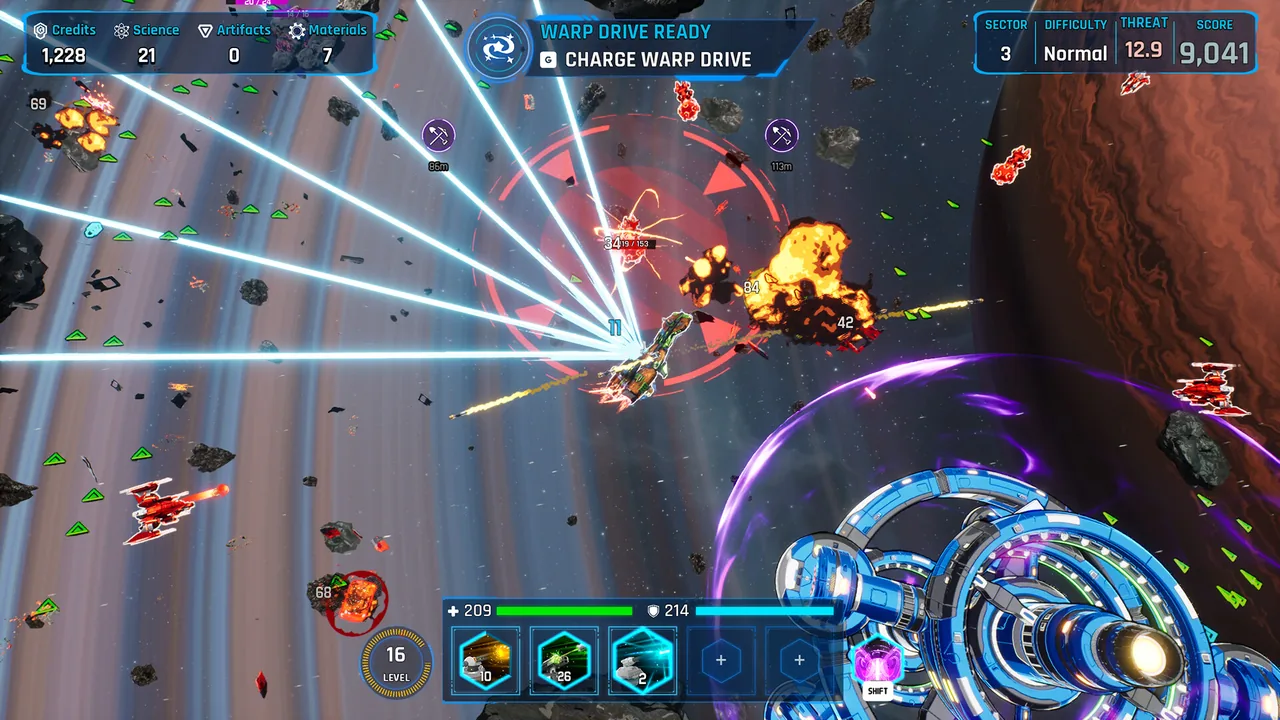
Starforged Legacy's core pitch lands cleanly with the reviewers it's clicked with: forge a single starcraft into a fleet-leveling warship, weaving through asteroid fields and bullet-heaven combat, growing permanently stronger with resources salvaged from each run. One review captured exactly what makes that loop work in practice: it "respects my time as a member of the working population... I can jump in, literally have 120, 240, or 360 seconds of fun and actually jump out again with a sense of accomplishment," specifically thanking the developer for a game that "perfectly scratches that 80s Galaga / Uridium itch." That reviewer also singled out a small but meaningful mechanical touch — ships that "don't turn on a dime" and simulate some inertia, "requiring just the slightest bit of skill" — a detail that separates the movement from a purely reflexive twin-stick shooter feel.
Real build depth behind the arcade shell
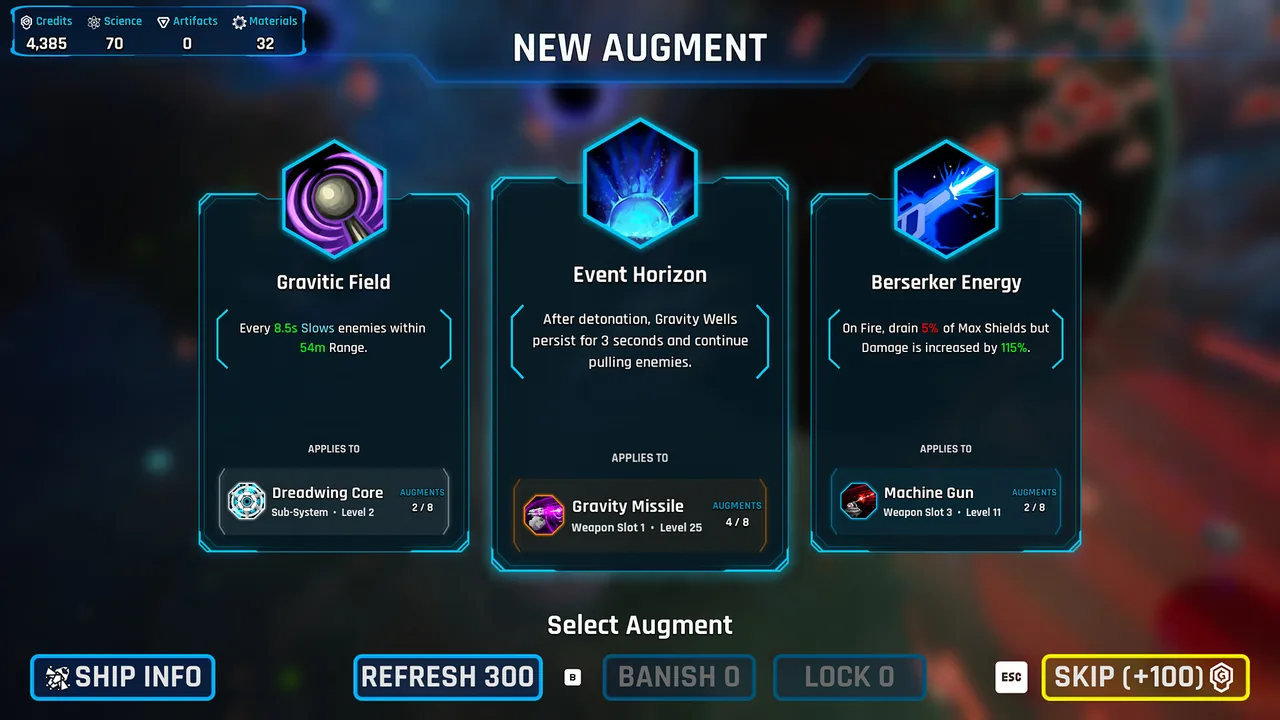
Beneath that tight core loop sits a surprisingly deep build system. Reviewers consistently point to the game's 9 distinct starcraft, each with its own starting armaments and combat style, combined with 16 core weapons and over 190 augments and enhancements to customize them. One detailed review broke down the appeal specifically: "a pretty big number of weapons," "a pretty interesting amount of objectives per map," and the ability to build anything from "very tanky ships that will almost take no damage to very fast paced hitters." That same reviewer, while generally positive, flagged a real balance wrinkle worth noting: because weapon upgrades are tied to individual weapons rather than shared more broadly, players can end up over-investing in one weapon while others on their loadout stay comparatively weak — a specific, mechanical critique of the build system's current depth rather than a vague complaint.
The mandatory clock is the game's most divisive design choice
The single most consistent and pointed criticism across negative reviews targets the game's mandatory per-level time limits, and it's raised with real specificity rather than general frustration. One reviewer described losing hard-won openings simply because "the timer is reached, no matter what you are doing, your ship warps out," even when "a nanosecond away from grabbing some upgrade drop crates," concluding bluntly: "Nothing makes me hate a PVE game more than being forced by a clock... Being punished for wanting to take the extra time to deal with all of the objectives is anti-fun game design." Another reviewer's account was even more pointed about the specific numbers involved: "You get 90 seconds per map in the campaign. 90. Why?" — describing missions stacked on top of that short window, including finding and activating floating objects in space, all under the same tight clock, and concluding the design turns runs into "an explosion simulator" rather than a game with meaningful pacing or tension. That's a specific, repeated structural complaint from multiple independent reviewers, not an isolated gripe, and it's worth taking seriously for anyone considering a purchase today.
Controller support and difficulty tuning need work
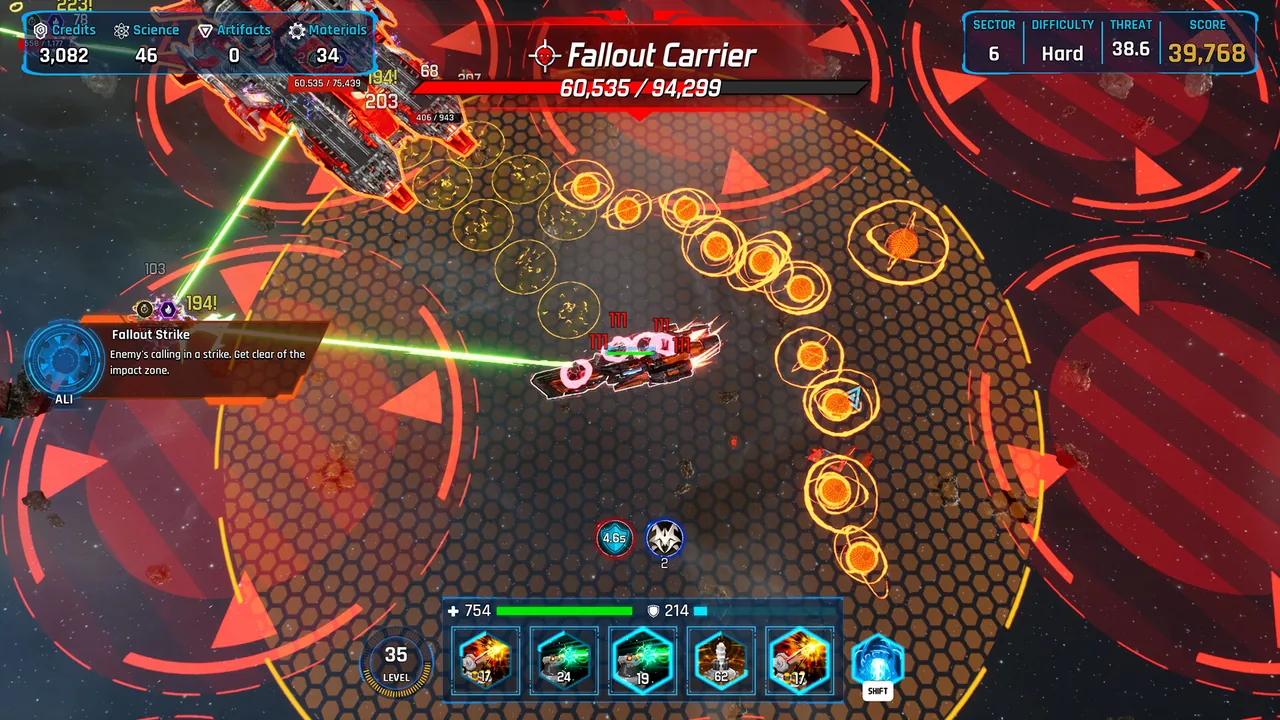
A second, more purely technical complaint centers on controller input. One reviewer reported that "UI barely works with controller," with "upgrade menus" specifically prone to "stop responding to controller inputs," forcing a constant switch back to mouse control mid-run — a frustrating interruption for a genre that traditionally plays well on a gamepad. Difficulty tuning also drew a specific complaint from one reviewer who found their first run trivially easy, describing sitting still and "kill[ing] everything automatically without any movement," with bosses that "weren't really challenging, just took forever to kill at first" before dying almost instantly once damage output ramped up — a lack of escalating challenge that reviewer felt undercut the tension the genre usually thrives on.
A developer that's visibly still building
What tempers all of the above is a genuinely active, responsive development pace. The patch history shows frequent, clearly-labeled updates — a public beta branch for testing an upcoming "Hangar & Arsenal" update, named previews ahead of that update's release, and multiple numbered patches addressing core flight systems — alongside reviewer accounts of a developer active on Discord and "willing to take suggestions and ideas." One reviewer summed up that trajectory directly: "With every update comes a little more revision, improvement and fine tuning. Dev has been killing it." For a game whose biggest complaints (time limits, controller reliability, difficulty pacing) are all squarely systems-design issues rather than fundamental flaws, that level of active iteration is a meaningfully positive signal for where the game might land by the time it exits Early Access.
Weighing the price at this stage of development
At $7.99, Starforged Legacy sits at a low, low-commitment price point that softens the impact of its current Early Access rough edges considerably. Reviewers broadly agree the amount of build variety and short-session replay value already on offer clears that bar comfortably, even accounting for the time-limit and controller complaints above. That calculus is worth keeping in mind specifically because so many of the game's current flaws are tuning and UI problems rather than structural design failures — the kind of issues a low-price Early Access purchase is reasonably expected to carry, and the kind the active patch cadence suggests are genuinely being worked through rather than ignored.
Verdict
Starforged Legacy delivers a genuinely satisfying, tightly-scoped arcade bullet-heaven loop with real build depth across its ship and augment systems, and its short-session design philosophy is a deliberate, well-executed strength rather than a limitation. But its current Early Access state carries real friction: mandatory, often punishingly short time limits that multiple reviewers single out as actively working against the fun, alongside controller reliability problems and uneven difficulty pacing. Worth buying now at a low price for fans of the genre who want to support active, responsive development and can tolerate some rough pacing decisions; players who specifically dislike being rushed by a hard clock should wait to see whether that core structural complaint gets addressed as Early Access continues.
Pros and cons
Pros
- A genuinely tight, respectful arcade loop that reviewers praise for delivering satisfying short runs without demanding a big time investment
- Real build variety across 9 distinct starcraft and over 190 weapon augments and enhancements
- Ship movement with a touch of inertia that adds a welcome, skill-rewarding layer over a typical twin-stick shooter feel
- A visibly active, communicative developer, with frequent named updates and a public Discord where players say suggestions are taken seriously
Cons
- Mandatory, often very short per-level time limits (as low as 90 seconds in some accounts) that several reviewers call actively anti-fun, forcibly ending runs mid-objective
- Controller support is currently unreliable, with upgrade menus reported to intermittently stop responding to controller input entirely
- At least one reviewer found the escalating challenge poorly tuned, describing early runs as trivially easy with no real difficulty ramp
- Some reviewers feel the different in-run routes and objectives don't yet offer enough meaningful variation from each other
Screenshots
-
Starforged LegacyImage: Tripwire Presents via Steam -
Starforged LegacyImage: Tripwire Presents via Steam -
Starforged LegacyImage: Tripwire Presents via Steam