Game review
67 Minutes in Heaven
6.5 / 10
- Developer
- One Flow Man
- Publisher
- Treestyle Studios
- Released
- 6 June 2026
- Platforms
- Windows
- Genre
- Adventure, Free To Play
- Monetisation
- free
- Players
- false
The short version
Biggest strengths
- Genuinely well-written, lived-in dialogue and characters that reviewers repeatedly describe as more compelling than the game's low-poly presentation would suggest
- Real branching structure with multiple distinct endings that reward replaying, corroborated by several reviewers who played through more than once
- A well-judged, restrained horror atmosphere and sound design that lands its scares without leaning on cheap jump-scare spam
Biggest weaknesses
- Choppy animation and blocky, low-poly visuals that at least one detailed reviewer found unintentionally unpolished rather than deliberately retro-charming
- A sluggish, delayed camera that multiple reviewers say makes basic navigation around the house frustrating
- Very limited interactivity: movement and dialogue choices are essentially the entire toolkit, with almost nothing in the environment to actually interact with
Who it's for: Fans of short, free PS1-style horror visual novels who want a genuinely creepy, dialogue-driven story with real branching endings, and who won't mind rough presentation and limited interactivity for a free, brief runtime
Our recommendation: recommended
6.5 / 10
A double date that goes exactly where you think it goes
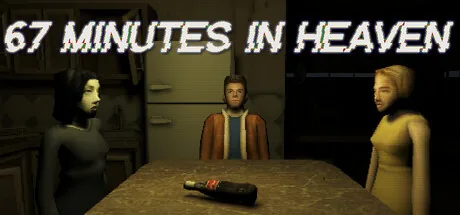
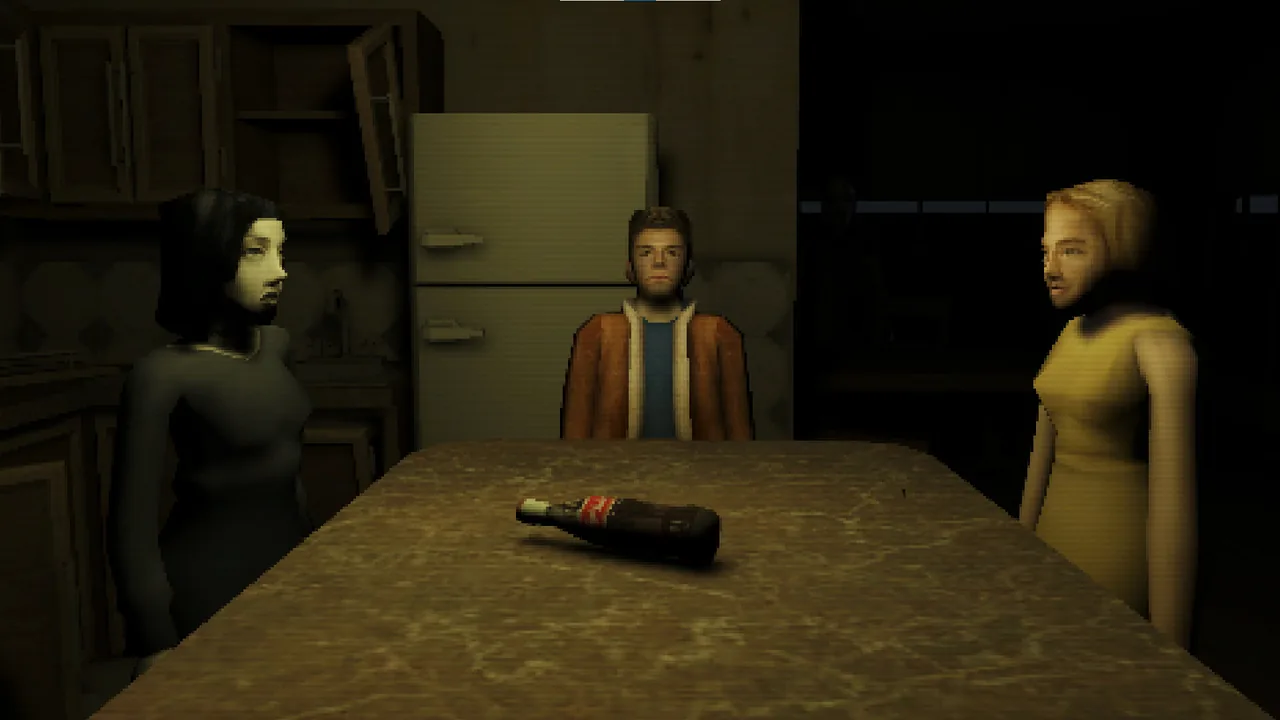
Four teenagers sneak into an abandoned house, someone suggests playing "67 Minutes in Heaven," and things go wrong from there. It's a familiar horror setup executed in a deliberately old-school PS1-style shell, all blocky low-poly models and grainy texture work, and reviewers consistently say the premise's simplicity is a feature rather than a limitation. One reviewer summarized it as "a short indie horror game that feels like a lost PS1-era creepypasta," praising how its "low-poly visuals, eerie atmosphere, and a weird cast of teenage characters make the story easy to get invested in" despite an admittedly brief runtime.
Writing that punches above the production values
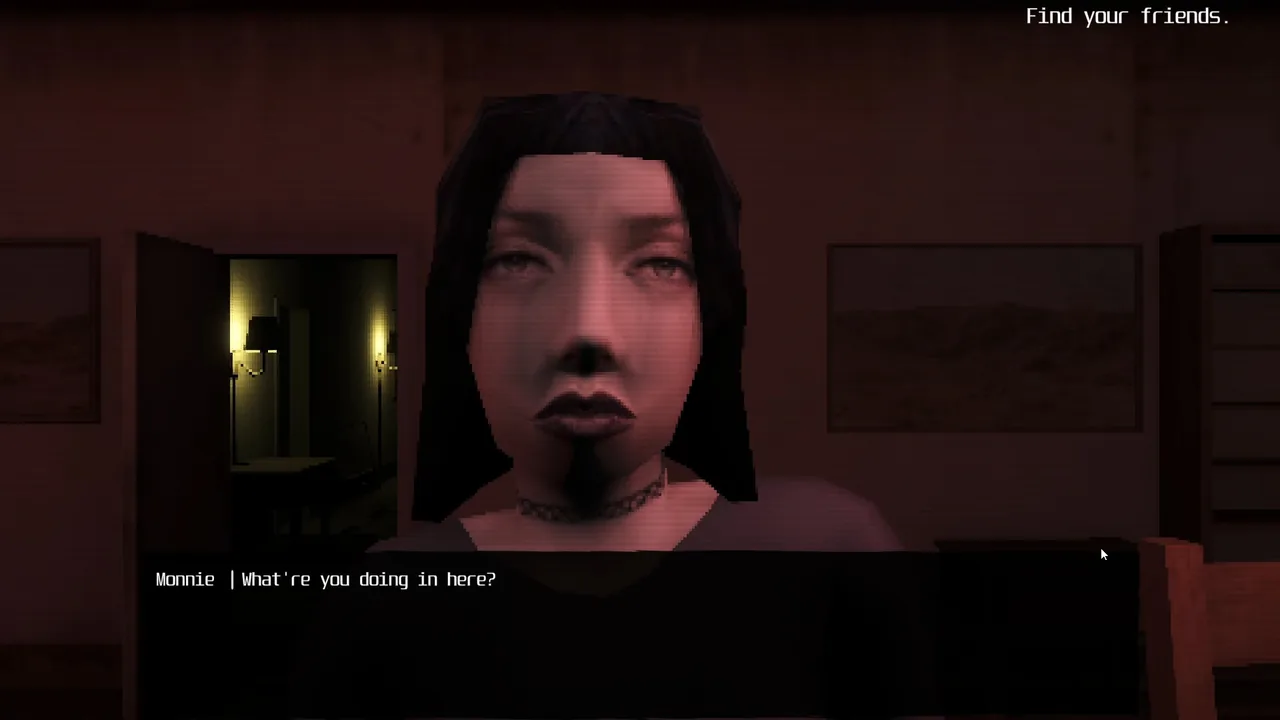
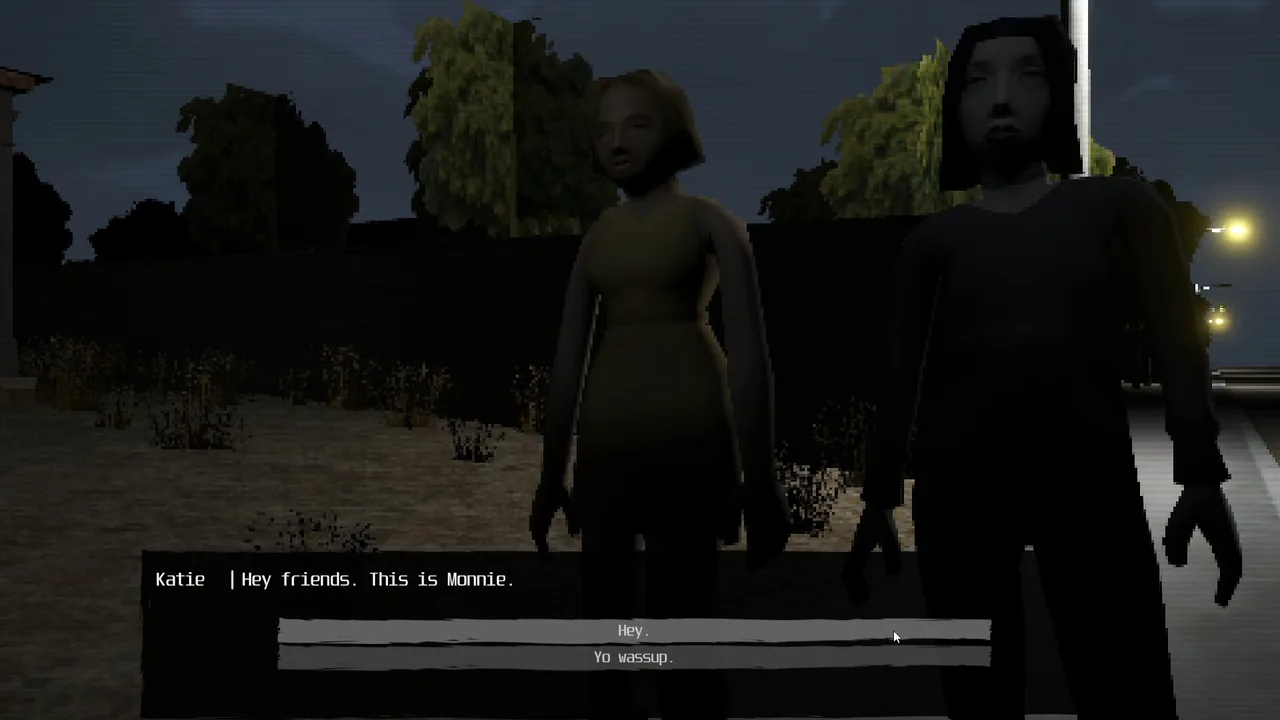
The most consistently praised element, across nearly every substantial review, isn't the horror set-pieces but the dialogue itself. One detailed negative review, otherwise sharply critical of the game's visuals and gameplay, still singled out the writing as the one part that "actually shows up to play," noting "the dialogue feels lived-in, the characters have weight, and the whole thing has this quiet, lingering unease that makes you genuinely curious about the other paths." Multiple reviewers reported replaying specifically to see how conversations diverge, with one describing chasing down the story's "underlying moral" across a sixth or seventh playthrough, and another calling it "crazy how in-depth the story goes" given how much detail rewards repeat runs.
Restrained scares that land
Rather than leaning on jump-scare spam, reviewers describe a slower-burn horror approach that several found genuinely effective. One wrote plainly that the game "gave me goosebumps every time I walked past that attic door," while another called a specific basement encounter "pretty scary, even though it shouldn't have felt like it" given the low-fidelity presentation. A more critical reviewer, while panning the visuals and animation, still gave the sound design real credit, calling the audio "the quiet overachiever here," with a single memorable whisper and well-placed screams that "stays out of your way" rather than overloading the soundtrack with cheap stingers.
Rough presentation, by design or by budget
Not every reviewer was won over by the PS1-style aesthetic. The same detailed critical review that praised the writing was unsparing about the visuals, describing "blocky characters with all the expressiveness of cardboard cutouts, pixelation that looks intentional in the worst way, and animation so choppy you'll wonder if the game is buffering on dial-up," concluding it reads as "just ugly" rather than a deliberate retro homage. That's a sharper assessment than most of the review pool, but it points at a real tension: where some players read the low-poly look as charming nostalgia, at least one experienced reviewer read the same presentation as simply unpolished, and prospective players should know both readings exist.
A camera and interaction model that fight the player
Beyond the visual debate, several reviewers flagged concrete usability problems. One reported "there seems to be a delay in turning the camera, where the initial movement lags/stutters, but then the rest of the motion is suddenly fast and smooth," making basic navigation "really hard" throughout their playthrough. Another reviewer, reviewing more caustically, noted that "interaction options are so limited you can open exactly one piece of furniture in the entire house, and it's empty," describing the exploration as amounting to "try all dialogue once and hope something happens" rather than genuine environmental discovery. Two separate reviewers also independently reported a specific softlock bug: getting trapped behind a door in the attic that you just opened, forcing a restart. It's a corroborated, specific bug report rather than a one-off complaint, though both reviewers noted the restart itself is quick.
A free game that knows exactly how long it should be
At no cost and roughly 25 to 30 minutes for a single ending, 67 Minutes in Heaven asks for almost nothing from players before delivering its story, and reviewers consistently treat that as the right call given the rough edges elsewhere. One reviewer captured the calculation directly: "I have absolutely paid for worse. This is a fun game with also fun writing and cool music. It has multiple endings. I would recommend it without a second thought." Another, who wished the story had been expanded into something longer, still said they "would've happily paid a higher price for it" if it had been, a genuinely strong endorsement of the writing's quality given how little else the game asks of the player to reach it. Several reviewers explicitly encouraged the solo developer to keep making games, treating this less as a finished statement and more as a promising proof of concept.
A crowded field of free PS1-horror shorts
Low-poly, PS1-inspired horror has become one of the most saturated corners of free Steam releases, with dozens of similarly styled short horror games competing for the same audience and the same handful of horror-content-creator playthroughs. That crowding raises the bar for what actually makes one of these stand out, since the retro aesthetic alone is no longer a novelty by itself. What reviewers keep pointing to as 67 Minutes in Heaven's edge over its many peers isn't its visuals, which draw the most mixed reactions in the review pool, but its writing and structure: real branching dialogue, distinct characters, and multiple endings worth chasing down, rather than a single linear walk toward one scripted scare. That's a meaningfully higher bar cleared than most entries in this specific, very crowded niche manage.
Verdict
67 Minutes in Heaven is a short, free horror visual novel that punches well above its low-poly presentation thanks to genuinely lived-in dialogue, real branching endings, and restrained, well-placed scares. Its rough animation, sluggish camera, near-total lack of environmental interactivity, and a corroborated attic-door softlock keep it from being a polished package, and reviewers are split on whether the retro visuals read as charming or simply unfinished. Worth the half-hour for horror and visual-novel fans who want a genuinely creepy, dialogue-first story at zero cost and can forgive the jank that comes with it; those who need smooth camera control and real environmental interaction to stay immersed should temper expectations accordingly.
Pros and cons
Pros
- Genuinely well-written, lived-in dialogue and characters that reviewers repeatedly describe as more compelling than the game's low-poly presentation would suggest
- Real branching structure with multiple distinct endings that reward replaying, corroborated by several reviewers who played through more than once
- A well-judged, restrained horror atmosphere and sound design that lands its scares without leaning on cheap jump-scare spam
- Costs nothing, making its short runtime and rough edges much easier to forgive
Cons
- Choppy animation and blocky, low-poly visuals that at least one detailed reviewer found unintentionally unpolished rather than deliberately retro-charming
- A sluggish, delayed camera that multiple reviewers say makes basic navigation around the house frustrating
- Very limited interactivity: movement and dialogue choices are essentially the entire toolkit, with almost nothing in the environment to actually interact with
- At least two reviewers independently reported a softlock bug involving a door in the attic
Screenshots
-
67 Minutes in HeavenImage: Treestyle Studios via Steam -
67 Minutes in HeavenImage: Treestyle Studios via Steam -
67 Minutes in HeavenImage: Treestyle Studios via Steam