
Game review
7 Nights with Vroombi
8 / 10
- Developer
- Pixel Goat Games
- Publisher
- Pixel Goat Games
- Released
- 25 June 2026
- Platforms
- Windows
- Genre
- Casual, Indie, Simulation
- Monetisation
- paid
- Players
- false
The short version
Biggest strengths
- A genuinely fresh horror premise: playing as a small, defenseless robot vacuum with no way to fight back, only clean and observe, which reviewers consistently found more unsettling than empowering
- Well-judged, non-overused scares that build tension through suspense and environmental storytelling rather than relying on constant jump scares
- Multiple distinct endings and story threads that reward replaying, with reviewers praising how much narrative detail is packed into a brisk runtime
Biggest weaknesses
- Very short overall runtime, roughly an hour to see one ending, with most achievements clearable across two or three playthroughs
- Missing or unclear subtitle options, with at least one reviewer reporting they couldn't follow the game's limited dialogue
- A line-of-sight mechanic that requires seeing through furniture to track a stalking threat, which one detailed reviewer found genuinely difficult to manage
Who it's for: Fans of short, story-driven cozy-horror games who want a genuinely unique low-stakes premise, real scares balanced with charm, and multiple endings worth chasing down, without needing a long time commitment
Our recommendation: recommended
8 / 10
A vacuum cleaner as horror protagonist
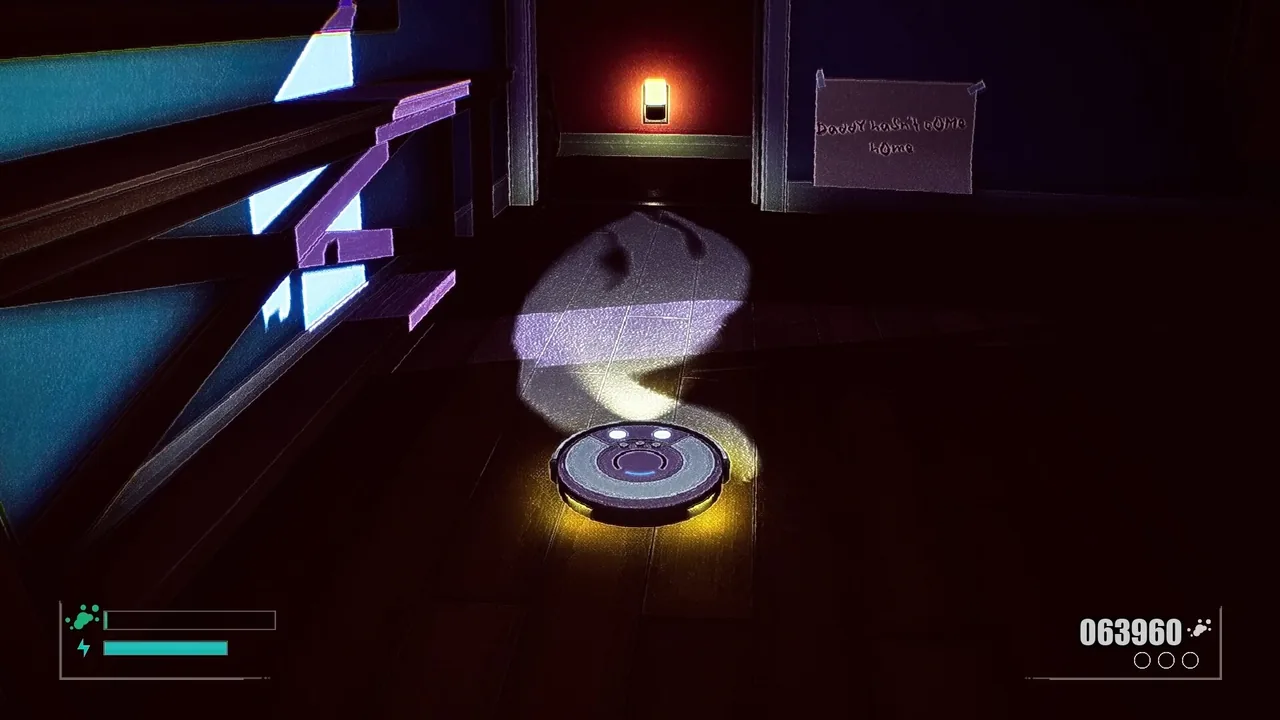
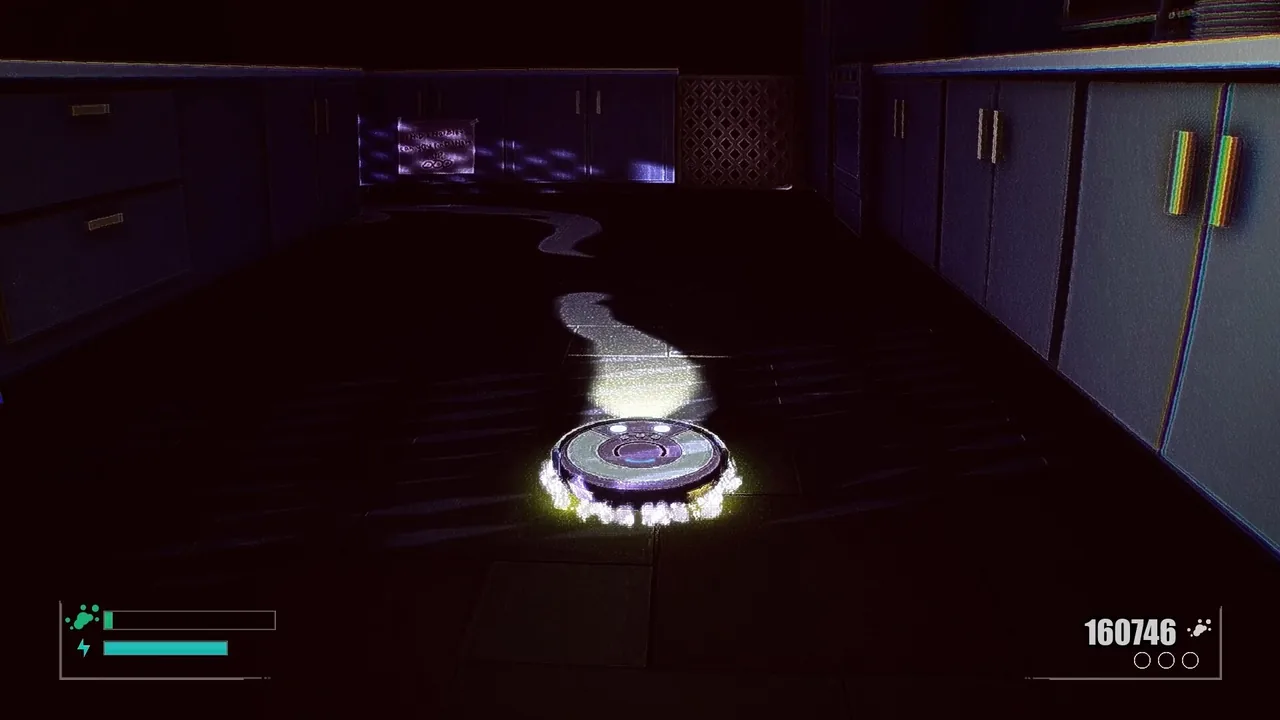
7 Nights with Vroombi's central idea is disarmingly simple and, according to nearly every reviewer, executed with real care: you play as a tiny robotic vacuum whose only job is to keep a suburban house clean overnight, while something is clearly, increasingly wrong with the family living there. One detailed reviewer laid out exactly why the premise works: it "takes a wonderfully strange approach to indie horror by putting players in control of a tiny robotic vacuum instead of a conventional human protagonist," combining "interactive cleaning simulation with supernatural and psychological horror." Another reviewer distilled the appeal even more bluntly: "you, a simple vacuum, can do nothing but observe and clean up after it," a framing that strips away any illusion of player agency over the horror itself and replaces it with pure, helpless dread.
Scares that know when to hold back
The review pool is unusually consistent in praising the game's pacing of its horror elements specifically. One reviewer, who admittedly bought the game as a joke after laughing at the title, wrote candidly: "this game was actually REALLY scary for what it was. The nights without the monster drove me nuts from suspense, because something was always off. The monster, when it showed up really freaked me out, and wasn't overused either." Another reviewer situated the tone precisely within a specific horror lineage, calling it "Skinamarink but you're a robo-vac" and explicitly placing it in "the cozy horror genre." That's a difficult balance for any horror game to strike, scary enough to land real tension without tipping into exhausting jump-scare spam, and reviewers consistently credit the developer with getting that balance right.
A story told through absence and notes
Rather than direct dialogue or cutscenes, much of the game's narrative comes through Lily's scattered handwritten notes found while cleaning, and reviewers repeatedly singled this out as unexpectedly affecting. One reviewer wrote that they "would have liked being able to interact with the family and specifically Lily more to be more attached," but conceded "even what we have makes it incredibly heartfelt/heart-wrenching," a meaningful admission given the format's inherent limitations. Another simply said, "I really love Lily's little Notes and wanted to save her and her family," a genuine emotional investment for a game whose protagonist can't speak or intervene directly in the plot at all.
Real, if minor, rough edges
Despite the near-universal praise, a handful of reviewers flagged specific, concrete friction points worth knowing about. One noted "the lack of subtitle options," adding they "missed or didn't understand quite literally every piece of limited dialogue in this game," a real accessibility gap for a game that leans on written and spoken clues to tell its story. A separate detailed reviewer flagged a specific mechanical challenge: "seeing through furniture was a little difficult for me," while still acknowledging the design intent of "keeping the player on their toes." A third reviewer ran into a confusing settings default around the game's newly added sticker-collecting feature, missing it entirely on a first playthrough because the option defaulted to off without being clearly flagged.
Short, and priced to match
Nearly every reviewer agreed on runtime: about an hour for a single ending, with full completion achievable across two or three replays chasing different story branches. Rather than treating that as a weakness, most reviewers explicitly weighed it against the $3.99 asking price and came away satisfied. One wrote plainly, "sure it's short, it's $4. But it's also incredibly well done, great style, WILD storyline, and an interesting play loop... I think it's a great title to add to this 'Cleaning Horror' subgenre that seems to be forming." Another reviewer who tracked down both endings called it "worth the money" specifically because of how much replay value the branching story provided relative to the low price.
A distinctive entry in a genre finding its footing
Multiple reviewers independently referenced a nascent "cleaning horror" or "chore horror" subgenre forming around games like this one, and 7 Nights with Vroombi is consistently cited as a strong, possibly defining example of it rather than a follower riding an existing trend. Combining the mundane satisfaction of a cleaning sim's busywork loop with genuine narrative stakes and real scares is a harder trick than it sounds, since either half alone risks feeling thin, and reviewers credit the developer with making both halves reinforce rather than undercut each other.
Endings worth chasing, achievements that ask for a second look
A recurring theme across the longer reviews is that the game's short length is offset by genuine branching, not just a single linear ending padded with collectibles. One reviewer who mapped out the structure across repeat sessions described tracking down "both endings" specifically to understand how the story's timeline fit together, treating the second playthrough as an active investigation rather than a chore. Another confirmed the achievement list similarly demands at least two full runs to clear, since several unlocks are tied to choices or discoveries that are mutually exclusive within a single night. A newer sticker-collecting layer adds a lighter, optional goal on top of that story-driven replay incentive, though as noted above its default-off visibility setting means some players won't discover it without digging into the options menu first. Taken together, these systems give 7 Nights with Vroombi more actual content per dollar than its one-hour headline runtime suggests on its own.
Verdict
7 Nights with Vroombi takes a genuinely novel horror premise, a small, helpless robot vacuum bearing witness to a family's unraveling, and executes it with real narrative care, well-paced scares, and a surprising amount of emotional weight for such a short runtime. Its few flaws are minor and specific rather than systemic: missing subtitle options, a line-of-sight mechanic some found fiddly, and a runtime that, while short, is honestly priced and packed with replay value through multiple distinct endings. Very easy to recommend for horror fans who want something different from the genre's usual power fantasies, and for cozy-game fans curious whether a little scare can coexist with genuine charm; it clearly can here.
Pros and cons
Pros
- A genuinely fresh horror premise: playing as a small, defenseless robot vacuum with no way to fight back, only clean and observe, which reviewers consistently found more unsettling than empowering
- Well-judged, non-overused scares that build tension through suspense and environmental storytelling rather than relying on constant jump scares
- Multiple distinct endings and story threads that reward replaying, with reviewers praising how much narrative detail is packed into a brisk runtime
- Charming art style and a genuinely emotional undercurrent through Lily's in-game notes, which several reviewers said gave them real attachment to a character they never directly interact with
Cons
- Very short overall runtime, roughly an hour to see one ending, with most achievements clearable across two or three playthroughs
- Missing or unclear subtitle options, with at least one reviewer reporting they couldn't follow the game's limited dialogue
- A line-of-sight mechanic that requires seeing through furniture to track a stalking threat, which one detailed reviewer found genuinely difficult to manage
- A newly added sticker collection feature has a confusing default-off menu setting that led at least one reviewer to miss it on their first playthrough
Screenshots
-

7 Nights with VroombiImage: Pixel Goat Games via Steam -
7 Nights with VroombiImage: Pixel Goat Games via Steam -
7 Nights with VroombiImage: Pixel Goat Games via Steam