
Game review
Desktop Survivors 98
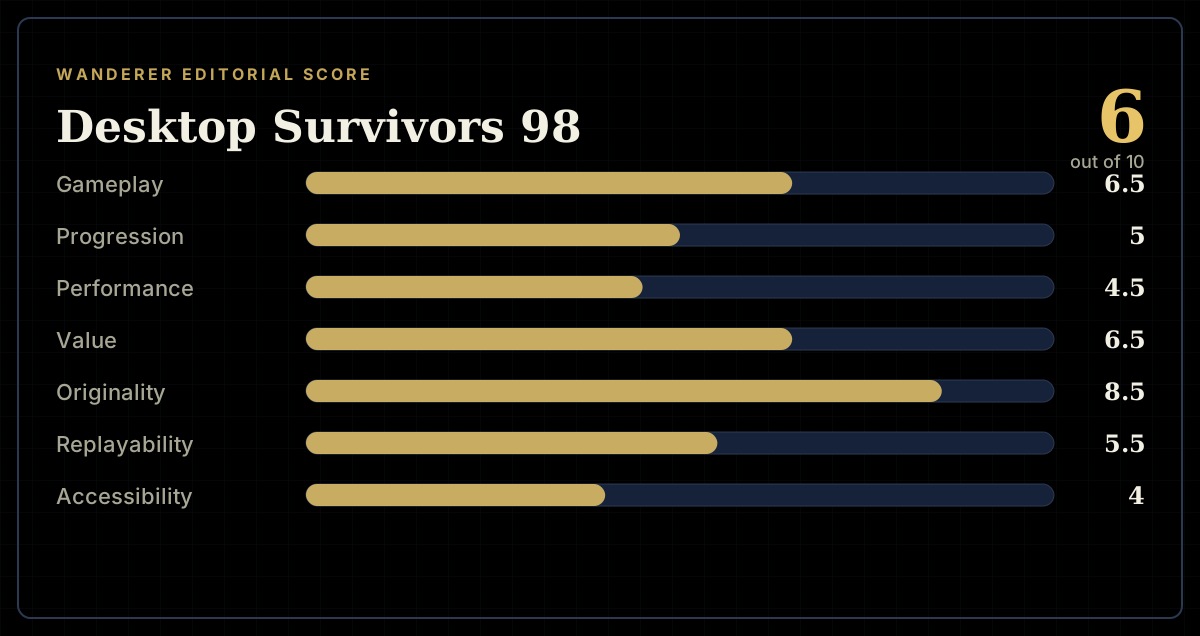
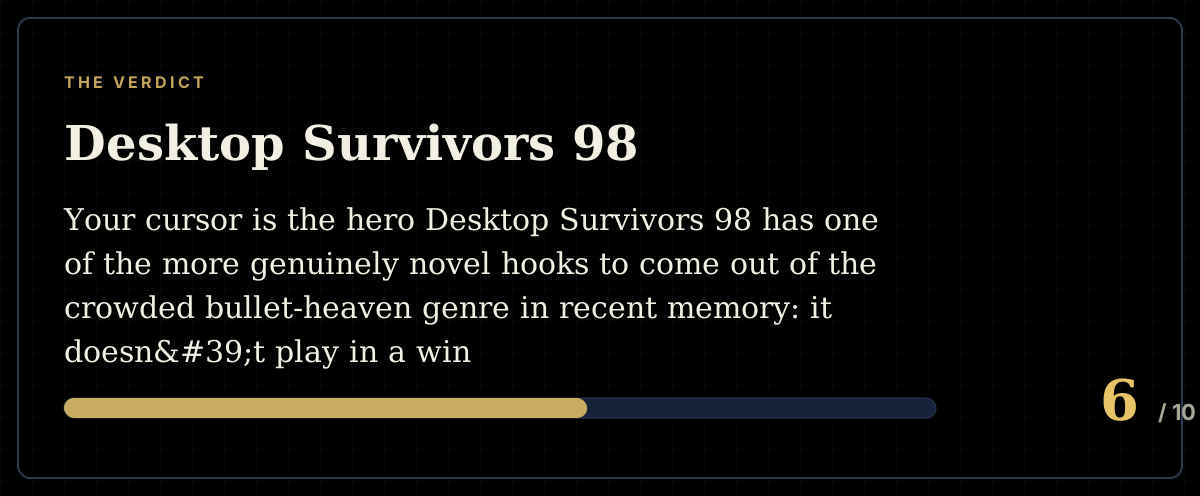
6 / 10
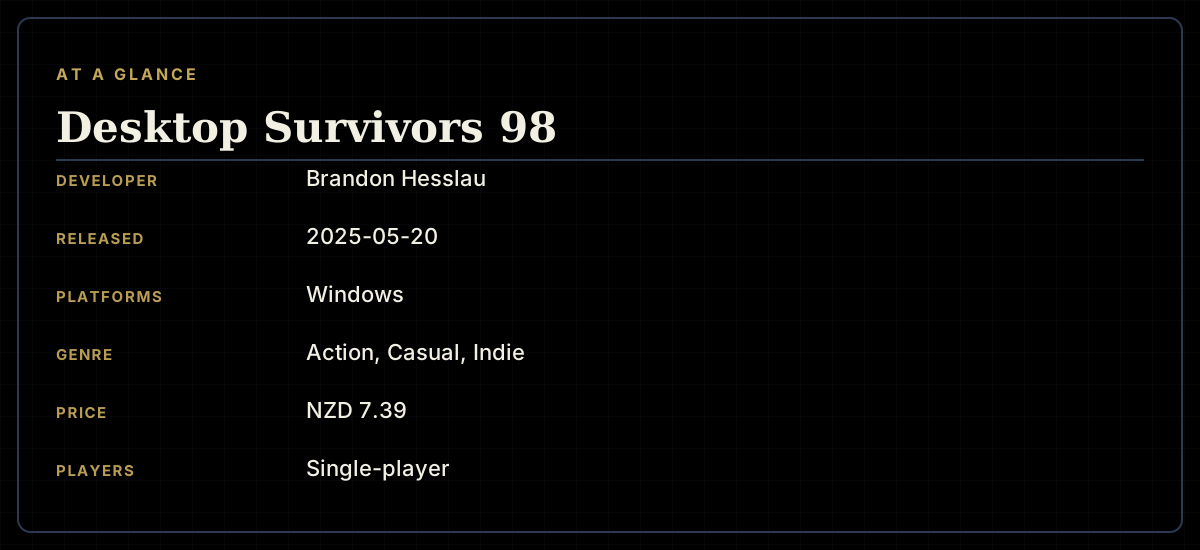
- Developer
- Brandon Hesslau
- Publisher
- Brandon Hesslau
- Released
- 20 May 2025
- Platforms
- Windows
- Genre
- Action, Casual, Indie
- Players
- Single-player
The short version
Biggest strengths
- A genuinely novel premise — your cursor is the hero, and the run plays out as an overlay across your actual Windows desktop rather than in a contained window
- Late-nineties PC aesthetic (fake popups, boot sounds, pixelated low-res UI) is built into the mechanics, not just a skin over a generic survivors-like
- A wide achievement spread (92.3% down to 13.0%) shows there's real structure and a long tail for players who commit
Biggest weaknesses
- The developer's own patch history shows a burst of fixes in the two weeks after launch (19-28 May 2025) and total silence since, over a year of no updates as of this review — corroborating a real, recurring "abandoned"/"dead game" complaint in the review base
- Reported crash and save-loss issues serious enough that one reviewer clocks a crash in "1 in 4-5" runs
- Balance swings hard between extremes: many reviewers report only one or two weapons are viable, sessions can feel punishingly underpowered early, and other reviewers separately report the game becomes trivially easy once meta-progression is maxed
6 / 10
Your cursor is the hero
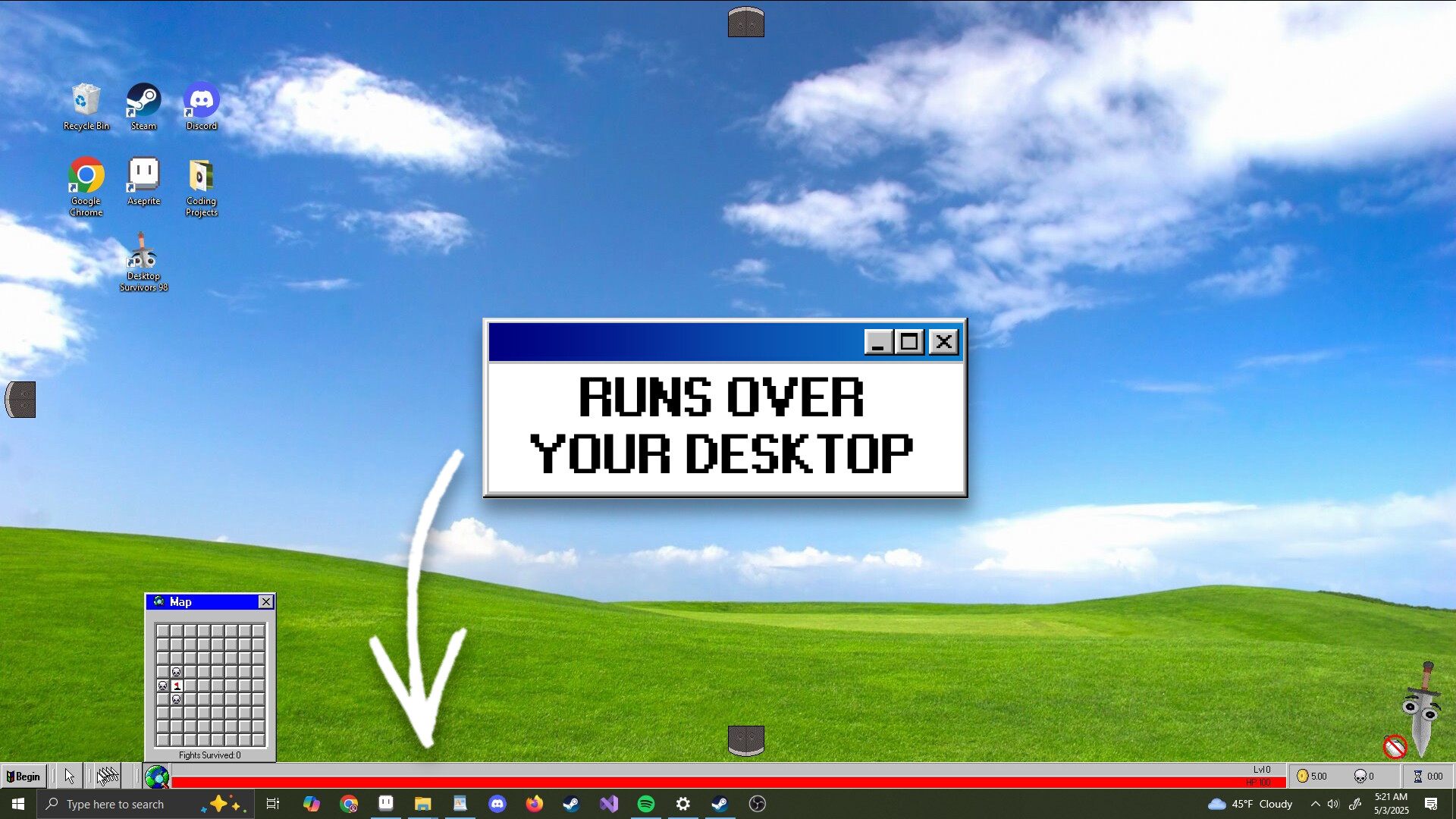
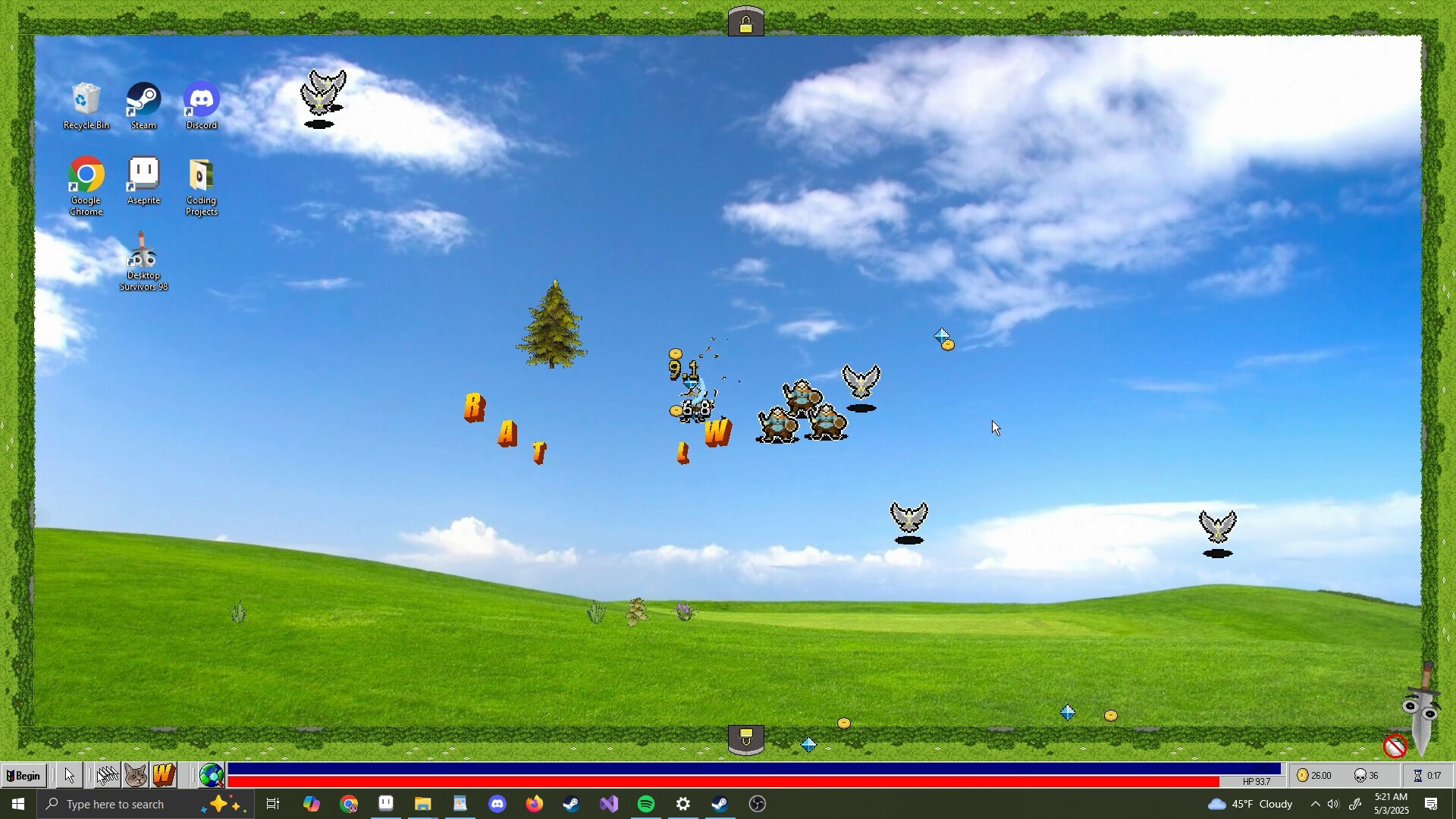
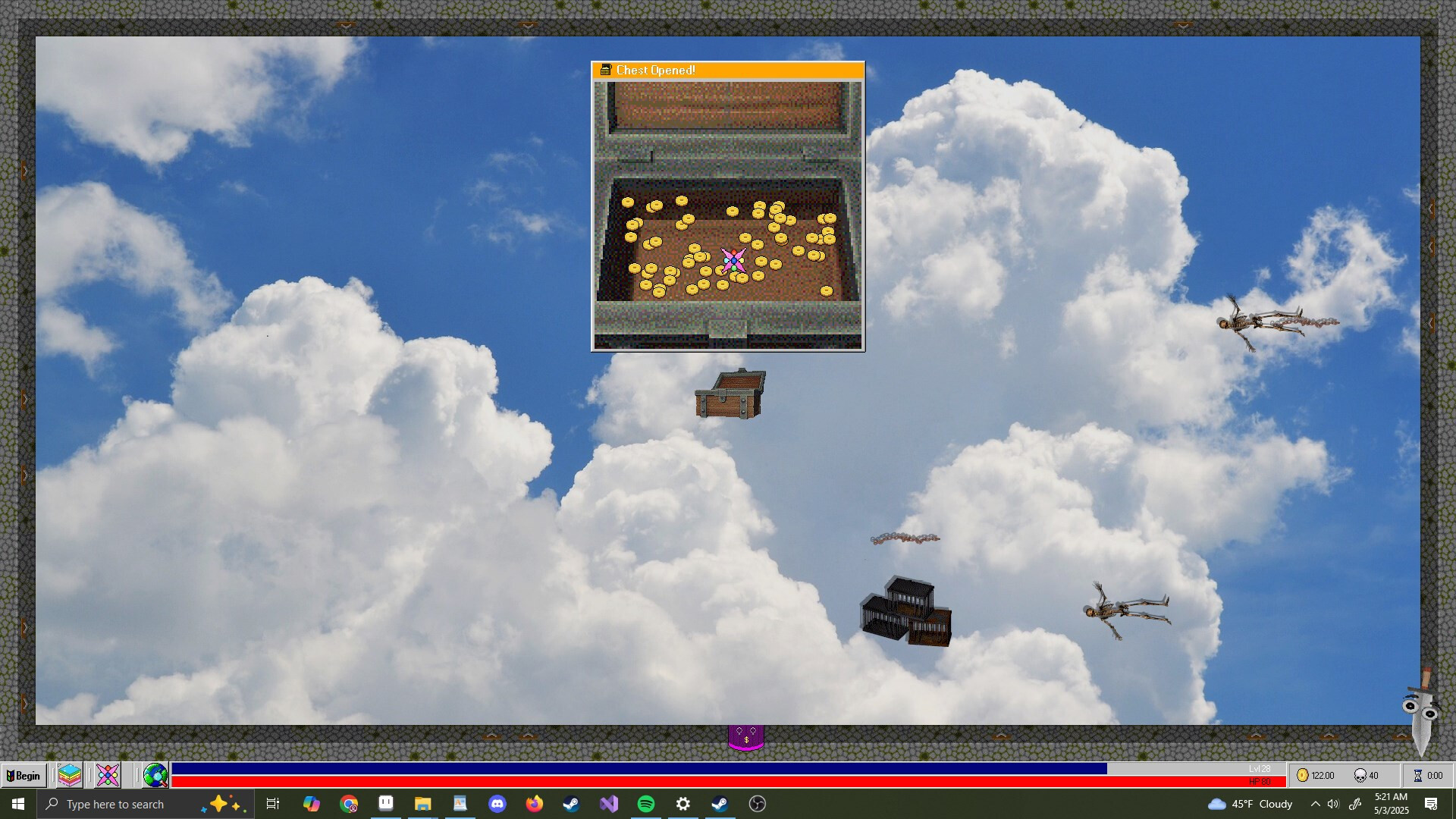
Desktop Survivors 98 has one of the more genuinely novel hooks to come out of the crowded bullet-heaven genre in recent memory: it doesn't play in a window. Enemies spawn, waves swarm, and your cursor — now armed and fighting for its life — moves across your actual desktop, dodging around your real taskbar and icons while the whole experience is skinned in a loving, obsessive recreation of late-90s Windows: fake dialog boxes, boot chimes, a pixelated low-resolution interface, and enemy and weapon design pulled directly from that era's UI language (the "CD Launcher" weapon, cursor skins modeled on old Windows pointer packs). One of the most-upvoted reviews on the store page isn't really about the gameplay at all — it's a step-by-step guide to extracting the game's cursor packs and installing them as your actual system cursors, which says a lot about how completely the aesthetic has landed with its audience.
Underneath the theming it's a fairly conventional survivors-like: clear a timed room, gain levels, pick from a randomised set of weapon and passive upgrades, repeat until the run ends. What makes it distinct in practice, beyond the visual conceit, is that "aiming" is replaced entirely by moving your literal mouse cursor around your screen — several reviewers describe this as either the best or worst part of the game depending on how their hand tolerates sustained fine-motor movement, and one review flags that a left-click-to-attack option would have made the core interaction meaningfully more comfortable for players who find constant cursor-flailing tiring.
A year of silence after a two-week burst
The most concrete, checkable problem here isn't a matter of taste. The developer's own Steam news feed shows a tight cluster of patches immediately after launch — version 1.0.1 through 1.0.7, all posted between 19 and 28 May 2025 — and then nothing. As of this review, over a year has passed with no further updates, and the review corpus reflects it independently and repeatedly: reviewers call it "abandoned," "dead game," and "mid and abandoned" without prompting from each other, sometimes years apart in posting date but converging on the identical word. That's the same "real support burst, then quiet fade" shape seen elsewhere in the current review library's small-studio coverage, and here it's directly verifiable against the developer's own posted history rather than inferred from reviewer suspicion alone.
That abandonment matters more than it might for a finished, polished game, because the corpus also documents specific, still-unfixed problems a live studio would normally patch. One reviewer reports crashing in roughly one of every four or five runs, with progress lost each time; another reports the same crash-and-data-loss pattern independently. A separate, more serious report describes a flashing visual effect on one weapon's evolved form triggering an actual epilepsy attack, despite the game shipping a "flashing lights" accessibility toggle that reviewer says didn't suppress it — a genuine, specific safety concern that a year of silence has left unaddressed either way.
Balance that swings both directions at once
The review base is unusually split on difficulty and balance, in a way that reads as evidence of an underlying problem rather than simple player disagreement. A significant cluster reports the early game as punishing and underpowered — weapons that deal too little damage even upgraded, gold too scarce to buy meaningful power in timed rooms, enemies that move faster than feels fair for a cursor-controlled character. A separate cluster, often from reviewers with much longer playtimes in the thousands of minutes, reports the opposite problem: once meta-progression unlocks enough passive power, the game becomes "basically impossible to lose," to quote one 4,100-minute reviewer directly, which is itself the reason they give for not recommending it. Both complaints are corroborated by multiple independent reviewers rather than resting on a single account, and together they describe a difficulty curve that's uncomfortable at the start and hollow at the end, with the well-tuned middle stretch that made the early hours strong not lasting into the meta-progression's endgame.
The achievement data is consistent with a real, substantial game rather than a shallow one — the completion curve runs smoothly from 92.3% for the earliest general milestone down to 13.0% for the hardest late unlock, spread across 78 separate achievements covering distinct weapons, cursor skins, and stage clears. That's a wide, deliberately structured content set; the problem the reviews describe isn't a lack of things to unlock, it's that the difficulty tuning around unlocking them doesn't hold together end to end.
A demo that promised more than the release kept
A smaller but recurring thread in the negative reviews is worth flagging on its own: several players who tried the pre-release demo report the finished 1.0 release actually removed or reworked elements they preferred, rather than simply building on them. "Never seen such a good demo lead to such a horrible game before," one review puts it, adding that demo progress didn't carry over and specific design choices were changed for the worse. This is a different complaint from the abandonment pattern above — it's about the initial release decisions rather than what happened afterward — but it points the same direction: a game whose most enthusiastic early audience, the people who played the demo enough to have opinions on it, came away from the full release feeling like something was lost in the transition rather than gained.
Where this leaves it
Desktop Survivors 98's premise is one of the few genuinely original ideas the survivors-like genre has produced this generation, and for a window of maybe ten to twenty hours it delivers on that idea's novelty better than almost anything else on the market. What holds it back from a stronger recommendation is everything downstream of the concept: a developer who patched hard for two weeks and then vanished for over a year, unresolved crash and save-loss reports, a specific and serious flashing-lights safety complaint, and a difficulty curve that multiple independent accounts describe as broken at both ends rather than merely challenging. Buy it for the concept and the opening stretch, and go in with tempered expectations for how far the support and the balance will carry you past that.
Pros and cons
Pros
- A genuinely novel premise — your cursor is the hero, and the run plays out as an overlay across your actual Windows desktop rather than in a contained window
- Late-nineties PC aesthetic (fake popups, boot sounds, pixelated low-res UI) is built into the mechanics, not just a skin over a generic survivors-like
- A wide achievement spread (92.3% down to 13.0%) shows there's real structure and a long tail for players who commit
- Strong opening hours, by its own reviewers' account — nostalgia and a genuinely different control scheme carry the first several runs well
Cons
- The developer's own patch history shows a burst of fixes in the two weeks after launch (19-28 May 2025) and total silence since, over a year of no updates as of this review — corroborating a real, recurring "abandoned"/"dead game" complaint in the review base
- Reported crash and save-loss issues serious enough that one reviewer clocks a crash in "1 in 4-5" runs
- Balance swings hard between extremes: many reviewers report only one or two weapons are viable, sessions can feel punishingly underpowered early, and other reviewers separately report the game becomes trivially easy once meta-progression is maxed
- Visual clarity and accessibility are genuine, repeated complaints — screen clutter, UI that doesn't scale even at maximum settings, and one reviewer specifically reports a flashing-lights weapon effect triggering a seizure despite an in-game flashing-lights toggle
- Several reviewers say the shipped game removed content or balance decisions they preferred from the pre-release demo
Screenshots
-
Desktop Survivors 98Image: Brandon Hesslau via Steam -
Desktop Survivors 98Image: Brandon Hesslau via Steam -
Desktop Survivors 98Image: Brandon Hesslau via Steam -
How the review scores each part of the gameWanderer Editorial -
At a glanceWanderer Editorial -
The short versionWanderer Editorial