Game review
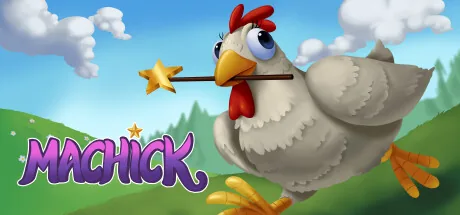
Machick
5.5 / 10
- Developer
- DeadPixel
- Publisher
- DeadPixel
- Released
- 22 March 2024
- Platforms
- Windows
- Genre
- Roguelite, Action, Survivors-like
- Monetisation
- One-time purchase, no in-game store
- Players
- Single-player only
The short version
Machick is a Vampire Survivors-style horde battler with a genuinely distinctive hook: rather than picking pre-made weapons, players craft their own wands piece by piece to fight an army of anti-magic toads threatening an enchanted forest. Developed and self-published by DeadPixel, it released on 22 March 2024. Its 117 English-language Steam reviews sit at Mostly Positive, roughly 79.5%, and this review reads the full available negative sample of 24 reviews alongside the top positives to find a clear before-and-after story: a genuinely well-supported launch month followed by tapering patches, unresolved bugs, and reviewers who eventually stopped believing the developer's own update claims.
Biggest strengths
- The wand-crafting system draws genuine, specific praise as a creative twist on the genre's usual pre-made weapon lists, giving players real room to experiment with combinations
- The developer was demonstrably responsive in the game's first month, shipping patches almost daily through late April 2024 in direct response to community bug reports
- Art style, sound design and the game's central magical-chicken-versus-toad-army premise draw consistent, charmed praise for personality that stands out in a crowded genre
Biggest weaknesses
- Update activity dropped off sharply after April 2024, with an eight-month gap before a single content update in December 2024, and the developer's public news feed shows no further support for the base game since, instead announcing a sequel in September 2025
- Multiple reviewers report the developer publicly claimed to have fixed bugs or added features, including controller support, that reviewers say were never actually implemented
- Persistent technical issues recur across the negative sample well into 2025 and 2026, including graphics and UI elements disappearing mid-run and abilities that don't function as described
Who it's for: Survivors-like fans drawn to a genuinely creative wand-crafting hook who don't mind buying a game whose active support appears to have ended; a poor fit for anyone who wants ongoing developer engagement or promised features like controller support to actually arrive.
Our recommendation: A cheap, charming idea worth a try at its low price, with the clear understanding that what shipped in its first month or two is close to what you're getting long-term.
5.5 / 10
Introduction
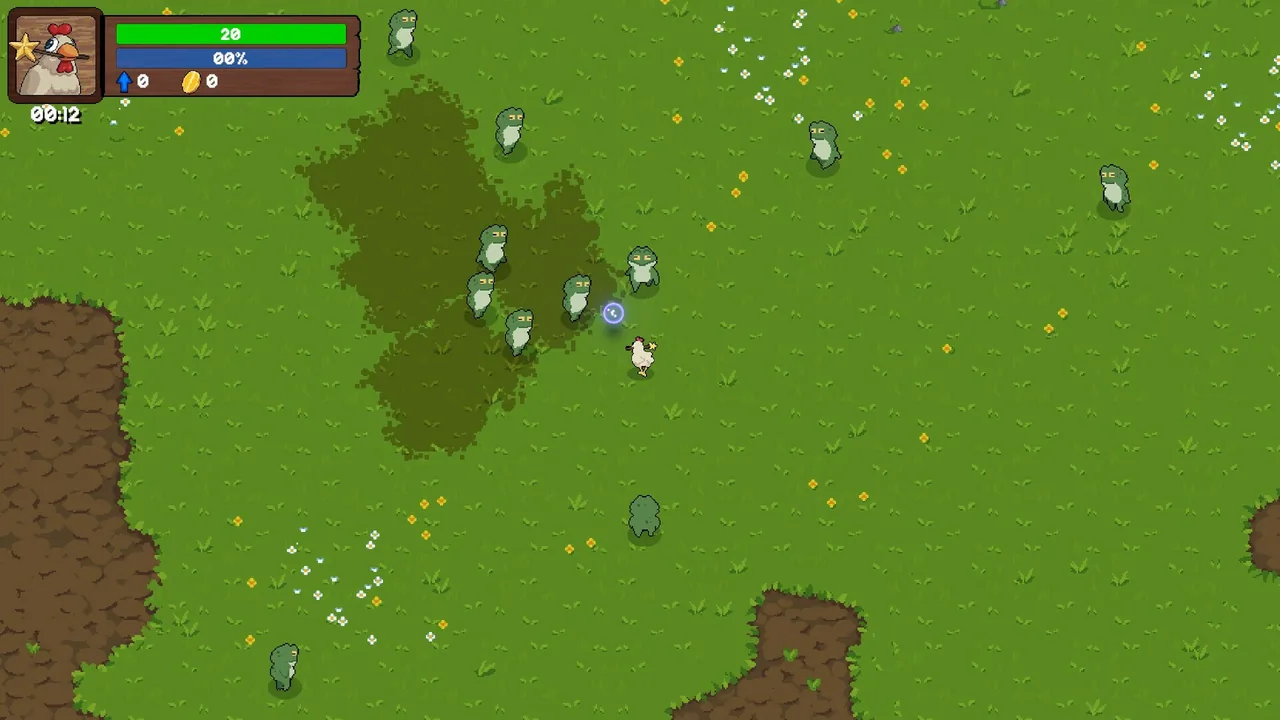
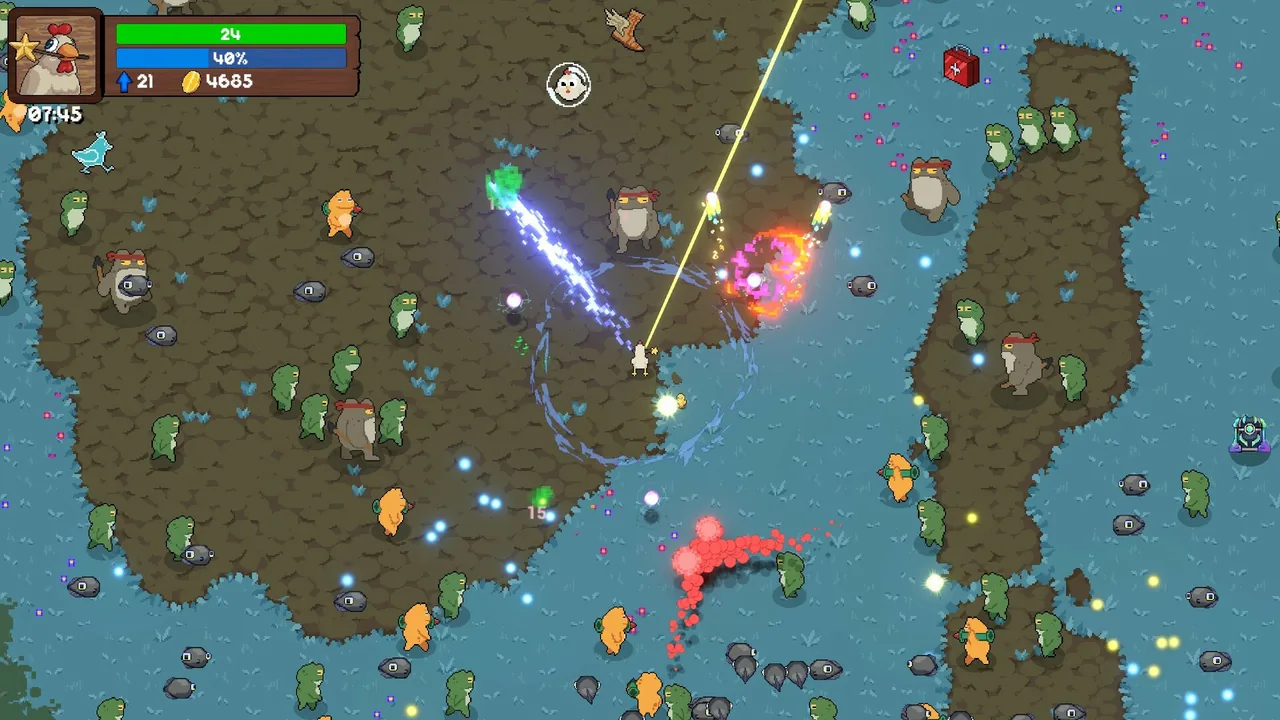
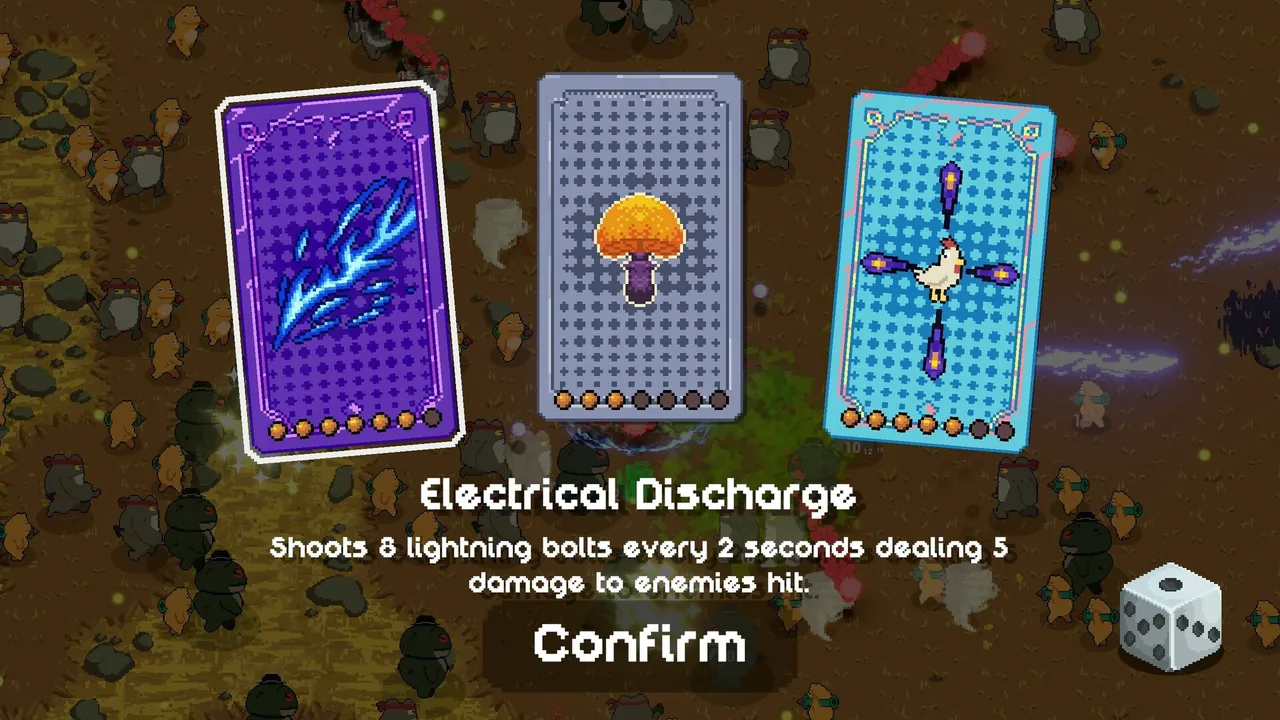
Machick sends magic-wielding chickens against a heavily armed army of anti-magic toads threatening to destroy an enchanted forest, built around a genuinely distinctive hook within the crowded survivors-like genre: rather than choosing from a fixed weapon list, players craft their own wands piece by piece, mixing components to build a personalised attack. DeadPixel developed and self-published it, releasing on 22 March 2024. Reading the full available negative sample of 24 English-language reviews alongside the top positives, out of a Mostly Positive corpus (roughly 79.5% across 117 reviews), finds a clear, dateable arc: a genuinely well-supported launch followed by a developer who appears to have moved on.
A creative hook, genuinely well received at launch
Machick's wand-crafting system earns real, specific praise across the sample. One detailed early review called the game "too cheap for what it's worth," specifically praising how much room the wand customisation leaves for creative combinations, alongside solid art and sound design. The game's whimsical premise — chickens with magic wands fighting an army of frogs — draws consistent, charmed comment even from more critical reviewers, and the core survivors-like loop of clearing waves, collecting orbs and choosing upgrades is broadly credited as functional and enjoyable in short sessions. Crucially, that same early review specifically praised the developer's responsiveness: "the devs are very engaged in their game, and after I sent bug feedback" changes followed. That wasn't an isolated impression — the game's own public patch history shows near-daily updates through late April 2024, addressing crashes, performance and content additions in direct response to community reports.
Support that tapered off, then stopped
What separates Machick's story from a typical launch-bug narrative is how clearly the sample dates the shift. Reviewers writing in 2025 and 2026 describe a very different developer relationship than the one praised at launch. One detailed review laid it out precisely: a mid-2024 news post promising new features was later deleted, and after eight months of inactivity, a single update added new content that itself shipped with fresh bugs, some of which reportedly remained unresolved. Another reviewer went further, alleging the developer publicly claimed to have added controller support and fixed specific bugs that, in that reviewer's testing, simply hadn't happened. The game's own update history corroborates the shape of this timeline: after the intense patch cadence through April 2024, there's a single content update in December 2024, and then nothing recorded until a September 2025 announcement — not for Machick itself, but for a sequel, Machick 2. For players who bought in expecting the same level of engagement the early reviews described, that's a meaningfully different product than the one they were sold.
Persistent bugs and thin content
Independent of the support timeline, specific technical complaints recur throughout the negative sample across a long span of dates: graphics and UI elements disappearing mid-run, particularly in longer sessions past 15 minutes, and abilities that reviewers say don't function as their descriptions claim. Content volume draws its own consistent criticism — several reviewers report having seen everything the game offers within four or five hours, with one directly unfavourable comparison noting the game costs more than Vampire Survivors while offering "a fraction of the content."
Final Verdict
Machick is a genuinely creative idea — wand-crafting gives it real identity in a genre that often blurs together — and its earliest reviews describe a developer who was, for a period, exactly the kind of engaged, responsive presence this library likes to see. What's harder to recommend confidently is what came after: a support cadence that dropped off sharply, specific claims about fixes and features that reviewers say didn't materialise, and a developer who appears to have redirected their energy toward a sequel rather than finishing what shipped. At its low price, there's still a charming few hours here for genre fans willing to accept the game roughly as it stands today, rather than as its early, more optimistic reviews described it.
Pros and cons
Pros
- The wand-crafting system draws genuine, specific praise as a creative twist on the genre's usual pre-made weapon lists, giving players real room to experiment with combinations
- The developer was demonstrably responsive in the game's first month, shipping patches almost daily through late April 2024 in direct response to community bug reports
- Art style, sound design and the game's central magical-chicken-versus-toad-army premise draw consistent, charmed praise for personality that stands out in a crowded genre
- The low price makes even a modest amount of enjoyment a reasonable trade, and several reviewers frame it explicitly as good value on that basis alone
Cons
- Update activity dropped off sharply after April 2024, with an eight-month gap before a single content update in December 2024, and the developer's public news feed shows no further support for the base game since, instead announcing a sequel in September 2025
- Multiple reviewers report the developer publicly claimed to have fixed bugs or added features, including controller support, that reviewers say were never actually implemented
- Persistent technical issues recur across the negative sample well into 2025 and 2026, including graphics and UI elements disappearing mid-run and abilities that don't function as described
- Content volume draws consistent criticism as thin relative to genre leaders, with several reviewers reporting they'd seen everything the game offers within four to five hours
Screenshots
-
MachickImage: DeadPixel via Steam -
MachickImage: DeadPixel via Steam -
MachickImage: DeadPixel via Steam -
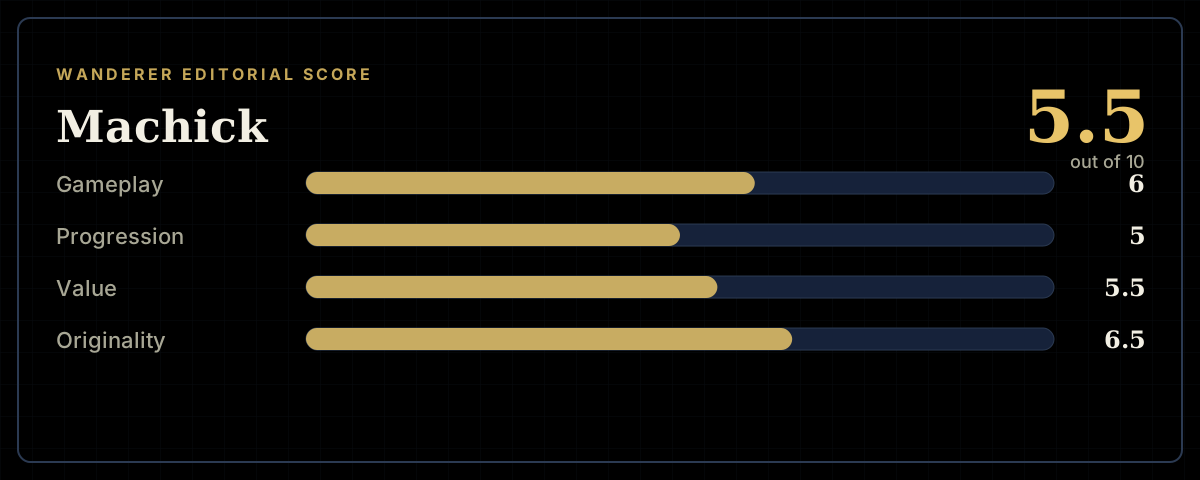
How the review scores each part of the gameWanderer Editorial -
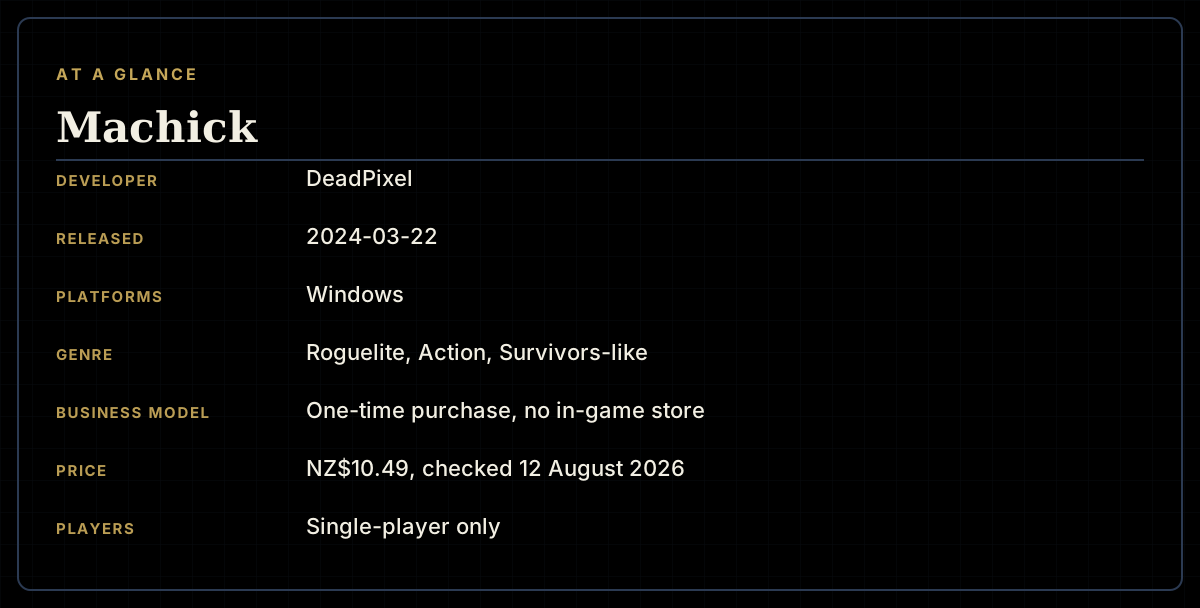
The essentials at a glanceWanderer Editorial -
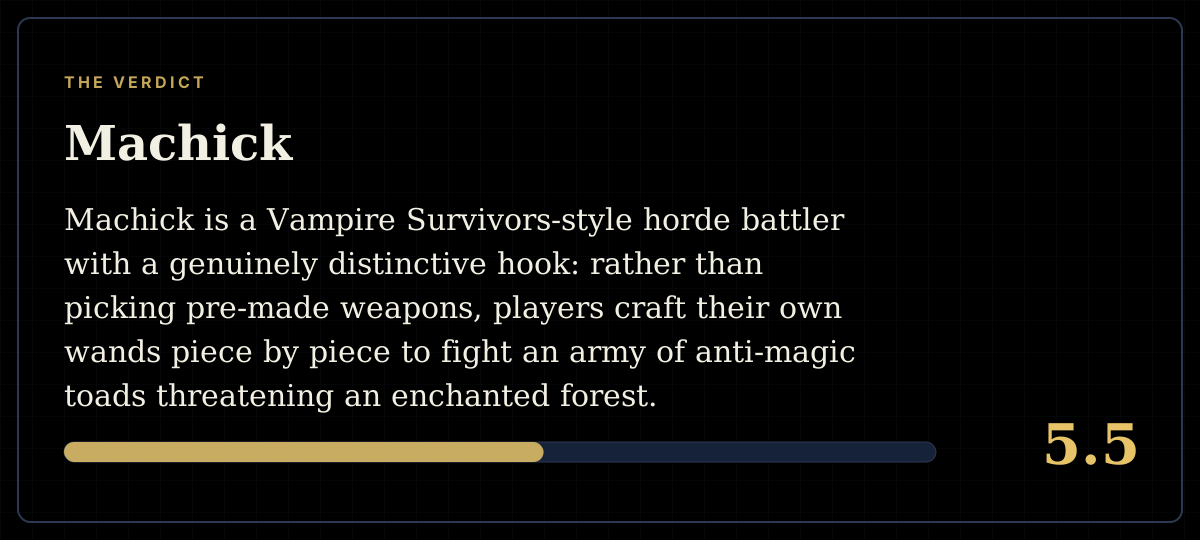
The short versionWanderer Editorial